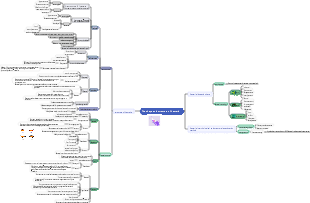
MindMap Gallery Bacterial morphology and structure mind map
The mind map about bacterial morphology and structure is suitable for most majors, including the size and shape of bacteria, the basic structure of bacteria, bacterial morphology and structure inspection methods, etc.
Edited at 2023-11-09 22:54:35This is a mind map about bacteria, and its main contents include: overview, morphology, types, structure, reproduction, distribution, application, and expansion. The summary is comprehensive and meticulous, suitable as review materials.

This is a mind map about plant asexual reproduction, and its main contents include: concept, spore reproduction, vegetative reproduction, tissue culture, and buds. The summary is comprehensive and meticulous, suitable as review materials.
This is a mind map about the reproductive development of animals, and its main contents include: insects, frogs, birds, sexual reproduction, and asexual reproduction. The summary is comprehensive and meticulous, suitable as review materials.
This is a mind map about bacteria, and its main contents include: overview, morphology, types, structure, reproduction, distribution, application, and expansion. The summary is comprehensive and meticulous, suitable as review materials.
This is a mind map about plant asexual reproduction, and its main contents include: concept, spore reproduction, vegetative reproduction, tissue culture, and buds. The summary is comprehensive and meticulous, suitable as review materials.
This is a mind map about the reproductive development of animals, and its main contents include: insects, frogs, birds, sexual reproduction, and asexual reproduction. The summary is comprehensive and meticulous, suitable as review materials.
The shape and structure of bacteria
bacteria
Various types of prokaryotic microorganisms, including bacteria, radioactive Lineae, Mycoplasma, Chlamydia, Rickettsia, Spirochaete
Small in shape, simple structure, no nucleolus and nuclear membrane, only original Initial nucleoplasm, no other organelles except ribosomes
Bacterial size and shape
Observe with an optical microscope and measure in micrometers um
Bacteria classified according to appearance
cocci
Diplococcus: two bacteria arranged in pairs; eg: Neisseria meningitidis bacteria, Neisseria gonorrhoeae, Streptococcus pneumoniae
Streptococcus: multiple cells adhered into chains or beads; eg: Streptococcus pyogenes
Staphylococcus aureus: Staphylococcus aureus
Bacillus: eg: Bacillus anthracis
Spirobacter
basic structure of bacteria
cell wall
Divided by Gram stain
Gram-positive bacteria G (purple)
peptidoglycan thick
Glycan skeleton: composed of N-acetylglucosamine and N-acetylmuramic acid Linked via β-1,4 glycosidic bond (action point of lysozyme)
Tetrapeptide side chain
Pentapeptide cross-linking bridge
Penicillin action site
Teichoic acid: an important bacterial antigen that has the function of adhering to host cells. Related to bacterial resistance and pathogenicity
Gram-negative bacteria G-(red)
Peptidoglycan thin
adventitia
Lipoproteins: Tightly connect the outer membrane to the peptidoglycan layer
Lipid bilayer: 1. Transport nutrients 2. Barrier function
lipopolysaccharide
Lipid A: is the main component of the toxicity and biological activity of endotoxins , no species specific
core polysaccharide
specific polysaccharide
Function: Maintain the morphology of bacteria, protect bacteria against hypotonic environment, and participate in material exchange
Bacterial cell wall defective type (cell L type)
cell membrane
Function: material exchange, respiration, biosynthesis, secretion of filamentous colonies Function, participate in cell division
Form a special structure: mediator: cell ventral to cytoplasmic depression fold to form a bladder
cytoplasm
Ribosome: sedimentation coefficient is 70s, composed of two subunits, 50S and 30S Composition, streptomycin and erythromycin have no effect on human ribosomes
Plasmid: 1. Is genetic material, double-stranded circular DNA 2. Determines certain traits of bacteria (drug resistance)
Cytoplasmic granules (common metachromatic granules): where nutrients and energy are stored
Bacterial morphology and structure examination method
electron microscope
ultrastructure of bacteria
Optical microscope
stain-free specimen detection method
Stained specimen detection method
Gram stain
G: Purple
G-: red
acid fast staining
Identify Mycobacterium tuberculosis, Mycobacterium leprae, etc.
Special dyeing method
The special structure of bacteria
Capsule:
1.Storage water 2. Anti-phagocytosis (enhance invasiveness) 3. Identify cell functions 4. Adhesion function:
Flagellum: slender and curved
related to bacterial pathogenicity
After special dyeing, the flagella are thickened and can be observed under a light microscope.
Function
Antigenic: chemical composition is protein (H antigen)
locomotive organs
Pili: short, thin and straight
Classified by function
Common pili (relevant to pathogenicity)
Sex pili (F and F- can transfer genetic material through sex pili)
Visible under electron microscope
bud:
Whether the spores are killed is often used as an indicator to judge the sterilization effect.
Method: High-pressure steam sterilization (121°C, 20 minutes)
Endogenous dormant bodies formed under certain conditions
Function
related resistance
Identify bacteria