 Wondershare EdrawMind
MindMap Gallery Chapter 4 Strategic Human Resource Management
- 107
Chapter 4 Strategic Human Resource Management
This is a mind map about 4 chapters of strategic human resource management, including strategic human resource management and its implementation process, as well as the specific content of strategic human resource management.
Edited at 2023-11-09 16:33:51
- bacteria
This is a mind map about bacteria, and its main contents include: overview, morphology, types, structure, reproduction, distribution, application, and expansion. The summary is comprehensive and meticulous, suitable as review materials.
- Plant asexual reproduction
This is a mind map about plant asexual reproduction, and its main contents include: concept, spore reproduction, vegetative reproduction, tissue culture, and buds. The summary is comprehensive and meticulous, suitable as review materials.
- Reproductive development of animals
This is a mind map about the reproductive development of animals, and its main contents include: insects, frogs, birds, sexual reproduction, and asexual reproduction. The summary is comprehensive and meticulous, suitable as review materials.
Chapter 4 Strategic Human Resource Management
- bacteria
This is a mind map about bacteria, and its main contents include: overview, morphology, types, structure, reproduction, distribution, application, and expansion. The summary is comprehensive and meticulous, suitable as review materials.
- Plant asexual reproduction
This is a mind map about plant asexual reproduction, and its main contents include: concept, spore reproduction, vegetative reproduction, tissue culture, and buds. The summary is comprehensive and meticulous, suitable as review materials.
- Reproductive development of animals
This is a mind map about the reproductive development of animals, and its main contents include: insects, frogs, birds, sexual reproduction, and asexual reproduction. The summary is comprehensive and meticulous, suitable as review materials.
- Recommended to you
- Outline
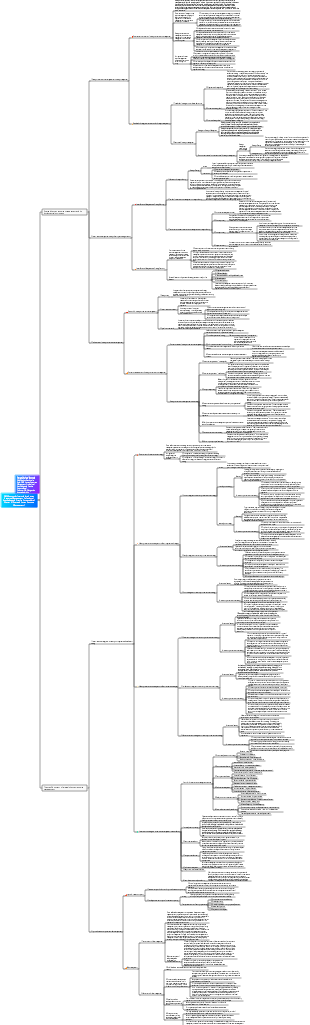
2024 Economist Intermediate-Human Resource Management Professional Knowledge and Practice (Intermediate)-Chapter 4 (Strategic Human Resource Management)
- 93
Chapter 4 Strategic Human Resource Management
Section 1 Strategic Human Resources Management and its Implementation Process
(1) Concept and connotation of strategic human resources management
1. The concept of strategic human resource management The so-called strategic human resource management refers to "the practice of linking the enterprise's human resource management activities with strategic goals and objectives in order to improve the performance level of the enterprise and cultivate an innovative and flexible organizational culture", or "in order to achieve A planned human resource utilization model and various human resource management activities implemented for the goals of an organization."
2. Core concepts of strategic human resource management The core concept emphasized by strategic human resource management is that human resource management must be able to help organizations achieve strategies and gain competitive advantage. Modern human resource management has been seen as a "profit center" rather than just a "cost center".
3. Core concepts of strategic human resource management The core concept of strategic human resource management is strategic fit or strategic fit, that is, an organization's human resource management activities must have consistency in two aspects
4. Strategic human resource management focuses the organization’s attention on four aspects (1) Change structure and culture (2) Improve organizational efficiency and performance (3) Develop special abilities (4) Management change
5. Strategic human resource management requires important ideas that the organization’s human resource management must implement. First, a profit-oriented perspective, not just a service-oriented perspective. Second, analyze, evaluate and explain the costs and benefits of human resource management issues (productivity, salary and benefits, recruitment and selection, training and development, performance feedback, absences, temporary layoffs and employee attitude surveys, etc.). Third, provide a suggested solution report on human resources management. Fourth, provide training for human resource management functional personnel.
6. The requirements of strategic human resource management for human resource managers The requirements of strategic human resource management actually mean that human resource management professionals must be able to demonstrate to others that they have contributed to the achievement of the organization's goals and mission. To this end, human resource managers in an organization must strive to: First, participate in the organization's strategic planning process. Second, master some specific knowledge related to the strategic goals of the organization. Third, know what types of employee skills, behaviors, and attitudes can support the organization's strategy. Fourth, develop specific human resource management programs to ensure that employees have the skills, behaviors, and attitudes needed to implement the organization's strategy.
(2) Three levels of strategy and the basic model of strategic management
1. The three levels of strategic management and their interrelationships. An organization's strategy usually includes the following three levels: organizational strategy, competitive strategy, and functional strategy
(1) Organizational strategic level It mainly answers the question of where to compete, that is, making decisions about what kind of business the organization should choose to operate and what industry or field it should enter. Addresses the question of how an organization can grow and develop while shrinking and consolidating under adverse circumstances. It points out the various directions an organization can choose in its development process. Divided into: growth strategy, stability strategy, contraction strategy
(2) Competitive strategy level Also known as business strategy, it mainly answers the question of how to compete. That is, to compete effectively with competitors in the selected industry or field, thereby establishing one's long-term competitive advantage in the market. The classification method of Professor Michael Porter, a well-known strategic expert at Harvard University: Competitive strategies are usually divided into total cost leadership strategy, differentiation strategy and market concentration strategy.
(3) Functional strategic level Mainly answer the question of what to rely on to compete. That is, which resources will help defeat your competitors, and how you will obtain, develop and use these resources to compete. Functional strategy reflects the basic course of action determined by each department in the organization to help the organization achieve its strategy and corresponding competitive goals, including marketing strategy, human resources strategy, financial strategy, etc. Human resource management strategy is a type of functional strategy.
2. A basic model of strategic management
(1) The strategic management process of an organization mainly includes two core stages: strategy formulation and strategy implementation.
Strategy Formulation Process: Also known as the strategic planning process, it defines the organization’s mission, long-term goals, external opportunities and threats, and and the strengths and weaknesses that exist within the organization, and then determine the strategic direction of the organization
strategy implementation process Also known as the strategy execution process, it helps organizations determine how to effectively implement the determined strategy, mainly how to Designing the organizational structure, how to allocate resources, and how to ensure that the organization obtains highly skilled employees, etc.
Note: In the strategic management process of an organization, the strategy execution stage does not always passively follow the strategy formulation stage. exist There is a continuous cycle between information and decision-making throughout the strategic management process.
(3) Human resources management and strategic planning (Main tasks, functions, four connections)
1. Strategic Planning Overview
· Strategic planning is a type of corporate planning designed to match the company's internal strengths and weaknesses with external opportunities and threats, thereby helping the organization maintain a competitive advantage. The tasks that an organization's strategy formulation process must accomplish: · Determine the organization’s mission, vision, values, and long-term goals. · Then, based on the analysis of the external opportunities and threats and internal strengths and weaknesses (SWOT), determine the way the organization achieves its mission and long-term goals, that is, make strategic choices. · Clarify how the organization will allocate its resources in pursuit of its goals.
(1) Contents of mission, vision and values
· Mission ⇔ Describes the reason, purpose and significance of an organization's existence ⇔ Improve the quality of human life through Internet services · Vision ⇔ is an overall description of the future development direction of the organization ⇔ Become the most respected Internet company · Values ⇔ It is the basic code of conduct and ethics that we adhere to in the process of fulfilling our mission and achieving our vision ⇔ Integrity, enterprising spirit, cooperation and innovation
(2) Human resource management plays an important role in two aspects in the entire strategic management process: First, human resource management is the most critical factor in the implementation of organizational strategy. Second, human resource management may lead to adjustments in organizational strategy.
(2) The organization evaluates its external environment and internal environment
External analysis: refers to analyzing the various strategic opportunities faced by the organization and the various threats it faces by examining the organization's operating environment.
Strategic opportunities: untapped customer markets; technological advances that are helpful to the enterprise; potential human resources that have not yet been tapped and utilized, etc.
Strategic threats: potential personnel shortages; new competitors entering the market; upcoming laws that may negatively impact the company; technological innovations by competitors, etc.
Internal Analysis: Analyzing the organization’s own strengths and weaknesses. It focuses on examining the quantity and quality of various resources such as financial resources, capital resources, technical resources, and human resources that an organization may obtain.
2. The role of human resource management in the strategic planning process
The strategic planning process generally occurs at a high level and is typically determined by a strategic planning group. Every step of strategic planning and decision-making involves people-related issues, so the human resource management function needs to participate in every step of strategic decision-making.
3. The connection between human resource management and strategic planning
(1) Administrative management contact
The focus of the human resources management function is mainly on daily administrative management activities. The organization's top human resources managers do not have the time, opportunity, or ability to think strategically about human resource management issues. The human resources department of an organization is completely separate from the strategic management process of the business.
(2) One-way contact
The enterprise's strategic planning function will formulate its own strategic plan, and then inform the human resources department of this strategic plan to cooperate with the implementation or implementation of the strategic plan.
(3) Two-way contact
Allows organizations to take human resource issues into account throughout the strategic planning process. Happens in the following three steps sequence 1) Inform HR of various strategic options. 2) Senior human resources managers analyze the human resource requirements of different strategies and report the analysis results to the strategic planning group. 3) Communicate strategic planning decisions to senior human resources managers, who will design specific plans for strategic planning.
(4) Integrated contact
It is based on the continuous interaction between strategic planning and human resource management, rather than a unilateral advancement process in a certain sequence. Connections are dynamic and omnidirectional. Senior HR leaders are members of the strategic planning team and are fully involved in the strategy development process. Ideally, an organization's strategic planning and human resource management should reach an integrated level of linkage.
(4) Human resources management and strategy execution (Five important factors)
· Strategy formulation: It is the responsibility and task of top management.
· Strategy execution (implementation), especially the formulation of human resource strategies and putting them into human resource management practices in order to implement the strategy, is mainly the responsibility of an organization's human resource management function. Any organization with poor execution basically has problems or deficiencies in human resource management.
Once the top managers of an organization make a certain strategic choice, the role of human resource management changes to the following three aspects:
(1) Determine what kind of human resources the organization needs, including quantity, quality, structure, etc.
(2) Through the development and coordination of various human resource management practices, ensure that the organization obtains the appropriate number of employees, ensures that these employees have the different levels and types of skills required by the strategy, and ensures that their skills and positions are consistent with the required Complete work tasks that match each other.
(3) Establish an appropriate control system through the scientific design of the human resource management system and the human resource policies, systems, procedures and practices it includes to ensure that the behavior of these employees is conducive to the realization of strategic goals.
One of the very important reasons why human resource management has a significant impact on the realization of organizational strategy is that whether the organization's strategy can be successfully implemented mainly depends on five important factors:
Human resources has the main responsibility ⇔ ① Work task design ② Personnel selection, training and development ③ Compensation system Human resources play an influencing role ⇔ ④ Organizational structure ⑤ Information system
(5) Three major tools of strategic human resource management
strategic map
It is a graphical tool that decomposes the organizational strategy implementation process. It vividly displays the various key activities that must be completed to ensure the successful implementation of the company's strategy and the driving relationships between them.
Indicates the path and overall context of organizational strategy implementation
HR Scorecard
The human resources scorecard is not a card used to score points. It is a variety of financial and non-financial goals or metrics designed for a series of human resource management activity chains that need to be completed to achieve the organization's strategic goals.
It clarifies the specific indicators and goals that need to be achieved to measure the various management activities that must be completed to achieve the organizational strategy.
Formulate corporate strategy ⇔ What are the strategic goals of this company? Confirm the needs for the workforce ⇔ In order to ensure the achievement of the company's strategic goals, the human resources function should ensure that the company obtains what employee competencies and behaviors Determine detailed HR scorecard metrics ⇔ Which HR policies and practices achieve the employee competencies and behaviors the organization needs? Develop human resource strategies and corresponding policies and measures ⇔ Which human resource policies and practices can achieve the employee competencies and behaviors that the organization needs?
digital instrument panel
It is actually a variety of charts that can be displayed on the computer desktop. It vividly shows leaders and managers the current progress of various activities that appear on the company's strategic map in the form of desktop graphics, tables and computer pictures. At what stage it has reached and in which direction it is heading, this data display provides business leaders and managers with an opportunity to take timely corrective measures.
Enterprise managers can keep abreast of the organization's completion of various strategic tasks and the progress of important work.
(6) Steps of strategic human resources management (Four processes, eight steps)
1. Main processes of strategic human resources management
2. Steps in the strategic human resource management process
(1) Determine the organization’s strategic plan ⇔ starting point (2) Delineate the organization’s value chain ⇔ What key activities need to be completed, and what other important activities need to be completed to support the key activities (3) Design strategy map ⇔ driving relationship between activities (4) Determine various organizational results required by the strategy ⇔ For example, customer satisfaction is above 95% (5) Determine the employee competencies and behaviors required by the organization ⇔ Mainly done by human resource managers (6) Clarify the human resource management systems, policies and activities that need to be implemented ⇔ Involving recruitment, training and development, performance management, etc. (7) Make a human resources scorecard ⇔ Determine indicators and specific indicator values (8) Monitoring through digital dashboard ⇔ Judgment, evaluation, adjustment
Section 2 The specific content of strategic human resources management
(1) The connotation of human resources strategy
The so-called human resources strategy is an action guide used by the human resource management department and its managers to help the company achieve its strategic goals. It is a model or model for an organization to integrate its main goals, policies and procedures of human resource management into an organic whole. product of planning.
(1) Matching of human resource management strategies with different organizational strategies (Growth strategy, stability strategy, contraction strategy)
1. Growth strategy and corresponding human resources strategy
It is a strategy that focuses on market development, product development, innovation, and mergers. Divided into internal growth and external growth strategies.
Internal growth: Focus on the enhancement of one's own strength and self-expansion.
(1) Organization of internal growth strategy, human resources issues: The important content emphasized is the development of new products and new markets, the creation of new businesses and the entry of new fields.
· Recruitment and selection: Recruitment and selection are relatively stressful, and they must be able to continuously replenish all types of talents needed for organizational growth and development. · Training: all-round, multi-type · Promotion: Emphasize internal promotion and recruit employees for low-level positions from outside ·Performance and remuneration: Pay attention to employees’ results and the completion process, and remuneration is closely related to results.
External growth: The integration strategy is realized through vertical integration and horizontal integration, often through mergers, alliances, acquisitions, etc.
(2) Organizations with external growth strategies, human resources issues: how to rationally reallocate human resources, maintain the morale of the workforce, achieve the integration of values and culture, and ensure that all human resource management practices and standards are consistent.
· Recruitment and Selection: Recruitment needs are not large, relocation work is stressful · Training: The focus is on cultural integration and unification of values, skills training on how to resolve conflicts, and skills retraining for those who are temporarily unable to find jobs. · Performance and remuneration: The focus is on standardizing performance management practices and remuneration structures and remuneration levels
2. Stability strategy and corresponding human resources strategy
A stabilization strategy is a strategy that emphasizes market share or operating costs. The organization is required to choose a part of the market it has occupied that it can do best, and then make it better.
Organizations that adopt a stable strategy are often in a relatively stable environment with low growth rates. The key to maintaining competitiveness lies in whether they can maintain the skills they already possess.
The starting point is to stabilize the workforce that has mastered relevant work skills, maintain the stability of human resources within the organization, and maintain the standardization, consistency and internal fairness of management methods.
· Recruitment and selection: There is little demand for personnel recruitment, and internal employees can be promoted slowly · Training: Focus on the needs of employees’ current jobs ·Performance management: focuses on employees’ behavioral norms and employees’ work abilities and attitudes · Compensation: Pay more attention to the internal consistency of compensation
3. Shrink strategy and corresponding human resources strategy
Also known as downsizing strategy. Used by organizations that want to downsize a portion of their operations due to severe financial difficulties. Often associated with layoffs, divestitures, and liquidations.
The human resources problem is: how to divest redundant human resources from the organization in a peaceful, stable and minimally costly way, and how to improve the morale of employees who remain in the organization after downsizing and downsizing.
· Training: Training is stressful because many people’s knowledge and skills need to be updated. · Performance management: The focus is on the assessment of results, and there is a very strong desire to link employee income with the organization's business performance. · Remuneration: Reduce the proportion of fixed remuneration and increase the proportion of floating remuneration in remuneration, implement employee stock ownership plans, and encourage employees to share risks with the organization
(3) Matching of human resource management strategies with different competitive strategies (Innovation strategy, cost leadership strategy, customer focus strategy)
1. Innovation strategy and corresponding human resources strategy
It is a competitive strategy oriented towards product innovation and shortening of product life cycle. It emphasizes risk-taking and the continuous launch of new products, and regards shortening the time from product design to market launch as an important goal. There is a strong emphasis on customer satisfaction and the individual needs of customers. They do not pay much attention to the position hierarchy and relatively stable job evaluation within the organization.
· Recruitment and selection: Willing to get innovative and risk-taking people · Performance management: Focusing on the results of innovation rather than specific behavioral norms in the work process, the performance system is very goal-oriented · Salary: √ Emphasis on risk sharing and success sharing between the organization and employees to ensure that successful innovators in products, production methods, technologies, etc. can indeed receive high returns √In terms of job description, maintain considerable flexibility and require the ability to adapt to work needs in different environments √Basic salary does not depend on very clear job scope and responsibilities, but on the employee’s individual innovation ability and technical level
2. Cost leadership strategy and corresponding human resources strategy
In fact, it is a low-cost strategy, that is, when the quality of the product itself is roughly the same, the organization provides products to customers at a lower price than its competitors. Organizations pursuing a cost leadership strategy place a strong emphasis on efficiency. Describe in detail and specifically the work content, responsibilities, and tasks that employees will perform. Emphasize the stability of employees in their jobs.
· Recruitment and selection: People who like to work hard for a long time in a highly repetitive and programmed job · Training: focused on the needs of employees’ current jobs ·Performance management: focuses on employees’ behavioral norms and compliance with basic work procedures · Salary √ Pay close attention to the compensation situation of competitors to ensure that the organization’s salary level is neither lower than that of competitors, nor preferably higher than competitors √Increase the proportion of variable pay or bonus in the salary structure √ Reward employees for any achievements in cost savings √Control cost expenditures, encourage employees to reduce costs and improve production efficiency
3. Customer center strategy and corresponding human resources strategy
It is a strategy to gain competitive advantage by improving customer service quality, service efficiency, service speed, etc. Organizations focus on pleasing customers, satisfying customer needs, identifying latent needs and finding ways to meet those latent needs
· Recruitment and Selection: A strong emphasis on job applicants or candidates’ customer service abilities, motivation and experience · Training: Devoting significant time to customer knowledge, customer service skills, and customer-oriented values · Salary: √ Pay employees based on the quantity and quality of services they provide to customers √Bonuses are paid based on the overall customer evaluation of the service provided by an employee or group of employees √The service industry implements a piece-rate wage system based on the number of customers served by employees and a certain unit price.
(4) Human resource strategy and human resource management practice selection
Job analysis and job design
Few tasks ⇔ Many tasks Simple task ⇔ Complex task Requires few skills ⇔ Requires many skills Specific job description ⇔ General job description
Recruitment and selection
external source ⇔ internal source Limited socialization ⇔ Full socialization Evaluate specific skills ⇔ Evaluate general skills Narrow career development channel ⇔ Broad career development channel
Training & Development
Focus on current job skills ⇔ Focus on future job skills Individual orientation ⇔ Group orientation Train a few employees ⇔ Train all employees random, unplanned ⇔ planned, systematic
performance management
Behavioral Standards ⇔ Result Standards Development Orientation ⇔ Management Orientation Short term standard ⇔ Long term standard Individual orientation ⇔ Group orientation
Salary structure, bonuses and benefits
Focus on salary and benefits ⇔ Focus on bonuses Short-term rewards ⇔ Long-term rewards Emphasis on internal level ⇔ Emphasis on external fairness Reward individuals ⇔ Reward groups
Labor relations and relations with employees
collective bargaining ⇔ individual bargaining Top-down decision-making ⇔ Employee participation in decision-making Formal established procedures ⇔ No formal established procedures Treat employees as expenses ⇔ Treat employees as wealth
(5) High Performance Work System (HPWS) (Two definitions and characteristics of a learning organization)
1. The concept of high-performance work system
High performance work systems became popular in the 1990s. Many studies have found that high-performance work systems are indeed linked to lower employee turnover and workplace accident rates, higher productivity, customer satisfaction, and better financial performance.
There are two main definitions of high-performance work systems. (1) Define a high-performance work system as a set of human resource management policies and practices that can improve organizational effectiveness and thus help the organization become a high-performance organization. For example, Mark Hughes Reid pointed out that a high-performance work system is a relatively independent but interrelated set of human resources that aims to improve individual employees and organizational performance results by improving the competency, work attitude, and work motivation of the workforce. Management practices, including comprehensive recruitment and selection procedures, incentive compensation, performance management systems, extensive employee engagement and training, etc.
(2) Another definition focuses more on how to achieve organizational performance by achieving a good match between the organization's social systems (employees and their interactions) and technical systems (equipment and processes). It refers to the correct combination of people, technology and organizational structure that can ensure that the organization makes full use of various resources and seizes various opportunities in the process of achieving organizational goals. It emphasizes that if an organization wants to operate as a high-performance work system, it must ensure that various elements of the organization can achieve a good match with other elements in a smoothly functioning whole.
The core theory of both definitions is the same, that is, the organization's human resource management system must be consistent with the organization's strategy and goals and ensure the realization of the latter.
2. Learning organization
A learning organization refers to a culture that values and supports lifelong learning formed by an organization by promoting all employees to continuously acquire and share knowledge. In a learning organization, employees are the most basic component.
Key characteristics of a learning organization: (1) Committed to continuous learning (2) Knowledge sharing (3) Universal adoption of critical and systematic thinking methods (4) Have a learning culture (5) Pay attention to employees
(4) Talent management (The connotation and four main contents of talent management)
1. The connotation of talent management
The so-called talent management refers to the systematic and planned strategic measures taken by enterprises to attract, retain, develop and motivate highly skilled employees and managers. Another definition: Talent management is a more holistic and extended human resource planning. Its purpose is to strengthen organizational capabilities through the comprehensive use of various human resource intervention methods, and at the same time promote the achievement of the organization's strategic business priorities.
Talent management focuses on the attraction, retention and utilization of key talent. A significant difference between talent management and traditional human resource management is that it requires organizations to be proactive, proactive and flexible in acquiring and retaining talents, and to be able to respond more quickly to changes in the external environment. At the same time, it attempts to completely break down the barriers between various human resource management functions by drawing on some basic principles of supply chain management, Six Sigma, customer relationship management, and lean production.
Regarding who the "talents" in talent management should be, there are two important characteristics: First, talent is not abstract, nor is it absolute. The focus of talent evaluation is on performance and potential. Performance focuses on the past and present, while potential focuses on the future. Second, talent not only refers to the best few employees in the organization who have shown excellent performance (Type A talents), but also includes those employees who make up the majority of the workforce, are capable and have stable performance (Type B talents) .
2. Main contents of talent management
First, build flexible and diverse talent acquisition channels to achieve dynamic talent matching. Enterprises should continuously and timely collect information on the demographic structure of the labor force and changes in attitudes, behaviors and skills of workers, establish and continuously update a talent database that includes employees’ skills and interests, and dynamically use this database to carry out talent development match. Establish various employment relationships and establish close ties with recruiting agencies, universities, the military, etc.
Second, form a new talent team adjustment mechanism that helps reduce risks. (1) Use both strategies of manufacturing and purchasing talents to deal with risks in talent supply and demand, and maintain an appropriate balance; (2) Adapt to the uncertainty of talent demand and cultivate talents on a small scale and in multiple batches; (3) Reduce talent development risks and improve the return on investment in talent development; (4) Protect the organization’s investment in training and development by balancing the interests between the organization and its employees.
Third, establish a diversified employee value proposition and build a new organizational culture (1) Faced with the current new market environment and the new characteristics of labor force diversity, companies must provide different types of employees with compelling reasons to work for them; (2) Enterprises must change the role of leaders and transform traditional command leadership into influence leadership; (3) Enterprises also need to establish a unified, equal and compassionate organizational culture.
Fourth, strengthen human resources capacity building and achieve strategic human resources management (1) Integrate various relatively independent human resource functions and strengthen the joint role of various human resource functions in talent recruitment and retention; (2) Integrate employee management processes into standard enterprise processes so that managers at all levels can effectively assume the responsibility of attracting and retaining employees; (3) Transform corporate business strategies into detailed talent strategies, improve human resource management processes, and improve the business awareness of human resource management professionals.