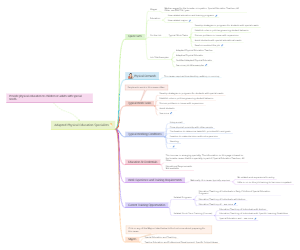
Civil engineering materials - cement concrete, consisting of ① cementitious materials (cement, admixtures), ② fine aggregate, ③ coarse aggregate, ④ water and ⑤ admixtures if necessary. It is mixed evenly and formed densely , after the cementitious material is solidified and hardened, it is cemented together to form an artificial stone with a certain strength and durability.
Edited at 2023-07-27 12:21:18This is a mind map about bacteria, and its main contents include: overview, morphology, types, structure, reproduction, distribution, application, and expansion. The summary is comprehensive and meticulous, suitable as review materials.
This is a mind map about plant asexual reproduction, and its main contents include: concept, spore reproduction, vegetative reproduction, tissue culture, and buds. The summary is comprehensive and meticulous, suitable as review materials.
This is a mind map about the reproductive development of animals, and its main contents include: insects, frogs, birds, sexual reproduction, and asexual reproduction. The summary is comprehensive and meticulous, suitable as review materials.
This is a mind map about bacteria, and its main contents include: overview, morphology, types, structure, reproduction, distribution, application, and expansion. The summary is comprehensive and meticulous, suitable as review materials.
This is a mind map about plant asexual reproduction, and its main contents include: concept, spore reproduction, vegetative reproduction, tissue culture, and buds. The summary is comprehensive and meticulous, suitable as review materials.
This is a mind map about the reproductive development of animals, and its main contents include: insects, frogs, birds, sexual reproduction, and asexual reproduction. The summary is comprehensive and meticulous, suitable as review materials.
BS
concrete
It consists of ① cementing materials (cement, admixtures), ② fine aggregate, ③ coarse aggregate, ④ water and ⑤ admixtures if necessary. It is mixed evenly and formed densely. After the cementing materials are solidified and hardened, , cemented together to form artificial stone with a certain strength and durability.
Ordinary concrete
It is composed of cement, sand, gravel and water, which is evenly mixed, densely formed, and hardened to form an artificial stone with a certain strength and durability. Also known as cement concrete, or simply "concrete".
Classification of concrete
According to cementing material
Cement concrete, asphalt concrete, polymer concrete, polymer impregnated concrete, etc.
According to the type of mineral admixtures used
Fly ash concrete, silica fume concrete, ground slag concrete, fiber concrete, steel fiber concrete, etc.
According to performance and usage
Structural concrete, thermal insulation concrete, decorative concrete, large volume concrete, hydraulic concrete, marine concrete, road concrete, waterproof concrete, heat-resistant concrete, acid-resistant concrete, radiation-proof concrete, etc.
According to production and construction technology
Ready-mixed concrete, on-site mixed concrete, commercial concrete, pumped concrete, sprayed concrete, roller compacted concrete, etc.
According to reinforcement method
Plain concrete, reinforced concrete, steel mesh concrete, fiber concrete, prestressed concrete, etc.
According to apparent density
Concrete partition walls are suitable for light concrete pouring
According to the workability of the mixture
Plastic concrete (slump 10~90mm) Fluid concrete (slump 100~150mm) High fluidity concrete (slump ≥160mm) Dry hard concrete (slump <10mm)
According to intensity
Ordinary concrete
<C60
high strength concrete
C60~C100
ultra high strength concrete
≥C100
Characteristics of concrete
advantage
①Raw materials are abundant and cost is low; ②It has good adaptability and the concrete mixture has good plasticity; ③ Bonds well with steel bars and generally does not corrode steel bars; ④High compressive strength and good durability; ⑤Convenient construction.
shortcoming
① Self-heavy weight (apparent density is about 2400kg/m3);
② It is a brittle material with low tensile strength (about 1/10 to 1/20 of the compressive strength) and poor deformation resistance;
③High thermal conductivity; ④Slow hardening;
⑤The production cycle is long and the quality of the construction process is difficult to control.
concrete structure
Cement water → cement slurry sand → cement mortar + gravel → concrete mixture → hardened concrete.
Cement stone: about 25%; Sand and gravel: more than 70%; Porosity and free water: 1% ~ 5%.
The role of constituent materials
Components of cement concrete
cement
The main factors that should be considered when choosing cement are the uses of concrete;
uses of concrete;
Environmental conditions for concrete
Design strength grade of concrete
concrete construction conditions
Based on the above factors, →appropriately select the type and strength grade of cement.
Concrete mixing and curing water
According to different water sources, concrete mixing water and curing water are divided into: drinking water, surface water, underground water, recycled water, concrete enterprise equipment washing water and sea water, etc.
When conducting water sample testing, the tested water sample should be compared with the drinking water sample for the following comparative tests:
Cement setting time comparison test: the difference in initial setting time and final setting time should not be greater than 30 minutes.
Cement mortar strength comparison test: 3d and 28d strength is not less than 90% of the strength of cement mortar prepared with drinking water.
Fine aggregate and coarse aggregate
definition
fine aggregate
A general term for rock particles with a particle size ≤4.75mm.
Coarse aggregate
A general term for rock particles with a particle size ≥4.75mm.
Classification
Natural sand: naturally generated, artificially mined and screened rock particles with a particle size less than 4.75mm, but does not include soft, weathered rock particles. (river sand, mountain sand, lake sand, desalinated sea sand, etc.)
Machine-made sand: rock particles with a particle size less than 4.75mm, which are made by mechanical crushing and screening after soil removal, but do not include soft and weathered particles. (Vulcan dust artificial sand)
Pebbles: rock particles with a particle size greater than 4.75mm formed by natural weathering, water transport, sorting, and accumulation.
Crushed stone: It is made of natural rocks, pebbles or mine waste rocks through mechanical crushing and screening, with a particle size greater than 4.75mm.
Fine aggregate and coarse aggregate 1-6