MindMap Gallery Clip overview mind map
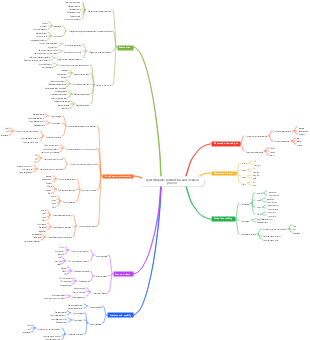
This is a mind map about the overview of editing, the history of editing, the necessity of editing, the meaning, tasks, and functions of editing, etc. Hope this helps!
Edited at 2023-11-07 08:56:39This is a mind map about bacteria, and its main contents include: overview, morphology, types, structure, reproduction, distribution, application, and expansion. The summary is comprehensive and meticulous, suitable as review materials.

This is a mind map about plant asexual reproduction, and its main contents include: concept, spore reproduction, vegetative reproduction, tissue culture, and buds. The summary is comprehensive and meticulous, suitable as review materials.
This is a mind map about the reproductive development of animals, and its main contents include: insects, frogs, birds, sexual reproduction, and asexual reproduction. The summary is comprehensive and meticulous, suitable as review materials.
This is a mind map about bacteria, and its main contents include: overview, morphology, types, structure, reproduction, distribution, application, and expansion. The summary is comprehensive and meticulous, suitable as review materials.
This is a mind map about plant asexual reproduction, and its main contents include: concept, spore reproduction, vegetative reproduction, tissue culture, and buds. The summary is comprehensive and meticulous, suitable as review materials.
This is a mind map about the reproductive development of animals, and its main contents include: insects, frogs, birds, sexual reproduction, and asexual reproduction. The summary is comprehensive and meticulous, suitable as review materials.
Clip overview
The history of editing
Editing is divided into: original stage, initial stage, action editing stage, digital editing stage
In the early days of film, it was a single shot without editing.
Méliès, French film director, the world's first film artist
The Breton School pioneered the distinction between scenes
Edwin Bout blazed the trail for American narrative cinema with his imaginative filmmaking, blending different time and space through editing.
David Griffith, one of the most important directors in the founding period of American cinema and the father of American cinema, perfected montage in practice.
Soviet montage school, representative figures: Eisenstein, Pudovkin, Kuleshov
Editing must be artistic creation
The need for editing
1. Uncertainty of the meaning of a single shot
2. Different lens assembly sequences may have different meanings.
3. Change time and space
4. Create style features
The meaning, tasks and functions of editing
Meaning: cut - cut, edit - reorder, recombine
1. A process of production and an important part of creation
2. Film and television art creation methods and screen assembly skills
3. People who work as editors
EDITThree levels
Lens assembly
paragraph clipping
Overall structure of the clip
Task
1. Selection and use of materials
1. Expression of meaning: the content of the shot, the scene of the shot, and the angle issue
2. Visibility
(1) Action factors: characters, scene movements, camera movements, lens assembly movements
(2) Modeling elements: character modeling, environment modeling, picture modeling (light, color, composition, axis, etc.)
2. Lens cropping
1. Select the available parts of the shot
2. Determine the length of the lens, especially the still lens
Elements that determine shot length
(1) Content - basic length
(2) Scenery - visual perception
(3) Light color - visual perception
(4) Emotion-emotional perception
(5) Plot - familiar or unfamiliar
(6) Influence of sound elements
3. Adjust structure and master structure
Editing process
TV editing workflow and requirements
ten steps
three phases
Preparation Phase
Modify script or shooting outline
Familiar with the material
Keep detailed records of useful shots
1. How was the content specified in the shooting outline completed?
2. Is the film completed according to the requirements of the column?
3. Are there any major technical problems?
4. Do you need a data tape?
5. Is it necessary to take additional shots?
Prepare equipment
Strange machines are particularly important
Coordinate with relevant personnel
Director, Editor, Producer, Copywriter, Stuntman
Organize materials
editing stage
paper clipping
1. Arrange the dialogue paragraphs according to narrative logic and structure them.
2. Consider using interviews or actions as the main material of the structure.
3. When to insert interviews? What is the interview about? Who speaks?
4. Determine the main axis of event development
rough cut
Fine cut
Inspection phase
1. Check the expression of meaning
1. Whether the creative intention is realized
2. Is the meaning expressed clearly, smoothly and coherently?
3. Authenticity and logic
4. Whether the structural proportions of each part are well-proportioned
2. Check the screen
1. Whether the video signal meets the broadcast requirements
2. Is there any magnetic break during editing?
3. Is there any frame clipping or frame skipping?
4. Is the vision smooth?
5. Is the editing point reasonable?
6. Is the scene transition appropriate?
7. Whether the hue and tone match
3. Check the sound
1. Whether the audio signal meets technical standards
2. Is there international audio?
3. Is the sound mixing ratio appropriate?
4. Is the sound and picture coordinated?
Screen cutting point
Motion editing: Select the correct editing point based on the subject movement and lens movement within the picture.
Classification of motion: When the subject moves and the camera is fixed, it is called internal motion of the lens; When the subject is relatively stationary and the camera moves, it is called external lens motion; The movement of the subject and the camera together is called comprehensive movement
relatively still/basically still
Classification of motion editing points: 1. Motion editing points inside the lens; 2. Motion editing points outside the lens; 3. Comprehensive motion editing points