 Wondershare EdrawMind
MindMap Gallery Cognitive Awakening Mind Map
- 56
Cognitive Awakening Mind Map
This is a mind map about cognitive awakening, cognitive awakening, re-recognizing ourselves, understanding our instincts, building patience, and changing step by step!
Edited at 2023-11-06 22:01:14
- bacteria
This is a mind map about bacteria, and its main contents include: overview, morphology, types, structure, reproduction, distribution, application, and expansion. The summary is comprehensive and meticulous, suitable as review materials.
- Plant asexual reproduction
This is a mind map about plant asexual reproduction, and its main contents include: concept, spore reproduction, vegetative reproduction, tissue culture, and buds. The summary is comprehensive and meticulous, suitable as review materials.
- Reproductive development of animals
This is a mind map about the reproductive development of animals, and its main contents include: insects, frogs, birds, sexual reproduction, and asexual reproduction. The summary is comprehensive and meticulous, suitable as review materials.
Cognitive Awakening Mind Map
- bacteria
This is a mind map about bacteria, and its main contents include: overview, morphology, types, structure, reproduction, distribution, application, and expansion. The summary is comprehensive and meticulous, suitable as review materials.
- Plant asexual reproduction
This is a mind map about plant asexual reproduction, and its main contents include: concept, spore reproduction, vegetative reproduction, tissue culture, and buds. The summary is comprehensive and meticulous, suitable as review materials.
- Reproductive development of animals
This is a mind map about the reproductive development of animals, and its main contents include: insects, frogs, birds, sexual reproduction, and asexual reproduction. The summary is comprehensive and meticulous, suitable as review materials.
- Recommended to you
- Outline
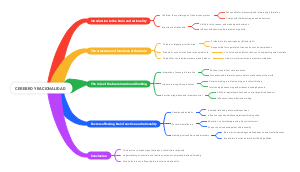

cognitive awakening
brain
1. Get to know yourself again
triple brain
reason
mood
instinct
Seeking refuge, eager for success
Growth is the process of overcoming nature
Most of the time when we think we are thinking, we are actually rationalizing our actions and desires.
Changing habits is not an exercise of self-control but of knowledge
2. Sources of anxiety
Classification
1. Completion anxiety
2. Choice anxiety
3. Positioning anxiety
4. Environmental anxiety
5. Difficulty anxiety
Nature
Want to do a lot of things, but also want to see results immediately
Human pain is essentially anger at one's own incompetence!
3. He who has patience wins the world
It is human nature to be impatient
Cognitive Laws: The Patience Multiplier
Compound interest curve: growth is very slow in the early stage, and grows rapidly when it reaches the turning point
Expand your capabilities at the edge of your comfort zone
Comfort zone - stretch to go - difficult to go
Growth weight comparison:
Amount of change > Amount of action > Amount of thinking > Amount of learning
Learning has a plateau period:
Rise-Platform-Rise-Platform
Patience is not the result of perseverance, but the result of long-term perspective
How to have patience
Face your nature, let go of your psychological baggage, and accept yourself calmly
Delay gratification in the face of temptation and turn confrontation into communication
In the face of difficulties, take the initiative to change perspectives and give meaning to actions
subconscious
Section 1: Life is a race to eliminate ambiguity
Learn knowledge and eliminate cognitive ambiguity
The way to improve your thinking power is to identify the core difficulties and insights and focus on them
Break down worries and eliminate emotional ambiguity
It is easier to suffer than to solve problems, and to enjoy misfortune is easier than to enjoy happiness.
Once a specific event becomes vague, its boundaries will expand infinitely, and small things that were not difficult in the first place will become difficult to solve in the vague subconscious.
The only way to not be troubled by it is to face it, see it clearly, dismantle it, resolve it, and not give it a chance to enter the subconscious or become blurred; even if it has entered the subconscious, you must find a way Dig it out. So, when you feel an unexplainable and uncomfortable feeling in your heart, sit down quickly and ask yourself questions.
The real reason for lack of action is that choices are ambiguous, and humans will unconsciously avoid uncertainty when faced with it.
When we don’t have clear enough instructions or goals, it’s easy to choose pleasure and give up on options that should be persisted but are more brain-burning.
We need to refine and concrete our goals and processes, and establish a one-way channel among many possibilities, so that we are always in a state of "no choice."
Section 2: "Rely on feeling" - detect the messages sent by the subconscious mind.
Choose the points that touch you most based on your feelings, and then practice and change them as much as possible. In this way, reading will not only be more rewarding, but also less anxiety-provoking.
Find life goals based on feelings
How to capture sensuality
most
total
Body
dream
unconscious first reaction
Metacognition
Section 1: God’s Perspective
How to acquire metacognitive skills
First, tools to improve metacognitive abilities need to be obtained from the "past", including learning the wisdom of predecessors and reflecting on one's own experiences.
Secondly, one’s own experience is a unique wealth.
Third, if learning and reflection are static, how can the current and dynamic self actively use metacognition? It's very simple, activate your "soulmate"!
Fourth, there are many ways to improve metacognitive ability, but the most unexpected one is the following one - meditation.
Section 2 Self-control: We are born to be the helmsmen of thoughts
Metacognitive ability can be redefined as: the ability to self-examine, proactively control, and prevent being influenced by the subconscious mind.
Whenever we encounter a situation that requires a choice, if we can stop and think for a few seconds, we may activate our rational brain, use metacognition to examine our current thinking, and then make a different choice.
Be sure to spend more "meta time" on selecting nodes.
Metatime is usually distributed at "selected nodes", such as the beginning or end of an event, a phase, or a day. Making good use of this time will greatly optimize the quality of subsequent time.
Examine your first reaction at the point of choice and generate a clear and unambiguous claim.
An outstanding manifestation of strong metacognitive ability is zero tolerance for ambiguity.
To sum up, there are three ways to become a thought pilot.
·Remain aware of the current time, examine your first reaction, and formulate a clear opinion;
·Remain awake and clear about what to do next according to the schedule throughout the day;
·Keep thinking about long-term goals and figure out the long-term meaning and intrinsic motivation.
That's what people with strong metacognitive abilities are like: Whether it's their immediate attention, their schedule for the day, or their long-term life goals, they strive to make sense, self-examine, and take active control rather than just go with the flow.
Chapter 7 Emotional Power ——Emotion is the wisdom of looking at problems from multiple perspectives
Section 1 Mental Bandwidth: Only abundance can relieve worries
Scarcity mentality makes people stupid
Any event that creates stress will occupy our mental bandwidth
As long as our attention is attracted by something huge, we are likely to enter a state of scarcity, reduce our mental bandwidth, and behave unwisely.
Eager for success and full of anxiety
When a person faces many tasks at the same time, his mental bandwidth will be reduced, and he will lose mobility and self-control.
Although modern life has alleviated the pressure of survival, it has also brought pressure on self-control. Resisting temptation and desire all consumes our mental bandwidth
Only a rich mind can relieve worries
The first post is to stay aware of the environment and choose wisely.
Second post, stay goal aware, less is more.
The third post is to maintain awareness of desires and review decisions.
When there are a lot of tasks and thoughts in our minds, it is often when our ability to act is at its weakest.
The real master of mobility is not the person who has the ability to do many things at the same time, but the person who finds ways to avoid doing many things at the same time.
The fourth post is to stay emotionally aware and make careful decisions.
The fifth post is to maintain idle awareness and set limits on yourself.
Section 2 Single Perspective: Your bad mood stems from a single perspective
Chapter 6 Mobility ——The world without action is just a concept
Section 1 Clarity: A concept to reconstruct your ability to act
The use of attention also follows this rule, and the initial choice will affect the direction of automatic reinforcement of behavior.
Whether the attention-enhancing loop is positive or negative depends largely on your initial choices.
In the initial stage, force yourself to do important things first. Once you enter the positive reinforcement loop, you will have strong power of action - this is the secret to enhancing self-control and improving action power.
Clarity, that is, the ability to refine and concrete goals - action can only be reconstructed with the support of clarity.
The purpose of planning is not to make yourself strictly follow the plan, but just to make yourself aware of it.
When you are stuck in a state of laziness, laziness, and emptiness, it is often because your brain is in a fuzzy state.
To a certain extent, having something you love is much more important than the ability to act.
Section 2 "Fool": The world will reward those "fools" who do not care about gains and losses.
People who want to see results first before taking action often fail to see results.
You need to focus and continue to act until you break through the threshold.
If you think what others are saying is well-founded, but you can't refute it for the time being, and you happen to want to do it very much, then believe what they say is right, and then act decisively.
Section 3 Action: How to solve the problem of "I know everything, but I just don't do it"
Treat cognition as a skill. When you know or figure out a truth, don't be too happy too early. Think about it and do a lot of practice later, so that you won't be impetuous.
Learning without real change is ineffective learning.
Both reality and theory tell us: it is better to change a little than to know a hundred things. Real growth does not lie in how much you understand, but in how much you change.
Chapter 5 Learning Ability ——Learning is not just about working hard
Section 1 Matching: The edge of the comfort zone, a methodology suitable for everything
We often cannot grasp things that are too far away from us, whether they are painful or enjoyable.
Making choices is an extremely energy-consuming thing
The more phenomena that can be explained, the more fundamental the concept becomes.
No matter what you do, no matter how well you are currently doing, as long as you keep practicing at the edge of your comfort zone, your comfort zone will continue to expand, your stretching zone will continue to expand, and the original difficult zone will gradually change. It becomes a stretch zone or even a comfort zone, so growth is inevitable.
Quick success is impossible
Section 2 Depth: Deep learning, one of the few good ways out in life
How to deep learn
(1) Acquire high-quality knowledge;
(2) Deeply seam new knowledge;
(3) Output the results to teach.
The first is to obtain and delve into first-hand knowledge as much as possible.
The second is to write down what you have learned in your own words as much as possible.
The third is to reflect on life.
Benefits of deep learning
In addition to making us less impetuous and sharpening our rationality, deep learning can also bring many benefits, such as the improvement of cross-border capabilities.
Deep learning can also make people more inspired.
At the same time, deep learning can also allow us to see more connections between different things and generate insights.
Focus on deep learning while remaining open to shallow learning.
Section 3 Relevance: The Master’s “Black Box”
The vast majority of people are used to looking at things in isolation and like to spend a lot of time collecting and possessing information; while another group of pioneers prefer to fiddle with the connections between information, thus becoming smart without knowing it.
The acquisition of knowledge does not depend on how much, but on whether it is relevant to oneself, and how sufficient this correlation is.
There is a more important hidden condition that cannot be ignored: you need a clear goal or a strong need.
How to obtain related abilities
have goal
Enter more
stay curious
Say something often
Section 4 System: Establishing a personal cognitive system is actually very simple
The essence of a system is to use a unique perspective to integrate some scattered and independent knowledge, concepts or opinions into methods and techniques for dealing with the world.
The sub-themes break down each company's cognitive system, only take the points or chunks that touch them the most, and then splice them into their own cognitive network.
Three aspects of effectively relating new knowledge
One is to reinterpret new knowledge in your own language, which will prompt your original knowledge system to respond to the new knowledge.
The second is to be able to successfully extract knowledge when needed. Knowledge that cannot be extracted is pseudo-touch.
The third is to be able to practice or use this knowledge frequently in life, because practice is the ultimate way to generate strong connections.
Section 6 Feedback: It’s time to tell you what real learning is
Whether there is timely and continuous positive feedback is the key to producing differences in learning effects.
But their super strong desires and emotional strength are very valuable mobility resources. If they can feel the joy of learning, they will also show strong mobility and become addicted to learning as much as they are addicted to entertainment.
Therefore, the scientific learning strategy is to produce works, obtain feedback, and drive the instinctive and emotional brains to "play and play" instead of blindly persisting and letting the rational brain work hard to "learn and learn".
Only with a sense of work can you have a future
First of all, sharing is not about sharing half-finished products at will, but doing your best to polish the work into the best possible look within your current capabilities.
Second, develop a sharing strategy to show to those who are less capable than you
Finally, treat the blow calmly and objectively.
Real learning and growth is not about "hard work, hard work, hard work", but "feedback, feedback, feedback again"
Section 7 Rest: You didn’t succeed, maybe because you worked too hard
They never over-exerted themselves, and whenever they felt low on energy, they would stop and take the initiative to rest, which in turn allowed the water level in their energy buckets to quickly rise.
A more scientific model should be: extreme concentration, active rest, and so on.
After all, overcoming difficulties and resisting temptations require willpower.
Concentration
Section 1: One trick to boost your concentration
The body is action, the soul is feeling
The causes and dangers of distraction
One is that they feel that the present moment is too boring, so they pursue more interesting things;
The second is that the current moment is too painful, so they pursue more comfortable things. Because the body is trapped in reality, it has no choice but to let its thoughts run wild.
Physical sensation is always the best medium to enter the present state, and feeling the process of things disappearing is a good concentration training. It reminds us that the key to the unity of body and mind is not only to focus on the present moment, but also to enjoy the present moment, and this kind of enjoyment will definitely make us more calm and less panicked.
Section 2 Learning to focus: Deep immersion is the safe hilt of the double-edged sword of evolution
deep immersion approach
First, have clearly defined goals.
Second, be extremely focused when practicing.
Third, we can obtain effective feedback
Fourth, always practice in the stretching zone.