 Wondershare EdrawMind
MindMap Gallery Electromechanical transmission control mind map
- 53
Electromechanical transmission control mind map
This is a mind map about electromechanical transmission control, including the working principles and characteristics of DC motors, the working principles and characteristics of AC motors, etc.
Edited at 2023-11-06 11:50:07
- bacteria
This is a mind map about bacteria, and its main contents include: overview, morphology, types, structure, reproduction, distribution, application, and expansion. The summary is comprehensive and meticulous, suitable as review materials.
- Plant asexual reproduction
This is a mind map about plant asexual reproduction, and its main contents include: concept, spore reproduction, vegetative reproduction, tissue culture, and buds. The summary is comprehensive and meticulous, suitable as review materials.
- Reproductive development of animals
This is a mind map about the reproductive development of animals, and its main contents include: insects, frogs, birds, sexual reproduction, and asexual reproduction. The summary is comprehensive and meticulous, suitable as review materials.
Electromechanical transmission control mind map
- bacteria
This is a mind map about bacteria, and its main contents include: overview, morphology, types, structure, reproduction, distribution, application, and expansion. The summary is comprehensive and meticulous, suitable as review materials.
- Plant asexual reproduction
This is a mind map about plant asexual reproduction, and its main contents include: concept, spore reproduction, vegetative reproduction, tissue culture, and buds. The summary is comprehensive and meticulous, suitable as review materials.
- Reproductive development of animals
This is a mind map about the reproductive development of animals, and its main contents include: insects, frogs, birds, sexual reproduction, and asexual reproduction. The summary is comprehensive and meticulous, suitable as review materials.
- Recommended to you
- Outline
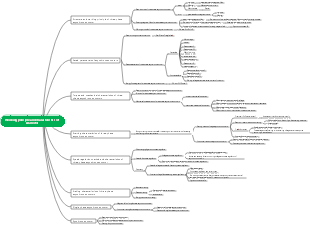
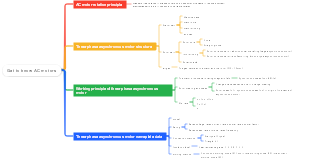

Electromechanical transmission control
Chapter 1 Overview
Composition of electromechanical transmission system
Electrical control system
Electric drive or electromechanical transmission
mechanical moving parts
Electromechanical transmission
Definition of electromechanical transmission: Electromechanical transmission, also known as electric transmission or electric drive, refers to the general name of the system that uses an electric motor as the prime mover to drive production machinery.
The purpose of electromechanical transmission: to convert electrical energy into mechanical energy, realize the start, stop and speed adjustment of production machinery, complete the requirements of various production processes, and ensure the normal progress of the production process.
The tasks of electromechanical transmission
Convert electrical energy into mechanical energy
Realize the start, stop and speed adjustment of production machinery
Complete the requirements of various production processes
Ensure the normal progress of the production process
Development of electromechanical transmission
Group dragging: one motor drags one vertical axis and multiple production machines
Single motor drag: one motor drives one production machine
Multi-motor drag: a production machine is driven by different motors
Chapter 2 Dynamic Basis of Electromechanical Transmission System
Electromechanical transmission equation of motion
Calculation formula TM-TL=Td
Determine the direction of TM, TL and n
The direction of the motor speed n is specified as
If TM and n are turning in the same direction, it is ; if they are turning in the opposite direction, it is -
TL and n turn in the same direction, which is -; if they turn in the opposite direction,
TM is , drag torque; TM is -, braking torque
TL is -, drag torque; TL is , braking torque
Category three
TM=TL, Td=0, constant speed, static torque
TM>TL, Td=positive value, acceleration, dynamic torque
TM<TL, Td=negative value, deceleration, dynamic torque
Conditions for stable operation of electromechanical transmission systems
Double meaning:
The system should be able to operate at a constant speed
When the speed of the system changes slightly due to some external interference, it should be ensured that the system can return to its original operating speed after the interference is eliminated.
Necessary and sufficient conditions for stable operation of the system
There is an intersection between the mechanical characteristic curve n=f (TM) of the electric motor and the characteristic curve n=f (TL) of the production (load) machinery.
When speed n > equilibrium point, TM<TL, When speed n < equilibrium point, TM>TL
Analyze whether a certain point is a stable equilibrium point?
When n is large, is TM<TL?
n hours, is TM>TL?
If all are satisfied, then this point is a stable equilibrium point
Chapter 3 Working Principle and Characteristics of DC Motor
Classification of motors
DC motor: The operating voltage or output voltage is DC
DC motor: converts electrical energy into mechanical energy
DC generator: converts mechanical energy into electrical energy
AC motor: The working voltage is AC
Composition of DC motor
Stator part
It is mainly composed of two parts: the stator core and the field winding wound on it.
Function: Generate the main magnetic field and mechanically support the motor
Rotor part
It is mainly composed of two parts: armature core and armature winding.
Function: Generate induced electric potential or mechanical torque to achieve energy conversion
commutator
Brush device
Basic working principle of DC motor
Main magnetic pole: DC voltage is applied to the excitation winding, and excitation current passes through it, causing the stator core to generate a fixed magnetic field. That is, the main function of the stator is to generate the main magnetic field.
Armature winding: rotates in a fixed magnetic field. Its main function is to generate induced electromotive force or mechanical torque to achieve energy conversion.
Commutator: For generators, its function is to convert the AC potential induced in the armature winding into DC potential between the brushes; For an electric motor, its function is to convert the external DC current into the alternating current of the armature winding to produce a constant electromagnetic torque.
The direction of the electromotive force is opposite to the direction of the current or applied voltage. Counter electromotive force The direction of electromotive force is the same as the direction of current or applied voltage. power electromotive force
Electromotive force, electromagnetic torque and armature current
DC motor
DC motor: separately excited, shunt excited, series excited, compound excited
Mechanical properties
Mechanical Properties Hardness: A measure of the straightness of mechanical properties. That is, the ratio of the torque change dT to the resulting rotational speed change dn.
Based on the hardness of the mechanical properties, the mechanical properties of the motor can be divided into three categories?
Absolutely hard features
Hard properties
Soft features
Mechanical Characteristics of DC Motors
Inherent mechanical characteristics: n=f (T) under rated conditions (rated voltage and rated flux) and without any external resistance in the armature circuit
Man-made mechanical characteristics (speed regulation characteristics) (common speed regulation methods for DC motors)
Change the external series resistance Rad of the armature circuit (n remains unchanged, the slope k becomes larger, and the mechanical properties dT/dn become softer. The larger Rad is, the softer the properties are)
Change the armature voltage U (U decreases, n decreases, the speed drop remains unchanged (a set of parallel lines) the characteristic hardness remains unchanged, and the artificial characteristic curves with different values are all below the inherent characteristic curve)
Change the main magnetic flux of the motor
(As the magnetic flux decreases, both the ideal no-load speed n0 and the speed drop increase, and the characteristic hardness becomes softer. The electromagnetic torque T decreases, and each artificial characteristic curve intersects the inherent characteristic curve; under rated operating conditions , the motor always works in the area to the left of the intersection point)
Launch features
When the motor is directly connected to the power grid and the rated voltage is applied, the R of the motor is very small before starting, and the starting current will be very large, producing dangerous sparks. Therefore, it is necessary to try to limit the armature current during startup. The instantaneous current must not be greater than 2 times the rated current.
How to limit the starting current of a DC motor
step down start
Start by connecting an external resistor in series in the armature circuit
Speed regulation characteristics
speed regulation
The change in rotational speed is caused by artificial changes in the resistance of the armature circuit.
Method of speed regulation of DC motor
Change the external series resistance Rad of the armature circuit
The mechanical properties are soft. The greater the resistance, the softer the properties and the lower the stability; The speed adjustment range is not large when no load or light load; It is difficult to achieve infinite speed regulation; A large amount of electrical energy is consumed on the speed regulating resistor;
Only used in transmission systems such as cranes and hoists that operate at low speeds for a short time.
Change the armature voltage U
(1) When the power supply voltage changes continuously, the rotation speed can be adjusted smoothly and steplessly. Generally, it can only be adjusted below the rated rotation speed.
(2) The speed regulation characteristics and the inherent characteristics are parallel to each other, the mechanical properties and hardness remain unchanged, the speed regulation stability is high, and the speed regulation range is large.
(3) During speed regulation, since the armature current has nothing to do with the voltage U, and Φ=ΦN, the motor torque T=Kt ΦN IN remains unchanged, which is a constant-rotation speed regulation and is suitable for speed regulation of constant torque loads. ;
(4) The motor can be started by adjusting the armature voltage without starting equipment.
Change the main magnetic flux of the motor
The speed regulation range of weak magnetic field speed regulation is not large.
It is often used in conjunction with voltage and speed regulation to expand the speed regulation range. That is, below the rated speed, use voltage reduction to regulate the speed; above the rated speed, use weak magnetic speed regulation.
Chapter 4 Working Principles and Characteristics of AC Motors
Structure and working principle of three-phase asynchronous motor
Structure: Mainly composed of stator and rotor, there is a certain air gap between the stator and rotor
stator
Composed of iron core, winding, machine base, end cover, bearings, etc.
Three-phase winding: three parts are symmetrically distributed on the stator core, AX, BY, CZ, where A, B, and C are called the head ends, and X, Y, and Z are called the ends. The three-phase winding is connected to the three-phase AC power supply, and the current in the three-phase winding generates a rotating magnetic field in the stator core.
rotor
The rotor consists of a rotating shaft, an iron core and a winding
The role of the rotor: generate rotor current and generate electromagnetic torque
Rotor windings can be divided into: squirrel cage type, wire wound type
Rotating magnetic field of three-phase asynchronous motor
The synthetic magnetic field generated by the three-phase current not only changes with time, but also rotates in space, so it is called rotating magnetic field.
In the stator winding, the positive direction of current flowing is defined as from the beginning of each winding to its end.
When you want to change the direction of rotation of the rotating magnetic field (that is, change the direction of rotation of the motor), you only need to swap any two of the three wires connecting the stator winding to the power supply.
Number of pole pairs and rotation speed of rotating magnetic field
When there are p pairs of magnetic poles, the synchronous speed of the rotating magnetic field n0=60f/p Slip rate s=n0-n/n0.
Stator winding wire end connection method
If the line voltage of the power supply the motor is connected to is equal to the rated phase voltage of the motor, its windings should be connected in delta
If the line voltage of the power supply is 3 times the rated phase voltage of the motor, its windings should be connected in star
Expression of rated efficiency of three-phase asynchronous motor
Torque and mechanical characteristics of three-phase asynchronous motors
Torque expression of three-phase asynchronous motor
Mechanical characteristics of three-phase asynchronous motors
inherent mechanical properties
Four special points of the inherent mechanical characteristic curve
Ideal no-load operating point (T=0, n=n0, S=0) At this time, the motor speed is the ideal no-load speed n0
Rated operating point (T=TN, n=nN, S=SN) At this time, the rated torque of the motor Rated slip
Start working point (T=Tst, n=0, S=1) At this time, the motor starting torque
Critical operating point (T=Tmax, n=nm, S=Sm) At this time, the critical torque of the motor critical slip
man-made mechanical properties
Reduce motor supply voltage
The ideal no-load speed n0 and critical slip Sm remain unchanged
The maximum torque Tmax is greatly reduced
Mechanical properties soften
Under the premise that the load torque TL remains unchanged, the slip S increases, the current I increases, and the temperature rises, causing the motor to heat up or even burn out.
Stator circuit access resistance or reactance
Change stator power frequency
The ideal no-load speed n0 decreases and the critical slip Sm increases
The starting torque Tst increases and the maximum torque Tmax remains unchanged.
Rotor circuit series resistance (wound motor)
Tmax remains unchanged, Sm changes
Mechanical properties soften
Starting characteristics of three-phase asynchronous motor
Main requirements for motor starting
There is sufficient starting torque
On the premise of meeting the starting torque requirements, the smaller the starting current, the better.
It is required to start smoothly and accelerate smoothly during startup to reduce the impact on production machinery.
The starting equipment is safe and reliable, and strives to be simple in structure and easy to operate.
The smaller the power loss during startup, the better
Starting method of squirrel cage asynchronous motor
Direct start (full voltage start): large starting current, small starting torque
Resistor or reactor reduced voltage starting: 1. Only suitable for no-load or light-load starting situations 2. The resistor consumes a lot of energy and is not suitable for motors that are frequently started.
Y-△ step-down start (380v)
Autotransformer step-down start: adjustable voltage, small current
Yanbian triangle step-down starting: both starting current and starting torque are large
How to start a wire-wound asynchronous motor
Since the resistor can be connected in series in the rotor circuit, it has larger starting torque and smaller starting current, and has better starting characteristics.
Step-by-step removal of starting resistor method: small current, large starting torque, large loss on the resistor
Frequency sensitive rheostat starting method
Speed regulation characteristics of three-phase asynchronous motor (n=60f*(1-S)/p)
Voltage and speed regulation
Rotor circuit series resistance speed regulation
Change pole logarithm p speed control
Frequency
Braking characteristics of three-phase asynchronous motors
The speed of the three-phase asynchronous motor is n, and the speed of the stator rotating magnetic field is n1
When n<n1, electric running state
When n>n1, the power generation operating state
When the directions of n and n1 are opposite, the braking state
feedback braking
Feedback braking operation status of a hoisting machinery whose load torque is potential energy torque when lowering heavy objects
During the process of pole-changing speed regulation or frequency conversion speed regulation of the motor, the number of pole pairs suddenly increases or the power supply frequency suddenly decreases, causing the synchronous speed n0 to suddenly decrease. The feedback braking operation state
Reverse braking
Power reverse connection braking
Reverse pull and reverse braking (lower heavy objects)
Energy consumption braking
Chapter 6 Relay-Contactor Control System
Switch circuit logic control
control target
Solenoid valve opening and closing
Starting or stopping the motor
Control requirements
Sequence, interlock function
Automatic cycle according to stroke control principle
Protection (overcurrent, overheating, safety)
Automatic cycle according to time control principle
Commonly used control appliances and executive appliances
Electrical appliance classification
Knife switch Q
Rely on manual or external force to disconnect or connect the power supply
Button SB
Rely on manual or external force to disconnect or connect the power supply
Contactor KM
AC contactor (thick wire diameter, few turns, iron core with short-circuit ring)
Composition: contacts, arc extinguishing device, iron core (magnetic circuit), coil
DC contactor (large number of coil turns)
Graphical symbols of contactors: coil wire, normally open contact (with main contact), normally closed contact (with main contact), auxiliary contact
fuse FU
Protection circuit, series circuit
relay
Thermal relay FR
Overload protection
Current relay KA
Voltage relay KV
Intermediate relay K
Commonly used basic circuits for relay-contactor control
circuit diagram
Wiring diagram
Schematic diagram
Chapter 9 DC drive control system
Production machinery requirements for technical indicators of automatic speed regulation systems
static indicator
Static difference (speed stability index) S
The harder the mechanical properties, the smaller the static difference, and the higher the relative stability of the rotational speed.
Speed range D
Smoothness of speed regulation
Measured by the speed difference between two adjacent speed control stages
Stepped speed regulation and stepless speed regulation Within a certain speed regulation range, the more stable operating speed levels can be obtained, the higher the smoothness of speed regulation. If the number of levels approaches infinity, it means that the speed is continuously adjustable, which is called stepless speed regulation.
Speed regulation characteristics of electric motors
Dynamic indicators
Maximum overshoot M
Transition process time T
Number of oscillations