 Wondershare EdrawMind
MindMap Gallery Huawei data approach
- 28
Huawei data approach
Huawei Data Tao learning and compilation includes data governance and digital transformation, corporate policy and framework collaboration, etc., which can provide an overall understanding and reference for their understanding of data.
Edited at 2023-11-05 09:03:37
- bacteria
This is a mind map about bacteria, and its main contents include: overview, morphology, types, structure, reproduction, distribution, application, and expansion. The summary is comprehensive and meticulous, suitable as review materials.
- Plant asexual reproduction
This is a mind map about plant asexual reproduction, and its main contents include: concept, spore reproduction, vegetative reproduction, tissue culture, and buds. The summary is comprehensive and meticulous, suitable as review materials.
- Reproductive development of animals
This is a mind map about the reproductive development of animals, and its main contents include: insects, frogs, birds, sexual reproduction, and asexual reproduction. The summary is comprehensive and meticulous, suitable as review materials.
Huawei data approach
- bacteria
This is a mind map about bacteria, and its main contents include: overview, morphology, types, structure, reproduction, distribution, application, and expansion. The summary is comprehensive and meticulous, suitable as review materials.
- Plant asexual reproduction
This is a mind map about plant asexual reproduction, and its main contents include: concept, spore reproduction, vegetative reproduction, tissue culture, and buds. The summary is comprehensive and meticulous, suitable as review materials.
- Reproductive development of animals
This is a mind map about the reproductive development of animals, and its main contents include: insects, frogs, birds, sexual reproduction, and asexual reproduction. The summary is comprehensive and meticulous, suitable as review materials.
- Recommended to you
- Outline
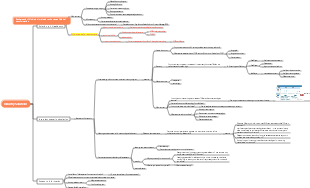
Huawei data approach
The framework of this book
Data governance and digital transformation
challenge
Target
Vision
blueprint
frame
Corporate policy and structure collaboration
Enterprise-level data comprehensive management system
The synergistic relationship between data, change, operations, and IT
Data responsibility management subject in business
Different data management methods and key points
Key tasks
information architecture
data base
data service
key capabilities
full perception
Comprehensive quality improvement
Controllable sharing
future thinking
AI governance
data sovereignty
Data Ecology
Enterprise-level data governance system
Accountability for each data
Management responsibilities must be borne by the corresponding business department
There must be a unique data Owner
Data management overview
in principle
Information Architecture Management Principles
Data generation management principles
Data application management principles
Data accountability and reward and punishment management principles
policy
Information Architecture Management Policy
Managing Information Architecture Roles and Responsibilities
Information architecture construction requirements
Information Architecture Compliance Control
Data source management policy [Data origin is the core concept of governance]
Data source management principles
Data source certification standards
Data Quality Management Policy [Continuous improvement of quality is the core goal of governance]
Data quality management responsibilities and requirements
Business rules and management requirements for data quality management
Engage change, operations and IT
Establish data management processes
position
L1:MBT&IT
L2: Management data
L3: Management Information Architecture
L3: Manage data quality
L3: Management Data Analysis
key role
Information Architecture Engineer
Data governance engineer
Data platform engineer
Data Analyst
data scientist
Work together to complete the delivery and verification of data solutions in management change, management quality and operations
The transformation system and the operation system jointly make data governance decisions
Integrating data governance into IT implementation
Empowering data governance through internal control systems
company level management organization
Appoint data owner and data steward
Number of companiesOwner
Develop a vision and roadmap for the data management system
Spread data management concepts and create a data culture atmosphere
Build and optimize data management system, including organization and appointment, authorization and accountability, etc.
Approval of corporate data management policies and regulations
Adjudicate cross-field data and management disputes and resolve major cross-field data and management issues
Domain Data Owner
Responsible for the construction of data management system
Responsible for information architecture construction
Responsible for data quality management
Responsible for the construction of data base and data services
Responsible for adjudicating data disputes
Data steward
The assistant of the data owner and the executor of specific work
two-wheel organization
Corporate Data Management Department
Number of companiesOwner
Domain Data Owner
Quality and Process IT Management Department
Quality Operations Department/XX Management Department
XX Data Management Department
XX Data Management Department
XX Data Management Department
Cross-domain data joint warfare team
Data Quality Implementation Group
Information Architecture Construction Group
Data Service Promotion Group
Data Analysis Working Group
Data Base Working Group
Metadata Working Group
Data management organization positioning
system builder
Competence Center
Business data partner
cultural advocate
Data working framework
data source
data lake
data subject join
Data consumption
data governance
Data classification management framework
Classification framework [data characteristics]
Descriptive means
Metadata【Meta-data】
Data ownership
External data【External Data】
Internal data【Internal Data】
Storage characteristics
Structured Data【Structured Data】
Basic data【Reference Data】
Master Data【Master Data】
Transactional Data【Transactional Data】
Observational Data【Observational Data】
Rule data [Conditional Data]
Report Data【Report Data】
Unstructured data【Unstructured Data】
Structured data management [unified language]
External data【External Data】
Classification definition
Definition: Data obtained through the public domain
Characteristics: Objective existence, its creation and modification are not affected by the company
Example: country, currency, exchange rate
data governance
Compliance first
Clear responsibilities
efficient flow
Auditable and traceable
controlled approval
Internal data【Internal Data】
Classification definition
Definition: Data generated by operations within an enterprise
Characteristics: generated in the business process of an enterprise or defined in business management regulations, and subject to the operation and marketing of the enterprise
Examples: contracts, projects, organizations
Structured Data【Structured Data】
Classification definition
Definition: It can be stored in a relational database and uses a two-dimensional table structure to express the implemented data.
Features: Can be stored in a relational database; first there is a data structure, and what data is generated?
Examples: country, currency, organization, product, customer
Unstructured data【Unstructured Data】
Classification definition
Definition: Data whose form is relatively unstable and inconvenient to use two-dimensional database logic to express.
Characteristics: Various forms and cannot be stored in relational databases; the amount of data is usually large
Examples: web pages, pictures, videos, audios, XML
data governance
Extract its basic features and content and implement them through metadata
Basic data【Reference Data】
Classification definition
Definition: Use structured language to describe attributes, data used for classification or cataloging, also called reference data
Characteristics: Usually consists of a limited range of allowed/optional values; static data, very stable, and can be used as a business/IT switch, division of responsibilities/authorities, or dimension of statistical reporting
Example: contract type, position, country, currency
data governance
The focus is on change management and unified standard control
Master Data【Master Data】
Classification definition
Definition: Data with high business value that can be reused across processes and systems within the enterprise, with a unique, accurate, and authoritative data source
Features: Usually a participant in business events, it can be called repeatedly across processes and systems within the enterprise; its value is not limited to the predefined data range; it objectively exists before the business event occurs and is relatively stable; it is a supplement to master data Descriptions can be classified into master data categories
Example: Basic configuration of entity organization, customers, and personnel
data governance
The focus is to ensure multiple uses from the same source and focus on verification of data content.
Transactional Data【Transactional Data】
Classification definition
Definition: Used to record business events that occur during the business process. Its essence is the data generated by activities between master data.
Characteristics: It has strong timeliness and is usually one-time; transaction data cannot exist independently from the main data.
Examples: BOQ, payment instructions, master production plan
data governance
Focus on making calls to master data and basic data and the correlation between transaction data
Observational Data【Observational Data】
Classification definition
Definition: The observer obtains records of the behavior/process of the observed object through observation tools
Features: Usually the amount of data is large; the data is process-oriented and mainly used for monitoring and analysis; it can be automatically collected by machines
Examples: system logs, IoT data, GPS data generated during transportation
data governance
To be defined as business objects for management is a prerequisite for governance
Rule data [Conditional Data]
Classification definition
Definition: Structured data describing business rule variables (generally in the form of decision tables, association tables, scorecards, etc.), which is the core data for implementing business rules
Features: Rule data cannot be instantiated and only exists in the form of logical entities; the structure of rule data is relatively stable in the vertical and horizontal dimensions, and most changes are content refreshes; changes in rule data have a wide-ranging impact on business activities
Examples: Employee reimbursement compliance scoring rules, business trip subsidy rules
data governance
The goal is to achieve configurable, visual, and traceable rules
Management in different ways according to the characteristics of lightweight and grading
Business rules must be related to the business activities in the process and are the guidance and basis for business activities.
Includes rule variables and relationships between variables
There must be a unique data owner responsible for
Its metadata should record the relationship with business rules
Report Data【Report Data】
Classification definition
Definition: refers to the data that is used as the basis for operational decision-making after data processing.
Characteristics: Data usually needs to be processed; data from different sources usually need to be clarified, converted, and integrated for better analysis; dimensions and indicator values can be classified into report data
Example: revenue, cost
data governance
On the basis of application-related data, focus on subdividing data types for explanation.
Metadata【Meta-data】
Classification definition
Definition: Data that defines data is information about the physical data, technical and business processes used by an enterprise, data rules and constraints, and the physical and logical structure of the data.
Characteristics: It is a descriptive label that describes data (such as databases, data elements, data models), related concepts (such as business processes, application systems, software codes, technical architecture) and the connections (relationships) between them
Examples: data standards, business terms, indicator definitions
data governance
Goals and mission: There is a basis for entering the lake, and it can be indexed when leaving the lake.
Information architecture construction for "business transactions"
Business operation process
Manage "resources" such as people and things well
Manage the direct connections between various resources, that is, various business transaction "events"
Conduct "overall description and evaluation" of the execution effects of various events to ultimately achieve organizational goals and values
Information Architecture
Purpose
Define the various people, things, and material resources involved in the entire operation process, and implement effective governance to ensure that all types of data are efficiently and accurately transmitted among the various business units of the enterprise, and the upstream and downstream processes are quickly executed and operated.
Four major components
Data asset catalog
Main points
expressed through layered architecture
Classification and definition of data
Clarify data assets
Inputs for building data models
layered
L1 topic grouping
Based on the characteristic boundaries of the data itself
Based on business management boundaries
L2 subject domain
Non-overlapping data categories
Usually a subject domain has the same data Owner
L3 business objects
information architecture core layer
Define the important people, things, and things in the business area
Architecture construction and governance mainly focus on business objects
Within the scope of enterprise architecture EA, information architecture (IA) is integrated with business architecture (BA), application architecture (AA), and technical architecture (TA) through business objects.
L4 data logical entity
A set of attributes that describe a certain aspect of a business object
L5 attributes
The smallest particle of information architecture
Objectively describe the nature and characteristics of business objects in certain aspects
data standards
Main points
Business definition specifications
Unify language and eliminate ambiguity
Provide standard business meaning and rules for data asset sorting
Require
Business perspective requirements
Technical perspective requirements
Management perspective requirements
Enterprise data model
Main points
Description of data relationships through E-R modeling
Guiding IT development is the basis for application system implementation.
connection relation
Comparatively realistic simulated business (scenario)
Solidification of important business models and rules
Data distribution
Main points
A panoramic view of data flowing through business processes and IT systems
Identify the “in and out” of your data
Navigation to locate data issues
core
data source
Authentication data source
in principle
Establish a common code of conduct at the corporate level
specific principles
Principle 1: Data management by object, clear data owner
Principle 2: Define information architecture from an enterprise perspective
Principle 3: Comply with the company’s data classification management framework
Principle 4: Structure and digitize business objects
Principle 5: Data servitization, same source sharing
the core element
Design and implement based on business objects
Architectural design based on business objects
Principle 1: Business objects refer to important people, things and things that are indispensable in the operation and management of the enterprise.
Principle 2: Business objects have unique identity information
Principle 3: Business objects are relatively independent and have attribute descriptions
Principle 4: Business objects can be instantiated
Implement the architecture according to business objects
data model
conceptual model
logic model
physical model
Control key points
Logical data entity design
Control the consistency of conceptual model and logical model
rule
1. The relationship between business objects and logical entities is one-to-one or one-to-many, and many-to-one situations are not allowed.
2. A set of closely related attributes that describe different business characteristics of a business object, which can be designed as a logical data entity
3. Logical entity design must follow the third paradigm
4. To provide data services or basic data used across business areas, separate logical entities must be designed.
5. The relationship between two business objects can also be designed as a logical data entity of the relationship type. In the data asset catalog, the business objects that appear later can be assigned in the order of the time when the business occurred.
Integrated modeling management
Consistency between logical and physical models
control point
1. Integrated design of product logical model and physical model, integration of metadata management and data model management
2. Build a data standard pool. Entity attributes can only be selected from the data standard pool.
3. Automatic comparison and verification of product metadata and database
4. Product metadata release certification and information asset integration
5. Self-service entry into the lake based on product metadata on the transaction side
Facing business digital expansion
Challenges of Traditional Information Architecture
1. The data generated by a large number of businesses and operations are completely managed
2. Do a large number of business processes form visible and manageable data?
3. A large number of business rules lack management and cannot be used flexibly.
extension method
Object Digitization
The goal is to establish a mapping of object ontology in the digital world
It is not the management of a small amount of data based on flow requirements, but the management of the entire data of an object.
process digitalization
Does not interfere with business activities and can be automatically recorded
Make business online and record execution or operation tracks
Digitization of rules
Use digital means to manage complex rules in complex scenarios
rule
Define class rules
behavioral rules
Construction of data base for "connection sharing"
construction framework
1. Unified management of structured and unstructured data
2. Open up data supply channels
3. Ensure company data is complete, consistent and shared
4. Ensure data security and controllability
construction strategy
1. Data security principles
2. Two-wheel drive principle of demand and planning
3. Principle of multiple scenarios for data supply
4. Information architecture compliance principles
data lake
Realize the "logical collection" of enterprise data
Features
1. Logical unity
2. Diverse types
3.Original records
Enter the lake
six standards
1. Clarify the data owner
2. Publish data standards
3. Authenticate data sources
4. Define data confidentiality level
5. Data quality assessment
6. Metadata registration
Way
technical means
Batch integration
Data replication synchronization
Message integration
Streaming integration
Data virtualization
Analysis Table
Way
Pull and push methods
type of data
Structured
1. Demand analysis and management
2. Compliance assessment
Check data source readiness
Assess lake entry standards
3. Implementation of entering the lake
4. Register metadata
unstructured
Management scope
file itself
file properties
Guideline
Dublin Core Metadata Dublin Core™ Metadata Initiative (DCMI)
1.Basic feature metadata
2. File analysis content
3. File relationship
4.Original files
data subject join
Convert data into "information"
5 types of connection application scenarios
multidimensional model
Business-oriented multi-perspective and multi-dimensional analysis
step
1. Determine the business scenario
2. Declaration granularity
3. Dimensional design
Unity
Unidirectionality
Orthogonality
4. Fact table design
Fact attributes are attributes that quantify corresponding granular facts. Generally, fact tables include one or more fact fields.
Facts of different granularities cannot exist in the same fact table
Include as much as possible all facts relevant to the business process and exclude irrelevant facts
Non-additive facts need to be decomposed into additive facts
The numerical units of facts must be consistent
graphical model
Analysis of correlation impacts between data to help businesses quickly locate correlation impacts
step
1.Business scenario definition
2.Information collection
3.Graph modeling
4. Annotation of entities, concepts, attributes, and relationships
5. Identification of entities and concepts
5. Attribute identification and relationship identification
Label
Delineation of specific business scope
Classification
fact labels
Derived from entity properties
objective and static
Rule label
Produced by data processing
Relatively objective and static
model tag
Attribute combination algorithm generation
subjective and dynamic
step
1. Label system construction
2. Label
data storage structure
Implementation
fact labels
Tag values and attribute allowed values
System automatically
Rule label
Design labeling logic
System automatically
model tag
Design a labeling algorithm model
System automatically
index
Measures of business results, efficiency and quality
Classification
Atomic indicator
Composite indicator
step
1. Clarification of requirements for indicator disassembly
2.Indicator dismantling design
Dismantling indicators based on indicator superposition formula
Identify indicator data based on indicator disassembly results
3. Match indicators with data assets
algorithm
For intelligent analysis scenarios, provide advanced analysis methods to support business judgment and decision-making
step
1.Needs Assessment
Business-driven analysis needs identification
Data-driven analysis needs identification
Value and Feasibility Assessment
2. Data preparation
3. Scheme design
4. Modeling and verification
Decide if analytical modeling is needed
Modeling and verification
Trial analysis
Prepare data analysis offline verification report
Decide if you need IT development
Model online verification
Transfer to operation
Data service construction for "self-service consumption"
Self-service, efficient, reusable
Data relocation challenges
cost
consistency
Development trends of data sharing models
Refer to the U.S. smart community information sharing strategy
definition
Data distribution and publishing framework
service product
meet needs
Standards compliant
Taking into account sharing and security
construction strategy
1. Clarify the data service method
2. Develop data service management specifications and processes
3. Build a data service center
Uniform standards
1. Meet reusability and reduce data “moving”
2. Identify service users, design and define SLA accordingly
3. Applications and applications must use service interfaces to interact
4. Register and publish on a unified platform
5. Choose the appropriate service-oriented architecture granularity for different scenarios
life cycle management
Phase 1: Service Identification and Definition
1. Analyze data service needs
2. Identify reusability
3. Interpret the admission conditions
4. Develop an iteration plan
Phase 2: Service Design and Implementation
design
service contract
Basic Information
provider
Service type
skill requirements
Timeliness
processing logic
security strategy
SLA
data contract
describe
Input and output parameters
Business data asset coding
Physical landing asset coding
Service division granularity
in principle
Business characteristics
consumption characteristics
Management features
Ability characteristics
Reference specification
Under the same provision form, one data can only be designed in one data service
Design data of the same dimensions into a data service by subject (business object)
Design the data of the same logical entity as a data service
Design single-function algorithms and application models as a service
deliver
Requirements receiving and management
Build a self-service development platform
Automatic code review
Automatic data verification
Functional automatic testing
Service deployment
Service classification construction
Data Integration Services
definition
Provides full data set access
Consumers decide on their own processing logic
specification
data lake
business object
data assets
Associated master data
topic join
theme
data assets
Data API service
definition
Provide data event-driven "response" to an IT system
feature
The provider actively transmits data based on random data events.
The provider will define data processing logic based on the event, and the consumer will subscribe in advance and trigger it randomly.
The life cycle of the service follows the event. When the event ends, the service terminates.
Compare the advantages of integrated services
Supply/Consumption Data Services
High polymerization
loose coupling
Data supply three one
1 day
1 week
1 month
Phase 3: Service Operations
knowledge autonomy
Data map
Independent analysis ability
Results management to process management
Create a data awareness framework for “digital twins”
Capability structure
hard perception
soft perception
Build comprehensive quality management capabilities for “clean data”
PDCA comprehensive quality management framework
ISO 8000 Data Quality and Enterprise Master Data
SY/T 7005-2014 Data Quality Control and Assessment Principles
Business abnormal data monitoring
Measure and improve
Create “safe and compliant” data controllable sharing capabilities
metadata
Authorization and Permissions