MindMap Gallery Engineering mechanics mind map
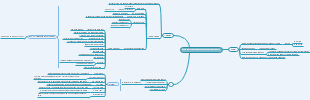
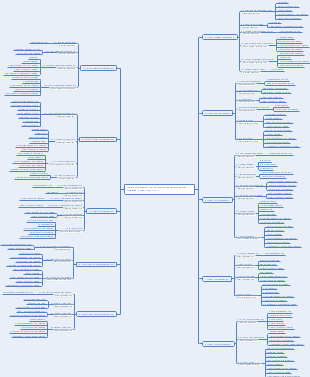
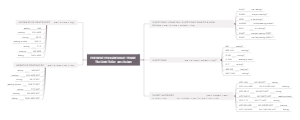
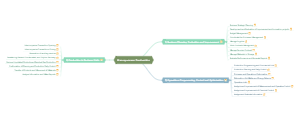
The engineering mechanics mind map includes the foundation of statics, plane force system, friction, etc. Hope this helps!
Edited at 2023-11-02 20:54:17This is a mind map about bacteria, and its main contents include: overview, morphology, types, structure, reproduction, distribution, application, and expansion. The summary is comprehensive and meticulous, suitable as review materials.
This is a mind map about plant asexual reproduction, and its main contents include: concept, spore reproduction, vegetative reproduction, tissue culture, and buds. The summary is comprehensive and meticulous, suitable as review materials.
This is a mind map about the reproductive development of animals, and its main contents include: insects, frogs, birds, sexual reproduction, and asexual reproduction. The summary is comprehensive and meticulous, suitable as review materials.
This is a mind map about bacteria, and its main contents include: overview, morphology, types, structure, reproduction, distribution, application, and expansion. The summary is comprehensive and meticulous, suitable as review materials.
This is a mind map about plant asexual reproduction, and its main contents include: concept, spore reproduction, vegetative reproduction, tissue culture, and buds. The summary is comprehensive and meticulous, suitable as review materials.
This is a mind map about the reproductive development of animals, and its main contents include: insects, frogs, birds, sexual reproduction, and asexual reproduction. The summary is comprehensive and meticulous, suitable as review materials.
Engineering Mechanics
Fundamentals of Statics
The concept of statics
concept of force
Determining factors: 1. The size of the force 2. The direction of the force 3. The point of action of the force
Internal effect: a force that changes the shape of an object
External effect: a force that changes the state of motion of an object
The concept of particle and rigid body
Mass point: regardless of the shape or size of the object, only the mass is considered and the object is regarded as a point
Rigid body: An undeformable geometric shape composed of an infinite number of points that maintains its shape and size under the action of a force.
concept of balance
Plane force system: A force system in which a rigid body is in equilibrium under the action of a certain force system
Balance conditions of force system: conditions satisfied by the balance of force system
The mechanics of statics
Principle of two-force balance: two forces of equal magnitude and opposite directions acting on the same straight line
The principle of adding and subtracting balanced force systems: Adding or subtracting any balanced force system to any force system acting on a rigid body does not change the effect of the original force system on the rigid body.
transferable
Parallelogram Law of Forces
Action and reaction theorem: A pair of forces interacting between two objects always exist at the same time and are equal in magnitude and opposite in direction. The lines of action are the same and act on the two objects respectively.
Rigidization principle: A deformable body is in equilibrium under the action of a certain force system. If the deformable body is rigidified into a rigid body, its equilibrium state remains unchanged.
constraints and binding
Constraints: Limit movement and movement trends. Constraint forces: Forces that constrain the displacement of an object in a certain direction.
Flexible rope constraints: Steel wire ropes, belts, chains, nylon ropes, etc. in engineering can all be simplified into soft ropes
Constraints with smooth contact surfaces
Smooth cylindrical hinge constraints
Smooth cylindrical pin link
Radial bearings
Radial sliding bearing
Radial rolling bearings
Fixed hinge support
Movable hinge support
Stick shaft support
Smooth ball hinge constraint
chain link constraint
Force analysis and force diagram of objects
Force diagram
1. Clarify the research object
2. Take the separated body and draw a force diagram
Force analysis
1. Classify constraints into certain types of typical constraints according to their nature
2. Use the two-force balance or three-force balance convergence theorem to determine certain binding forces
3. Analyze the interaction force between two objects according to the laws of action and reaction
plane force system
A group of forces whose lines of action are in the same plane
plane intersection force system
Geometric method, analytical method can be calculated
Plane intersection force system: a force system in which the lines of action of each force intersect at a point
Plane parallel force system: a force system whose lines of action are parallel to each other
Plane arbitrary force system: a force whose lines of action are neither parallel nor intersecting at a point
Couples and force couple systems
The concept and equivalence of couples of forces
Concept: two parallel forces with equal magnitude and opposite direction and not collinear (clockwise is negative and counterclockwise is positive)
Synthesis and equilibrium of plane force couple system
plane general force system
Translation theorem of force: The force acting on a rigid body can translate to any point. After translation, a force couple is attached. The couple moment of the additional force couple is equal to the moment of the original force on the translation point.
Simplification of plane general force system to one point and principal vectors and principal moments
Equilibrium equations of plane general force system
Equilibrium equation of plane parallel force system
Static determination problems and the equilibrium of object systems
Static determination and overdetermination problems
Static determinate problem: The number of unknowns of the problem being studied is equal to or less than the number of independent balanced equations, and all the unknowns can be solved.
Overdetermined force problem: If the number of unknown quantities is more than the number of independent balanced equations, and all the unknown quantities cannot be solved, the equation
Superstatically definite degree: the difference between the total number of unknown quantities and the total number of independent equilibrium equations
Balance problem of rigid body system
Object system (system of things): a system composed of several objects connected through constraints
Rigid body system: When discussing rigid body statics, an object is treated as a system of rigid bodies
Calculation of internal forces of plane statically determinate trusses
Nodal method and section method can be calculated
Truss: A geometrically constant structure consisting of a number of straight rods connected by hinges at both ends.
Plane truss: All truss members are in one plane
Node: The connection between the members in the truss
friction
Friction: The tendency or tendency of one object to move relative to another object is hindered along a surface in contact with another object.
sliding friction
Static sliding friction: objects only have a tendency to slide relative to each other, and the friction they experience
Maximum static friction: the maximum value reached by friction when an object is in critical equilibrium.
Dynamic sliding friction: When relative sliding occurs between contact surfaces, friction occurs between the contact surfaces that hinders the sliding of objects.
Friction angle and self-locking phenomenon
Friction angle: the maximum value of the angle between the full binding force and the normal line
Self-locking phenomenon: The resultant force of all active forces acting on the object is Fe. If the line of action is within the friction angle, the object will remain stationary no matter how large it is.
rolling friction
Consider the balance problem of an object during friction