MindMap Gallery Second grade physics
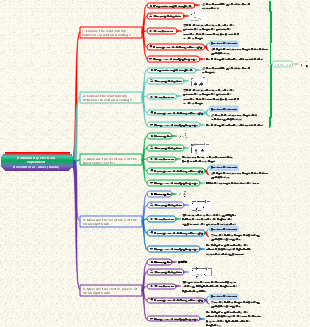
Mind map for second grade physics, including sound phenomena, optics, changes in physical states, magnetic phenomena, electricity, etc.
Edited at 2023-11-02 11:19:05This is a mind map about bacteria, and its main contents include: overview, morphology, types, structure, reproduction, distribution, application, and expansion. The summary is comprehensive and meticulous, suitable as review materials.

This is a mind map about plant asexual reproduction, and its main contents include: concept, spore reproduction, vegetative reproduction, tissue culture, and buds. The summary is comprehensive and meticulous, suitable as review materials.
This is a mind map about the reproductive development of animals, and its main contents include: insects, frogs, birds, sexual reproduction, and asexual reproduction. The summary is comprehensive and meticulous, suitable as review materials.
This is a mind map about bacteria, and its main contents include: overview, morphology, types, structure, reproduction, distribution, application, and expansion. The summary is comprehensive and meticulous, suitable as review materials.
This is a mind map about plant asexual reproduction, and its main contents include: concept, spore reproduction, vegetative reproduction, tissue culture, and buds. The summary is comprehensive and meticulous, suitable as review materials.
This is a mind map about the reproductive development of animals, and its main contents include: insects, frogs, birds, sexual reproduction, and asexual reproduction. The summary is comprehensive and meticulous, suitable as review materials.
Second grade physics
Chapter 1 Sound Phenomenon
Section 1 The production and spread of sound
production of sound
Sound source
definition
A sound source is an object that produces sound
Classification
natural sound source
Various objects in nature, such as wind, rain, thunder and lightning, etc.
artificial sound source
Various objects made by humans, such as musical instruments, machinery, etc.
vibration of sound source
The vibration of the sound source is the fundamental cause of sound
The frequency and amplitude of vibration determine the pitch and loudness of sound
Type of sound source
solid sound source
Vibrating solid objects such as drums, gongs, etc.
gas sound source
Vibrating gases, such as flutes, pipe organs, etc.
liquid sound source
Vibrating liquids, such as running water, waves, etc.
propagation of sound source
The vibration of the sound source propagates through the medium
The propagation speed of the sound source is related to the density and elasticity of the medium;
vibration
production of sound
Definition of vibration
Vibration is the reciprocating motion of an object near its equilibrium position
Vibration produces sound
Type of vibration
mechanical vibration
Objects vibrate under the action of force
For example: tuning forks, drum heads, string instruments, etc.
electromagnetic vibration
Electromagnetic fields produce vibrations under the action of alternating electric fields or magnetic fields
For example: speakers, headphones, etc.
frequency of vibration
Vibration frequency refers to the number of times a vibrating object vibrates per second
The higher the frequency, the higher the pitch of the sound
amplitude of vibration
Amplitude refers to the maximum distance a vibrating object can deviate from its equilibrium position.
The greater the amplitude, the louder the sound
propagation of sound
how sound travels
Sound can travel through solids, liquids and gases
Sound travels fastest in solids
speed of sound
The speed of sound in air is about 340 meters/second
Sound travels faster in solids than in air
sound attenuation
Sound will gradually weaken as it propagates
The attenuation of sound is related to distance, medium and obstacles
frequency
sound frequency
frequency definition
Number of vibrations per unit time
The relationship between frequency and pitch
The higher the frequency, the higher the pitch
The relationship between frequency and wavelength
The higher the frequency, the shorter the wavelength
The relationship between frequency and speed of sound
The speed of sound is proportional to frequency
The relationship between frequency and timbre
Frequency affects timbre
The relationship between frequency and musical instruments
Different instruments have different frequency ranges;
propagation of sound
medium
speed of sound
propagation of sound waves
Section 2 Characteristics of Sound
tone
frequency
definition
Frequency refers to the number of vibrations per second
unit
Hertz (Hz), the number of vibrations per second
Influencing factors
Frequency is related to the mass, length and tension of the vibrating object
tone
Pitch is related to frequency, the higher the frequency, the higher the pitch
music
Different musical instruments have different pitches, related to frequency;
loudness
amplitude
definition
Amplitude refers to the maximum distance that a vibrating object deviates from its equilibrium position during vibration.
Influencing factors
Amplitude is related to the mass, elastic coefficient and vibration frequency of the vibrating object
loudness
Loudness refers to the loudness of sound perceived by the human ear
Loudness is proportional to amplitude
The greater the amplitude, the greater the loudness
The smaller the amplitude, the smaller the loudness;
decibel
timbre
Chapter 2 Optics
Section 1 The Propagation of Light
light source
definition
A light source is an object that emits light
Classification
natural light source
sun
moon
Star
artificial light
electric light
Candle
flashlight
straight line propagation
straight line propagation of light
Definition of straight line propagation of light
Light travels in straight lines in the same uniform medium
Light travels in a straight line in a vacuum
linear propagation of light
eclipse
shadow
pinhole imaging
Linear propagation of light applications
laser alignment
shooting aim
Optical Fiber Communication;
speed of light
Section 2 Reflection of Light
law of reflection
content
light reflection phenomenon
When light passes from one medium into another, reflection occurs at the interface between the two media.
The phenomenon of light reflection can be seen everywhere in life, such as mirrors, water surfaces, etc.
The content of the law of reflection
The incident ray, reflected ray and normal are in the same plane
Incident rays and reflected rays lie on both sides of the normal
The angle of incidence is equal to the angle of reflection
Application of the law of reflection
plane mirror imaging
periscope
Rearview Mirror;
reflection of mirror
diffuse reflection
Section 3 Refraction of Light
law of refraction
definition
When light passes from one medium to another, its propagation direction is deflected.
refractive index
The ratio of the speed of light in a vacuum to the speed of light in a medium
law of refraction formula
n1/sinθ1 = n2/sinθ2
application
lens imaging
Application of refraction phenomenon in life
Experimental verification of refraction phenomena
Experimental principle
Experimental steps
Analysis of results;
refractive index
total reflection
Chapter 3 Changes in the State of Matter
Section 1 Temperature
thermometer
degrees celsius
thermodynamic temperature
Section 2 Changes in the State of Matter
concept
three states of matter existence
solid state
liquid
gaseous
Definition of change of state of matter
The process by which matter changes from one state to another
Types of changes in state of matter
melt
The process by which matter changes from solid to liquid
Endothermic
solidification
The process by which matter changes from liquid to solid
exothermic
Vaporization
The process by which matter changes from liquid to gaseous state
Endothermic
liquefaction
The process of matter changing from gaseous to liquid state
exothermic
sublimation
The process by which matter changes directly from solid to gaseous state
Endothermic
Sublime
The process by which matter changes directly from gaseous state to solid state
exothermic;
Section 3 Heat Transfer
Heat Conduction
thermal convection
Heat radiation
Chapter 4 Electricity
Section 1 Current and Circuits
current
circuit
series circuit
parallel circuit
Section 2 Voltage and Resistance
Voltage
resistance
Ohm's law
Section 3 Electric Power
The concept of electrical power
Definition of electrical power
Electrical power indicates how quickly the current does work.
The unit of electrical power is watt (W) or kilowatt (kW)
Electric power calculation formula
P=I*V
P represents electrical power, the unit is watt (W) or kilowatt (kW)
I represents current, the unit is ampere (A)
V represents voltage, the unit is volt (V)
Measurement of electrical power
Measurement method of electrical power
Measuring electrical power using an electrical power meter
Measuring electrical power using voltmeters and ammeters
Precautions for using electric power meter
Range selection of electric power meter
How to read an electric power meter
Electric power applications
Applications of electrical power in daily life
Electrical power of household appliances such as lamps, televisions, and computers
Electric power of high-power appliances such as electric water heaters and air conditioners
Application of electric power in production
Electric power of production equipment such as motors and transformers
Electric power of electric welding machines, electric drills and other power tools;
Chapter 5 Magnetic Phenomena
Section 1 Magnetic Field
magnetic field
Definition of magnetic field
The magnetic field is an invisible and intangible substance
Magnetic field exists around a magnet
The force exerted by a magnetic field on a magnet placed within it
Basic properties of magnetic fields
Magnetic fields are directional
The direction of the magnetic field at a certain point in the magnetic field is the direction pointed by the N pole when the small magnetic needle is stationary at that point.
The magnetic field is strong or weak
The strength of the magnetic field at a certain point in the magnetic field can be expressed by the magnetic induction intensity
Distribution of magnetic field
The distribution of the magnetic field is uneven
The strength and direction of the magnetic field change with spatial location
The distribution of the magnetic field is related to the shape and material of the magnet
The relationship between magnetic field and electric current
Electric current can produce a magnetic field
The direction of the magnetic field of the current is related to the direction of the current
Effect of magnetic field on electric current
The force exerted by a magnetic field on an electric current placed in it
The relationship between magnetic fields and magnets
Magnets are magnetic
Magnetism is an inherent property of magnets
Classification of magnets
Magnets can be divided into permanent magnets and electromagnets
Applications of magnetic fields
Application of magnetic field in production and life
Applications of electromagnets
Maglev train applications;
Magnetic field lines
concept
Curve describing magnetic field
Magnetic field lines are closed curves
Where magnetic field lines are densely packed, the magnetic field is strong
Where magnetic field lines are sparse, the magnetic field is weak
direction of magnetic field lines
Magnetic field lines always point from N pole to S pole
The magnetic field lines point from the S pole to the N pole outside the magnet.
The magnetic field lines point from the N pole to the S pole inside the magnet.
Properties of magnetic field lines
Magnetic field lines do not intersect
Magnetic field lines can divide the magnetic field
Magnetic field lines can describe the distribution of magnetic fields
Applications of magnetic field lines
Determine the direction and strength of the magnetic field
Analyze the distribution and changes of magnetic fields
Calculate the magnetic flux of a magnetic field;
magnetic pole
Section 2 Magnetic Field of Current
Basic properties of magnetic fields
Magnetic fields are invisible and intangible
Magnetic fields are directional
The magnetic field is strong or weak
How to express magnetic field
Magnetic field lines
The density of magnetic field lines indicates the strength of the magnetic field
The direction of the magnetic field lines indicates the direction of the magnetic field
magnetic field of current
There is a magnetic field around a current-carrying wire
The direction of the current is related to the direction of the magnetic field
The size of the current is related to the strength of the magnetic field
Ampere's rule
Hold the wire with your right hand
Thumb points in the direction of the current
Four fingers point in the direction of the magnetic field
Section 3 The Effect of Magnetic Field on Current
The principle of the effect of magnetic field on electric current
The principle of the effect of magnetic field on current is that the current in magnetic field will be affected by magnetic force.
The size of the magnetic field force is related to the size of the current and the strength of the magnetic field.
The direction of the magnetic force is related to the direction of the current and the direction of the magnetic field.
Application of the Effect of Magnetic Fields on Electric Currents
electromagnet
An electromagnet is a device that generates a magnetic field by passing electric current through a coil.
The magnetic strength of the electromagnet is related to the size of the current and the number of turns of the coil
Electromagnetic relay
An electromagnetic relay is a switch that uses an electromagnet to control the on and off of a circuit.
Electromagnetic relays can be used in control circuits and protection circuits
Experiment on the effect of magnetic field on electric current
experiment equipment
Power supplies, switches, wires, coils, magnets, ammeters
Experimental steps
Connect circuit
Adjust the current size
Observe the effect of magnetic field on electric current
Experimental results
The principle of the effect of magnetic field on electric current has been verified;