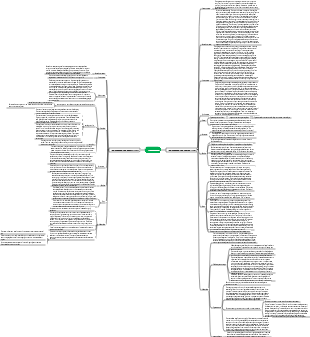
MindMap Gallery Arthropods
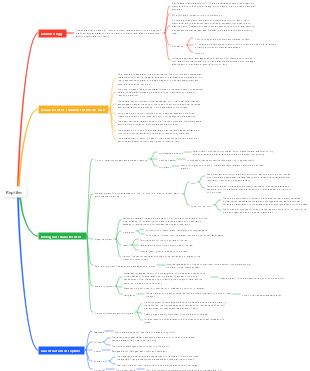
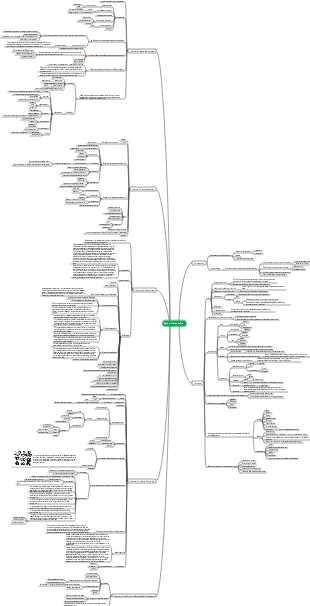
This brain map introduces the characteristics of arthropods: their body is segmented, their appendages are also segmented, their exoskeleton is mainly composed of chitin and calcium phosphate, they have an open-tube circulatory system, various respiratory organs, and their nervous system is a chain nervous system. , classification and ecological significance.
Edited at 2023-10-31 19:53:32This is a mind map about bacteria, and its main contents include: overview, morphology, types, structure, reproduction, distribution, application, and expansion. The summary is comprehensive and meticulous, suitable as review materials.

This is a mind map about plant asexual reproduction, and its main contents include: concept, spore reproduction, vegetative reproduction, tissue culture, and buds. The summary is comprehensive and meticulous, suitable as review materials.
This is a mind map about the reproductive development of animals, and its main contents include: insects, frogs, birds, sexual reproduction, and asexual reproduction. The summary is comprehensive and meticulous, suitable as review materials.
This is a mind map about bacteria, and its main contents include: overview, morphology, types, structure, reproduction, distribution, application, and expansion. The summary is comprehensive and meticulous, suitable as review materials.
This is a mind map about plant asexual reproduction, and its main contents include: concept, spore reproduction, vegetative reproduction, tissue culture, and buds. The summary is comprehensive and meticulous, suitable as review materials.
This is a mind map about the reproductive development of animals, and its main contents include: insects, frogs, birds, sexual reproduction, and asexual reproduction. The summary is comprehensive and meticulous, suitable as review materials.
Arthropoda
Main features
Idiosyncratic stanzas
Definition: Body segments with similar structure and function often heal to form different body regions
Body area: head, chest, abdomen
Head: Sensation and feeding
Chest: Movement and Support
Abdomen: Reproduction and Metabolism
Significance: It ensures the coordination of various physiological functions of the animal body and is conducive to the animal's adaptation to the environment.
appendage segmentation
Bilimb type body segments: original limb, outer limb segment, inner limb segment
The single-limbed arthropod evolved from the bilimbed type, and its outer limbs have completely degenerated.
The appendages are arranged in rhythm, forming various forms of mouthparts, tentacles, feet for various movements, and assistance in respiration and reproduction, or they have degenerated and disappeared.
Differences from wartfoot: It has joints and has higher mobility and flexibility
Importance: Arthropods are the only invertebrate animals with segmented appendages
Exoskeleton
Body wall: composed of epidermis, epithelium and basement membrane
epidermal action
①:Protect the body from mechanical damage
②: Prevent the invasion of undesirable external factors
③: Prevent excessive evaporation of water
④: Provides for the muscles inside it to grow and coordinate with the muscles to produce movement
Epidermal classification
Upper epidermis: thin, pigmented, lipoprotein-containing, with a waxy layer on the surface
Outer skin: hard, with calcium deposits or rich in bone protein
Inner epidermis: The thickest, colorless and soft, ductile and tortuous, and its main components are chitin and arthropodin.
limit
Molting phenomenon: Arthropods periodically put on soft and wrinkled new skin under the control of endocrine hormones to adapt to the intermittent growth of the body.
Crustaceans: Molting glands secrete ecdysone
Insects: A pair of prothoracic glands produces ecdysone
Strong striated muscles
The muscles of platyhelminthes, nematodes, and annelids are mainly oblique muscles.
Arthropod striated muscles: contract quickly and powerfully
mixed body cavity
Meaning: The cyst wall of the mesodermal sac disintegrates and is a mixture of the true coelom and the protocoelom. Therefore, the cavity between the body wall and the digestive tract is formed by the true coelom and the blastocoel cavity.
Three divided blood sinuses: dorsal blood sinus, perivisceral sinus, and abdominal blood sinus
open tube circulation system
Heart: a tubular or sac-like structure located at the back of the digestive tract with multiple pairs of heart holes
Blood circulation: starts from the heart, flows into the blood chambers or sinusoids through the arteries, and directly infiltrates various tissues and organs. The blood in the blood chambers returns to the heart through the cardiac holes.
Arthropod blood transports only nutrients and metabolic waste products
Blood is colorless
Various respiratory and excretory organs
respiratory organs
Aquatic: Gills or book gills (formed by protrusions from the body wall)
Terrestrial: trachea or book lung (formed by invagination of the body wall)
excretory organs
Glandular structure: homologous to metanephric duct
Malpighian tube: terrestrial arthropods, class Insecta
well developed digestive system
Performance: Enhanced hunting ability
Mouthparts: feeding, broken food structure
Grind stomach or gizzard
Midgut: Secretes digestive enzymes and is the main site for food digestion and absorption.
Hindgut: completes ion and water reabsorption
A more focused nervous system
Chain-shaped like annelids
The brain is further concentrated in the anterior segment
Brain (formed by the union of three pairs of ganglia), subesophageal ganglion, abdominal nerve chain
sensitive sensory organs
Classification: Tactile receptors, chemoreceptors and visual receptors
Tactile organ: Tactile hairs, which can sense the stimulation of changes in contact, air flow, water flow, etc.
Chemoreceptors: olfactory receptors (antennae), taste receptors (in the mouth and on the mouthparts), visual receptors (monocular and compound eyes)
reproduction and development
Most dioecious
Aquatic: Multiple IVF
Terrestrial: internal fertilization
Summary: Reproductive forms are diverse, mostly oviparous, ovoviviparous, parthenogenetic, larval and polyembryonic.
Protective, mimicry and alert colors
Protective coloration: Use body color and shape similar to their environment to hide themselves from natural enemies.
Mimicry: Imitation of other organisms to protect oneself or capture food
Warning colors: bright colors and patterns that make enemies easy to identify and prevent them from being attacked
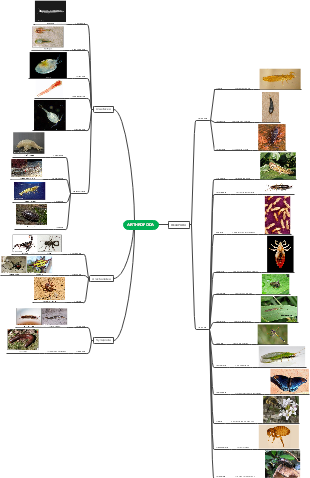
Classification
Trilobites
The most primitive group of arthropods
Flat body
Crustacea
Representative animal: Macrobrachium
Cephalothorax and abdomen
Many appendages, bilimb type
open tube circulation
gill respiration
Chelicerina
Limestomata
Arachnida
The body is divided into cephalothorax and abdomen
Polypodia
Body divided into head and trunk
tracheal breathing
Malpighian duct excretion
All are terrestrials
Hexapodia
Representative animal: migratory locust
Head, chest and abdomen
Metamorphosis: From larva to adult, the morphological structure and living habits undergo great changes.
Not completely perverted
Gradual metamorphosis: larvae and adults are similar in shape, except that their sexual organs are immature, their wings are underdeveloped, and their living environment and habits are the same.
Semi-metamorphosis: different shapes and living habits
Complete metamorphosis: There are often significant differences in form and living habits
ecological significance
role in ecosystems
The relationship between arthropods and humans