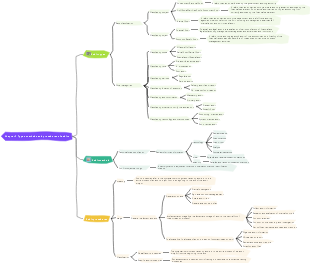
MindMap Gallery audit evidence
Audit procedures refer to detailed instructions for CPAs on how to analyze certain types of audit evidence to be obtained at a certain time during the audit process. This mind map introduces the nature of audit evidence, audit procedures, confirmation, analysis procedures, etc. , hope it helps you!
Edited at 2023-10-31 19:51:22This is a mind map about bacteria, and its main contents include: overview, morphology, types, structure, reproduction, distribution, application, and expansion. The summary is comprehensive and meticulous, suitable as review materials.

This is a mind map about plant asexual reproduction, and its main contents include: concept, spore reproduction, vegetative reproduction, tissue culture, and buds. The summary is comprehensive and meticulous, suitable as review materials.
This is a mind map about the reproductive development of animals, and its main contents include: insects, frogs, birds, sexual reproduction, and asexual reproduction. The summary is comprehensive and meticulous, suitable as review materials.
This is a mind map about bacteria, and its main contents include: overview, morphology, types, structure, reproduction, distribution, application, and expansion. The summary is comprehensive and meticulous, suitable as review materials.
This is a mind map about plant asexual reproduction, and its main contents include: concept, spore reproduction, vegetative reproduction, tissue culture, and buds. The summary is comprehensive and meticulous, suitable as review materials.
This is a mind map about the reproductive development of animals, and its main contents include: insects, frogs, birds, sexual reproduction, and asexual reproduction. The summary is comprehensive and meticulous, suitable as review materials.
audit evidence
Nature of audit evidence
The concept of audit evidence
Audit bureau refers to all information used by certified public accountants to draw audit conclusions and form audit opinions.
Information contained in accounting records
Accounting records mainly include original vouchers, accounting vouchers, general ledgers and detailed ledgers, other adjustments to financial statements not reflected in accounting vouchers, as well as manual calculation sheets and electronic calculation sheets to support cost allocation, calculation, reconciliation and disclosure. data sheet
Other information
Minutes of meetings of the audited unit, internal control manuals, responses to confirmation letters, analysts’ reports, comparative data with competitors, etc., information obtained through audit procedures such as inquiries, observations and inspections, such as obtaining inventory existence by inspecting inventory evidence, etc., as well as information compiled or obtained by oneself that can lead to conclusions through reasonable inferences
Sufficiency and appropriateness of audit evidence
Evaluate the adequacy and appropriateness of audit evidence
Sufficiency of audit evidence
The sufficiency of audit evidence is a measure of the quantity of audit evidence and is mainly related to the sample size determined by the CPA.
The higher the assessed risk of material misstatement, the more audit evidence may be required; the higher the quality of the audit evidence, the less audit evidence may be required.
Deficiencies in its quality may not be remedied simply by obtaining more audit evidence.
Suitability of audit evidence
Relevance and reliability are the core contents of the appropriateness of audit evidence
Relevance of audit evidence
Relevance is the logical link between information used as audit evidence and relevant assertions considered for the purpose of the audit procedures.
Specific audit procedures may only provide relevant audit evidence for certain assertions but not for other assertions.
Reliability of audit evidence
Audit evidence obtained from external independent sources
When internal controls are effective
Audit evidence obtained directly
Audit evidence in the form of documents and records
Audit evidence obtained from original documents
Special considerations when evaluating adequacy and appropriateness
Considerations for the reliability of documentation
Does not involve identifying the authenticity of documents and records
Document records may be forged, further investigation
Considerations when using information generated by the auditee
Completeness and accuracy
Considerations when the evidence is conflicting
If audit evidence obtained from different sources or audit evidence of different natures for a certain assertion can corroborate each other, the audit evidence related to the assertion will be more convincing.
Inconsistencies in audit evidence indicate that an item of audit evidence may be unreliable
Cost considerations in obtaining audit evidence
Inventory supervision is an irreplaceable audit procedure for formal inventory confirmation.
Audit procedures
The concept and role of audit procedures
Audit procedures refer to the detailed instructions given by the CPA on how to analyze certain types of audit evidence to be obtained at a certain time during the audit process.
What kind; how big; which; when
Types of audit procedures
examine
Review of records and documents in paper, electronic or other media and physical review of assets
observe
The CPA looks at the activities that relevant persons are engaged in or the procedures that are being implemented
limitation
Limited to the time the observation occurs
ask
The CPA obtains information orally or in writing from informed persons inside or outside the audited entity.
Inquiries are used extensively throughout the audit process as a supplement to other audit procedures
Inquiries by themselves are not sufficient to obtain adequate and appropriate procedures
Letter of confirmation
CPA obtains written response from third party
specific account balance
Confirmation of agreement and transaction terms
Obtain actual evidence that certain conditions do not exist
recalculate
CPAs perform accuracy checks on data in records or documents
Re-run
The CPA independently performs procedures or controls that are originally part of the internal control of the audited entity.
analysis program
CPAs evaluate financial information by analyzing the relationships between different financial data and between financial data and non-financial data.
Letter of confirmation
Correspondence decision
Assessed risk of material misstatement at the identification level
The higher the risk of misstatement, the higher the requirements.
The lower the risk of misstatement, the lower the requirements.
There is no need to directly confirm the balance and terms of the loan to the creditor again.
A certain risk is a special risk, and it is necessary to consider whether to reduce the risk of inspection through confirmation of specific matters.
Determinations targeted by the corroboration procedure
The corroborative power of corroboration is different for different determinations.
Confirmation of accounts receivable may be of existence, rights and obligations
Accounts Payable Integrity
Implement audit procedures other than confirmation
Still need to consider
The respondent’s understanding of the correspondence matters
The expected ability or willingness of the person being inquired to respond to the inquiry letter
Expected objectivity of person being questioned
Contents of correspondence confirmation
Object of confirmation
Bank savings
Correspondence procedures should be implemented
Unless immaterial and the risk of material misstatement is low
accounts receivable
Unless it is not important or the correspondence is likely to be invalid
Reasons need to be given for non-confirmation
The scope of implementation of the corroboration procedure
specific items
Large amounts, long account ages, frequent transactions, small ending balances, major related party transactions, major or abnormal transactions, and possible fraud or erroneous transactions
Time for confirmation
Usually the balance sheet date is the deadline, and confirmation will be implemented within an appropriate time after the balance sheet date.
If the risk assessment of material misstatement is low, an appropriate date before the balance sheet date can be selected as the closing date.
What to do when management requests not to implement letter of confirmation
Consider whether it is reasonable and obtain audit evidence to support it.
Unreasonable, the scope of the audit is deemed to be limited.
Be professionally skeptical
Whether management is honest and whether there may be major fraud or errors
Design of confirmation letter
General requirements for design inquiry letters
Factors to consider when designing a confirmation letter
positive and negative
Reply rate
Misstatement
accuracy
non-conventional contract
informed third party
Authorization from the management of the audited entity
The recipient of the letter may be more willing to reply
Positive corroboration and negative corroboration
positive
Must be able to reply
is it right or not
The disadvantage is that it is restored without verification.
Inquiry letter
Low response rate
negative
The person being inquired will only respond to the letter if he or she disagrees with the information listed in the inquiry letter.
The audit evidence provided by a reply letter that has not received a negative confirmation letter is far less convincing than the audit procedures provided by a reply letter that itself is a confirmation letter.
The negative form can be used in the following situations:
Risk assessment is low
Small account with large balance
No large number of errors expected
There is no reason to believe that the person being inquired about does not take the corroboration seriously.
Implementation and evaluation of corroboration
Controlling the confirmation process
Issued directly by CPA
Information remains consistent with bank statements
return address
What to do when a positive confirmation letter is not received
Evaluate the reliability of confirmation
Handling of discrepancies
Signs of fraud risks that need to be paid attention to when implementing letter confirmation and relative measures to be taken
analysis program
Purpose of Analysis Program
Analytical procedures refer to CPAs evaluating financial information by analyzing the inherent relationships between different financial data and between financial data and non-financial data.
When necessary, investigate the identified fluctuations or relationships that are inconsistent with other information or that are significantly different from expected values.
used as a risk assessment process
used as substantive proceedings
Conduct a general review at or near the end of the audit
Analytical procedures are not suitable for control test procedures
Internal controls do not involve large amounts of data
used as a risk assessment process
The use of analytical procedures at this stage is mandatory
It should be noted that the CPA no longer needs to understand the financial reports applicable to the audited entity and its environment. Analytical procedures must be implemented when preparing each aspect of the basic and internal control system elements.
used as substantive proceedings
When the use of analytical procedures is more effective than testing of details in reducing assertion-level inspection risks to an acceptable level, the CPA may consider testing of details alone or in combination with
Compared with detailed tests, the accuracy that substantive analysis procedures can express may be subject to various limitations, and the evidence provided is largely indirect evidence with relatively weak probative power.
Source, comparability, nature and relevance, and its controls related to the preparation of information
expected
acceptable difference
for overall review
Purpose
Determine whether the financial statements as a whole are consistent with expectations of the entity being audited
The CPA should use analytical procedures at this stage
floating theme