MindMap Gallery biological populations and communities
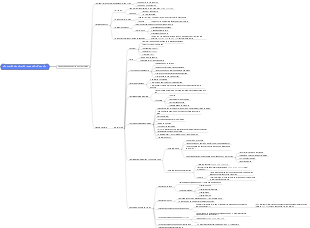
Biological populations and communities. Biological populations refer to a collection of the same species or organisms that occupy a specific space within a certain period of time and perform certain functions as part of a biological community. A community is a spatial unit in which organisms live, and a community can include many different species. If you like it, you can collect it and like it~~
Edited at 2023-10-31 03:49:45This is a mind map about bacteria, and its main contents include: overview, morphology, types, structure, reproduction, distribution, application, and expansion. The summary is comprehensive and meticulous, suitable as review materials.

This is a mind map about plant asexual reproduction, and its main contents include: concept, spore reproduction, vegetative reproduction, tissue culture, and buds. The summary is comprehensive and meticulous, suitable as review materials.
This is a mind map about the reproductive development of animals, and its main contents include: insects, frogs, birds, sexual reproduction, and asexual reproduction. The summary is comprehensive and meticulous, suitable as review materials.
This is a mind map about bacteria, and its main contents include: overview, morphology, types, structure, reproduction, distribution, application, and expansion. The summary is comprehensive and meticulous, suitable as review materials.
This is a mind map about plant asexual reproduction, and its main contents include: concept, spore reproduction, vegetative reproduction, tissue culture, and buds. The summary is comprehensive and meticulous, suitable as review materials.
This is a mind map about the reproductive development of animals, and its main contents include: insects, frogs, birds, sexual reproduction, and asexual reproduction. The summary is comprehensive and meticulous, suitable as review materials.
biological populations and communities
Population and its spatial distribution
The concept of population: a collection of the same species or organisms that occupy a specific space within a certain period of time and perform certain functions as part of a biological community
Population spatial distribution characteristics
static distribution
Random type: The position of individuals in the population in space is not affected by the distribution of other individuals (independent of each other), and each individual has an equal probability of being distributed in any space.
Uniform type: individuals within the population are equally distributed in space
Group type (most common): The distribution of individuals within a group forms dense patches
dynamic distribution
migrate
diffusion
Reasons for spatial distribution differences
internal cause
space required
Utilization method
Decentralized utilization
common use
external factors
microdomain differences
natural obstacles
Animal and human activities
Quantitative characteristics of a population
size and density
Size: the size of the population
Density (the basis for automatic population adjustment): the total number of individuals of a certain population in unit space
birth and death rates
Birth rate: the number of new individuals produced per unit time
Mortality rate: the number of individuals that die per unit time
Growth rate (adjusts population size): the difference between birth rate and death rate per unit time
age structure
age pyramid
growing population
stable population
declining population
Sex ratio structure: The ratio of males to females of a certain age in a population. Is an element of population structure that reflects the potential of a population to produce offspring
population growth model
Discrete growth model of population
continuous growth model
Limited environment growth rate changes
The population starts small and grows slowly, then gradually increases
Soon after, the growth rate gradually decreases due to increasing environmental resistance.
The quantity reaches the environmental capacity k and is maintained
Continuous growth model of population: J type
Logistic growth model of population: S-type
ecological strategies for populations
The concept of population ecological countermeasures: the “countermeasures” of organisms evolving in different directions in the struggle for survival
r Countermeasures: Small individuals, short lifespan, low survival rate, weak competitiveness, but high value-added rate, the population is prone to sudden fluctuations of ups and downs, and farmland insects, weeds, etc.
K strategy: large individuals, long lifespan, high survival rate, strong competitiveness, stable population density, and always maintained at the maximum environmental capacity. Such as trees, large carnivores, etc.
Application of population ecological countermeasures: Proper allocation of various organisms in r-k type lineages
Utilizing the characteristics of short life cycles, rapid reproduction, and rapid reproduction of maternal and child organisms such as earthworms, bees, cicadas, and edible fungi, we can accelerate the recycling of materials and increase the output of agricultural products.
Utilize perennial forest bamboo and wood to stabilize the agricultural ecological environment
population dynamics
Seasonal waxing and waning: population numbers of wheat tillers and cotton bugs
inter-annual cyclical fluctuations
3-4 years: Lemmings, Arctic foxes
9-10 years: American rabbit, Canadian lynx
Irregular fluctuations: most insects
Population Outbreaks: Pests, Diseases and Rodent Infestations
Population balance: large ungulates, carnivores, red ants, etc.
Population decline and extinction: overgrazing, overhunting, etc.
ecological invasion
The concept of ecological invasion: Because humans consciously or unconsciously bring certain organisms into areas suitable for their habitat and reproduction, the population continues to expand, and the distribution area gradually and steadily expands. This process is called ecological invasion.
Case 1: European cave rabbit
Case 2: A yellow flower in Canada
Case 3: Lucky snail
Case 4: Water hyacinth
Causes and Regulation of Population Fluctuations
Causes of population fluctuations
density constraint
Intraspecific density constraints
food and territory
Psychological Inhibition: Lemmings
density between species
Feedback between predator and prey
Effects of pathogenic bacteria and parasites on populations: parasitic wasp egg laying
Non-density constraints: abiotic environment (climate, pollution), such as drought
regulation of population fluctuations
interspecific regulation
Predator and Prey: Using Australian Ladybugs to Control Hypnotic Insects
Interactions between parasites and hosts: controlling pests with parasitoids
intraspecific regulation
Physiological regulation: survival of the fittest
Genetic regulation: natural selection pressures and changes in genetic composition
Interrelationships between populations and their applications
positive interaction
Mutualism
Symbiosis
original collaboration
negative interaction
compete
prey
parasitic
allelopathy
inhibitory effect
enhancement
Community and its structural characteristics
The concept and characteristics of community
Concept: a collection of various biological populations within a specific area or habitat
Features
having a certain type of composition
Have a certain appearance and structure
Have certain dynamic characteristics
There are interactions between different species
form a certain community environment
Have specific community boundary characteristics
community species structure
Dominant species
Subdominant species
companion species
Occasional species
species diversity
Shannon-Wiener Index
Simpson index
spatiotemporal structure of the community
horizontal structure
vertical structure
Aboveground
underground part
time structure
Community ecotone and edge effect
Nutritional structure of the community
Three major functional groups of community organisms
producer
consumer
decomposer
Nutritional relationships of community biological components
food chain
food web
ecological niche
Niche concept: the function and status of organisms in species and ecosystems. It reflects the comprehensive adaptation characteristics of organisms to the environment when completing their normal life cycles.
niche theory
niche breadth
niche overlap
niche competitive exclusion
niche differentiation
Application of ecological niche theory in agriculture
community succession
The concept of community succession: as time goes by, some species of biological communities disappear, and other new species appear. The community and its environment move in a certain direction, and there is a sequential development process of change.
community succession type
primary succession
xerophytic succession
aquatic succession
secondary succession
Top communities and artificial subtops
Top community: community succession to the final stable community that is in balance with the environment.
People are sub-top
Causes of community succession, changes in structure and function
Causes of community succession
Internal factors: interaction between organisms and the environment
External factors: climate, soil, biology, human factors
Structural changes in community succession
Species structure: species diversity is becoming more and more abundant
space-time structure
Horizontal structure, time structure boundaries tend to be obvious
The vertical structure levels gradually become more complex, developing from single to multi-level
Nutritional structure: from short chains to long chains, single chains expand to the food web
Functional changes in community succession
material cycle
energy flow
stability
Enlightenment of community succession on production
Clever use of the law of succession: Using the principle of internal community succession, certain means can be used to transform the environment into a state conducive to production or accelerate the succession process.
The use of nature requires controlled investment: if human interference causes the community to be in an unstable state, to maintain the long-term existence of this unstable community, maintenance capacity must be increased.
Environment-dominant organisms: The characteristics of the top community in an area are restricted by the environment and can only reach a certain level.
ecological adaptability of organisms
The concept of ecological adaptability: a manifestation of specific traits formed by organisms in order to adapt to the environment in the competition for survival. It is the result of the comprehensive effect of various ecological factors in the environment on organisms, and ultimately manifests as ecological adaptation of convergence and divergence.
Convergent adaptation and life forms: Different species of organisms with distant biological relationships show similar ecological characteristics because of the same environment.
Divergent adaptation and ecotype: Different individuals of the same species produce ecological variation due to different environments