MindMap Gallery skeletal muscle
Systemic anatomy - skeletal muscles, of which facial muscles (also known as expression muscles): are mainly distributed on the face, around the mouth, eyes, nose and other openings; the diaphragm and abdominal muscles contract at the same time, which can increase abdominal pressure and assist defecation, vomiting, and coughing and childbirth, etc.
Edited at 2023-10-30 19:36:11This is a mind map about bacteria, and its main contents include: overview, morphology, types, structure, reproduction, distribution, application, and expansion. The summary is comprehensive and meticulous, suitable as review materials.

This is a mind map about plant asexual reproduction, and its main contents include: concept, spore reproduction, vegetative reproduction, tissue culture, and buds. The summary is comprehensive and meticulous, suitable as review materials.
This is a mind map about the reproductive development of animals, and its main contents include: insects, frogs, birds, sexual reproduction, and asexual reproduction. The summary is comprehensive and meticulous, suitable as review materials.
This is a mind map about bacteria, and its main contents include: overview, morphology, types, structure, reproduction, distribution, application, and expansion. The summary is comprehensive and meticulous, suitable as review materials.
This is a mind map about plant asexual reproduction, and its main contents include: concept, spore reproduction, vegetative reproduction, tissue culture, and buds. The summary is comprehensive and meticulous, suitable as review materials.
This is a mind map about the reproductive development of animals, and its main contents include: insects, frogs, birds, sexual reproduction, and asexual reproduction. The summary is comprehensive and meticulous, suitable as review materials.
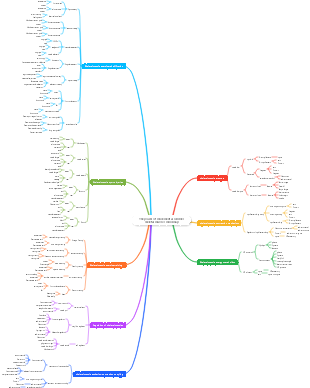
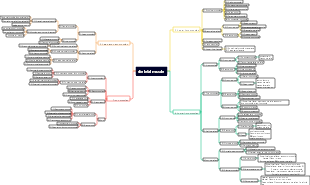
skeletal muscle
head muscles
Facial muscles (also known as expression muscles): mainly distributed on the face, around the mouth, eyes, nose and other holes
Muscles of mastication: including masseter, temporalis, medial pterygoid and lateral pterygoid muscles, distributed around the temporomandibular joint and involved in chewing movements
neck muscles
Superficial cervical muscles and lateral cervical muscles
Platysmus muscle: located in the superficial fascia of the neck, originating from the fascia on the surface of the pectoralis major and deltoid muscles, and inserting at the corner of the mouth, the lower edge of the mandible and the skin of the lower face
The sternocleidomastoid muscle: Mostly covered by the platysus muscle, it originates from the front of the sternum manubrium and the sternal end of the clavicle, and its two heads meet obliquely posterior and upward to terminate at the mastoid process of the temporal bone. Function: Contraction of the muscles on one side causes the head to tilt to the same side and face to the opposite side. Contraction of both sides at the same time causes the head to tilt back.
Anterior cervical muscles: divided into supratrophyseal muscle group and infrafacial muscle group
The profundus muscle: divided into two groups, the medial and lateral groups. The lateral group is located on both sides of the cervical segment of the spine. When the neck is fixed, it can lift the ribs and help inhale. The medial group is located in front of the cervical segment of the spine and on both sides of the midline
Trunk muscles
Back muscles
shallow group
Trapezius muscle: It is a superficial triangular muscle located on the upper part of the neck and back. The left and right sides together form a trapezoid. When contracting, draw the scapula closer to the spine
Latissimus dorsi: Located in the lower back and side of the chest, it is the largest flat muscle in the body.
Deep group: The erector spinae muscle is located in the grooves on both sides of the spine. It is the longest and largest of the back muscles. Contraction of one side of this muscle causes the spine to flex to the same side. Contraction of both sides at the same time makes the spine extend backward and tilt the head back.
chest muscles
Pectoralis major: Located in the upper front part of the thorax, it originates from the medial 2/3 of the clavicle, the sternum and the 1st to 6th costal cartilage, and ends at the greater tubercle ridge of the humerus. When contracting, the shoulder joint can be adducted and internally rotated. It can lift the ribs upward and expand the thorax to aid inhalation
Pectoralis minor: For the deep surface of the pectoralis major, it is triangular in shape. Its function is to pull the scapula forward and downward. When the scapula is fixed, the ribs can be raised to assist in inhalation
Serratus anterior: It is a broad flat muscle located on the side wall of the thorax; it is innervated by the long thoracic nerve; if this muscle is paralyzed, the inner edge and lower corner of the scapula will leave the thorax and protrude subcutaneously, which is called a "winged shoulder"
Diaphragm (main respiratory muscle): a thin, dome-shaped structure located between the chest and abdominal cavity that bulges upward.
Aortic hiatus: approximately level with the 12th thoracic vertebra, through which the aorta and thoracic duct pass
Esophageal hiatus: approximately level with the 10th thoracic vertebra, on the left front and upper side of the aortic hiatus, through which the esophagus and vagus nerve pass
Vena cava foramen: level with the 8th thoracic vertebra, in the central tendon on the right front and upper side of the esophageal hiatus, where the inferior vena cava passes
Abdominal muscles (located between the lower edge of the thorax and the upper edge of the pelvis, forming the abdominal wall)
External oblique muscle: It is located in the superficial layer of the anterolateral part of the abdomen. The lower edge of the peritoneum is thickened and curled. It is connected between the anterior superior iliac spine and the pubic tubercle. It is called the inguinal ligament. There is a small bundle of tendon fibers at the medial end of the inguinal ligament that folds downward and posteriorly to the pubic comb, which is called the lacunar ligament. The part of the lacunar ligament that extends and attaches to the pubic comb is called the pubic pectin ligament Above and outside the pubic tubercle, the aponeurosis forms a triangular hole, called the superficial (subcutaneous) inguinal canal ring.
Internal oblique: located deep to the external oblique
Abdominal transverse machine: located on the deep internal oblique surface of the abdomen
Rectus abdominis: located on both sides of the midline of the anterior abdominal wall
The diaphragm and abdominal muscles contract at the same time, which can increase abdominal pressure and assist defecation, vomiting, coughing, and childbirth.
limb muscles
Upper limb muscles
Deltoid muscle: Located on the shoulder, triangular in shape, innervated by fluid nerves. Function: Abduct the shoulder joint, the anterior muscle bundle can flex and internally rotate the shoulder joint, and the posterior muscle bundle can extend and externally rotate the shoulder joint. When this muscle is paralyzed and atrophied, the acromion protrudes under the skin, making the shoulder square.
Subscapularis: Located in front of the scapula, it is triangular in shape. Adducts and internally rotates the shoulder joint during contraction
Biceps brachii: innervated by musculocutaneous nerve. When this muscle contracts, it flexes the elbow joint, can supinate the forearm when it is in the pronated position, and assists in flexing the shoulder joint.
Coracobrachialis: flexes and adducts the shoulder joint forward
Brachialis: flexes the elbow joint
Triceps brachii (arm muscle group): Its function is to extend the elbow joint. The long head can also extend and adduct the shoulder joint; innervated by the radial nerve
Lower limb muscles
Gluteus medius and gluteus minimus: abduct the hip joint,
piriformis muscle
Sartorius muscle: Located superficially on the front and medial side of the thigh, it is the longest muscle in the body in the shape of a flat belt (function: flexes the hip and knee joints, and internally rotates the flexed knee joint)
Quadriceps: Located in the front of the thigh, it is the largest muscle in the body (function: flexing the hip joint and extending the knee joint)