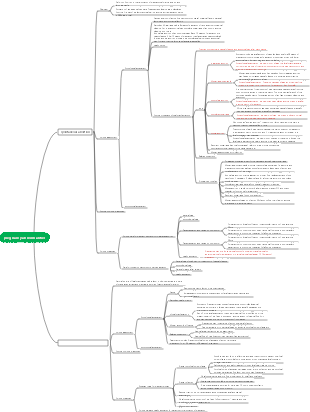
MindMap Gallery Care for women during pregnancy
For the care of women during pregnancy, fertilization of a mature egg is the beginning of pregnancy, and the expulsion of the fetus and its appendages from the mother's body is the termination of pregnancy. The pregnancy period is usually calculated from the first day of the last menstrual period.
Edited at 2023-10-30 10:58:44This is a mind map about bacteria, and its main contents include: overview, morphology, types, structure, reproduction, distribution, application, and expansion. The summary is comprehensive and meticulous, suitable as review materials.

This is a mind map about plant asexual reproduction, and its main contents include: concept, spore reproduction, vegetative reproduction, tissue culture, and buds. The summary is comprehensive and meticulous, suitable as review materials.
This is a mind map about the reproductive development of animals, and its main contents include: insects, frogs, birds, sexual reproduction, and asexual reproduction. The summary is comprehensive and meticulous, suitable as review materials.
This is a mind map about bacteria, and its main contents include: overview, morphology, types, structure, reproduction, distribution, application, and expansion. The summary is comprehensive and meticulous, suitable as review materials.
This is a mind map about plant asexual reproduction, and its main contents include: concept, spore reproduction, vegetative reproduction, tissue culture, and buds. The summary is comprehensive and meticulous, suitable as review materials.
This is a mind map about the reproductive development of animals, and its main contents include: insects, frogs, birds, sexual reproduction, and asexual reproduction. The summary is comprehensive and meticulous, suitable as review materials.
Care for women during pregnancy
pregnancy diagnosis
early pregnancy diagnosis
Symptoms and signs
Amenorrhea, early pregnancy symptoms (most appear around six weeks after menopause), frequent urination
Auxiliary inspection
Pregnancy test (early pregnancy test paper) can detect 10 days after fertilization
Ultrasound examination (confirmation): The examination can only be carried out at the earliest 4 to 5 weeks of pregnancy. The main purpose is to confirm intrauterine pregnancy.
cervical mucus test
Basal body temperature measurement (requires long-term persistence). For women with bidirectional body temperature, the high temperature phase lasts for 18 days after menopause. If there is no decrease, the possibility of early pregnancy is high (for non-pregnant women, the body temperature is affected by the corpus luteum and will decrease after rising)
Second and third trimester pregnancy diagnosis
Purpose: To assess maternal and fetal health status, intrauterine growth and development of the fetus, presence of fetal malformations, etc. in order to promptly detect problems and deal with them as early as possible.
Symptoms and signs
enlargement of uterus
Fetal movement
Generally, B-ultrasound examination can be found after 18 weeks of pregnancy. Pregnant women can feel fetal movement after 20 weeks of pregnancy.
Fetal movement begins to occur at 18 to 20 weeks of pregnancy, 3 to 5 times/hour
carcass
After 20 weeks, it can be palpated; after 24 weeks, the fetal head, fetal back, fetal buttocks and fetal limbs can be distinguished by palpation
Fetal heart sounds
Normal 110~160 times/min
Location: before 24 weeks of pregnancy, just below the navel or slightly to the left or right. After 24 weeks of pregnancy, the side of the fetal back is related to the body position
Auxiliary inspection
Ultrasound examination: Fetal system examination, screening for fetal structural malformations
color doppler ultrasound
Fetal position: the relationship between the fetal presenting part indicator point and the maternal pelvic inlet anterior, posterior, left, right, and transverse
Fetal presentation refers to the part of the fetus that first enters the mother's pelvic entrance
pregnancy management
Prenatal check-up start time: confirmed early pregnancy Purpose: Understand the health status of mother and child, estimate pregnancy period and gestational age, and formulate next obstetric examination plan
Before 28 weeks of pregnancy: 1 time/4 weeks; after 28 weeks of pregnancy: 1 time/2 weeks; after 36 weeks of pregnancy: 1 time/week
nursing assessment
Medical history
health history
normal information
Age: Too young is prone to dystocia, and first-time mothers over 35 years old are prone to pregnancy-related diseases.
Occupation: Avoid exposure to radiation and toxic substances
Others: education level, religious belief, marital and family status, address, etc.
Current health status: eating habits, rest, sleep, excretion, daily activities and self-care, and whether there are any special hobbies
Menstrual history, marital and childbearing history: Ask about the last menstrual period
Personal history, past history, family history
Maternity and childbirth history
Past pregnancy and childbirth history
Current pregnancy status
Estimated due date: starting from the first day of the last menstrual period, subtract 3 or add 9 to the month, and add 7 to the date (lunar calendar date: add 15 to the date)
physical assessment
Whole body examination: measure blood pressure and weight, assess the growth, development, nutrition, mental state, height and gait of pregnant women, etc.
Obstetric check-up
Abdominal examination: examination after emptying the bladder of pregnant women (visual, palpable, and auditory)
Fetal movement monitoring, pelvic measurement, vaginal examination, anal examination
Auxiliary inspection
psychosocial assessment
Psychological assessment: Assessing the pregnant woman’s attitude towards pregnancy and psychological status
Assessment of the support system: Evaluate the attitude of the husband and other family members towards the wife’s pregnancy and the gender of the child, and the family’s economic status
Social assessment: Assess the place of residence, nature of work, labor intensity, and living environment of pregnant women
Nursing diagnosis
Nursing measures
General nursing, psychological nursing
symptom care
Nausea and vomiting, frequent urination and urgency, constipation
Increased leucorrhea: obvious in the first 3 months and the last 3 months of pregnancy, which is a normal physiological change during pregnancy. To rule out bacterial infection, keep the vulva clean and dry, and vaginal douching is strictly prohibited
Lower limb edema: Lie on your left side and elevate your lower limbs when resting
Varicose veins of lower limbs and vulva; low back pain; supine hypotension; anemia
Lower limb muscle spasm: local hot compress massage, oral calcium if necessary
health guidance
Judgment of abnormal symptoms: seek medical attention immediately: vaginal bleeding, continued vomiting after 12 weeks of pregnancy, sudden decrease in fetal movement, etc.
Nutritional guidance, cleanliness and comfort, activity and rest, prenatal education, medication guidance
Important methods of self-monitoring during pregnancy: fetal heart sounds and fetal movement counting
sex life guidance
Recognize threatened labor: A large amount of vaginal fluid suddenly flows out. Instruct the pregnant woman to lie down and send her to the hospital as soon as possible to prevent umbilical cord prolapse and endanger the life of the fetus.
preparation for childbirth
Childbirth knowledge and psychological preparation
threatened labor
False labor: short and irregular duration of uterine contractions, long and irregular intervals, appearing at night and disappearing in the morning
Feeling of fetal descent
Seeing red: A relatively reliable sign that labor is about to begin, 24 to 48 hours before labor starts.
Preparation of delivery items and prenatal exercise
Maternal changes during pregnancy
Physiological changes
reproductive system
Uterus
The body of the uterus is significantly enlarged and softened. The enlargement of the uterus is not due to an increase in the number of cells, but mainly due to the hypertrophy of its cells. The cytoplasm is filled with actin and myosin with contractile activity, which provides a material basis for uterine contraction after labor.
The uterus rises from the pelvic cavity into the abdominal cavity and rotates slightly to the right
Uterine isthmus: about 1cm long when not pregnant and can stretch to 7-10cm during delivery; cesarean section incision
Cervix: Cervical edema, increased blood vessels, softening of the cervix in early pregnancy, and a bluish appearance
ovary
resting during pregnancy
Is the main organ that produces estrogen and progesterone
oviduct
During pregnancy, decidual cells sometimes appear in the muscularis or serosal layers.
vagina, vulva
breast
Early pregnancy: breast swelling, pain, and breast congestion
Nipple enlargement and darkening, areola discoloration
Colostrum is produced when the breasts are squeezed in the third trimester of pregnancy
Circulation and blood system
heart
The heart shifts to the left, up and forward, and the area of cardiac dullness expands
Heart rate increases by 10 to 15 beats/min at rest; capacity: increases by 10% at the end of the period
Cardiac output begins to increase at 10 weeks of pregnancy and reaches a peak at 32 to 34 weeks.
Blood volume begins to increase at 6 to 8 weeks of pregnancy, reaching a peak at 32 to 34 weeks of pregnancy, with an increase of approximately 1450ml.
The increase in blood volume includes an increase in plasma and red blood cells; the increase in plasma is greater than the increase in red blood cells, causing blood dilution and physiological anemia.
blood pressure
Blood pressure is low in the first and second trimester of pregnancy; blood pressure is slightly elevated in the third trimester, but still does not exceed the normal value.
Pregnant women's blood pressure is easily affected by their position. Blood pressure when sitting is slightly higher than when lying on the back.
venous pressure
In the middle and late stages of pregnancy, the amount of blood returning from the pelvic cavity to the inferior vena cava increases, and the enlarged uterus compresses the The inferior vena cava blocks the return of blood, so pregnant women are prone to vulvar varicose veins and hemorrhoids in the lower limbs.
blood components
urinary system
The kidney rate increases during pregnancy. The supine position of the pregnant woman increases the urine output, and the nocturnal urine output is more than the daily urine output.
Physiological glycosuria of pregnancy: GFR increases, and the renal tubule's ability to reabsorb glucose cannot increase accordingly.
Frequent urination is prone to occur in the first and last three months of pregnancy
respiratory system
digestive system
Endocrine System
other
psychological changes
pregnancy physiology
Fertilization of a mature egg is the beginning of pregnancy, and the expulsion of the fetus and its appendages from the mother's body is the termination of pregnancy.
Pregnancy period is usually calculated from the first day of the last menstrual period
fertilization and implantation
Fertilization usually occurs in the ampulla of the fallopian tube
Implantation begins between 6 and 7 days after fertilization and is completed between 11 and 12 days.
Implantation site: upper front or back wall of the uterine cavity
Four conditions must be met for a fertilized egg to implant
The decidua basalis develops into the maternal part of the placenta
Formation and function of fetal appendages
Fetal appendages: Tissues other than the fetus in the uterine cavity play an important role in maintaining the life and growth and development of the fetus in utero.
placenta
Composition: amnion, chorion phyllodes (main structure), decidua basalis
Structure: The center is thick and the edges are thin; the maternal surface is rough and dark red; the fetal surface is smooth and off-white.
Function
gas exchange
Nutrient supply
Excrete fetal metabolites
defense function
Synthetic function
human chorionic gonadotropin
Six days after fertilization, embryonic syncytiotrophoblasts begin to secrete
Day 10 of Fertilization: The Most Sensitive Way to Diagnose Early Pregnancy
Secretion peaks 10 weeks after implantation
Function: Maintain menstruation, corpus luteum lifespan, maintain pregnancy
human embryonic prolactin
fetal membrane
umbilical cord
Two umbilical arteries and one umbilical vein; cannot be compressed (otherwise it will cause fetal hypoxia and even be life-threatening)
It is an important channel for gas exchange between mother and fetus, supply of nutrients and discharge of metabolic products.
amniotic fluid
source
The main source in early pregnancy: maternal serum passes through the fetal membranes and enters the amniotic cavity as dialysate.
Fetal metabolites: fetal urine in the second and third trimester of pregnancy (main source)
In late pregnancy, fetal lungs are involved in the production of amniotic fluid
absorb
50% is completed by fetal membranes
The fetus swallows amniotic fluid, the amniotic epithelium on the surface of the placenta and umbilical cord is absorbed, and the fetal body surface skin is absorbed
Quantity, properties and ingredients
Normal full-term pregnancy amniotic fluid volume: 800 ~ 1000ml; polyhydramnios: greater than 2000ml
The amount of amniotic fluid in expired pregnancy is significantly reduced, and can reach less than 300ml.
Function
Protect the fetus
Protect the mother
Get screened for Down syndrome
Embryonic fetal development characteristics and fetal physiological characteristics
Embryo and fetal development stages
Pregnancy is calculated from the first day of the last menstrual period, usually two weeks before ovulation or fertilization, and three weeks before implantation.
Embryonic and fetal development characteristics
Weekend 8: Fetal heartbeat; Weekend 16: conscious fetal movement; Weekend 24: After birth, respiratory viability is poor; Weekend 28: Susceptible to idiopathic respiratory distress syndrome (late lung development); Weekend 32: Viability is acceptable
Fetal physiological characteristics