MindMap Gallery Glycosides
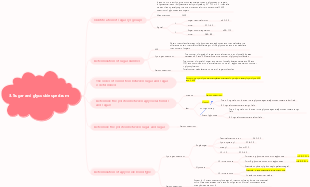
Mind map of glycosides, a type of compound formed by linking sugar or sugar derivatives to another non-sugar substance through the terminal carbon atom of the sugar. Glycoside: glycoside, non-sugar part: aglycone/glycoside .
Edited at 2023-10-29 19:56:14This is a mind map about bacteria, and its main contents include: overview, morphology, types, structure, reproduction, distribution, application, and expansion. The summary is comprehensive and meticulous, suitable as review materials.

This is a mind map about plant asexual reproduction, and its main contents include: concept, spore reproduction, vegetative reproduction, tissue culture, and buds. The summary is comprehensive and meticulous, suitable as review materials.
This is a mind map about the reproductive development of animals, and its main contents include: insects, frogs, birds, sexual reproduction, and asexual reproduction. The summary is comprehensive and meticulous, suitable as review materials.
This is a mind map about bacteria, and its main contents include: overview, morphology, types, structure, reproduction, distribution, application, and expansion. The summary is comprehensive and meticulous, suitable as review materials.
This is a mind map about plant asexual reproduction, and its main contents include: concept, spore reproduction, vegetative reproduction, tissue culture, and buds. The summary is comprehensive and meticulous, suitable as review materials.
This is a mind map about the reproductive development of animals, and its main contents include: insects, frogs, birds, sexual reproduction, and asexual reproduction. The summary is comprehensive and meticulous, suitable as review materials.
Glycosides
Physical and chemical properties
Traits
Generally solid
Contains few sugar groups and is crystalline
The sugar-containing base is mostly amorphous powder
color
subtopic
taste
Generally tasteless
Some glycosides are hygroscopic and irritating to mucous membranes: saponins, cardiac glycosides, etc.
Optical activity
All have optical activity
The sugars produced by hydrolysis are mostly left-handed, and the sugars produced by hydrolysis are mostly right-handed (the change in optical rotation before and after hydrolysis can be used as a clue to the existence of glycosides, but confirming the existence of glycosides is to find the aglycone)
Solubility
Glycosides are water soluble
Soluble in methanol, ethanol, aqueous n-butanol and other hydrophilic organic solvents
A lipophilic organic solvent that is poorly soluble in petroleum ether, benzene and chloroform.
Aglycon polylipophilicity
Easily soluble in organic solvents
Hardly soluble in water (some are soluble in petroleum ether, some are insoluble)
The more sugar groups, the greater the water solubility
Cleavage of glycoside bonds
Study the structure of glycosides and polysaccharides
acid catalyzed hydrolysis
Environment: water or dilute alcohol
Dilute hydrochloric acid, dilute sulfuric acid, acetic acid, formic acid, etc.
Mechanism: protonation of glycoside bond atoms (key) - cleavage of glycoside bonds to form cationic carbon ions and sugar cationic intermediates - solvation of cationic carbon ions in water - removal of protons to form sugar molecules
Hydrolysis rules
Glycoside bond atoms: nitrogen glycoside>oxo glycoside>S>C
N amide, the pyrimidine ring has p-π conjugation, the electron cloud density is reduced, and it is difficult to hydrolyze
Furanose (five-membered ring, planar structure, ring tension decreases after hydrolysis) > Pyranose (six)
Pyranosides: five-carbon oxyglucosides > Class A five-carbon glycosides > six-carbon glycosides > seven-carbon glycosides > uronic acid glycosides (the most difficult to hydrolyze)
Deoxyglycosides>Hydroxyglycosides>Aminoglycosides
2,3-deoxyglycoside>2-deoxyglycoside>3-deoxyglycoside>2-hydroxyglycoside>2-aminoglycoside
Aromatic glycosides > Aliphatic glycosides (aromatic ring powered)
Glycosides that are difficult to hydrolyze or whose aglycones are easily destroyed can be hydrolyzed by biphasic acids.
base catalyzed hydrolysis
The acetal structure is stable and generally does not undergo alkali hydrolysis.
Ester glycosides, phenolic glycosides, dilute alcohol glycosides or glycosides with β-electron-withdrawing substitutions, subject to alkaline hydrolysis
Crocin
Enzymatic hydrolysis
Mild, it protects the structure of sugar and aglycone unchanged, and can also obtain secondary glycosides, aglycone and sugar, and the connection method of sugar and sugar.
Exclusive:
Exclusive
α-glucosidase (maltase) can only hydrolyze α-glycosidic bonds (α-glucosidic bonds)
β-glucosidase (mygdalase) can only hydrolyze β-glycosidic bonds (β-glucosidic bonds) with poor specificity, and can also hydrolyze other six-carbon sugar β-glycoside bonds.
Determine glycoside bond configuration
Graduality
Hydrolyze the outer sugar group first - determine the order
acetolysis reaction
Reagents: acetic anhydride and acid (commonly used sulfuric acid, perchloric acid, Lewis acid-zinc chloride, boron trifluoride, etc.)
Difficulty level: 1→6 glycoside bonds>1→4>1→3>1→2
The acetylated sugars identified by HTL and PC can then be used to infer the connecting positions of sugars and sugars in glycosides.
Oxidative cracking reaction (Smith degradation method)
Principle: Periodic acid oxidizes the ortho-diol hydroxyl structure of the sugar (not the ortho-diol hydroxyl group of the glycoside), and then sodium tetrahydroborate reduces it to the glycol, which is unstable in acid Hydrolyze to obtain native aglycone (the reaction conditions are mild, suitable for oxyglycosides with unstable aglycone structures and carbon glycosides that are difficult to hydrolyze)
Color development, precipitation reaction
sugar
aglycone
Extraction and Separation
extract
Water extraction and alcohol precipitation (primary glycoside/secondary glycoside/glycone)
Solubility (pay attention to killing enzymes and protecting glycosides), commonly used system solvent method
Maintain neutral conditions to prevent hydrolysis of glycosides Add calcium carbonate during extraction, or use methanol, ethanol, or boiling water
The aglycone has strong fat solubility and is generally extracted with organic solvents such as ether and chloroform.
separation
solvent method
Macroporous adsorption resin method
First elute the large polar components of sugars with water, and then use ethanol (concentration from low to high) to separate the glycosides
Column chromatography
Strongly lipophilic glycosides and aglycones: silica gel adsorption column
Highly polar glycosides: silica gel or cellulose distribution column chromatography, water-saturated organic solvent as eluent
Polyamide chromatography
detect
Physical and chemical examination
sugar
Hydrolysis reaction: The aglycone has poor water solubility, and will precipitate after cooling after acid hydrolysis.
Chromatography
TLC: Silicone Dispensing
Forward: n-butanol-acetic acid-water, chloroform-methanol-water, ethyl acetate-n-butanol-water
Reverse: acetonitrile-water, methanol-water
PC: n-butanol-ethyl acetate-water, n-butanol-ethanol-water, water-saturated phenol
Reagent
sugar
aglycone
Classification of glycosides
glycoside bond atom
oxyglycoside
Alcohol glycosides
ranunculus
salidroside
Phenolic glycosides
Gastroside
Paeonolin
Arbutin
Anthraquinone glycosides, coumarin glycosides, most of the flavonoid glycosides
ester glycosides
saponin
Commonly found in triterpene saponins
Cyanogenic glycoside: a-hydroxynitrile structure
Amygdalin
Glucosinolates
carotene
Myrosin
nitrogen glycosides
Guanosine, adenosine, cytidine
Crotonin
Carbon glycoside
Aloe glycoside, aloe vera glycoside
The aglycones are mostly flavonoids, anthrones, and anthraquinones.
Glycoside structure
It is formed by the dehydration condensation of the hemiacetal hydroxyl group of the sugar and the hydroxyl group of the aglycone, so glycosides mostly have an acetal structure. The chemical bond between aglycone and sugar is called a glycoside bond The O connected to the sugar on the aglycone is the glycoside bond atom
A class of compounds in which sugar or a sugar derivative is linked to another non-sugar substance through the terminal carbon atom of the sugar. Glycoside: Glycoside Non-sugar part: aglycone/glycoside
Structural research
Program: Physical constants - molecular weight - aglycones and sugars that make up glycosides (glycone structure - type of sugar - number of sugars) -Aglycone and sugar, the connection position between sugar and sugar -sugar and sugar connection sequence -glycoside bond configuration
Determination of glycoside purity
Melting point, specific rotation, TLC, HPLC
molecular weight
Glycosides are highly polar and difficult to volatilize
Electron impact mass spectrometry (EI) is generally not used
Chemical ionization (CI), field desorption (FD), fast atom bombardment (FAB), electrospray (ESI)
Type and amount of sugar
Type of sugar: After hydrolysis, use PC (n-butanol, acetic acid, water), TLC (silica gel), GC (methanolysis first) , or direct NMR
Number of sugars: MC, NMR,
Location
Aglycones and sugars: NMR—C-NMR: glycosylation shift
Sugars and Saccharides: Chemistry/NMR (methanolysis after methylation)
Sequence: Hydrolysis/MS
Glycoside bond configuration
Optical activity/enzyme
H/C—NMR