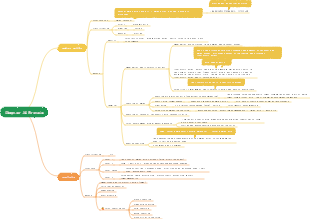
MindMap Gallery Chapter 1 Signals and Systems
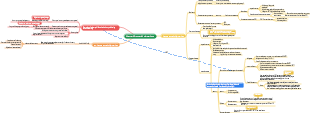
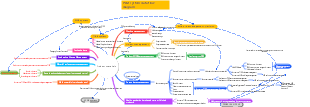
Textbook: "Signals and Linear System Analysis" fifth edition by Wu Dazheng, compiling the knowledge points of the first chapter of signals and systems. Signals are the expression form or transmission carrier of messages.
Edited at 2023-10-23 23:27:18This is a mind map about bacteria, and its main contents include: overview, morphology, types, structure, reproduction, distribution, application, and expansion. The summary is comprehensive and meticulous, suitable as review materials.

This is a mind map about plant asexual reproduction, and its main contents include: concept, spore reproduction, vegetative reproduction, tissue culture, and buds. The summary is comprehensive and meticulous, suitable as review materials.
This is a mind map about the reproductive development of animals, and its main contents include: insects, frogs, birds, sexual reproduction, and asexual reproduction. The summary is comprehensive and meticulous, suitable as review materials.
This is a mind map about bacteria, and its main contents include: overview, morphology, types, structure, reproduction, distribution, application, and expansion. The summary is comprehensive and meticulous, suitable as review materials.
This is a mind map about plant asexual reproduction, and its main contents include: concept, spore reproduction, vegetative reproduction, tissue culture, and buds. The summary is comprehensive and meticulous, suitable as review materials.
This is a mind map about the reproductive development of animals, and its main contents include: insects, frogs, birds, sexual reproduction, and asexual reproduction. The summary is comprehensive and meticulous, suitable as review materials.
Chapter 1 Signals and Systems
1. Signal
definition
The form or delivery vehicle of the message
express
Mathematical expressions (functions)
Waveform graph
Classification
Deterministic signal & random signal
This book only discusses certain signals
OK signal
The signal has a definite value at every point in the domain (can be represented by a definite time function or sequence)
A signal that is defined in the continuous time range (-∞<t<∞) is called a continuous time signal.
"Continuous": The domain of the function - time (or other quantity) is continuous. The value range can be continuous or discontinuous.
random signal
"uncertainty", "unpredictability"
Continuous signal & discrete signal
Continuous signals (continuous time signals)
Discrete signals (discrete time signals)
This book only discusses the case where Tk is equal to a constant
A signal that is defined only at some discrete instants is called a discrete-time signal.
"Discrete": The domain of the function - time (or other quantities) is discrete, and it only takes certain specified values.
Periodic signals & non-periodic signals
periodic signal
It is defined in the (-∞, ∞) interval and is a signal that changes repeatedly according to the same rule every certain time T (or integer N).
non-periodic signal
Signals that are not periodic are called aperiodic signals.
formula
continuous periodic signal
f(t)=f(t mT),m=0,±1,±2,···
discrete periodic signal
f(k)=f(k mN),m=0,±1,±2,···
in conclusion
①Continuous sinusoidal signals must be periodic signals, but sinusoidal sequences are not necessarily periodic sequences.
②The sum of two consecutive periodic signals is not necessarily a periodic signal, but the sum of two periodic sequence values must be a periodic sequence.
Energy Signal & Power Signal
energy signal
If the energy of the signal f(t) is bounded (i.e. 0<E<∞, then P=0), it is called an energy-limited signal.
Time-limited signal: a signal that is not zero only within a limited time interval E: Normalized energy P: normalized power
power signal
If the energy of the signal f(t) is bounded (i.e. 0<P<∞, then E=∞), it is called a power-limited signal.
formula
in conclusion
①Periodic signals are power signals
②The non-periodic signal may be a power signal or an energy signal
③Some signals are neither energy signals nor power signals, such as f(t)=e^t
other
Real signals and complex signals
Causal and non-causal signals
One-dimensional signals and multi-dimensional signals
2. Basic operations of signals
addition and multiplication
The discrete sequence addition (or multiplication) can be calculated by adding (or multiplying) the values of the corresponding sample points respectively.
Invert and translate
Reversal - f(t)→f(–t) or f(k)→f(–k) is called the inversion or inversion of the signal f(·). Graphically, it means f (· ) is reversed by 180° with the vertical coordinate as the axis.
Translation - f(t)→f(t t₀) is called the translation or shift of the signal f(·), if t) is called the translation or shift of the signal f(·), if t₀ < 0, Then move f(·) to the right, otherwise move it to the left.
Scale transformation (abscissa expansion and contraction)
f(t)→f(at) is called the scale transformation of the signal f(t). If a>1, then f(at) compresses the waveform of f(t) along the time axis to the original 1/a; if 0<a<1, then f(at) compresses the waveform of f(t) along the time axis Expand to a times the original size.
3. Step function and impulse function
Step function and impulse function
unit step function, Usually the value at t=0 is not defined
The unit impulse function is a singular function, which is a function of maximum intensity and action time. An idealized model of extremely short physical quantities (proposed by Dirac). Understanding: A symmetrical narrow pulse with infinite height, infinitesimal width and area of 1.
Generalized function definition of impulse function
Select a type of function φ(t) with good performance, called the test function (which is equivalent to the definition domain). A generalized function g(t) is a mapping that assigns a value N to each function φ(t) in the test function space. , this number is related to the generalized function g(t) and the test function φ(t), and is recorded as N[g(t), φ(t)]. Usually the generalized function g(t) can be written as ∫g(t)φ(t)dt=N[g(t),φ(t)]
Derivatives and integrals of shock functions
Properties of impulse functions
Parity
Multiply with an ordinary function
Sampling properties
scale transformation
Three steps to follow when applying sampling features
1. Look at the moment t₀ when the impulse occurs; 2. Check whether t₀ is included in the integral limit; 3. Substitute t₀.
4. System
describe
mathematical model
If the response (output signal) of a system at any moment depends only on the excitation (input signal) at that moment and has nothing to do with its past conditions, it is called an immediate system (or memoryless system). If the response of a system at any moment is not only related to the excitation at that moment, but also related to its past conditions, it is called a dynamic system (or memory system).
This book mainly discusses dynamic systems
When the excitation of the system is a continuous signal and its response is also a continuous signal, it is called a continuous system. The mathematical model describing the continuous system is a differential equation. When the excitation of the system is a discrete signal and its response is also a discrete signal, it is called a discrete system. The mathematical model describing the discrete system is a difference equation.
System block diagram representation
Commonly used basic units: integrator (for continuous systems) or delay unit (for discrete systems), adders and number multipliers (scalar multipliers)
characteristic
Linear
y(·)=T[f(·)]
Homogeneity
Assuming α is an arbitrary constant, if the excitation f(·) of the system increases by α times, its response y(·) also increases by α times, that is, T[αf(·)]=αT[f(·)], then The system is said to be homogeneous or uniform.
Additivity
If the response of the system to the sum of excitations f₁(·) and f₂(·) is equal to the sum of the responses caused by each excitation, That is, T[f₁(·) f₂(·)]=T[f₁(·)] T[f₂(·)], then the system is said to be additive.
nature
Decomposition properties
zero state linear
When all initial states are zero, the zero-state response of the system should be linear (including homogeneity and additivity) for each input signal, which can be called zero-state linearity.
zero input linear
When all input signals are zero, the zero-input response of the system should be linear for each initial state, which can become the zero-input characteristic.
time invariant
If the response caused by the stimulus f(·) acting on the system is yzs(·), then when the stimulus is delayed for a certain time td (or kd), the zero-state response caused by it is also delayed by the same time,
If there is a variable coefficient before f(·), or there is an inversion or expansion transformation, the system is a time-varying system.
Causality
For any time t₀ or k₀ (generally optional t₀=0 or k₀=0) and any input f(·), if f(·)=0, t<t₀(k<k₀) if its zero state response yzs(· )=T[{0},f(·)]=0,t<t₀(k<k₀), the system is called a causal system, otherwise it is called a non-causal system.
stability
For a bounded excitation f(·), the zero-state response yzs(·) of the system is also bounded. This is often called bounded input and bounded output stability, or stability for short.
This book mainly discusses linear time-invariant systems (LTI)