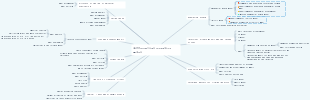
MindMap Gallery Guidance for the American College Student Mathematical Modeling Competition
Many teams relied on this set of pre-match tutorials to win M or F awards. This template introduces in detail the process of the American College Student Mathematical Modeling Competition, tips for each stage before, during and after the competition, and the data processing software involved. Document search tools, translation tools, etc. It is recommended that all team members study together before the competition, which can greatly increase the probability of winning.
Edited at 2024-03-02 22:40:59This is a mind map about bacteria, and its main contents include: overview, morphology, types, structure, reproduction, distribution, application, and expansion. The summary is comprehensive and meticulous, suitable as review materials.

This is a mind map about plant asexual reproduction, and its main contents include: concept, spore reproduction, vegetative reproduction, tissue culture, and buds. The summary is comprehensive and meticulous, suitable as review materials.
This is a mind map about the reproductive development of animals, and its main contents include: insects, frogs, birds, sexual reproduction, and asexual reproduction. The summary is comprehensive and meticulous, suitable as review materials.
This is a mind map about bacteria, and its main contents include: overview, morphology, types, structure, reproduction, distribution, application, and expansion. The summary is comprehensive and meticulous, suitable as review materials.
This is a mind map about plant asexual reproduction, and its main contents include: concept, spore reproduction, vegetative reproduction, tissue culture, and buds. The summary is comprehensive and meticulous, suitable as review materials.
This is a mind map about the reproductive development of animals, and its main contents include: insects, frogs, birds, sexual reproduction, and asexual reproduction. The summary is comprehensive and meticulous, suitable as review materials.
US Sai Guidance
Basic introduction to mathematical modeling
Precautions
Register and complete the competition yourself without looking for an agent
Not participating in online discussion groups
Do not use model diagrams and programs that were not completed by yourself
Protect your papers from leakage and prohibit plagiarism checking and translation
What is mathematical modeling
Use mathematical language and methods to abstractly simplify and establish a path that can approximately describe and solve the problem.
Actual problems are expressed as mathematical models, and the mathematical models are solved to achieve and verify answers to actual problems.
Enter mathematical modeling
Learn the basics of math
Calculus, linear algebra, modern algebra, analytic geometry, differential geometry, ordinary differential equations, probability theory, mathematical statistics, mathematical modeling
Participate in on-campus mathematical modeling competitions
Practice is the only way to transform book knowledge into your own abilities
Participate in the National Undergraduate Mathematical Modeling Competition
Second week of fall semester
Apply for undergraduate research projects, graduation thesis design, Shenzhen Cup Challenge, Jiangsu Big Data Development and Application Competition, American College Student Mathematical Modeling Competition
Abilities developed by participating in mathematical modeling competitions
Discover and ask mathematical questions from real problems
Ability to quickly acquire information and master new knowledge through literature reading
Abstractly define mathematical concepts, set variables and parameters, and determine solution goals
Choose appropriate mathematical methods and establish mathematical models
Not only can you deductively reason, program and calculate, and be familiar with mathematical software
Bold and careful, perseverant, confident and self-reliant
Master the writing methods of scientific papers, write rigorously and express clearly
Have teamwork awareness and spirit
Basic process of mathematical modeling
Read the question, understand the actual problem situation, and clarify the key points and goals of the problem
What do you want?
What is the purpose?
What factors are involved?
Must be discussed clearly before reviewing the literature
Translation, extracting mathematical problems from practical problems
Model, select variables, adopt or construct appropriate mathematical models
Solving, using mathematical reasoning and programming calculation methods to solve mathematical models
Test, compare the results of the mathematical model with the actual situation, and verify the model results
Explain, analyze the limitations and scope of application of mathematical models, and provide conclusions to solve practical problems
The first element of mathematical modeling: mathematical definition
Introduce mathematical definitions and determine variables and parameters
Only with mathematical definitions can we have mathematical models
Analyze variable relationships and select appropriate mathematical models
The second element of mathematical modeling: reasonable assumptions
Define uncertain factors, replace complexity with simplicity, and make up for the lack of information.
Assumptions need to strike the right balance between practicality and mathematical simplicity
Conclusions based on assumptions must undergo parameter sensitivity analysis and model robustness analysis
Clearly describe the rationality, necessity and impact of the assumptions, give reasons, cite literature, and analyze the implications.
The third element of mathematical modeling: focus on reality
Establish the model based on reality, model mathematical reasoning with the help of reality, and finally use reality to test the model
Key points for preparation for mathematical modeling competition
U.S. competition rules and precautions
2.5 5 a.m. - 2.9 8 a.m. (ends at 9 a.m.)
4.1 Result
Register with an instructor using a different email address
The total number of pages should not exceed 25 pages
Abstract, Table of Contents, References, Appendix
Team serial number
Communication outside the team is strictly prohibited
Reference standards, pictures too
Do not disclose personal information
Minimum font size 12
Register in time
Download thesis template
Submit email: solutions@comap.com
File name (only one pdf), subject is team serial number
The home page is an abstract, only one pdf, no personal information.
Upload papers three hours in advance
Protect the credit card used for payment and print and save the payment invoice
Registration and team formation
The paper must be written by three people together and takes at least one and a half days.
In order to write a clear paper, I would rather choose a simpler model
Preparation before the game
Software preparation
Matlab, Netlogo, spss, r, python, arcgis, drawing software
Model preparation
Partial differential equation model A
Differential Equation Model B
Statistical model C
Optimization model ABCDEF
Simulation model ABD
Algorithm preparation
Algorithm A for numerical solution of partial differential equations
Discrete Model Simulation Algorithm B
Parameter estimation method C
Stochastic intelligent optimization algorithms (simulated annealing, genetic algorithms) neural networks, machine learning
Learn how to do model testing, sensitivity analysis
Literature search tools: Google, CNKI, Muduo search
Translation tools
CNKI's scientific and technological English translation
Read excellent papers
On-campus resources
Writing skills practice, prepare essay template
word,latex
Prepare 3 computers and install relevant software
Read the competition rules carefully, summarize the most important essay writing notes, and post them in a conspicuous place
Select past competition questions for simulation practice
Training problem analysis and review skills
Learn how to model testing, especially sensitivity analysis
Writing skills practice
Form a team cooperation model and be familiar with the basic procedures for selecting topics, discussing, solving problems, and writing
Characteristics of US Contest Questions
Key points of the modeling competition
Topic selection
Choose the direction you are most familiar with
The apparent difficulty is not necessarily the same as the actual difficulty
Carefully analyze the logical connections between various small problems
Draw all the key words in the question, taking into account
Determine the computational complexity of the model
Determine the possibility of innovation
Blindly copying documents
Follow others' opinions
Poor understanding of the problem
Weak quantitative skills
Information search
Model selection
Reasonableness of conclusion
computer aided
essay writing
Scoring method
No more than a few points without considering any factors
Completeness, strict logic, clear expression, transcending phenomena to see the essence, easy to read and understand, and standardized citations
step
Problem analysis, insight into the theme
what is the goal
What are you asking for and how are the issues related?
What are the main influencing factors and put forward hypotheses
Read the question carefully
What models can be used
What literature to draw from
Notes on essay writing
Key indicators of paper quality
Correct application of mathematical methods
Completeness and depth of problem solving
Innovative and insightful modeling methods
Clear and concise text description
Visual presentation of results
Common mistakes
There are too many symbols, and there is no symbol explanation under the main model.
Irregular literature citation
There is no derivation process, no formula symbols, and I don’t know where the results will come from.
There are too many excerpts from the literature, and the duplication check exceeds the limit.
The chart formula is not clear
Failure to use charts and graphs to express results clearly and concisely
Only numerical results, no algorithms, no algebraic models
Separate model and solution process
Do not express the results in the text, or even have no results at all
Other things to note
Fonts should be coordinated
Don’t use weird fonts
Don’t use picture formulas
Check whether the formula has been blurred
Say important things more than three times
Avoid typos and grammatical errors in important places
Charts and charts should be numbered separately and have descriptions. The descriptions of the figures are below and the descriptions are above.
Important symbols are always explained
Literature citation is very important, especially when the background theory of the problem is relatively advanced, you must also clearly point out your own improvements and processing.
Clearly write down what a certain document did using this method, and what we did using or improving this method.
Regardless of whether it can be calculated or not, there must be a process and result.
The results obtained must be vivid and colorful, and the graphs and text should be combined to explain the rationality.
Must master drawing software
The paper must be written by three people together
Basic paper format
topic
summarysummary
Be concise, no background to the question, no more than one page
What model was built for what problem, what algorithm was used to get what conclusion, the innovation lies in
Write in paragraphs according to questions
No formulas, literature references, or symbols should appear.
Never make it up
keywordkeyword
Professional vocabulary for research objects and research methods
Table of contents
Text part
1. Problem restatement and analysis
Proposition of the problem and its background, emphasis on key points and solutions, data description, literature review (where to get inspiration or which methods mentioned in the literature are not used)
What amount do you want?
What is the goal? What is the significance of research?
What are the relevant factors? elicit the following hypothesis
What is the key point in solving the problem? elicit problem-solving methods
Full-text review of modeling ideas, description of model algorithms, and article structure layout (emphasis on the characteristics and innovation of ideas and methods, and a brief review of the corresponding literature based on the problem)
Review the literature used, summarize the full text, and outline the model algorithm.
Don't copy the questions, otherwise you will be checked for plagiarism and explode.
Describe the problem objectives and solutions to the problem
The goal should be quantified into what quantity, and the method should be quantified into a specific mathematical model. Introduction to the models in the literature
Pay attention to the core goals of the analysis problem
Pay attention to the logical connections between tasks
Pay attention to flexible and dialectical analysis of problems, adapt to changes, and do not think in a fixed way
Think about the problem from the perspective of the person who asked the question, be immersed in the situation, and proceed from reality
2. Assumptions & justifications
Simplify and clarify the assumptions of the problem, reference parameters, and symbols of variables (don’t write too long, it will be explained later)
Simplify the problem appropriately
Make up for the lack of information and data
Must match model
Generally, assumptions about the parameters in the model
a hypothesis and a reason
3. Model construction and application
A clearly labeled model. The model must be consistent with the assumptions, the reasoning and calculations are clearly expressed, and there are clear mathematical conclusions and problem conclusions.
Model building
Preliminary data processing
Write clearly the derivation process and mathematical expressions of the model. There needs to be an explanation of the symbols below the main model.
When using classic models in the literature, do not copy the derivation process. Just provide explanations and citations.
Do not cite model principles in literature at large lengths
The mathematical form of the model must be present and cannot be written in pure text.
Reasons, derivation, detailed explanation, cited sources
Classification
Contour model
Dimensional model, scale model, interpolation, fitting
Mechanism model (partial differential equations, difference equations)
System of difference equations, detailed explanation, rationality
Differential equations, detailed derivation process
Detailed model building process
Optimization model
Optimization goals and constraints
Why use such constraints and why have such an objective function?
statistical model
Pay attention to the mathematical expression of random factors (random variable, distribution, expectation, variance)
Parameter estimation is the key
Model applicable conditions
Charts output by statistical software cannot be placed directly in the text. You must select useful results and re-table them.
Simulation model (cellular automaton)
Simulation rules are models
Do not use AHP unless necessary
Model calculation
The first step is to estimate and select the initial values and parameters in the model.
Write clearly the estimation method and reasons for selection
Secondly, briefly introduce the software used, the name of the algorithm, and the calculation time. Do not copy the algorithm principles in the literature.
Briefly describe the algorithm process and steps for important core algorithms in your own words, draw a simple and easy-to-read flow chart or use a ready-made toolbox software package
A statement of the data used in the calculation
The algorithm is very simple, even if you use a calculator to calculate it, you have to explain it.
Don't deliberately choose complex algorithms, everything is aimed at solving problems and making them easy to calculate, read and understand.
There is no need to attach code. For complex algorithms, try to choose ready-made software and toolboxes, and explain the input and output clearly.
results and analysis
The results are presented in various forms and are visualized
Data tables, prison sentences are best available
Don’t let people look at the pictures and speak for themselves. There must be lengthy explanations and descriptions of the results.
Pay attention to the description and number of the icon. The description of the figure is in the table below and centered. The font size in the figure is preferably half a size smaller than the main text.
4. Model testing and sensitivity analysis
Utilize data inspection and parameter sensitivity analysis
Model result testing, error analysis
Sensitivity analysis of model parameters, each parameter is analyzed
It is actually a test of the hypothesis
5. Further discussion (advantages, disadvantages and prospects) analysis of strengths&weaknesses
Advantages of the model, scope of use, possible improvements to the model
Just a formality
Model scope of application
Model improvements
6. Letter memo
Written based on the model result data, it is pragmatic and realistic for practical problems.
Must be placed before the reference
Just one page
References
Reference format
Modeling papers must have references
There must be literature citations in the text
superscript
appendix
Program code output results
Full model calculation results that are too large
The results output directly from the software operation, usually in the form of a table
Appendix appendix (programs and data) is optional