MindMap Gallery Alcohol, phenol, ether
Mind map of organic chemistry alcohols, phenols, and ethers. Sharing of essential review materials. Used for review and preview to improve learning efficiency. I hope it will be helpful to everyone preparing for the exam.
Edited at 2024-04-09 11:05:20This is a mind map about bacteria, and its main contents include: overview, morphology, types, structure, reproduction, distribution, application, and expansion. The summary is comprehensive and meticulous, suitable as review materials.

This is a mind map about plant asexual reproduction, and its main contents include: concept, spore reproduction, vegetative reproduction, tissue culture, and buds. The summary is comprehensive and meticulous, suitable as review materials.
This is a mind map about the reproductive development of animals, and its main contents include: insects, frogs, birds, sexual reproduction, and asexual reproduction. The summary is comprehensive and meticulous, suitable as review materials.
This is a mind map about bacteria, and its main contents include: overview, morphology, types, structure, reproduction, distribution, application, and expansion. The summary is comprehensive and meticulous, suitable as review materials.
This is a mind map about plant asexual reproduction, and its main contents include: concept, spore reproduction, vegetative reproduction, tissue culture, and buds. The summary is comprehensive and meticulous, suitable as review materials.
This is a mind map about the reproductive development of animals, and its main contents include: insects, frogs, birds, sexual reproduction, and asexual reproduction. The summary is comprehensive and meticulous, suitable as review materials.
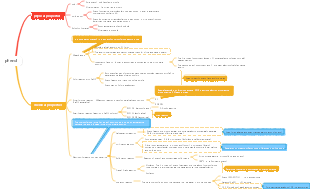
Alcohol, phenol, ether
alcohol
Classification and naming
common nomenclature
systematic nomenclature
unsaturated alcohol
Polyol
physical properties
Boiling point: 1. The boiling point of alcohol is higher than that of alkanes with similar relative molecular mass. 2. The boiling point of polyhydric alcohol is higher than the boiling point of monovalent alcohol with similar relative molecular mass. 3. Among the isomers of alcohols, primary monovalent alcohol has the highest boiling point (secondary alcohol). , tertiary branched chain, lower boiling point) 4 Alkyl group will hinder the formation of hydrogen bonds, so as the relative molecular mass increases, the boiling points of alcohols, halogenated hydrocarbons and alkanes are closer (the boiling points of alcohols increase as the relative molecular mass increases)
Water solubility: Methyl, ethylene, propyl alcohol and water are miscible in any proportion. Starting from butanol, the water solubility gradually weakens (the alkyl group increases and the solubility decreases. The reason is the same as 4) (the more hydroxyl groups, the greater the solubility)
Because alcohol has a hydroxyl group, it forms hydrogen bonds with water and is miscible with water × Higher alcohols are difficult to dissolve in water
chemical properties
The O in the hydroxyl group is hybridized in the form of unequal sp3 (except when the hydroxyl group is directly connected to the double bond carbon atom - enol, O is sp2 hybridized)
Acidic: Reacts with active metals
Breaking H reflects acidity - O and H are polar bonds and are easy to break
Acidic H2O>Alcohol-methyl is an electron-donating substituent, which weakens the polarity of the O and H bonds.
The more methyl groups, the slower the reaction
The stronger the corresponding salt and alkalinity (weak acid and strong alkali)
Hydrolysis reaction of sodium alkoxide: Alcohol and sodium hydroxide cannot react (weak acid does not generate strong acid)
Alcohol can be dissolved in strong acid (chemical reaction produces salt)
Nucleophilic substitution with concentrated hydrohalic acid
HI is more likely to break bonds and has a more active nucleophilic reaction with alcohol, so the I negative ion is more nucleophilic.
For the same hydrohalic acid, the reaction activity is: tertiary alcohol > secondary alcohol > primary alcohol - the more stable the carbocation intermediate produced by the reaction, the higher the activity of the reactant, and the faster the reaction
Reaction mechanism 1: SN1 nucleophilic substitution - such as tertiary alcohols and hydrohalic acids
Reaction mechanism 2: proceed according to the SN2 reaction mechanism - such as primary alcohols and hydrohalic acids
identify
Lucas reagent (anhydrous Zncl2 dissolved in concentrated hydrochloric acid) identifies primary, secondary, and tertiary alcohols with less than 6 carbon atoms.
HI HBr can react with various alcohols without catalysis, while Hcl requires catalysis
-The more stable the carbocation intermediate generated by the reaction is, the higher the activity of the reactants is and the faster the reaction is.
Principle: Alcohols with less than 6 carbon atoms can be dissolved in Lucas reagent
Identification of monohydric alcohols and polyhydric alcohols
Tertiary alcohols can be distinguished from primary or secondary alcohols by the color change of the oxidizing agent (tertiary alcohols do not undergo oxidation reactions)
Reacts with phosphorus halides and thionyl chloride
Alkaline: esterification reaction
Reacts with oxygen-containing inorganic and organic acids and acid anhydrides to dehydrate to form esters
dehydration reaction
intramolecular dehydration
Follow Zaichev's rules
E1 reaction mechanism-reaction rate: tertiary alcohol>secondary alcohol>primary alcohol
Intermolecular dehydration-nucleophilic substitution
Proceed according to the reaction mechanism of SN2 - primary alcohols and secondary alcohols mainly carry out this reaction, tertiary alcohols are difficult to
oxidative dehydrogenation
Oxidation
Tertiary alcohols can be distinguished from primary or secondary alcohols by the color change of the oxidizing agent (tertiary alcohols do not react)
Dehydrogenation
phenol
name
At this time, there is no phenol, and the hydroxyl group is expressed as a substituent.
physical properties
Phenol is a colorless solid, acidic, also known as carbolic acid
Can be oxidized by air into pink and turn into deep red for a long time
Can form intermolecular hydrogen bonds and can form hydrogen bonds with water, so it has solubility in water
chemical properties
Structural properties: O is SP2 hybridized and does not participate in the hybridized P orbital and P-π conjugation of the benzene ring. The electrons are transferred to the benzene ring. O-H is easily broken and has weak acidity.
Acidic
Therefore, the reaction between carbonic acid and sodium phenolate can produce phenol (strong acid makes weak acid)
There are electron-withdrawing substituents on the aromatic ring - the acidity is enhanced; there are electron-donating substituents - the acidity is weakened.
Color reaction: shows blue-purple color with ferric chloride
The stable enol form can also react with ferric chloride to produce a color reaction
electrophilic substitution
Reaction of phenol and bromine water
Phenol reacts with bromine in CCL4 solution to obtain monobromophenol
It reacts with dilute nitric acid at room temperature to produce o-nitrophenol and p-nitrophenol. If concentrated nitric acid and concentrated sulfuric acid react to produce 2,4,6 trinitrophenol.
oxidation reaction
Phenol can be oxidized to p-benzoquinone (yellow) by oxidants
ether
O in the ether bond is hybridized with inequality SP3
Classification
According to whether the two hydrocarbon groups connected to the ether bond are the same, they are divided into single ethers and mixed ethers.
According to whether the two hydrocarbon groups connected to the ether bond have aromatic rings, they are divided into aliphatic ethers and aromatic ethers.
name
Cyclic ethers are named after "epoxyalkane"
physical properties
Methyl ether and methyl ethyl ether are gaseous. Most ethers are liquid.
Low boiling point, small solubility in water except cyclic ether and crown ether
chemical properties
Go! ! ! ! ! ! ! !