 Wondershare EdrawMind
MindMap Gallery History of Foreign Literature(1)
- 44
History of Foreign Literature(1)
Regarding the history of foreign literature (1) mind map, including three styles of literature in the seventeenth century, Medieval Literature, Renaissance, Ancient literature, etc.
Edited at 2024-01-19 18:41:31
- bacteria
This is a mind map about bacteria, and its main contents include: overview, morphology, types, structure, reproduction, distribution, application, and expansion. The summary is comprehensive and meticulous, suitable as review materials.
- Plant asexual reproduction
This is a mind map about plant asexual reproduction, and its main contents include: concept, spore reproduction, vegetative reproduction, tissue culture, and buds. The summary is comprehensive and meticulous, suitable as review materials.
- Reproductive development of animals
This is a mind map about the reproductive development of animals, and its main contents include: insects, frogs, birds, sexual reproduction, and asexual reproduction. The summary is comprehensive and meticulous, suitable as review materials.
History of Foreign Literature(1)
- bacteria
This is a mind map about bacteria, and its main contents include: overview, morphology, types, structure, reproduction, distribution, application, and expansion. The summary is comprehensive and meticulous, suitable as review materials.
- Plant asexual reproduction
This is a mind map about plant asexual reproduction, and its main contents include: concept, spore reproduction, vegetative reproduction, tissue culture, and buds. The summary is comprehensive and meticulous, suitable as review materials.
- Reproductive development of animals
This is a mind map about the reproductive development of animals, and its main contents include: insects, frogs, birds, sexual reproduction, and asexual reproduction. The summary is comprehensive and meticulous, suitable as review materials.
- Recommended to you
- Outline
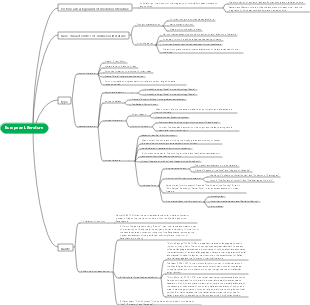
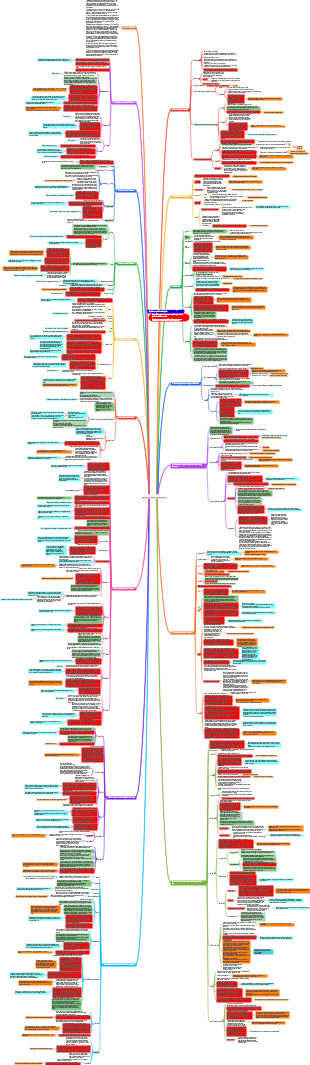

History of foreign literature
ancient literature
hebrew literature
Ur—migrated westward to Canaan
"Old Testament": "The Ten Commandments of Moses", the Jewish covenant with God
ancient greek literature
Fundamental contents
god story
The isomorphism of gods and humans; idealizing gods; the difference between gods and humans; worshiping gods, but praising humans at the same time; humanistic spirit
Characteristics of thinking in human childhood
hero legend
Epic "Homer"
"The Iliad"
Man's first literary work about war
It starts with the myth "The Battle for the Golden Apples" and the Trojan War as the background (the Greek coalition attacked Troy)
Protagonists: Achilles (Greek coalition), Patroclus (Achilles' friend), Hector (Trojan)
"The Odyssey"
A narrative centered around the Odyssey's return home.
The story spans ten years
The main plot is Odyssey’s own journey home.
The subplot is about his son Telemachus going out to search for news about his father.
drama
tragedy
Father of Tragedy: Aeschylus
"The Beggar", "The Persians", "Prometheus Bound", "Agamemnon", "The Seven Cities of Thebes"
Created the "triptych": "Prometheus Bound" is one of the triptychs
Sophocross
"Oedipus the King"
Protagonist: Oedipus
"Antigone"
Protagonist: Antigone
Dilemma:
bury brother
The king's uncle did not allow anyone to bury her brother
Euripides
The essence of tragedy: the dilemma
Aristotle's three elements of tragedy: sudden change, discovery, and suffering
comedy
lyric poetry
Pindar
the tradition of lyric poetry
Political, ethical and educational responsibilities
ancient roman literature
"Hellenistic" period
4th century BC - 2nd century BC, comedy
Alexander the Great's military conquests and the subsequent emergence of several kingdoms expanded Greek culture and integrated it with different civilizations, forming new cultures that were different from classical Greek culture, known in history as "Hellenization."
poetry
horace
"Long and Short Poems", "Song Collection",
"Poetry"
“Education through fun”
"The Art of Poetry" clearly affirms that poetry should be "sublime" in style. Point out that both poets and poetry are sacred, and God’s will is conveyed through poetry. Poetry not only indicates the way of life, but also brings joy to people.
works of literary criticism
"appropriate"
Also translated as "appropriate and decent"
"Fitness" first requires that literary and artistic works be consistent from beginning to end; secondly, it requires harmony in character creation and artistic style; thirdly, it is reflected in some drama rules
The principle of "fitness" is not only applied to the structure of the work, emphasizing that all parts of the work must be harmonious; it is also reflected in the characters' personalities, such as paying attention to the habits of different ages and giving appropriate modifications to different personalities and ages; it is also reflected in the language style On the other hand, poets must be original and moderate in their choice of words and sentences.
Virgil
"Pastoral", "Farming Poems"
"The Aeneid"
Summary: The Trojan hero Aeneas escaped from Troy under the protection of the gods. After going through hardships, he came to Italy, established the city of Rome, and began the rule of the Julian tribe. Praising the achievements of the Roman ancestors in founding the country shows that Rome’s mission of hegemony was determined by God.
Comparison with Homer
A timeless, consistent event: the Trojan War. The plot and characters are similar.
The first six volumes imitate "The Odyssey", in which Aeneas wanders on the sea for seven years and goes through many hardships. The last six volumes imitate the "Iliad", in which Aeneas fights heroically to fulfill the god's command.
Protagonist: Aeneas
Aeneas possesses the qualities of Virgil's ideal political leader. Take the overall situation into consideration and fight for collective honor.
Aeneas and Odysseus are both wanderers, but he has a great mission and is the executor of God's will.
Aeneas did not give up his sacred mission and responsibility for a private matter such as fighting for a female prisoner like Achilles, but he restrained his emotions and obeyed his sacred mission.
The language is subtle and meaningful, unlike Homer's boldness.
Achievement
For the first time in the history of European literature, the theme of conflict between duty and love appears.
The first outstanding literary epic in Western history. It established the model of literary epic.
Ovid
He does not sing praises, but always maintains his own personality. There is a strong color of hedonism in his works, and he is a hedonist to a certain extent.
Most of them are love poems, such as "Love Song" and "The Art of Love" (i.e. "Kama Sutra").
"Metamorphoses" rewrites ancient Greek mythology with extraordinary imagination
rhetorical period
The literature and art research of Alexandrian scholars has shifted from the level of social and realistic concerns to the level of formal skills of literature and art itself. Their academic works are mainly treatises on rhetoric and grammar. Therefore, some people regard the Alexandrian period and subsequent ancient times as The Roman period is called the "Rhetoric Period."
Longinus
"On the Sublime"
Five Factors of Sublime Style
The ability to grasp great ideas,
strong and deep passion,
Proper use of figures of speech,
noble words,
A stately and vivid layout.
Overall characteristics
In terms of artistic vitality, momentum, artistic level and originality, ancient Roman literature is far inferior to ancient Greek literature.
The creation of ancient Roman literature is closely related to the political ideologies of the ancient Roman Republic and the ancient Roman Empire. The unrestrained personality of ancient Greek art cannot be found here.
Ancient Roman literature connects the past and the future. For example, the Renaissance began with contact with ancient Roman art and indirectly came into contact with ancient Greek art.
early christian literature
The product of the blending of two Greek civilizations
The New Testament is the representative work and collection of early Christian literature.
medieval literature
period
From the 5th century to the 11th century, the early Middle Ages, that is, the period of formation of European feudal society.
From the 12th century to the 15th century, the middle Middle Ages, that is, the heyday of European feudal society.
The period from the 15th century to the mid-17th century, the late Middle Ages, was the period of decline of European feudal society and the budding period of capitalism. (Does not belong to medieval literature, but belongs to the Renaissance)
Deeply influenced by Christianity
church literature
Church literature serves to popularize religious teachings
"Old Testament" and "New Testament"
The New Testament is a Christian classic and also has high artistic value; however, the church has attached, distorted, and fabricated some doctrines to serve the needs of its own rule and policy of obscuring the people.
heroic epic
It has a folk "pagan" color, so it was destroyed by the church; but in the process of spreading in later generations, many Christian elements also penetrated into it.
"Edda" and "Saga"
"Edda"
Poetic Edda: including mythological poetry and heroic epics
The Prose Edda: An Interpretive Work on the Former
"Sakya"
Prose narrative literature reflects clan society
Value: It preserves rich and relatively complete Nordic myths, legends and historical stories, which has high literary and historical value.
Important heroic epics: France's "Song of Roland", Spain's "Cid's Song", Germany's "Niebelungenlied", Russia's "Igor's Expedition"
chivalric literature
The product of feudal society (primogeniture and the "knight of the light egg").
knightship
"Be loyal to the emperor, protect the teachings, and be a knight";
"Elegant and polite", advocating honor;
Knights yearned for the joys of worldly life and broke through the shackles of asceticism.
Loyalty to master;
Be loyal to your mistress and win the favor of the lady.
Lyrics of Chivalry
Admiration for elegant love
Most famous for "Dawn Song"
Urban literature (also known as citizen literature)
long narrative poem
France's "Legend of the Fox"
The life of animals reflects the real life of medieval society, and the fox symbolizes the civil class.
urban drama
Morality plays, fool's plays, farces (comedies), etc.
Dante
The last poet of the Middle Ages and the first poet of the Renaissance
"Feast"
Written in popular Italian language, it introduces scientific and cultural knowledge to the people and reduces disputes by improving people's cultivation.
"On Common Sayings"
Written in Italian, it demonstrates the superiority of Italian and criticizes the prejudice of only advocating Latin.
"On Imperialism"
Written in Latin, focusing on Dante's political views
"Divine Comedy"
Trilogy:
"Hell"
Hell is a big funnel, with the center in Jerusalem, gradually shrinking from top to bottom, and the souls it controls are more sinful as it goes downwards, until it reaches the center of the earth.
"Purgatory"
Purgatory (Pure Realm) is like a high mountain, in the sea opposite Jerusalem, where souls repent and wash away their sins. The mountain is divided into seven layers, symbolizing the seven deadly sins (pride, jealousy, anger, laziness, greed, food, and sex). Climbing one level removes a sin, and ascending to the top of the mountain leads to heaven. Including the foot of the mountain outside Purgatory and the paradise on the top of the mountain, there are nine floors in total. Those who suffered on the ninth level were traitors, frozen in the ice lake, and the people Dante hated the most. Dante ascends layer by layer, and eventually Virgil disappears. His first love, Beatrice, appears and guides Dante through heaven.
"Paradise"
Heaven is divided into nine levels, including the moon, mercury, Venus, sun, Mars, Jupiter, Saturn, fixed stars, and crystal sky. People who were good and virtuous during their lifetime: devout priests, martyrs for the Christian faith, wise monarchs, academic sages, Christ and angels, etc. can be in heaven. Above the ninth heaven, there is a flash of light from the Trinity of the Father, the Son, and the Holy Spirit.
Purpose: "To benefit an evil society"
Deep meaning: But it points out a way for mankind to move from darkness to light. Under the guidance of reason, human beings understand sins and mistakes, thereby awakening and gaining new life; and through being loyal to faith, they achieve the perfection of thought.
Renaissance
Rabelais
"The Legend of Giants"
The beginning of a modern European novel
A masterpiece that combines ancient myths, heroic epics, knight tales, folk tales and other artistic genres.
Part One: Pantagruel's Father: The Shocking Biography of the Giant Gao Kangda. It writes about Gao Kangda's birth and education, and the process of defeating the invaders with the help of Brother John. The second part: The biography of Pantagruel, the king of the thirsty country, returns his true colors and adds amazing heroic deeds. It mainly writes the story of Gao Kangda's son Pantagruel and his friendship with Panuge. Parts 3 to 5: In order to solve the problem of whether to get married or not, Banuri traveled across the ocean to search for the divine bottle to find the answer.
Source of story: folklore
Influenced by knight literature and citizen literature
Delime Abbey
Breakthrough in content and form: It broke through the medieval verse narrative literature and marked the birth of the modern novel.
Why was it that Rabelais was the only one who could combine various folk genres, themes and their respective artistic specialties into a novel, pioneering the trend?
In the Middle Ages, culture was monopolized by monks and nobles, and writers were almost all upper-class palace aristocrats. Rabelais's unique life experience allowed him to expand his horizons to the folk, and he truly took root here to gain inspiration and nourishment. The rise of the novel itself is a literary manifestation of the emergence of capitalism: the citizen class is becoming increasingly active, gradually forming its own expanding life circle, exerting more and more influence, and making its own voice heard.
Keywords in "The Legend of Giants": "drink"
At the end of the novel, Banuri finally found the divine bottle in a small hall and heard the word "drink" coming from the divine bottle. "It is not 'laughing' but 'drinking' that is human instinct. However, what I am talking about is not simply 'drinking', because any animal can drink it. What I am talking about is drinking refreshing wine... wine It can make people sober...because it has the ability to fill people's souls with truth, knowledge and knowledge." The song "Drink" is sung at the end of the book, echoing Gao Kangda's cry of "Drink" when he was born: "Drink knowledge." , truth and love. Break free from all the shackles that bind human nature and herald the coming of a new era.
Boccaccio
"The Decameron"
The first realist masterpiece in the history of modern European literature
It's a collection of stories, not a novel
Cervantes
"Don Quixote"
It sharply and comprehensively criticized the feudal politics, law, morality, religion, literature, art and private property system of Spain during this period, becoming an "epic of the dying knight class".
The degeneration of chivalry literature: Chivalry culture became more and more out of date. In the fifteenth century, a group of robber knights began to appear who robbed homes, killed people, and bought goods. Chivalry literature began to become more and more vulgar.
Summary of the story: The story takes place in a time when knights have been extinct for more than a century. The protagonist Alonso Quixote (the original name of Don Quixote) is addicted to knight novels and often fantasizes about being a medieval knight, and then calls himself a knight. "Don Quixote de La Mancha" (the guardian of the De La Mancha region) took his neighbor Sancho Panza as his servant, acted chivalrously, traveled around the world, and made various and The unbelievable behavior was inconsistent with the times, and ended up running into obstacles everywhere. But finally woke up from the dream. He died after returning to his hometown.
The two sides of Don Quixote's character
Sinking into rambling fantasies makes many of his actions ridiculous;
And its motives are noble, beautiful, and good, and have no selfish purposes.
shakespeare
Early creative stage (1590-1600), period of historical drama and comedy.
9 historical dramas including "Henry IV" and "Henry V",
"A Midsummer Night's Dream", "The Merchant of Venice", "Twelfth Night" and other 10 comedies,
"A Midsummer Night's Dream" in 1594 marked Shakespeare's artistic maturity, getting rid of the realm of imitation and having his own style.
People's attitude towards love is one of the important indicators to measure the civilization level of the entire society. In the hands of Shakespeare, love is sublimated into beautiful emotions, constituting a spiritual Garden of Eden. Love conquers all.
"Romeo and Juliet" and other 3 tragedies.
The middle creative stage (1601-1607), the tragic period.
"Hamlet"
"Othello"
"King Lear"
"Macbeth"
Protagonist: Macbeth, Lady Macbeth, Duncan
Experience the art of Shakespeare's tragedy: a flash of thought reveals another side of the character's soul (often hidden, but crucial to our understanding of the entire work) - this is the superb artistic skill of Shakespeare's drama. The tragedy lies precisely in the fact that what was destroyed was an outstanding, truly great figure. This goes for both Macbeth and Lady.
"Timon of Athens"
Ancient Greek Tragedy and Shakespearean Tragedy
Ancient Greek tragedies often show the protagonist's dilemma. Ancient Greek tragedy has a single clue and only shows one story. The main story takes place in the same place and does not allow for a long time span.
Shakespeare's tragic works focus on depicting the conflict between the tragic protagonist and hostile forces in a special situation and the complexity of inner torture and struggle, so as to demonstrate the value of life and explore reality. The plots of Shakespeare's plays are complex, rich and vivid. Their development process sometimes lasts for more than ten years, and the locations often change, sometimes even from one country to another.
The later creative stage (1608-1612), that is, the legendary drama period.
"The Tempest" and other 4 legendary dramas,
"Henry VIII" historical drama 1.
The diversity and richness of Shakespeare’s dramatic art
The characters written by Shakespeare are complex, rich, and vivid, and their development process can only be completed after a long period of multi-dimensional life and various struggles.
Beautiful language coexists with slang and vulgar language. Its colorful language plays an important role in portraying the characters.
The complexity of life content and characters in Shakespeare's plays: freedom, kindness, kindness, justice, love, friendship.
The division between Shakespeare's tragedy and comedy is blurred
Three Styles of Seventeenth-Century Literature
baroque literature
Related to the Counter-Reformation
Luxurious and gorgeous style to captivate people and demonstrate authority
Europeans originally used this term to refer to "works that lack the balanced characteristics of classicism". It was originally a derogatory term for people who advocated classical art in the 18th century for styles that were different from the Renaissance in the 17th century. Today, the term has lost its original meaning. Some derogatory meanings only refer to an artistic style that was popular in Europe in the 17th century.
In terms of art and culture, it connects the past with the following: the Renaissance leads to the classical period and the romantic period.
classic literature
Classical painting school: advocates rationalism and pursues the creative principles of sublimity, eternity and harmony.
Classicism arose in opposition to Baroque literature. Take human rationality to its extreme and pursue a form of perfection and simplicity
Promoting rationality requires restraining personal passions and using reason to deal with conflicts between individuals and national interests, family obligations and honor concepts. Therefore, love or passion can only be placed second.
"Classicism" is a literary and artistic trend that originated in France in the 17th century. It was first manifested in literature and drama, advocating rationalism, and advocating commonality and strict norms. It also affects art. In art, it is manifested in artistic trends that take Greek and Roman art as a model, imitate realism as a basic means, copy the concept of beauty based on observed objects, emphasize rationality and objectivity, and exclude emotion and subjectivity.
Classical drama rules
Three unities: one plot (one thing), one time (one day), one place (one place)
The subject matter should be reasonable: the drama should not have extreme themes such as violence, bloodshed, or nudity. At the same time, it should not be blasphemous, criticize the king, or satirize politics.
First, in order to maintain social stability and ideological harmony,
The second is to make the language of the drama more refined.
Realism: The plot may not necessarily be true in reality, but the author’s settings must make the story logical and rational. ,
Characteristics of Classical Drama
The direct intervention of royal power expresses the theme of emotions obeying responsibilities and individuals obeying obligations.
Draws art forms and themes from ancient Greek and Roman literature.
Advocating for accurate, concise, gorgeous and elegant language, showing more court taste
Tragedy became a model of classical literature
Gao Naiyi
"Cid"
The basic conflict is the contradiction between obligation and emotion, which is a typical conflict in classical drama.
Racine
"Andromache"
Strictly adhering to the creative principle of three unities, this drama has a compact plot and extremely high artistic quality.
Molière
Contribution: Molière's comedies make people laugh while also reflecting on life and society to a certain extent. His comedies based on reflections on reality created the tradition of comedy of manners.
"The Ridiculous Female Talent"
It bitterly satirizes the arty bourgeoisie and criticizes the decadence and boredom of the so-called "elegant" life in aristocratic society.
"hypocrite"
Protagonist: Tartuffe
Summary: Tartuffe, a church liar who pretends to be holy, sneaks into the home of the wealthy businessman Olgon, trying to seduce his wife and seize his property. In the end, the truth is revealed, Tartuffe is imprisoned, Olgon wakes up, and the whole family is happy.
"miser"
puritan literature
The Puritans were reformers who emerged within the Church of England in the 16th century and demanded the elimination of Catholic remnants of the Church of England. Advocated religious reform. They believe that "everyone is a priest and everyone has a calling" and that every individual is qualified to communicate directly with God, and oppose the tyranny, corruption, red tape and formalism of the church group. They advocate a simple, realistic life of believers in which everyone is equal before God. They are the spokespersons of entrepreneurship and the voice of the times for the emerging bourgeoisie.
John Bunyan
"The Pilgrim's Progress"
The novel shows the theme of the Puritans, guided and inspired by their faith, relying on personal will and "spiritual communication" with God to overcome the weaknesses of human nature and move towards the ideal state.
allegorical novel
The protagonist goes through "Mountain of Difficulty", "Plain of Comfort", "Vanity Fair", "Despair" and various dangers and temptations.
Mental journey: self-exaltation, self-salvation
Milton
"Paradise Lost"
Based on the Old Testament Genesis and the New Testament Revelation, God is described as a tyrant and Satan is portrayed as a revolutionary Puritan, embodying Milton's shocking rebellious spirit.
"Paradise Restored"
Based on the Gospel of Luke in the New Testament, it expresses the revolutionary spirit of the Puritans through the story of Jesus rejecting the temptation of the devil.
"Samson the Strong"
Based on the Gospel of Luke in the New Testament, it expresses the revolutionary spirit of the Puritans through the story of Jesus rejecting the temptation of the devil.