MindMap Gallery Chapter 6 Energy Conversion between Mitochondria and Cells
This is a mind map about mitochondria, including the basic characteristics of mitochondria, mitochondria and diseases, cellular respiration and energy conversion, etc.
Edited at 2024-01-19 01:36:40This is a mind map about bacteria, and its main contents include: overview, morphology, types, structure, reproduction, distribution, application, and expansion. The summary is comprehensive and meticulous, suitable as review materials.

This is a mind map about plant asexual reproduction, and its main contents include: concept, spore reproduction, vegetative reproduction, tissue culture, and buds. The summary is comprehensive and meticulous, suitable as review materials.
This is a mind map about the reproductive development of animals, and its main contents include: insects, frogs, birds, sexual reproduction, and asexual reproduction. The summary is comprehensive and meticulous, suitable as review materials.
This is a mind map about bacteria, and its main contents include: overview, morphology, types, structure, reproduction, distribution, application, and expansion. The summary is comprehensive and meticulous, suitable as review materials.
This is a mind map about plant asexual reproduction, and its main contents include: concept, spore reproduction, vegetative reproduction, tissue culture, and buds. The summary is comprehensive and meticulous, suitable as review materials.
This is a mind map about the reproductive development of animals, and its main contents include: insects, frogs, birds, sexual reproduction, and asexual reproduction. The summary is comprehensive and meticulous, suitable as review materials.
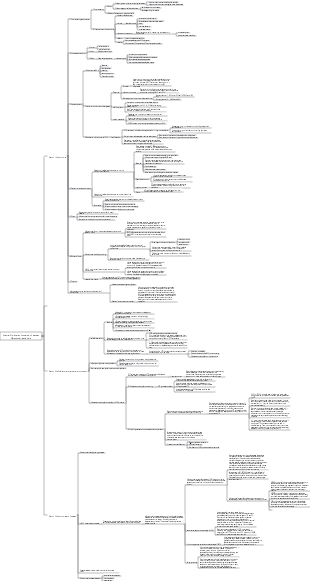
Chapter 6 Energy Conversion between Mitochondria and Cells
Section 1 Basic Characteristics of Mitochondria
1. Shape, quantity and structure of mitochondria
(1) Shape and quantity of mitochondria
Shape: linear, granular or rod-shaped under light microscope
Quantity: ① Varies depending on cell type ② The minimum contains only 1 mitochondria, and the maximum contains 500,000. ③When metabolism is strong, the number of mitochondria is greater, and vice versa. ④ There are about 25 sperm cells, about 400 kidney cells, and about 1,300 mitochondria in liver cells. Most mature red blood cells have no mitochondria.
(2) Ultrastructure of mitochondria
Under the electron microscope, mitochondria are closed membrane vesicle structures composed of double-layered unit membranes.
1. outer membrane (outerembrane)
Location: The outermost unit membrane of mitochondria, about 5~7nm thick.
Composition: About 50% is lipids and about 50% is protein.
Features: ① Includes a variety of transport proteins, ② Forms a larger aqueous channel across the lipid bilayer, causing small pores with a diameter of 2~3 nm to appear in the outer membrane, allowing the passage of substances with a molecular weight of less than 10 000 Da, including some small molecules Peptides.
2. Intima (innermembrane)
Location: Located inside the outer membrane of mitochondria, with an average thickness of 4.5nm
Composition: 20% lipids, 80% protein.
Features: Low permeability, substances with a molecular weight greater than 150 cannot pass through. Choose high permeability, and the transport proteins on the membrane control the exchange of substances in the inner and outer chambers to ensure the metabolism of active substances.
3. translocation contactsite
There are places on the inner and outer membranes of mitochondria where the inner membrane and outer membrane come into contact with each other, where the membrane space becomes narrow, which is called a translocation contact point.
Function: Channel for proteins and other substances to enter and leave the mitochondria
4.Matrix
Ingredients: ① Enzymes (catalyze acid cycle, fatty acid oxidation, amino acid decomposition, protein synthesis, etc.)
independent genetic system
②Double-stranded circular DNA (unique to mitochondria)
③ribosomes
5.elementary particle
There are many particles protruding from the inner cavity attached to the inner surface of the inner membrane (including the steeple), and each mitochondria has about 104 to 105 particles.
The head has enzymatic activity and can catalyze the phosphorylation of ADP to generate ATP.
Also known as ATP synthase complex (ATP synthase complex), also known as FoFiATP synthase.
2. Chemical composition of mitochondria
1. Protein: It is the main component of mitochondria, accounting for about 65% to 70%, and is mostly distributed in the inner membrane and matrix.
2. Lipids: accounting for 25% to 30% of the dry weight of mitochondria, most of which are phospholipids.
3. Others: Contains DNA and a complete genetic system, a variety of coenzymes (such as CoQ, FMN, FAD and NAD, etc.), vitamins and various inorganic ions.
3. Mitochondrial genetic system (understand)
(1) Mitochondrial DNA
1. Location: In the matrix of mitochondria or attached to the inner membrane of mitochondria.
2. Quantity: There are often 1 to several mtDNA molecules in a mitochondria, with an average of 5 to 10.
3. Genome structure:
①Form
②Length 16568bp
③No histones
④H chain, L chain
⑤No introns
⑥Copying and transcribing
⑦Codon
4. Coding products: few. Mitochondrial tRNA, rRNA and some mitochondrial proteins.
(2) Replication of mitochondria (understand)
mtDNA replication is similar to prokaryotic cells, D-loop replication
The light chain replicates later than the heavy chain
The direction of synthesis of the heavy chain is clockwise and the direction of synthesis of the light chain is counterclockwise.
Replication is not affected by the cell cycle, can transcend the stationary phase or interphase of the cell cycle, and can even be distributed throughout the cell cycle.
subtopic
4. Transport of mitochondrial and nuclear-encoded proteins
(1) Transport of nuclear-encoded proteins into the mitochondrial matrix
1. When nuclear-encoded proteins enter mitochondria, a signal sequence is required.
2. The precursor protein remains in an unfolded state outside the mitochondria
3. The power generated by molecular motion assists the polypeptide chain to pass through the mitochondrial membrane
4. The polypeptide chain needs to be refolded within the mitochondrial matrix to form an active protein.
(2) Transport of nuclear-encoded proteins to other parts of the mitochondria
5. The Origin of Mitochondria
The currently generally accepted hypothesis, the endosymbiosis theory, holds that mitochondria may have originated from some early bacteria, which initially symbiotically existed with ancient anaerobic eukaryotic cells and eventually became part of the eukaryotic cells.
6. Mitochondrial fusion and fission
(1) Mitochondria proliferate through fission
(2) mtDNA is randomly and unevenly distributed into new mitochondria
During mitosis and meiosis, newly synthesized mtDNA molecules are randomly distributed to daughter mitochondria, and daughter mitochondria are randomly distributed to daughter cells. Therefore, daughter cells have different proportions of mutant mtDNA molecules.
(3) The fusion of mitochondria is conducive to promoting the mutual cooperation of mitochondria
7. Function of mitochondria
1. Oxidative phosphorylation: The oxidation of nutrients in mitochondria and coupling with phosphorylation to generate ATP is the main function of mitochondria.
2. Uptake and release of Ca2: Mitochondria and endoplasmic reticulum work together to regulate the Ca2 concentration in the cytosol
3. Participate in cell death: In some cases, mitochondria are the initiating link of cell death; in other cases, mitochondria are just a "pathway" of cell death.
Section 2 Cellular Respiration and Energy Conversion
introduce
The direct and complete combustion of 1 molecule of glucose releases energy of about 2804kJ/mol, which is far greater than the energy that any carrier molecule can capture. The energy of 1 molecule of ATP is about 31kJ/mol
Cycle of hydrogen transmitters NAD and NADH
The cycle of hydrogen transmitters FAD and FADH
Cellular Oxidation/Biological Oxidation/Cellular Respiration
Cellular oxidation: The process in which cells, with the participation of O, decomposes various macromolecule substances to produce COz, and the released energy is stored in ATP, is also called biological oxidation. Similar to human respiration, also known as cellular respiration
While cells oxidize substances, they undergo a phosphorylation reaction of ADP, so it is also called oxidative phosphorylation.
Basic processes of cellular oxidation
1. Glycolysis
Glucose is degraded in the cytoplasm to form pyruvate
Site of occurrence: cytoplasm
Net production of 2 ATP, 2 NADH
Under aerobic conditions, it eventually enters the mitochondria for oxidation.
Fermentation capacity under anaerobic conditions
Fermentation produces ATP under anaerobic conditions while regenerating NAD
2. Generation of acetyl-CoA
Pyruvate enters the mitochondria and is broken down in the mitochondrial matrix to produce acetyl CoA
Site of occurrence: mitochondrial matrix
Generate 1 NADH
3. TCA cycle
Acetyl CoA goes through the three-acid cycle and all its C is oxidized to CO2
produce
3 NADH
1 FADH2
1 ATP (GTP)
Site of occurrence: mitochondrial matrix
The permeability of the inner mitochondrial membrane is small, and substances with a molecular weight greater than 150 cannot pass through.
4. Oxidative phosphorylation couples ATP formation
The H produced by glycolysis, acetyl-CoA, and the trisulfate cycle contains H and e-
Among them, H is captured by NADH and FADH, and pumped into the mitochondrial intermembrane cavity through the respiratory chain coenzymes.
e- is transmitted sequentially through the respiratory chain, and a free energy difference is generated during the transmission process, which is used as pump energy by coenzymes.
They finally reduce O2 to H2O, and at the same time synthesize a large amount of ATP from the grana.
Site of occurrence: mitochondrial inner membrane, grana
How is the H gradient formed?
What does the H gradient do?
5. Respiratory chain/electron transfer chain
The respiratory chain is a series of enzyme systems that can reversibly accept and release H and e-. They are ordered in a chain on the inner mitochondrial membrane, so they are called the respiratory chain. And because they can transfer H and e-, they are also called electron transport chains.
1 respiratory chain
2 Thinking from the perspective of "free energy difference", why do cells need to undergo multiple transmissions?
3 chemiosmotic coupling hypothesis
The chemiosmosis hypothesis holds that the basic principle of oxidative phosphorylation coupling is that the free energy difference in electron transfer causes H to be transferred across the membrane, which is converted into an electrochemical proton gradient across the inner mitochondrial membrane. Protons flow back along the gradient and release energy, driving ATP synthase bound to the inner membrane to catalyze the phosphorylation of ADP to synthesize ATP.
4 grana
Also known as ATP synthase, it is shaped like a mushroom and belongs to the F-type proton pump.
Spherical F1 (head)
F0 (base) embedded in membrane
5 Working mechanism of ATP synthase: binding allostery
Section 3 Mitochondria and Diseases
1. Mitochondrial changes during disease processes
Mitochondria are very sensitive to changes in external environmental factors, and the influence of some environmental factors can directly cause abnormal mitochondrial function.
Mitochondrial oxidative phosphorylation capacity decreases with age
2. mtDNA mutations and diseases
Diseases in which defects in mitochondrial structure and function are the main cause of disease are often called mitochondrial diseases.
Mitochondrial diseases mainly affect the nervous and muscular systems.
3. Diseases related to abnormal mitochondrial fusion and fission
4. Treatment of Mitochondrial Diseases
Summarize
subtopic