 Wondershare EdrawMind
MindMap Gallery (Required at the end of the semester) Intellectual Property Law Patent Law Entire System
- 26
(Required at the end of the semester) Intellectual Property Law Patent Law Entire System
Combined with MA engineering textbooks, university teachers teach the content of law exam courses, focusing on the key points, careful thinking, memorizing and sorting out the necessary knowledge before the final exam.
Edited at 2024-01-17 23:40:24
- bacteria
This is a mind map about bacteria, and its main contents include: overview, morphology, types, structure, reproduction, distribution, application, and expansion. The summary is comprehensive and meticulous, suitable as review materials.
- Plant asexual reproduction
This is a mind map about plant asexual reproduction, and its main contents include: concept, spore reproduction, vegetative reproduction, tissue culture, and buds. The summary is comprehensive and meticulous, suitable as review materials.
- Reproductive development of animals
This is a mind map about the reproductive development of animals, and its main contents include: insects, frogs, birds, sexual reproduction, and asexual reproduction. The summary is comprehensive and meticulous, suitable as review materials.
(Required at the end of the semester) Intellectual Property Law Patent Law Entire System
- bacteria
This is a mind map about bacteria, and its main contents include: overview, morphology, types, structure, reproduction, distribution, application, and expansion. The summary is comprehensive and meticulous, suitable as review materials.
- Plant asexual reproduction
This is a mind map about plant asexual reproduction, and its main contents include: concept, spore reproduction, vegetative reproduction, tissue culture, and buds. The summary is comprehensive and meticulous, suitable as review materials.
- Reproductive development of animals
This is a mind map about the reproductive development of animals, and its main contents include: insects, frogs, birds, sexual reproduction, and asexual reproduction. The summary is comprehensive and meticulous, suitable as review materials.
- Recommended to you
- Outline
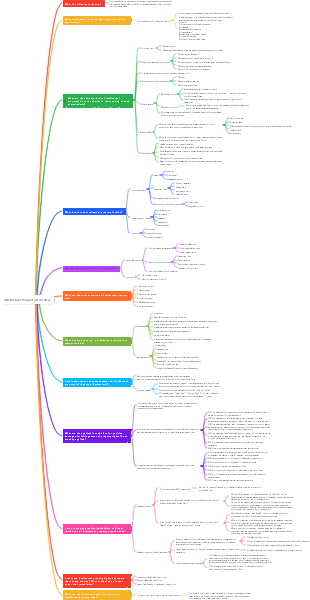

patent law
Overview
legal features
Special objects of protection: two-level division of patents and copyrights
There is a strict approval process
Have strict time limits
Actively encourage innovation
main body
Patentee: A person who obtains a patent right and enjoys the rights and obligations stipulated in the patent law.
Patent applicant: inventor and designer (patentee and patent applicant may not correspond one to one)
Inventor and designer: natural person
Qualification conditions: specific work; creative and substantial contribution (auxiliary work is not included)
Service inventions and creations
For inventions and creations completed by non-employed personnel, the right to apply for a patent belongs to the creator, and the patent rights obtained thereby also belong to the creator.
definition
Not performing tasks assigned by the unit outside of one's own duties, not utilizing the material and technical conditions of the unit
Unemployment, resignation, retirement, one year after retirement
Encouragement: No unit or individual may suppress an inventor or designer’s non-service invention-creation patent application.
When an employee completes a non-employment invention and creation, the right to apply for a patent and the patent right belong to the creator.
Generally, units enjoy patent rights for service inventions (exceptions: the unit waives the right to apply for a patent or otherwise agrees)
The unit is the patentee
Task standards (even if they are involved): Perform tasks assigned by the unit (own work, other tasks, and tasks related to the unit made within one year after resignation, retirement, retirement, or transfer of work)
or material condition standards: use the technical and material conditions of the unit
Rights of inventors and designers
Units give rewards and remuneration
The unit shall provide reasonable remuneration to the inventor or designer based on the economic benefits achieved.
Equity incentives to improve innovation benefits
entrusted invention
Rights ownership
If there is an agreement, the agreement shall follow. If there is no agreement or the agreement is unclear, the rights belong to the individual unit (the trustee) who completed the work.
If the agreement belongs to the entrusting party, the entrusting party shall respect the moral rights of the inventor and designer.
If the agreement belongs to the trustee, the trustee shall allow the principal to continue to use
Co-invention
Content: Both patent application rights and patent rights are transferable
Procedure: The transfer shall be concluded in a written contract and registered, and shall be announced by the patent administration department. The transfer shall be effective from the date of registration.
External: Transfers by Chinese persons to foreign entities must be approved by the national competent authorities.
Note: The assignee must indicate the name of the inventor and designer in the patent document.
Exercise of rights
If there is an agreement, the agreement shall prevail. If there is no agreement, the co-owners may implement it alone or permit others to implement it with a general license. The usage fees collected shall be distributed among the co-owners.
Except for the above circumstances, the exercise of rights in a joint invention requires the consent of all co-owners
Rights ownership
If there is an agreement, it shall be subject to the agreement; if there is no agreement, it shall be shared by the parties.
Right of priority: other parties have priority in receiving the transfer under the same conditions
Free implementation right: the subject who waives the right to apply
Right to confidentiality: If one party objects to applying for a patent, other parties are not allowed to apply for a patent.
Types of subjects: inventor (technical solution) and designer (art design)
foreigner
Compulsory agency system: foreign citizens without regular residence in China; foreign or other organizations without business offices
object
Definition: Inventions and creations that should be patented according to law
Classification
Technical plan/design plan (invention/utility model/appearance design)
International Classification: Truss Agreement on International Classification of Patents
Inventions for which patent rights are not granted
enumerate
Scientific discovery (already there)
Rules and methods of intellectual activities (not utilizing natural laws, relying only on human wisdom, e.g. traffic intersection rules)
Diagnosis and treatment methods of diseases (patents are still needed to save lives)
New varieties of animals and plants
Substances obtained by nuclear transformation methods
Designs based on the pattern and color of flat printed matter or a combination of the two that serve primarily as a logo (trademark protection)
Inventions and creations that violate national laws, social ethics, and harm public interests
content
invention
Technical: Technical creation and innovation, solutions to specific technical problems must be expressed in a certain form (perpetual motion is just an idea)
Legality: It is not an invention that does not grant patent rights. It must be novel, creative and practical, and must be reviewed and approved by the patent administrative department in accordance with legal procedures.
Category: method invention, product invention (eg iPhone)
Utility model
condition
a product or a component of a product
Products that must have a certain shape, structure or combination (eg selfie stick)
Has direct practical value in industry
Differences from inventions: inventive step requirements; protection scope; authorization approval procedures; protection period
Appearance design
condition
Must be related to the product
The design of the appearance, shape, pattern, etc. of the product; to create a sense of beauty (eg the arc appearance of the Apple mobile phone)
obtain
obtain
Entity requirements
Substantive conditions: specific requirements of laws and regulations
Conditions for authorization of invention patents and utility model patents: "Three judgments" novelty, creativity and practicality
Novelty
definition
Does not belong to the existing technology (existing technology: known to the public at home and abroad outside the filing date)
No organization or individual has filed an application for the same invention or utility model before the filing date.
understand the key points
Relatively new, compared to what is known within a specific range
Judgment criteria
Open standards
Level: At least the intermediate technical personnel in this major can implement it accordingly
Form: publication, use, oral, world standard disclosure (whether it has been published or made publicly known around the world before the filing date)
time standard
invention day standard
Application date criteria
Anything that has not been publicly known or used before the filing date is considered novel.
Order of submission on the same day: Negotiation first, failure to negotiate will not be approved
Conducive to promoting technology disclosure
priority
Definition: After filing a patent application for the first time, file another application within the specified time limit.
International priority (applications filed in different countries)
Period: 12/6 months (appearance design, etc.)
Facilitate cross-border acquisition and exercise of patent rights
domestic priority
Scope: only for inventions or utility models
Term: 12 months
Once a later application is filed, the earlier application will be deemed withdrawn, but the filing date of the earlier application will still prevail.
Exceptions without loss of novelty
Duration: 6 months
specific situation
Perform for the first time at an international exhibition sponsored or recognized by the Chinese government
Published for the first time at a prescribed academic or technical meeting
Disclosed by others without consent
creativity
definition
The invention has outstanding substantive features and significant progress
Outstanding substantive characteristics: It is essentially different from the existing basis and is not obvious to intermediate-level technicians in the technical field.
Significant progress: outstanding technical effects, technical solutions, solving technical problems, overcoming technical biases
Utility models have substantial features and progress
There is only a difference and progress
Practicality
Definition: In theory, it can be applied in industry (excluding pure theory and no need to create finished products)
feature
Implementability: can be implemented concretely in practice and can be implemented repeatedly
Benefit: can produce positive effects without producing negative effects (surge in energy consumption, environmental pollution)
Appearance design
Design authorization conditions
Novelty
Definition: A design that has been publicly published in domestic and foreign publications before the filing date; a design that is not identical or similar to a design that has been publicly used in my country other than the filing date.
Judgment criteria
Use public adoption of world standards
The comparison time point is the application date
Comparisons should be made among similar products
Exceptions without loss of novelty
Exhibited for the first time at an international exhibition sponsored or recognized by the Chinese government
First published at a prescribed academic technical conference
Disclosed by others without permission
The applicant files a design patent application 6 months after publication
Respect the prior rights of others
Aesthetically pleasing and suitable for industrial applications
procedural requirements
Application for patent rights for inventions
Conditions for obtaining patent rights: meet the authorization conditions and submit an application in accordance with regulations
Submitted application documents
Inventions and utility models: claims, instructions (ordinary technicians can perform reduction manufacturing), abstract
Design: request letter, pictures or brief description of the design (submit a model if necessary)
Acceptance of patent applications
Application date standards: submission date for in-person submission, postmark date for mailing, (in principle, the date received by the patent agency) application date
On the same application date, consensus was reached through negotiation, but if negotiation failed, all were rejected and became trade secrets.
Review and approval of patent rights
Examination procedures for invention patents: preliminary examination, publication application (published 18 months from the filing date), request for substantive examination (application within 3 years from the filing date), substantive examination (novelty, inventiveness, practicality, etc.)
Authorization, registration, announcement
It will take effect on the date of announcement. Registration shall be carried out within 2 months from the date of receipt of notification. The State Intellectual Property Office shall grant the patent right and announce it.
review
Request a review within 3 months and file a lawsuit with the court within 3 months (after rejecting the review request)
in principle
First-to-apply principle: Whoever applies first will get it
The same invention and creation can only be entitled to one patent (the same content can be applied for together as a utility model and invention)
Unity: An application can only cover one content
temporary protection period
Applicable to: inventions (excluding utility models and appearance designs)
Period: after public disclosure - before granting
Requirement: Pay patent royalties (if paid, it will not be regarded as infringement)
Statute of limitations: 3 years
Starting from (whichever is later)
When aware of the infringement
From the date of authorization
Examination procedures for utility model and design patents
Only preliminary examination (formal examination) is carried out
The state directly issues patent certificates, registrations and announcements
State rejects application
Review: Request a review within 3 months and file a lawsuit with the court within 3 months (after the review is rejected)
Rights and obligations
patent rights
Contents of patent rights
priority
International priority: If you apply for a patent abroad and then apply domestically, the priority date will be the filing date (within 12 months/6 months for the same subject, the first applicant nationwide for substantial protection)
Domestic priority: two domestic applications for the same subject with an interval of less than 12/6 months (taking advantage of the opportunity)
Exclusive right to implement (for production and business purposes)
manufacturing rights
Right to use (design patent does not protect the right to use)
Marketing rights
Promise of right to sell (preparation for sale)
Definition: The act of expressing intention to sell patented products by means of advertising, display or display, etc.
Requirements: The perpetrator has clearly expressed his/her intention to sell patented products.
Prohibited situation: Others engage in promised sales without permission. The patentee requests the court to issue an injunction.
The right to import
Definition: The same person enjoys patent rights in different countries or jurisdictions (the legality of parallel imports)
Enforcement permissions
License others to implement their patents (license contracts need to be filed)
Exclusive: The licensee enjoys the patent rights (excluding the original patentee, the licensee has the exclusive right to sue)
Exclusive: both the original patentee and the licensee can implement it (share the right to sue, with the original patentee first and the licensee last)
Normal: Multiple licensors can exist
Special License (Limitations on License Rights)
Designated licensing of invention patents of state-owned entities: designated by the relevant competent authorities of the State Council, the licensee still needs to pay royalties
Open license: voluntarily licenses any unit or individual to use the patent (patents other than inventions require a patent evaluation report)
Obtain Permission: Written Notification and Fee
Withdrawal of permission: Announcement, without affecting prior use
Substance: Ordinary license
compulsory license
Definition: The State Intellectual Property Office provides a license to applicants who meet the implementation conditions through administrative procedures.
Scope: inventions, utility models
type
Prevent abuse of rights
4 years from the date of application, 3 years from the date of authorization, if not implemented without justifiable reasons
The behavior of the patentee to implement the patent right is deemed to be a monopoly in accordance with the law.
Compulsory license of dependent patents
The later patent has significant technological progress compared to the earlier patent, and its implementation depends on the implementation of the previous patent. Compulsory license can be applied for both before and after.
For the public interest (national emergency, for public welfare purposes, the license does not have the exclusive right to implement it, and does not have the right to authorize others to implement it), for public health (for patented drugs, the State Intellectual Property Office can grant a compulsory license for manufacturing and export)
Restrictions on compulsory license: cannot be implemented exclusively, has no right to authorize others to implement, and needs to pay royalties
transfer patent rights
Domestic: A written contract shall be entered into, registered and announced by the Intellectual Property Office, and shall take effect from the date of registration.
To foreign countries: approval by relevant departments of the State Council is required
Prohibition of sublicensing: The licensee may not sublicense the patent to anyone outside the contract.
Right to use patent marks
You have the right to use the mark yourself, and you also have the right to require the licensee to use it.
You can also use no tags
Obligations of patentee
Obligation to pay patent annual fees
Significance: Eliminate low-value patents through economic leverage
No abuse of patent rights
Reward inventors or designers
Patent rights term, termination, invalidity
the term
Invention patents last for 20 years, utility model patents last for 10 years, and design patents last for 15 years.
Starting point: actual application date (the earlier, the better the benefits and the greater the need for protection)
Application extension (unreasonable delay): 4 years from the invention patent application date, 3 years from the substantive examination date
Legal effect of expiration: Patent rights automatically take effect and become social public wealth
Confusing point
Who is granted the patent right: Look at the priority date (regarded as the filing date)
Patent rights are calculated based on the actual filing date (not the priority date)
The significance of setting deadlines: to prevent technological monopoly and promote technological progress of all mankind
termination
reason
expiry
Failure to pay annual fees as required
Written statement giving up patent rights
Termination due to lack of successor
Legal effects after termination: The patent right ceases to exist from the date of termination and becomes social public wealth.
invalid
Definition: Relevant units and individuals request for review by the Patent Reexamination Board due to non-compliance with the provisions of the Patent Law because the patent right has been granted.
reason
(The product itself does not meet the requirements for patent authorization)
An invention or utility model does not possess the three characteristics
The design is not novel
Inventions and creations violate national laws, social ethics, and harm social interests
(The applicant does not meet the requirements) The patentee has no right to apply for and obtain patent rights (the invention was not created by the applicant)
(The scope of authorization does not meet the scope of the patent application) The patent application did not fully disclose the content of the invention and creation, but the patent right was granted (the scope of authorization is greater than the scope of disclosure)
The modification of the invention or utility model patent exceeds the scope recorded in the original description and claims.
The design patent amendment application changes the scope of the pictures and photos of the original appearance.
Bad faith of the patentee
Transfer of patent rights clearly violates the principle of fairness
proceedings declared invalid
Startup principal: unlimited
It shall be tried first by the State Intellectual Property Office and reviewed by the Patent Reexamination Board.
If the application is declared invalid during the review process
Invention patent: trial can not be suspended
Utility model and design patents: proceedings must be suspended
Declaring the patent right invalid shall be registered and announced by the Patent Administration Department of the State Council.
Legal Consequences
It has retroactive effect and the patent right is invalid from the beginning.
Exceptions: Relevant executed court judgments and rulings before invalidation, executed decisions by patent management agencies, and executed patent contracts
Remedy: If you are dissatisfied with the invalidation decision, you can file a lawsuit in court within 3 months.
Patent rights infringement and protection
patent infringement
Characteristics of patent infringement
The patent right itself is legal, valid and protected
Patent implemented without permission
The perpetrator’s purpose is production and business operations
Infringement should be an act that violates legal provisions (illegality) (as follows)
Types of infringement
direct infringement
Counterfeit patent: the product itself is fake
Counterfeit patent: The product itself remains unchanged, but the form is passed off as a patent
Indirect infringement: instigating, helping, inducing others to commit direct infringement
Bona fide infringement: subjectively using, selling, or offering to sell infringing products without knowledge (excluding more professional behaviors of manufacturing and importing) - no compensation is required, but use must be stopped (except for user payment of consideration)
Infringement determination principles
Identical principle (higher difficulty): every technical feature must be identical to constitute infringement
Principle of equivalents: Basically the same methods, functions, and effects constitute infringement.
Principle of redundant designation: omit redundant and non-core features, and only use necessary technical features to determine the scope of protection
Estoppel principle: The patentee’s interpretation of its claims should be consistent (mainly the interpretation of rights during the patent application process and in infringement litigation)
Patent protection
Scope of patent protection: subject to claims
perimeter limitation principle
Definition: The scope recorded in the claims is the scope of protection
Disadvantages: The recorded range is difficult to be very accurate
center bounding principle
Definition: Taking the claim as the center, a certain range of technologies around the center are also included in the scope of protection.
Expand the scope: Expand to include those that mid-level technicians in the technical field think can be included after careful study of the instructions and drawings.
Compromise principle: take the claims as the main source of identification, and you can also refer to the description and drawings for explanation.
How to protect patent rights
Administration
Criminal sanctions: counterfeiting of patents, serious circumstances
Civil compensation (progressive order)
Losses suffered from infringement and benefits gained from infringement
Reasonably determined with reference to the multiple of the patent license fee (1-5 times for serious intentional infringement)
Compensation of RMB 3-5 million will be determined based on the type of patent right, nature of infringement and circumstances.
The right holder shall be compensated for reasonable expenses incurred in investigating and stopping infringement.
Cases where patent protection is not applicable
Patent rights exhausted
The first sale right is exhausted: the entitled entity can use the sales promise to sell imports and transfer without restrictions (no manufacturing)
Right of first use
Definition: Before filing a patent application, another person is already manufacturing, using, preparing the same product method, or making preparations (earlier than the filing date)
If the prior user makes use of his or her invention, it will not be deemed as infringement of patent rights (the original scope cannot be transferred for personal use)
Purpose: To motivate and balance the principle of applying now and to protect the minimum interests of non-applicants
Professional scientific experimental research
Taking patented products as the object of scientific research (researching the patented products themselves)
Patented medical equipment and drug development
It can be developed before the patent expires and can be put on the market after the patent expires.
temporary transit
Foreign transportation vehicles temporarily enter and pass through China
The vehicle infringes patent rights for its own needs (transportation) (excluding the goods contained therein, etc.)
Parallel import: Go abroad to import products with patent rights in the importing country and sell them (the price difference of the same product in different countries)
fair use
Has nothing to do with commercial pursuits and is not for profit.
Form limited to manufacture and use (sales excluded)
Patent disputes
Jurisdiction
The Intermediate Court at the location of each provincial government, the Intermediate Court designated by the Supreme Court; the grassroots court designated by the Supreme Court
Specialized intellectual property courts: Intellectual property courts established in Beijing, Shanghai, and Guangzhou
burden of proof
The burden of proof is reversed: the infringer (defendant) gives evidence
Prior art defense: Use patented products as prior art defense to achieve the result of the court’s determination of “non-infringement”