MindMap Gallery Mobilize students' enthusiasm in class
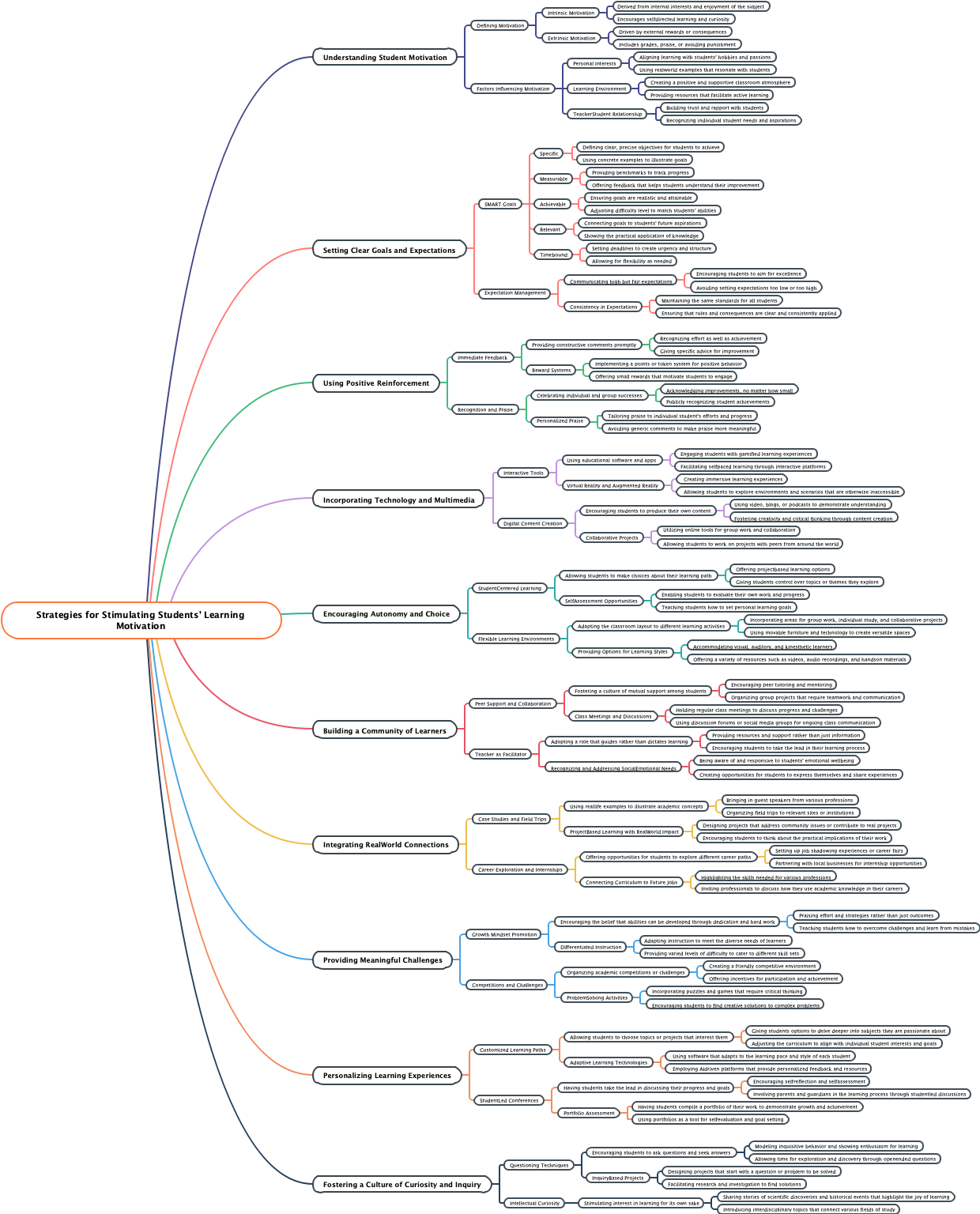
This is a mind map about motivating students in class. Summarizes the difficulties encountered in the classroom, Two main lines in the teaching process, AIDO student status management ladder, etc.
Edited at 2024-01-18 10:50:58This is a mind map about bacteria, and its main contents include: overview, morphology, types, structure, reproduction, distribution, application, and expansion. The summary is comprehensive and meticulous, suitable as review materials.

This is a mind map about plant asexual reproduction, and its main contents include: concept, spore reproduction, vegetative reproduction, tissue culture, and buds. The summary is comprehensive and meticulous, suitable as review materials.
This is a mind map about the reproductive development of animals, and its main contents include: insects, frogs, birds, sexual reproduction, and asexual reproduction. The summary is comprehensive and meticulous, suitable as review materials.
This is a mind map about bacteria, and its main contents include: overview, morphology, types, structure, reproduction, distribution, application, and expansion. The summary is comprehensive and meticulous, suitable as review materials.
This is a mind map about plant asexual reproduction, and its main contents include: concept, spore reproduction, vegetative reproduction, tissue culture, and buds. The summary is comprehensive and meticulous, suitable as review materials.
This is a mind map about the reproductive development of animals, and its main contents include: insects, frogs, birds, sexual reproduction, and asexual reproduction. The summary is comprehensive and meticulous, suitable as review materials.
Four secrets to help students fully engage in class
Difficulties encountered in the classroom
Students are distracted and often lower their heads and play with their mobile phones
Low willingness to participate in classroom activities and difficult to mobilize
The students were extremely uncooperative and even challenged
Learning is an interactive process. It is not difficult to complete the class. What is difficult is to mobilize the enthusiasm of the students.
Two main lines in the teaching process
Teaching task line: Design teaching according to course KAS categories
Student’s status line: Follow the student’s psychological state and guide students to slowly enter the classroom
The general conditions for creative activities are psychological safety and psychological freedom. Only psychological safety can lead to psychological freedom and creativity in learning - humanistic psychologist Carl Rogers
AIDO student status management ladder
The psychological process of learning: Accept - Interact - Descide - Open
Accept - the basis for students to invest in classroom learning
Students and lecturers: Show “vulnerability” appropriately (lecturer’s past experience)
students and trainees
Use more private sharing methods to increase opportunities for mutual understanding.
Students and content
Combining the characteristics of adult learning and directly pointing out the "pain points" to present the course benefits and goals
Recommended activities (icebreaker)
Draw a portrait and create your own business card
Build trust: the link between people and the environment/the link between people and the link between students and content. Acceptance is the basis for students to invest in classroom learning. At the beginning of the course, try to eliminate doubts, insecurities, and even boredom among the participants to build trust. Three links should be made during the acceptance stage
Interact—focus on the contribution of students (information)
Pay attention to the form of interaction: gradually increase the frequency of information transmission and develop from one-way (social cow) to multi-way
Pay attention to the students' contribution: form learning partners, non-directional roll call, rotating division of labor (recorder/time officer, etc. to promote more students to participate)
Promote active participation of students
Take turns: Ask a question and ask each participant to give a short answer. If you don’t want to answer, you can skip to the next one.
Designated speaker: Let the group leader or the student who speaks designate the next speaker
Learning partners: Divide students into groups of two or three and assign them tasks or discuss problems.
Game stimulation: Use simple and interesting activities or tests to guide students to express their ideas
Interaction is the process in which students open up and share information. At this stage, the purpose is to obtain a large amount of information so that students can form the habit of participation.
Decision-making (Deside) - problem solving: group decision-making, reaching consensus
Mobilize groups to solve problems: set challenging problems/tasks and cite conflicting cases and opinions
Promote the group and reach consensus: clarify task goals, set clear rules, create a communication atmosphere, and control the process well
Recommended activity: World Coffee
Decision-making is a process in which students are deeply involved in learning and collaborating. At this stage, more challenging and conflicting teaching methods should be designed based on the content to allow students to face problems and reach consensus.
Open—focus on results: display/sharing of results
The usual way to end the course: Q&A/reward groups or individuals with outstanding performance?/ask students to take an evaluation questionnaire?
Team/Group: Present the team results and let everyone share the team results
Openness is the process in which students share the results of the team. At this stage, students should be encouraged to focus on the results of the team and guided to review themselves to maximize the learning effect.
Student/Individual: Guide students to do personal review
Trainer: summarize and sublimate the learning content
Recommended activities: Closing remarks/making a study plan (setting up a Flag)
Focus on students-AIDO student status management