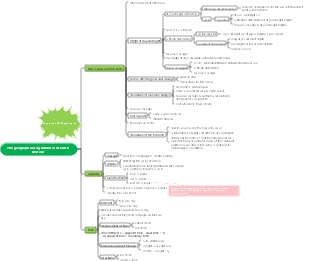
MindMap Gallery earth movement
This is a mind map about the movement of the earth, which summarizes the rotation of the earth, Earth's revolution, Earth's revolution characteristics, Changes in the height of the sun at noon, The division of five zones, etc.
Edited at 2024-01-18 12:13:04This is a mind map about bacteria, and its main contents include: overview, morphology, types, structure, reproduction, distribution, application, and expansion. The summary is comprehensive and meticulous, suitable as review materials.

This is a mind map about plant asexual reproduction, and its main contents include: concept, spore reproduction, vegetative reproduction, tissue culture, and buds. The summary is comprehensive and meticulous, suitable as review materials.
This is a mind map about the reproductive development of animals, and its main contents include: insects, frogs, birds, sexual reproduction, and asexual reproduction. The summary is comprehensive and meticulous, suitable as review materials.
This is a mind map about bacteria, and its main contents include: overview, morphology, types, structure, reproduction, distribution, application, and expansion. The summary is comprehensive and meticulous, suitable as review materials.
This is a mind map about plant asexual reproduction, and its main contents include: concept, spore reproduction, vegetative reproduction, tissue culture, and buds. The summary is comprehensive and meticulous, suitable as review materials.
This is a mind map about the reproductive development of animals, and its main contents include: insects, frogs, birds, sexual reproduction, and asexual reproduction. The summary is comprehensive and meticulous, suitable as review materials.
earth movement
Earth's rotation
rotation period
One day (about 24 hours)
direction of rotation
from west to east
center of rotation
Earth's axis
geographical phenomenon
Day and night (Earth is an opaque sphere)
Time difference, time in the east is always earlier than time in the west
Morning and evening line
Since the earth is a non-luminous and transparent sphere, the sun can only illuminate half of the earth's surface at the same time. The hemisphere facing the sun is daytime, that is, the day hemisphere; the hemisphere facing away from the sun is the night, that is, the night hemisphere. The dividing line between the day and night hemispheres is the twilight line. As the earth rotates, morning occurs when the night hemisphere enters the day hemisphere, and dusk occurs when the day hemisphere enters the night hemisphere.
Earth's revolution
revolution period
One year (approximately 365 days)
Direction of revolution
from west to east
center of rotation
sun
geographical phenomenon
changing of seasons
Division of four seasons: Many countries in the northern temperate zone generally classify March to May as spring, June to August as summer, September to November as autumn, and December to February of the following year as winter.
Changes in day and night length
The northern hemisphere is the summer half of the year from the vernal equinox to the autumnal equinox. At this time, the sun shines directly on the northern hemisphere. The day arc is greater than the night arc at all latitudes in the northern hemisphere, and the day length is longer than the night length (the day is longer and the night is shorter); the higher the latitude, the longer the day and the shorter the night; Extreme daylight occurs within the Arctic Circle. On the summer solstice, the day is the longest and the night is the shortest in the Northern Hemisphere. The opposite is true in the Southern Hemisphere.
The northern hemisphere has half a year of winter from the autumnal equinox to the spring equinox. At this time, the sun shines directly on the southern hemisphere, and the days are short and the nights are long everywhere in the northern hemisphere. The higher the latitude, the shorter the days and the longer the nights; the polar night phenomenon occurs within the Arctic Circle. On the winter solstice, the day is the shortest and the night is the longest in the Northern Hemisphere. The opposite is true in the Southern Hemisphere.
Earth's revolution characteristics
Huang Chiao Kok
If there is revolution, there will be an orbital plane, that is, the ecliptic plane; if there is rotation, there will be an equatorial plane. There is an intersection angle between the ecliptic plane and the equatorial plane, called the ecliptic angle, with a degree of 23.5° (23°26′).
Revolution characteristics
When the earth revolves around the sun, the angle between the earth's axis and the orbital plane remains unchanged at 66.5° (66°34′).
As the Earth orbits the Sun, the North Pole of the Earth always points in the direction of Polaris.
Changes in the height of the sun at noon
Solar altitude angle: The elevation angle of the sun's rays to the ground plane is called the solar altitude angle, or solar altitude for short. At direct solar point three, the sun's altitude is 90°; at the dusk line, the sun's altitude is 0°.
The sun's direct point moves back and forth between the Tropic of Cancer and the Tropic of Cancer throughout the year, causing annual changes in the height of the midday sun. In terms of seasonal changes, in the latitude zone north of the Tropic of Cancer, the height of the sun at noon reaches its maximum value on the summer solstice every year and reaches its minimum value on the winter solstice every year. At latitudes south of the Tropic of Capricorn, the opposite is true. Places between the Tropic of Cancer and the Tropic of Cancer receive direct sunlight twice a year.
Affected by the height of the sun at noon, the length of an object's shadow changes regularly with the seasons. As far as the Northern Hemisphere is concerned, the shadows of objects at noon are the shortest on the summer solstice and the shadows of objects at noon on the winter solstice are the longest; in areas north of the Tropic of Cancer, the shadows of objects at noon are all facing north.
The division of five zones
Division basis
How much solar radiation does each place on the earth's surface receive. The five zones reflect the decrease in total annual solar radiation from low latitudes to high latitudes.
Five belt names
tropical
There is direct sunlight, and it is hot all year round with long summer and no winter.
North temperate zone, south temperate zone
four distinct seasons
Northern Frigid Zone, Southern Frigid Zone
Extreme day or night phenomenon
dividing line
Tropic of Cancer, Arctic and Antarctic Circles
Schematic diagram of the Earth’s revolution (two solstices)
Vernal Equinox (around March 21)
The sun shines directly on the equator, so day and night are equal around the world
Summer Solstice (around June 22)
When the sun shines directly on the Tropic of Cancer, the polar day phenomenon occurs in the Arctic Circle, and the days in the Northern Hemisphere are long and the nights are short.
Autumnal Equinox (around September 23)
The sun shines directly on the equator, so day and night are equal around the world
Winter Solstice (around December 22)
When the sun shines directly on the Tropic of Capricorn, polar night occurs in the Arctic Circle, and the days are shorter and the nights are longer in the Northern Hemisphere.
solar motion
floating theme