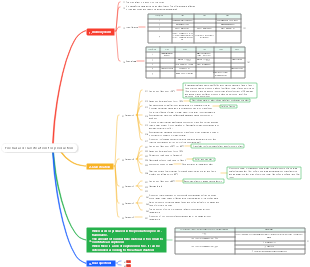
MindMap Gallery 24.1.16 General Building Fire Protection 2 Building Fire Hazard Classification
This is a mind map about 24.1.16 General: Building Fire Protection 2 Building Fire Hazard Classification. The introduction is detailed. I hope it will be helpful to you!
Edited at 2024-01-17 07:14:47This is a mind map about bacteria, and its main contents include: overview, morphology, types, structure, reproduction, distribution, application, and expansion. The summary is comprehensive and meticulous, suitable as review materials.

This is a mind map about plant asexual reproduction, and its main contents include: concept, spore reproduction, vegetative reproduction, tissue culture, and buds. The summary is comprehensive and meticulous, suitable as review materials.
This is a mind map about the reproductive development of animals, and its main contents include: insects, frogs, birds, sexual reproduction, and asexual reproduction. The summary is comprehensive and meticulous, suitable as review materials.
This is a mind map about bacteria, and its main contents include: overview, morphology, types, structure, reproduction, distribution, application, and expansion. The summary is comprehensive and meticulous, suitable as review materials.
This is a mind map about plant asexual reproduction, and its main contents include: concept, spore reproduction, vegetative reproduction, tissue culture, and buds. The summary is comprehensive and meticulous, suitable as review materials.
This is a mind map about the reproductive development of animals, and its main contents include: insects, frogs, birds, sexual reproduction, and asexual reproduction. The summary is comprehensive and meticulous, suitable as review materials.
Building fire hazard classification
Fire hazard classification of stored items
memory skills
Category A
Those containing the words A, B, prop, alkane, benzene, alkene, hydrogen, and phosphorus are all Category A, and some exceptions are marked in yellow;
Dangerous goods cotton
lively metal
Chloric acid, peroxide
Category B
Remember that items A, C, D, E and other items are Category B
Except for chloric acid, which is in Category A, all other acids are in Category B, except for ammonium nitrate, which is marked
Those that need to be remembered separately are marked in light green.
Those that are comparable between various categories are marked in orange, and you need to remember them clearly.
Category A
Liquids with flash point <28°C
Naphtha, carbon disulfide, liquor with an alcohol content of 38 degrees or above (in bulk), hexane, pentane, cyclopentane, benzene, toluene, methanol, ethanol, ether, methyl formate, methyl acetate, ethyl nitrate Ester, gasoline, acetone, propylene.
Gases with a lower explosion limit <10%, solid substances that can produce gases with a lower explosion limit <10% under the action of water or water vapor in the air
Calcium carbide, aluminum carbide, acetylene, hydrogen, methane, ethylene, propylene, butadiene, ethylene oxide, hydrogen sulfide, vinyl chloride, water gas, liquefied petroleum gas
Substances that can decompose by themselves at room temperature or that can cause rapid spontaneous combustion or explosion when oxidized in the air
Celluloid cotton, nitrocellulose film, nitrocellulose, spray paint cotton, collodion, yellow phosphorus
Substances that can produce flammable gases and cause combustion or explosion when exposed to water or water vapor in the air at normal temperatures
Metal potassium, sodium, lithium, calcium, strontium, lithium hydride, sodium hydride, lithium aluminum tetrahydride
A strong oxidant that can easily cause combustion or explosion when exposed to acid, heat, impact, friction, or flammable inorganic substances such as organic matter or sulfur.
Ammonium nitrate, potassium chlorate, sodium chlorate, potassium peroxide, sodium peroxide,
Substances that can cause combustion or explosion when impacted, rubbed, or in contact with oxidants or organic matter
Red phosphorus, phosphorus pentasulfide, phosphorus trisulfide
Category B
Liquids with flash point ≥28°C to <60°C
Butenol, acetylacetone, formic acid, (same as B) camphor oil, kerosene, turpentine, isoamyl alcohol, butyl ether, amyl nitrate, cyclohexylamine, mineral spirits, butyl acetate, glacial acetic acid
Gases with lower explosion limit ≥10%
Ammonia, carbon monoxide
Oxidants not belonging to Category A
Copper nitrate, chromic acid, potassium nitrite, sodium dichromate, potassium chromate, nitric acid, mercury nitrate, cobalt nitrate, fuming sulfuric acid, bleaching powder
Flammable solids not belonging to Class A
Sulfur, celluloid board (sheet), nitrocellulose varnish, nitrocellulose color flakes, magnesium powder, aluminum powder, camphor, naphthalene, raw rosin
combustion-supporting gas
Oxygen, fluorine gas, liquid chlorine
Items that can slowly oxidize when in contact with air at room temperature and may accumulate heat and cause spontaneous combustion.
Oilcloth and its products, oilcloth and its products, oil paper and its products, oil silk and its products
Class C characteristics
Flash point ≥60℃ liquid
Furfural, brandy finished product warehouse, animal oil, vegetable oil, asphalt, wax, lubricating oil, engine oil, heavy oil, diesel with flash point ≥60℃;
flammable solid
Industrial formed sulfur with particle size ≥2mm, chemical, man-made fibers and their fabrics, paper, cotton, wool, silk, hemp and their fabrics, grains, flour, natural rubber and their products, bamboo, wood and their products, Chinese medicinal materials, Electronic products such as televisions and cassette players, disk storage rooms for recorded data in computer rooms, and fish and meat rooms in cold storage;
Category D
Flame retardant items
Phenolic foam plastics, self-extinguishing plastics and their products, and their products, cement particle boards;
Class E characteristics
Otherwise items
Steel, aluminum, glass and its products, enamel products, ceramic products, non-flammable gas, glass wool, rock wool, ceramic wool, aluminum silicate fiber, mineral wool, gypsum and its paperless products, cement, stone, expanded perlite .
Special Note
When items with different fire hazards are stored in the same warehouse or any fire protection zone of the warehouse, the fire risk of the warehouse or fire protection zone shall be determined based on the items with the greatest fire risk.
The fire risk of warehouses storing Class D and E items should be determined as Class C when the weight of the combustible packaging is greater than 1/4 of the weight of the item itself (excluding packaging) or the volume of the flammable packaging is greater than 1/2 of the volume of the item itself.