MindMap Gallery Electric shock accidents and first aid
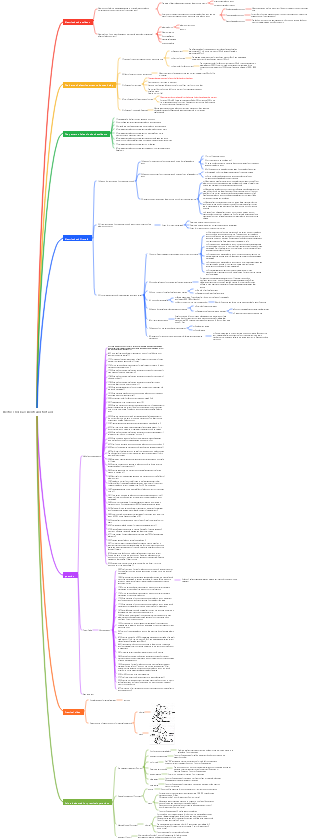
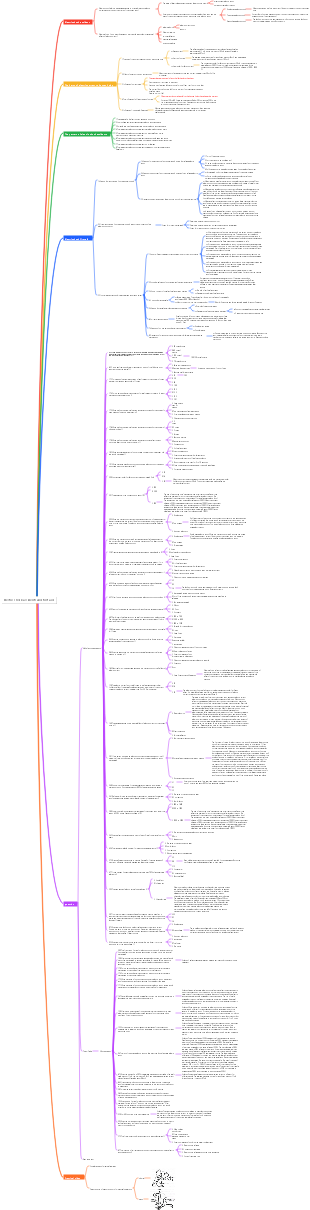
The content of the electric shock assessment for low-voltage electricians includes the harm of electric current to the human body, electric shock accidents, The occurrence pattern of electric shock accidents, first aid for electric shock, etc.
Edited at 2024-01-16 08:22:48This is a mind map about bacteria, and its main contents include: overview, morphology, types, structure, reproduction, distribution, application, and expansion. The summary is comprehensive and meticulous, suitable as review materials.

This is a mind map about plant asexual reproduction, and its main contents include: concept, spore reproduction, vegetative reproduction, tissue culture, and buds. The summary is comprehensive and meticulous, suitable as review materials.
This is a mind map about the reproductive development of animals, and its main contents include: insects, frogs, birds, sexual reproduction, and asexual reproduction. The summary is comprehensive and meticulous, suitable as review materials.
This is a mind map about bacteria, and its main contents include: overview, morphology, types, structure, reproduction, distribution, application, and expansion. The summary is comprehensive and meticulous, suitable as review materials.
This is a mind map about plant asexual reproduction, and its main contents include: concept, spore reproduction, vegetative reproduction, tissue culture, and buds. The summary is comprehensive and meticulous, suitable as review materials.
This is a mind map about the reproductive development of animals, and its main contents include: insects, frogs, birds, sexual reproduction, and asexual reproduction. The summary is comprehensive and meticulous, suitable as review materials.
Electric shock accidents and first aid
Electric shock accident
Electric shock (refers to the damage caused to internal organs by electric current passing through the interior of the human body)
The state of electrical equipment when an electric shock occurs
direct contact electric shock
indirect contact electric shock
According to the way the human body touches the electrified body and the path of the current passing through the human body, electric shock
Single phase electric shock
When one phase in the line, the current flows into the earth through the human body
Two-phase electric shock
Current flows from one phase conductor through the human body into another phase conductor (most dangerous)
Step voltage electric shock
The fault point must not be approached within 4m indoors, and the fault point must not be approached within 8m outdoors.
Electrical injury (injury directly caused by the thermal, chemical or mechanical effects of electric current)
electrical burns
electric current burns
arc burn
Electric branding
Skin metallization
mechanical damage
photoophthalmia
The harm of electric current to human body
1. The size of the current passing through the human body
① Sense current
The effective value of the perceived current value of an adult male is approximately 1.1 mA, with a minimum of 0.5mA; an adult female is approximately 0.7mA
② Get rid of current
The average discharge current for adult men is about 16mA, and the average discharge current for adult women is about 10.5 mA.
③ Ventricular fibrillation current
The human ventricular fibrillation current is about 50mA; the body resistance is generally about 500 Ω. Under normal circumstances, the resistance of the human body under the action of 220V power frequency voltage is 1000 ~ 2000 Ω.
2. Effect of duration through human body
When the product of energization time and current is greater than 50 mA·s, life is in danger
3. Influence of current path
The most dangerous part is from the left hand to the chest
Next, move your right hand to the chest
Hands to both feet and left hand to one (or both) feet, right foot or both feet
The current flowing from the left foot to the right foot may make the person unable to stand. Causing injury or fall
4. The influence of different types of current
Direct current is more harmful to the human body than alternating current
Currents of 50 to 60 Hz are very dangerous. Below 20 Hz or above 350 Hz, the risk is reduced accordingly, but high-frequency current is more likely to cause skin burns than power frequency current.
5. Influence of individual differences
Women are more sensitive to electric current than men, and children are more vulnerable than adults. Weak people are more susceptible to injuries than healthy people
The pattern of electric shock accidents
1. The seasonality of electric shock accidents is obvious
2. Low-voltage equipment causes many electric shock accidents
3. Portable and mobile equipment are prone to electric shock accidents
4. There are many electric shock accidents at electrical connection parts
5. There are many electric shock accidents in the metallurgy, mining, construction, and machinery industries
6. There are many electric shock accidents among middle-aged and young workers, non-professional electricians, contract workers and temporary workers.
7. There are many electric shock accidents in rural areas
8. There are many electric shock accidents caused by incorrect operation and illegal work.
Electric shock first aid
1. Method of disconnecting from the power supply
1. Methods for disconnecting from power supply due to low voltage electric shock
1. Turn off the power switch
2. Cut the wires with an insulated tool
3. Use an insulating object to move the live conductor away from the person receiving the electric shock.
4. Pull the person who gets electrocuted away from the electrified object
2. Methods to disconnect from the power supply in case of high-voltage electric shock
① Immediately notify the relevant departments of the power outage.
② Put on insulating gloves and boots, and use insulating tools with corresponding voltage levels to open the switch.
3. Precautions when removing an electric shock victim from the power source
① When rescuing people, to ensure your own safety and prevent yourself from electric shock, you must use appropriate insulated tools instead of metal or wet objects, and operate with one hand as much as possible.
② When getting an electric shock, the current will cause muscle spasm and the hand will tightly hold the electrified object. Once the power is cut off, without the effect of the current, the hand may loosen and cause the person to fall. People who get electrocuted should pay special attention to prevent injuries from falling when they are at high places.
③ When an electric shock accident occurs in a dark place, temporary lighting should be provided quickly to prevent yourself from getting an electric shock and to make it easier to see the status of the electric shock victim for rescue purposes.
④ In case of high-voltage electric shock, do not use dry wooden sticks or bamboo poles to open high-voltage wires. A sufficient safe distance should be maintained from high-voltage live objects to prevent electric shock due to step voltage.
2. After disconnecting from the power supply, check the injury status of the electric shock victim
Check for injuries immediately
Determine whether he is conscious or not
Determine whether the person is breathing and having a heartbeat
Check for broken bones, burns, and other injuries
3. On-site rescue methods for heartbeat and respiratory arrest
1. Adopt different treatment methods according to the injury situation
① After disconnecting from the power supply, the person who got the electric shock should be conscious and conscious. The person who got the electric shock should lie down and rest quietly on the spot without moving around to reduce the burden on the heart. Someone should closely observe the changes in his breathing and pulse. Keep warm when the weather is cold.
② If the person who gets an electric shock is unconscious and has a heartbeat but stops breathing, mouth-to-mouth artificial respiration should be performed immediately. If artificial respiration is not performed in time, the heart will soon stop beating due to lack of oxygen.
③ If the person who gets an electric shock is unconscious and breathing, but the heartbeat has stopped, an artificial extrathoracic heart should be squeezed immediately.
④ If the person who gets an electric shock has his or her heartbeat stopped and his breathing also stopped or his breathing is weak, cardiopulmonary resuscitation should be performed immediately.
⑤ If the heartbeat and breathing stop and there are other injuries, cardiopulmonary resuscitation should be performed first, and then the trauma should be treated.
2. Physiological basis of on-site cardiopulmonary resuscitation
If breathing stops, gas exchange cannot occur. If the heart stops, blood circulation cannot occur, which will cause hypoxia and damage to cells. Brain cells are most sensitive to hypoxia. Generally, hypoxia for more than 8 minutes will lead to brain death and the patient will become a vegetative state even after rescue.
3. Mouth-to-mouth (nose) artificial respiration method
① The role of artificial respiration
② Preparations before artificial respiration
4. How to blow and exhale
① Take a deep breath. The volume of air blown into the lungs of the casualty should reach 800-1200mL (adults)
② Mouth to mouth, pinch your nose and blow.
Blow for 2 seconds and let the casualty exhale for about 3 seconds.
5. Method of manual external chest heart compression
①The role of heart compression
② Preparation before compressing the heart
a. Position the casualty and maintain a clear airway
b. Determine the correct compression site
6. Correct pressing method
Kneel on one side, fold your hands, palms against the pressure point, lean forward slightly, straighten your arms, press down vertically, release after pressing, press 100 times per minute, adults press down 4~5cm, children press down 2 ~3cm.
7. Methods of on-site cardiopulmonary resuscitation
① Single person rescue
② Double rescue
8. Precautions for rescuing the injured using artificial respiration and cardiac compression
① Provide immediate, on-site, correct and continuous rescue. Rescue on the spot immediately after disconnecting from the power source to avoid transferring the injured and delaying the rescue opportunity. Rescue should be continuous.