MindMap Gallery RNA transcription
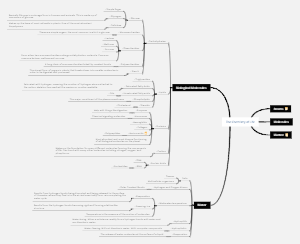
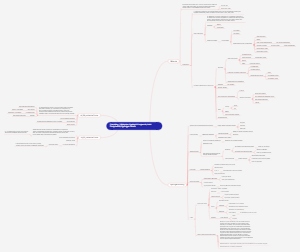
Molecular Biology, which summarizes the templates for transcription, RNA polymerase, promoter, transcription process, Post-transcription processing, etc.
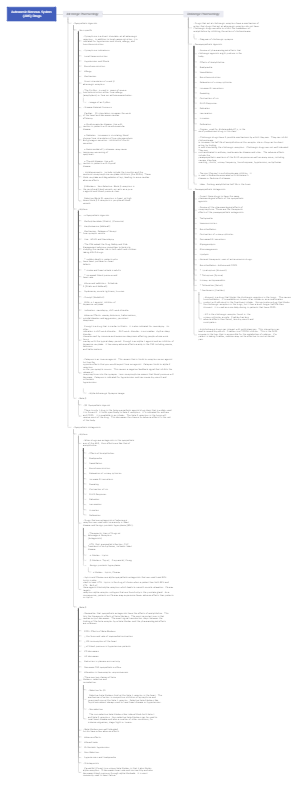
Edited at 2024-01-14 20:46:52This is a mind map about bacteria, and its main contents include: overview, morphology, types, structure, reproduction, distribution, application, and expansion. The summary is comprehensive and meticulous, suitable as review materials.
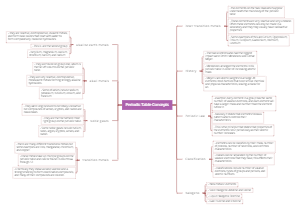
This is a mind map about plant asexual reproduction, and its main contents include: concept, spore reproduction, vegetative reproduction, tissue culture, and buds. The summary is comprehensive and meticulous, suitable as review materials.
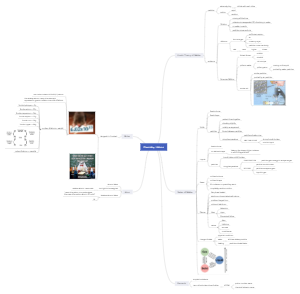
This is a mind map about the reproductive development of animals, and its main contents include: insects, frogs, birds, sexual reproduction, and asexual reproduction. The summary is comprehensive and meticulous, suitable as review materials.
This is a mind map about bacteria, and its main contents include: overview, morphology, types, structure, reproduction, distribution, application, and expansion. The summary is comprehensive and meticulous, suitable as review materials.
This is a mind map about plant asexual reproduction, and its main contents include: concept, spore reproduction, vegetative reproduction, tissue culture, and buds. The summary is comprehensive and meticulous, suitable as review materials.
This is a mind map about the reproductive development of animals, and its main contents include: insects, frogs, birds, sexual reproduction, and asexual reproduction. The summary is comprehensive and meticulous, suitable as review materials.
RNA transcription
Transcription template
template chain
DNA single strand as template
Antisense strand - negative strand (opposite of RNA)
coding chain
Another DNA single strand complementary to the template strand
Sense strand - plus strand (same as RNA)
Contains genetic information and is consistent with the transcribed RNA and amino acid codon sequences
transcription unit
A sequence from one promoter to another terminator
Can be one gene or multiple genes
RNA polymerase
Using 4 types of nucleoside triphosphates (NTPs) as raw materials, the starting nucleotide is purine triphosphate, and this triphosphate group is maintained at the 5' end of the product RNA (usually C in the upstream and T in the downstream)
The synthesis direction of RNA is 5'--3'. The nucleoside triphosphate is added to the 3' end OH of the new chain to form a phosphodiester bond.
prokaryotes
Holoenzyme = σ factor core enzyme (α2ββ')
σ factor (starting factor)
Recognize promoter and determine transcription specificity (only functions in the initial stage, after RNA synthesis is initiated, it immediately falls off from the holoenzyme and can be reused)
Different sigma factors recognize different promoters and express different genes. Different from promoter binding ability, transcription efficiency is different.
core enzyme
The strong binding between the α subunit and the promoter locally unwinds the DNA double strands.
β subunit catalyzes phosphodiester bond formation; (elongation of RNA chain)—replication
β' subunit participates in template strand binding
eukaryotes
RNA polymerase I synthesizes most rRNA in the nucleolus. Sensitivity to α-amanitine: insensitive
RNA polymerase II synthesizes mRNA in the nucleoplasm, and some snRNAs are highly sensitive
RNA polymerase III in the nucleoplasm, synthesizes tRNA, some snRNA, moderately sensitive
Promoter
Definition: It is a template DNA sequence that RNA polymerase holoenzyme recognizes, binds and initiates transcription. It is located in the 5' upstream region of the transcription unit.
The structure of the promoter affects RNA polymerase affinity, thereby affecting transcription efficiency, and also requires the participation of transcription factors (proteins).
prokaryotes
Three functional areas: initial transfer site to transfer the base pair of the first nucleotide (1), RNA polymerase recognition site (-35), binding site (-10)
P robnow box
-10 sequence, binding site, sequence is TATAAT
Rich in AT, dissolves the double helix and forms a promoter complex with RNA polymerase
S extama box
-35 sequence, recognition site (providing recognition signal for RNA polymerase), the sequence is TTGACA
The σ subunit recognition site determines the strength of the promoter, transcription speed, and protein synthesis speed (the speed and strength are controlled by the σ recognition site)
eukaryotes
RNA polymerase I: transcribes rRNA, only one promoter type
RNA polymerase II: Transcribes mRNA
Hat site: starting point (1), base A
TATA box: -25, GC rich, binding site, similar to P,
CAAT box: -75, controls the frequency of transcription initiation
universal transcription factor
RNA polymerase III: Transcribes tRNA. The 5SRNA promoter is located within the transcribed DNA sequence and is a downstream promoter.
transcription process
Prokaryotic
Transcription initiation (σ subunit)
1. RNA polymerase binds to the promoter through the recognition site (-35 region) to form a closed initiation complex; 2. Moves and binds to the binding site (-10) to form an open initiation complex; 3. The β subunit forms a phosphodiester bond to form an enzyme-DNA-RNA ternary complex, and transcription initiation is completed.
σ recognition, after the formation of a stable ternary complex (after transcription initiation), the σ factor is immediately shed
transcription elongation
Beta factors play a major role in forming RNA-DNA hybrids
Non-constant speed, there will be a pause when encountering GC-rich bases
Transcription termination
terminator
Definition: A specific sequence on the DNA template of prokaryotes that terminates transcription (among the sequences transcribed by RNA polymerase)
Classification
Endogenous terminator: does not rely on rho factors to achieve termination (GC-rich sequence)
Depends on ρ factor to achieve termination effect
ρ factor
A terminator protein that only plays a role in the termination phase. Its active form is a hexamer (with an RNA binding domain at the N terminus and a domain that hydrolyzes ATP at the C terminus), dissociating the newly generated RNA chain from the ternary complex. come out
eukaryotic
cis-acting element
A DNA sequence that is on the same DNA molecule as the related gene and regulates gene transcription - cis-regulation, no product is transcribed; upstream of the 5' end, downstream of the 3' end, inside the gene
promoter, enhancer, silencer, insulator
Promoter: Insufficient to bind to RNA polymerase. The presence of enhancer increases its activity significantly.
Enhancer: There is no fixed position. It is often necessary to use a protein bridge to connect the promoter sequence and the enhancer sequence. It works by increasing the concentration of activating factors near the promoter.
Silencer (negative enhancer): DNA sequence that inhibits the expression of nearby genes
Insulator: blocks the activation effect of enhancers on promoters or the inactivation effect of silencers; provides a barrier for active genes to prevent the misfire effect caused by heterochromosome extension (ensures gene expression regulation by regulating the activity of different regulatory elements accuracy
post-transcriptional processing
Prokaryotic RNA processing
mRNA has no post-transcriptional processing (no inserts and spacers)
rRNA
Cutting: Cut the primary product into 5S, 16S, and 23S fragments
Modification: Methylation of ribose 2' hydroxyl group
tRNA
Cutting: RNase P, removes excess nucleotides
Modification: base methylation and addition of CCA to the 3' end
Eukaryotic RNA processing
mRNA
Pre-mRNA---Nuclear heterogeneity---RNA (hnRNA)---Mature mRNA
hnRNA---mRNA: 5' capping, 3' tailing, splicing
5' capping cap structure: N7-methylguanylate 5',5'-triphosphate bond
3' tail: polyadenylic acid (polyA)
Protects the 3' end from nuclease degradation and facilitates the transport of mRNA from the nucleus to the cytoplasm
splicing
In the spliceosome, the process of removing introns from pre-mRNA and connecting exons to form mature mRNA
In the translipidation reaction, the two exons before and after are connected, and the excised intron forms a lasso shape.
It is carried out in the splicing body. The splicing body has five types of nucleosomes. The splicing body consists of RNA (snRNA) and protein factors. The splicing body is rich in uracil U and requires ATP for energy.
Eukaryotic cell processing (capping, tailing, splicing) is a continuous process, and transcription and processing occur simultaneously
tRNA
prokaryotes clover structure
1. Endonuclease cuts two sections of tRNA; 2. Endonuclease cuts off nucleotides one by one from the 3' end and trims them; 3. Adds -CCA to the 3' end; 4. Modification
RNA self-splicing (Tetrahymena RNA): Discovered that RNA has catalytic activity and proposed the concept of ribozymes
Eukaryotic cell methylation: tRNA is carried out on the base, rRNA is carried out on the 2' hydroxyl group of ribose
Reverse Transcription
Definition: The process of synthesizing DNA based on the principle of complementary base pairing using RNA as a template.
The reverse transcription process is catalyzed by reverse transcriptase (HIV virus is a retrovirus)