MindMap Gallery Three-step efficient learning method
It is an efficient and concise learning method. It can be said that as long as you master these three steps, you can learn any knowledge in any subject. Friends in need hurry up and collect it!
Edited at 2024-01-03 19:29:54This is a mind map about bacteria, and its main contents include: overview, morphology, types, structure, reproduction, distribution, application, and expansion. The summary is comprehensive and meticulous, suitable as review materials.

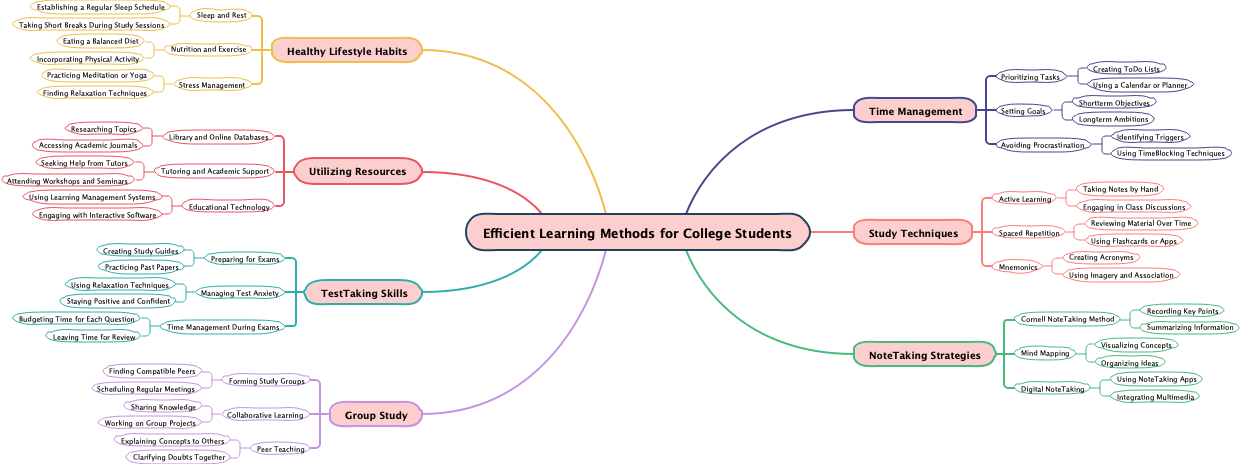
This is a mind map about plant asexual reproduction, and its main contents include: concept, spore reproduction, vegetative reproduction, tissue culture, and buds. The summary is comprehensive and meticulous, suitable as review materials.
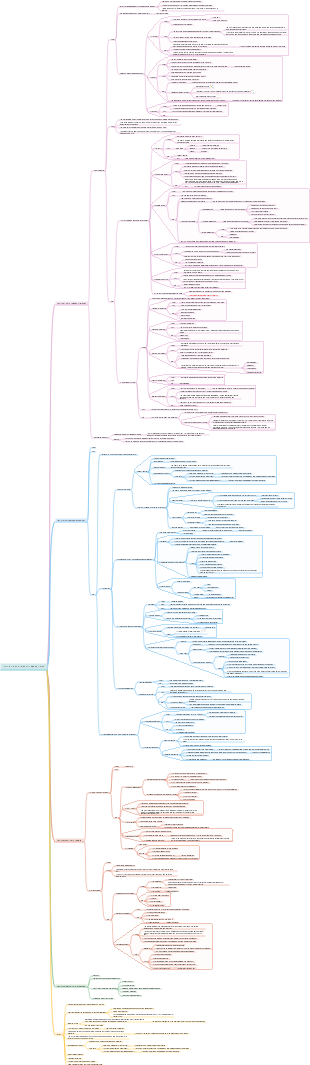
This is a mind map about the reproductive development of animals, and its main contents include: insects, frogs, birds, sexual reproduction, and asexual reproduction. The summary is comprehensive and meticulous, suitable as review materials.
This is a mind map about bacteria, and its main contents include: overview, morphology, types, structure, reproduction, distribution, application, and expansion. The summary is comprehensive and meticulous, suitable as review materials.
This is a mind map about plant asexual reproduction, and its main contents include: concept, spore reproduction, vegetative reproduction, tissue culture, and buds. The summary is comprehensive and meticulous, suitable as review materials.
This is a mind map about the reproductive development of animals, and its main contents include: insects, frogs, birds, sexual reproduction, and asexual reproduction. The summary is comprehensive and meticulous, suitable as review materials.
Three-step efficient learning method
Efficient learning of knowledge points
From being completely unfamiliar with a knowledge point to being able to apply it proficiently in various complex problems, what steps do you need to go through, and how can you quickly and thoroughly understand a knowledge point? It can be said that as long as you master these three steps, you can learn any subject or knowledge well.
The first step is knowledge input
Inefficient input: If you learn one by one, the knowledge must be scattered.
Efficient input: learning from the known to the unknown
First, every time you learn new knowledge, you must consciously establish a connection with the knowledge you have learned. What old knowledge can you associate with it? This connection can be connected with many kinds of underlying logic.
Capable of knowledge transfer
Participate in the derivation of new knowledge, and new knowledge can assist the understanding of old knowledge
Inexplicably, I felt that it was related.
It may appear together in the question and be tested
Silently put a line between the two of them in your brain to indicate that there is a connection. In this way, you will not only understand quickly, but also be able to initially establish a knowledge system.
Second, if you understand the new knowledge thoroughly, it will become known, and then you can use it to learn newer knowledge.
For every knowledge point, you must understand the underlying logic, and if you can deduce it, deduce it yourself.
Not just simply understand it, but understand it thoroughly.
Third, learn knowledge based on known problems and goals.
Read the catalog before reading and preview before class.
Then ask questions and find out what you are more interested in knowing what he would say.
Think about what I only need to solve when I go to study.
Keep an eye on these and start inputting knowledge.
The second step of knowledge sorting
Organize the fragments of knowledge into a knowledge framework, transform the text in the textbook into a knowledge reserve in the brain, and turn it into your own knowledge system.
The first method is directory search and recall method
First, read the textbook table of contents, recall relevant knowledge points one by one, and repeat them in your own words. Knowledge is interlocked and connected, so generally a series of knowledge points can be associated with one clue. If a piece of knowledge is not expected, it means that it and the knowledge near it need to be strengthened.
Second, after recalling, review the textbook content, filter out the important and difficult points that cannot be remembered or understood, write them as keywords, and put them next to the table of contents.
Third, sort it out like this every once in a while. Once you are proficient, you will no longer look at the catalog. Just take out a piece of paper, search, recall the knowledge structure, and list what you can think of one by one. Don't flip through the book easily. , I didn’t expect that the more difficult and strenuous it is, the more effective the recall process will be and the more profound the impression will be. The whole process is like this big net, checking for omissions and patching them up, improving the knowledge system over and over again, and the knowledge framework will gradually be stored in the mind.
The second method is repeated training method
For example, every time I see a type of question, I will explain its common mistakes and common test points. Every time I see a piece of knowledge, I will quickly recall it, the derivation process, constraints, and other related knowledge points. Repeat the prompts and strengthen the connection with knowledge. This knowledge framework will become more and more profound, the retrieval speed will become faster, and the questions will become more and more smooth.
The third step, knowledge output
Turn the knowledge in your head into your own output that you can use
The first type is to brush up the questions, which is a relatively fast process of brushing up the questions.
1. Review the textbook and understand it thoroughly
2. Do the corresponding sample questions and after-school questions
3. Do the basic questions in the exercise books and teaching aids
4. Make sets of papers and check for gaps in real questions
5. When you encounter something you don’t know, study the answer for the wrong question.
Analyze the corresponding knowledge modules, review the corresponding knowledge points and formulas in the textbook
Find similar questions for special training
The second is to speak your own words to others or record it for a while and then come back and listen to it to see if others or you can still listen. Find ways to simplify your language. If you can simplify a complex problem. If anyone can understand it, then you can truly understand it.
The third method is to predict the intention of the person who asked the question. What will this question test, where will I dig a hole, what kind of answer do I hope it will be, and develop a habit of guessing it every time. Even if I don’t step into this hole, I still need to know. It exists, so skillfully that it can be seen at a glance.
The fourth kind of question is to try your best to find out the problem and draw inferences. Use the method of creating problems for yourself and then answering them yourself to output knowledge. Record all the questions and see if you can still answer them when you come back later. this problem.