
MindMap Gallery Project Evaluation
This is a mind map about project evaluation, telling stories related to project evaluation. If you are interested in the story of project evaluation, please feel free to collect and like this mind map~
Edited at 2021-11-10 20:43:15This is a mind map about bacteria, and its main contents include: overview, morphology, types, structure, reproduction, distribution, application, and expansion. The summary is comprehensive and meticulous, suitable as review materials.

This is a mind map about plant asexual reproduction, and its main contents include: concept, spore reproduction, vegetative reproduction, tissue culture, and buds. The summary is comprehensive and meticulous, suitable as review materials.
This is a mind map about the reproductive development of animals, and its main contents include: insects, frogs, birds, sexual reproduction, and asexual reproduction. The summary is comprehensive and meticulous, suitable as review materials.
This is a mind map about bacteria, and its main contents include: overview, morphology, types, structure, reproduction, distribution, application, and expansion. The summary is comprehensive and meticulous, suitable as review materials.
This is a mind map about plant asexual reproduction, and its main contents include: concept, spore reproduction, vegetative reproduction, tissue culture, and buds. The summary is comprehensive and meticulous, suitable as review materials.
This is a mind map about the reproductive development of animals, and its main contents include: insects, frogs, birds, sexual reproduction, and asexual reproduction. The summary is comprehensive and meticulous, suitable as review materials.
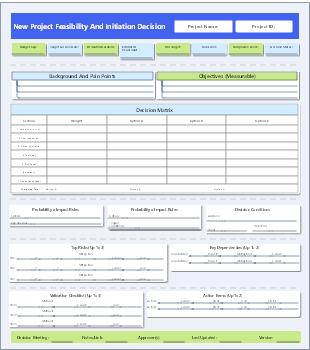
Project Evaluation
Definition: Project evaluation refers to the process of comprehensively examining and evaluating the objectives, costs, resources, and feasibility of a plan or project.
Goal evaluation: Evaluate whether the goals set by the project are clear, feasible and reasonable, and whether they are consistent with the organization's strategic goals.
Goal Clarity Assessment: Review the specificity, clarity, and measurability of project goals to ensure that project goals can be clearly communicated and understood.
Goal feasibility assessment: Examine whether the project goals are achievable within existing resources and time constraints, and evaluate whether the project size and complexity are consistent with the resources available.
Goal reasonableness assessment: Determine whether the project goals are strategically significant to the organization and can bring substantial business returns.
Cost assessment: Evaluate the resources required and expected cost input during project implementation.
Resource assessment: Evaluate various resources required for the project, including human resources, material resources, and technical support, etc., to ensure that the project can proceed smoothly.
Cost investment assessment: Calculate the budget and capital investment required for the project, and evaluate the economic feasibility of the project and the rationality of resource management.
Feasibility assessment: Evaluate the feasibility and prospects of the project, including technical feasibility, market feasibility, risk assessment, etc.
Technical feasibility assessment: Evaluate whether the key technologies involved in the project are mature and feasible, and determine the degree of dependence of the project on technical support.
Market feasibility assessment: Investigate the market environment and market demand faced by the project, and evaluate the project's competitive advantages and market prospects.
Risk assessment: Identify various risks that may be faced during project implementation and formulate corresponding risk response plans.
Importance: Project evaluation is an important part of project management, which can help organizations and project teams fully understand the project's feasibility, resource requirements, and goal achievement, thereby reducing the risk of project failure.
Can reduce the risk of project failure: By evaluating all aspects of the project, potential problems can be discovered and solved in advance to reduce the possibility of project failure.
Comprehensive understanding of the project situation: Through project evaluation, a comprehensive understanding of the project can be obtained, including project objectives, resource investment, risk warning, etc., which is conducive to decision-making and adjustment of project management.
step
Problem definition: Clarify the project issues and objectives that need to be evaluated, and determine the scope and details of the evaluation.
Data collection: Collect project-related data and information, including project plan, budget, resource allocation, etc.
Analysis and Comparison: Analyze and compare the collected data to obtain evaluation results and potential issues for the project.
Assessment report: Write an assessment report based on the analysis results, summarize the main findings and suggestions of the assessment, and report and communicate to relevant personnel.
Decision-making and adjustment: Make project decisions and adjustments based on evaluation results and reports to optimize project implementation and management.
Tools and techniques
Questionnaire survey: Collect project-related opinions and suggestions through questionnaire survey and obtain various feedback information.
Interview: Conduct face-to-face interviews with relevant project personnel or experts to gain an in-depth understanding of the current status and problems of the project.
Data analysis: Use statistical analysis, trend analysis and other methods to process and analyze project data.
Risk assessment tools: Use risk assessment models and tools to conduct a quantitative or qualitative assessment of the risks a project may face.
SWOT analysis: Reveal the strengths and potential problems of the project by analyzing the strengths, weaknesses, opportunities, and threats of the project.
Expert review: Invite experts in relevant fields to review the project and provide professional opinions and suggestions.
Implementation points
Clarify goals: Before project evaluation, clarify the goals and scope of the evaluation to ensure that the focus and direction of the evaluation are clear.
Collect comprehensive data: During the data collection process, ensure that the data and information collected are comprehensive, objective, and cover all aspects.
Comprehensive analysis: Comprehensive analysis of the collected data, comprehensively considering the impact of various factors on the project and potential problems.
Communicate well: The writing and communication of the evaluation report is an important part of the evaluation work, and it is necessary to ensure that the evaluation results can be understood and accepted by relevant personnel.
Timely adjustment: Make timely project decisions and adjustments based on evaluation results and reports to ensure that the project proceeds smoothly as planned.