 Wondershare EdrawMind
MindMap Gallery The world's top learning method
- 1.6k
- 34
- 1
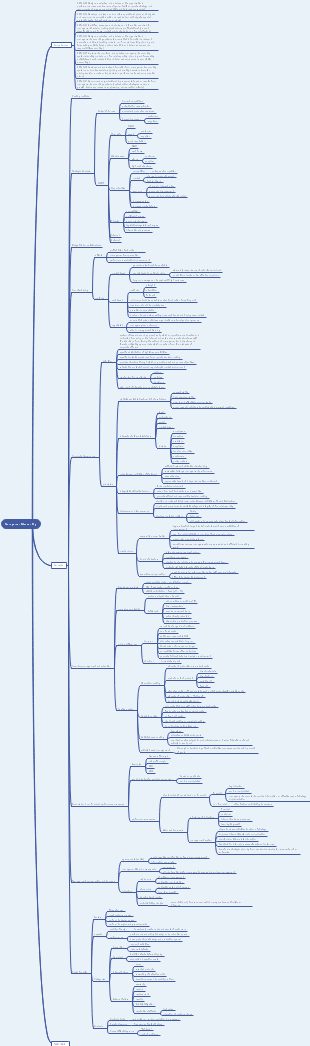
The world's top learning method
The most important knowledge in the world is knowledge about methods. There are many kinds of learning methods, each with its own unique features and applicable scenarios.
Edited at 2024-09-06 01:21:57
- 把時間當作朋友
這是一篇關於把時間當作朋友的心智圖,《把時間當作朋友》是一本關於時間管理和個人成長的實用指南。作者李笑來透過豐富的故事和生動的例子,教導讀者如何克服拖延、提高效率、規劃未來等實用技巧。這本書不僅適合正在為未來奮鬥的年輕人,也適合所有希望更好地管理時間、實現個人成長的人。
- Treat time as a friend
This is a mind map about treating time as a friend. "Treating Time as a Friend" is a practical guide on time management and personal growth. Author Li Xiaolai teaches readers practical skills on how to overcome procrastination, improve efficiency, and plan for the future through rich stories and vivid examples. This book is not only suitable for young people who are struggling for the future, but also for everyone who wants to better manage time and achieve personal growth.
- 高效能人士的七個習慣
這七個習慣相輔相成,共同構成了高效能人士的核心特質。透過培養這些習慣,人們可以提升自己的領導力、溝通能力、團隊協作能力和自我管理能力,從而在工作和生活中取得更大的成功。
The world's top learning method
- 把時間當作朋友
這是一篇關於把時間當作朋友的心智圖,《把時間當作朋友》是一本關於時間管理和個人成長的實用指南。作者李笑來透過豐富的故事和生動的例子,教導讀者如何克服拖延、提高效率、規劃未來等實用技巧。這本書不僅適合正在為未來奮鬥的年輕人,也適合所有希望更好地管理時間、實現個人成長的人。
- Treat time as a friend
This is a mind map about treating time as a friend. "Treating Time as a Friend" is a practical guide on time management and personal growth. Author Li Xiaolai teaches readers practical skills on how to overcome procrastination, improve efficiency, and plan for the future through rich stories and vivid examples. This book is not only suitable for young people who are struggling for the future, but also for everyone who wants to better manage time and achieve personal growth.
- 高效能人士的七個習慣
這七個習慣相輔相成,共同構成了高效能人士的核心特質。透過培養這些習慣,人們可以提升自己的領導力、溝通能力、團隊協作能力和自我管理能力,從而在工作和生活中取得更大的成功。
- Recommended to you
- Outline

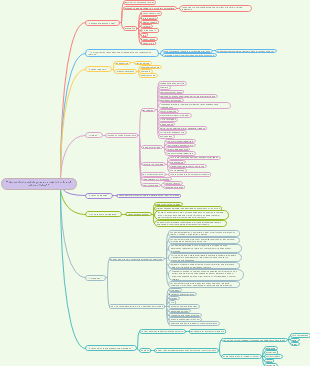
The world's top learning method
mind mapping
concept
Mind Map, also known as Mind Map in English, is an effective graphic thinking tool for expressing divergent thinking. It is simple, efficient and a practical thinking tool.
subtopic
principle
Mind mapping makes full use of the functions of the left and right brains, and uses the laws of memory, reading, and thinking to help people develop a balanced development between science and art, logic and imagination, thereby unlocking the unlimited potential of the human brain. Mind mapping therefore has the powerful function of human thinking.
Mind mapping uses the technique of paying equal attention to pictures and text, showing the relationship between topics at all levels as hierarchical diagrams of mutual affiliation and correlation, and establishing memory links between topic keywords, images, colors, etc.
Mind mapping is a method of visualizing thinking. We know that radioactive thinking is the natural way of thinking of the human brain. Every kind of data that enters the brain, whether it is feelings, memories or ideas - including words, numbers, codes, aromas, food, lines, colors, images, rhythms, Notes, etc., can become a thinking center, from which thousands of joint points radiate outward. Each joint point represents a connection with the central theme, and each connection can become another central theme, and then radiate out thousands of joint points, presenting a radiating three-dimensional structure, and the connections of these joints can be viewed For your memories, which are interconnected just like the neurons in your brain, are your personal database.
A mind map is a graphical representation of words, ideas, tasks or other related items that uses a central keyword or idea to visually structure and classify ideas; it uses a central keyword or idea to connect all representative words, ideas, tasks or other related items in a radiating line.
use
Mind mapping can be used to formulate plans, including work plans, study plans, and travel plans. Plans can be divided according to time or projects to organize complex schedules clearly.
Feynman learning method
Sources and concepts
The Feynman learning method is called the most powerful learning method in the world. The Feynman learning method is inspired by Nobel Prize winner Richard Feynman. Using Feynman techniques, you only need to spend 20 minutes. You can deeply understand the knowledge points, and remember them deeply and hard to forget. There are two types of knowledge, and most of us focus on the wrong kind. The first type of knowledge focuses on knowing the name of something. The second type of knowledge focuses on understanding something. This is not the same thing. The famous Nobel physicist Richard Feynman was able to understand the difference between the two, which was one of the most important reasons for his success. In fact, he created a learning method that ensured he would understand things better than anyone else. The core of the "Feynman Learning Method" is to consolidate one's knowledge by paraphrasing and teaching it to others. Because in the process of elaboration, the knowledge needs to be reviewed in the mind, and the knowledge also needs to be organized in the mind, and then transmitted to others. , mastering knowledge points virtually. "Feynman Learning Method" is the most powerful of all learning methods currently promoted worldwide.
Benefits of Feynman Learning Method
First, by expressing knowledge in a simple and clear way, we can understand it more deeply because we need to summarize and explain it clearly.
Secondly, when we can explain a concept in simple language, it means that we have truly mastered it and not just memorized the definition or formula mechanically.
Specific steps
1. We need to choose a topic or concept that we want to learn, which can be a book, an article, a theory or a skill, etc. Make sure we are fully interested and motivated in the topic.
2. Explain the topic or concept from the professor’s perspective. Explain it in simple and clear language to someone who knows nothing about the subject. Avoid using jargon or complex language and explain it in your own words.
3. Review our explanations and look for problems, ambiguities, or incompletenesses. Pay attention to those areas that we feel we cannot articulate or explain. These issues are areas where our understanding is not deep enough and require further study and clarification.
4. Return to the original material to study. Re-study and study content related to problematic parts of our explanations, find more information, and clarify areas that we did not understand previously. Don't be afraid of difficulties and keep moving forward.
5. Simplify and clarify our explanations. After relearning and researching, try again to explain the topic or concept in a concise and clear way. This time, we should be able to express it more accurately and clearly. Explain it in the simplest language so that others can easily understand it.
6. If we still find that we cannot explain a certain aspect clearly, repeat the previous steps and go back to the original material to study and research again. Keep iterating until we fully understand it and can explain it to others in a concise and clear way. Don't give up, keep at it and we will get closer and closer to true understanding.
Simon learning method
source
Professor Simon, the winner of the Nobel Prize in Economics, once put forward a theory: "For a person with a certain foundation, as long as he is really willing to work hard, he can master any knowledge within 6 months." Professor Simon established the theory Based on experimental psychology research results, a person can memorize a piece of information in 1 minute to 1 and a half minutes. Simply put, the core of Simon's learning method is: single goal, continuous investment, and concentration.
Basic principles of method
1. Split learning time: Break learning content into small chunks and space learning out across different learning sessions. This can not only reduce learning fatigue, but also improve learning results.
2. Spaced repetition: Leave a certain amount of time between each learning session to strengthen memory. Research shows that the consolidation and retention of knowledge can be enhanced by reviewing something some time after it has been memorized.
3. Combination of sequential and random learning: Combining sequential learning and random learning methods can help students master knowledge more comprehensively. Sequential learning can make the learning process more logical and coherent, while random learning can help students better memorize and recall knowledge.
4. Active learning: Actively participating in the learning process, such as asking questions, summarizing, repeating and teaching others, can improve learning results.
core concept
The core concept of Simon's learning method is to consolidate and strengthen knowledge memory through sequential, random and spaced repetition during the learning process. In general, the Simon Learning Method is an organized, scientific and efficient learning method that can help students better understand and remember knowledge and improve learning results.
Pomodoro method
The Pomodoro Technique is a time management technique that improves study efficiency and concentration. This method divides study time into a series of fixed-length blocks, each of which is called a "Pomodoro" and is usually 25 minutes long. After each Pomodoro, learners can rest for a few minutes before starting the next Pomodoro. Each Pomodoro block is a period of focused study, while breaks are meant to restore focus and relax the brain.
SQ3R learning method
The "SQ3R" learning method currently popular in the United States is an effective auxiliary learning method that helps us improve learning efficiency and study homework systematically. Its meaning is S (Surrey) - overview, Q (Question) - question, 3R (Read, Recite, Review) - reading, recitation, review. SQ3R is a reading method strategy that has been proven to be effective. It was first proposed by American educational psychologist Francis Robinson in his book "Effective Learning" published in 1941.
subtopic
deliberate practice
source
The famous psychologist Ericson has devoted himself to the field of "expertise science" for decades, studying experts in a series of industries or fields: chess masters, top violinists, sports stars, memory masters, spelling champions, Outstanding doctors, etc. He found that the most effective ways to improve skills and abilities, regardless of industry or field, all followed a set of universal principles, which he named "deliberate practice." For everyone looking to improve themselves in any industry or field, deliberate practice is the gold standard and the most powerful learning method ever discovered.
use
"Deliberate Practice" guides readers through purposeful practice to gradually improve their skills and abilities and become experts in their field. This book emphasizes planning, strategy, and sustained effort, and is intended for those who wish to achieve mastery in a specific area.
Five Steps to Deliberate Practice
First, set clear goals.
First, we need to set a clear, quantifiable goal to better define the skills and levels to pursue. For example, if you want to become a professional athlete or a pianist, you need to set a specific competition performance or level goal. For another example, if you set a goal for yourself to become a writer, then you need to set how many words you will write in a few years, how many years you will complete a book, etc. The more specific the goal, the better.
Second, focus on practice and feedback.
With the goal in mind, we need to focus on deliberate practice, that is, through repeated practice and adjustment, we can gradually improve our skills and level. At the same time, you need to seek effective feedback and guidance in order to discover your own shortcomings and weaknesses and make timely adjustments and improvements. If you do the same thing over and over again without purpose, you won't be able to make any progress. You need to find out where the problems are over and over again and improve them in a targeted manner. Establishing an effective feedback mechanism can help us discover our shortcomings and weaknesses in time and make timely adjustments and improvements. For example, you can record your practice process through video or recording, so that you can better reflect and summarize. Note here that you must find the right mentor or coach. Because only they can provide professional guidance and feedback to help us better discover our shortcomings and weaknesses, and make timely adjustments and improvements.
Third, create an effective training plan.
We need to develop an effective training plan, integrate deliberate practice into daily life, and ensure that there is sufficient practice time and quality every day. Develop a detailed plan to achieve a series of small changes that will eventually add up to the larger change previously desired.
Fourth, go beyond your comfort zone and challenge your limits.
In the process of deliberate practice, we need to constantly challenge our limits, transcend our comfort zones, and further improve our abilities and levels. Give your best effort at the edge of your comfort zone. Challenges outside our comfort zone, not too far away, can make our brains change most quickly.
Fifth, persevere and keep improving.
We need to persevere, continue to practice deliberately, and constantly improve and enhance our abilities and levels. At the same time, you need to reflect on and summarize your own practice experience, discover shortcomings and weaknesses, and take corresponding measures to improve and improve.
Cornell Note-taking
concept
The Cornell note-taking method, also known as the 5R note-taking method, is named after the university that produced this note-taking method. This method is suitable for almost all lectures or reading classes, and is especially effective for taking notes during lectures.
step
1⃣️Record While listening or reading Record class content Record the key parts Record the central idea (point of view/theme) Note down the unclear areas Keep it branched, simple, and highlight key points with a highlighter
2⃣️Simplify (Reduce) Communicate what you have learned as early as possible Key arguments, keywords, and key concepts are summarized concisely.
3⃣️Recite Cover the note column and use only the excerpt prompts in the clue column to complete the Describe what you have learned.
4⃣️Reflect Combine your own reflections, opinions, and experiences after listening to the lecture with the lecture content The distinction is written in a separate section of the notebook, with titles and indexes, compiled Create an outline and summary category and archive it at any time.
5⃣️Review Spend about ten minutes each week reviewing your notes quickly.
spider learning method
The spider learning method is a learning method that imitates the action of a spider spinning its web and is used to build and organize a knowledge system.
What learning problems are dealt with?
Many people study like ants moving around, hoarding knowledge bit by bit. They want to learn this and that when they see it. If it's just for the joy of learning, that's fine. But if it is to use knowledge, such learning methods are often ineffective. Because the knowledge is piled up in the mind without rules and rules, it is easy to be forgotten. When you really want to start using them, you find that they disappear without a trace. The spider learning method is just the opposite. It imitates the action of a spider spinning a web. It first determines a central point, and then adds knowledge to the outside in circles, and finally forms a solid knowledge network, which is what we call a knowledge system.
Specific concepts and methods
In fact, it is very simple to do. Every time we understand a knowledge point, we will see if there is a related topic before, and if so, we will add it to that topic; if not, we will re-establish a new central point and learn from it later. Add new knowledge. We can have many small networks, and the small networks are connected into large networks, slowly and continuously forming their own solid knowledge network.
hippocampal memory method
concept
The Hippocampal Memory Method is a hippocampus-based memory training method that aims to improve memory by stimulating and training the hippocampus. The hippocampus is an important area of the brain responsible for storing and retrieving memories. Through regular specific memory training, the function of the hippocampus can be enhanced, thereby improving memory ability.
Specific steps
1. Set memory goals: First, determine what you want to remember. It can be things in life, knowledge points in courses, or any topic that interests you.
2. Create associations: Connect the target content with existing memories to create personalized associations. For example, you can associate what you want to remember with things or situations you are already familiar with to make it easier to remember.
3. Make an association diagram: Use tools such as charts, images or mind maps to make an association diagram of the content to be memorized. Doing so will help you better understand and remember the target content.
4. Review and repeated training: Regularly review and review what has been learned, and consolidate memory through repeated training. Review can be done using flash cards, memory games, etc.
5. Use multiple senses to participate in memory: Participating in memory through multiple senses, such as listening, seeing, speaking and writing, can increase the effect of memory. You can try paraphrasing what you learned in your own words, or write it down with your fingers.
Other ways to improve memory
1. Get enough sleep: Sleep is crucial to the consolidation and improvement of memory. Maintaining good sleep quality and time will help improve memory.
2. Balanced diet: A nutritious and balanced diet helps to provide the energy and nutrients needed by the brain and maintain the normal function of memory.
3. Exercise: Moderate physical activity can promote blood circulation, increase the supply of oxygen to the brain, and improve brain work efficiency and memory.
5. Focus on attention: Stay focused and focused and avoid distractions and distractions.
6. Software and applications: Using some memory software and applications, such as flashcard applications, memory games, etc., can help enhance the effect of memory training.
minimalist learning method
use
"Minimalist Learning Method" is designed to help children achieve high scores in exams and adults quickly master knowledge. The method includes precise input, deep digestion and multiple output. Among them, precise input provides targeted exercises for learning weaknesses, in-depth digestion requires getting rid of fear of difficulties, and multiple output allows you to apply the learned knowledge into practice in a variety of ways.
introduce
In this "Minimalist Learning Method", a group of smart people reveal their efficient learning methods. Liao Heng, CEO of Xueba Media, summarizes and extracts a learning method that can quickly get to the core, allowing you to quickly learn something. Any skill you want to learn.
step
1. Accurate input
It emphasizes responding to situations quickly and achieving immediate results. Then when we study, we cannot cast a wide net and sow seeds, but must achieve precise input. Therefore, we need to learn the knowledge that directly determines the results and do intensive training on this part of the knowledge. For example, when the big exam is approaching, we don’t have time to chew on every knowledge point, so we directly train on the mock test questions. First, we understand what we know and what we don’t know, and then we decompose and digest the ones we don’t know. Nibble it through slowly.
2. Deep digestion
Because mastering a knowledge point requires some difficulty when inputting it, then when we master it, we will be more proficient in using it and understand it more easily. For the knowledge that we can easily grasp, we may be able to use it intuitively, but we may not really understand it. At this time, we need to calm down and think about where we are stuck. When we ask for help from others, we can accurately describe our situation, so that the explainer can really work on where we are stuck and make us suddenly understand.
3. Multiple output
Learning for the sake of application is the fastest way to learn. Now that you think you understand it, you have to quickly find the test questions of this knowledge, answer them, and try to see if you can really solve them. If you can solve it, do a special topic study, thoroughly understand this knowledge point from all aspects, and simulate the answering rules from various question types, so that you can answer the questions quickly and accurately when it comes to the real exam. Learning quickly, generally means learning and applying quickly, in order to cope with the situation you are about to face in order to achieve good results. But to master it for a long time, you need to continue training and expand the depth and breadth of knowledge.