MindMap Gallery Educational Applications of Geographic Information Systems
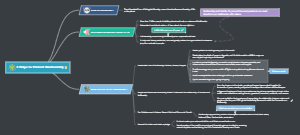
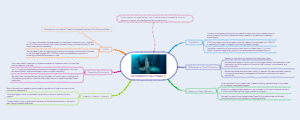
This content explores the educational applications of geographic information systems, starting with an introduction to community and outreach programs. It then illustrates future directions for GIS in education, such as augmented reality technologies and big data integration, helping readers gain a deeper understanding of the field's prospects. However, it also highlights the challenges and limitations associated with applying GIS in education, such as data privacy and technological costs. The overall aim is to spark interest among readers in GIS and encourage them to consider its potential impacts and problems.
Edited at 2024-10-13 05:04:54In the introduction section, elastin is a protein that plays a crucial role in the body, endowing tissues with elasticity and toughness. Its properties include high elasticity and good ductility. Elastin has a wide range of sources and is commonly found in animal connective tissues such as skin and blood vessels. When using elastin in products, the amount and method of addition should be determined based on the characteristics of the product. It has many uses and can be added to skincare products to enhance skin elasticity and reduce wrinkles; Improving food texture and enhancing taste in the food industry; In the medical field, it can be used to make elastic scaffolds such as artificial blood vessels, providing support for tissue repair. Reasonable use can play its unique value.
This document aims to guide the proper use of proteins. Proteins are the fundamental substances that make up life and are essential for maintaining normal physiological functions in the body, with a wide variety of types. When using protein, daily diet is an important source, such as meat, eggs, etc., which are rich in high-quality protein. Measuring protein intake can be done using professional tools or methods to ensure that the intake meets the body's needs. When mixing protein powder, it should be prepared according to the recommended ratio, and the water temperature should not be too high to avoid damaging the protein activity. Different groups of people have different protein requirements, such as athletes and fitness enthusiasts who can increase their intake appropriately to meet the needs of body repair and muscle growth.
Introduction to Unsaturated Polyester Resin: It is an important thermosetting resin with various excellent properties. It has a wide range of applications and is used in the construction industry to produce fiberglass products such as doors, windows, decorative panels, etc; Used in the automotive industry for manufacturing body components. The advantages of use include simple molding process, low cost, and chemical corrosion resistance. However, it also faces challenges and limitations, such as relatively poor heat resistance and susceptibility to aging. During use, corresponding protective measures should be taken according to specific application scenarios, such as adding heat-resistant agents, antioxidants, etc., to extend their service life and fully leverage their advantages.
In the introduction section, elastin is a protein that plays a crucial role in the body, endowing tissues with elasticity and toughness. Its properties include high elasticity and good ductility. Elastin has a wide range of sources and is commonly found in animal connective tissues such as skin and blood vessels. When using elastin in products, the amount and method of addition should be determined based on the characteristics of the product. It has many uses and can be added to skincare products to enhance skin elasticity and reduce wrinkles; Improving food texture and enhancing taste in the food industry; In the medical field, it can be used to make elastic scaffolds such as artificial blood vessels, providing support for tissue repair. Reasonable use can play its unique value.
This document aims to guide the proper use of proteins. Proteins are the fundamental substances that make up life and are essential for maintaining normal physiological functions in the body, with a wide variety of types. When using protein, daily diet is an important source, such as meat, eggs, etc., which are rich in high-quality protein. Measuring protein intake can be done using professional tools or methods to ensure that the intake meets the body's needs. When mixing protein powder, it should be prepared according to the recommended ratio, and the water temperature should not be too high to avoid damaging the protein activity. Different groups of people have different protein requirements, such as athletes and fitness enthusiasts who can increase their intake appropriately to meet the needs of body repair and muscle growth.
Introduction to Unsaturated Polyester Resin: It is an important thermosetting resin with various excellent properties. It has a wide range of applications and is used in the construction industry to produce fiberglass products such as doors, windows, decorative panels, etc; Used in the automotive industry for manufacturing body components. The advantages of use include simple molding process, low cost, and chemical corrosion resistance. However, it also faces challenges and limitations, such as relatively poor heat resistance and susceptibility to aging. During use, corresponding protective measures should be taken according to specific application scenarios, such as adding heat-resistant agents, antioxidants, etc., to extend their service life and fully leverage their advantages.
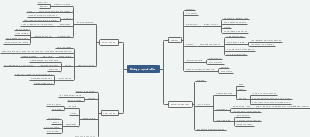
Educational Applications of Geographic Information Systems
Community and Outreach Programs
Involving the Community in GIS Education
Partnerships with local schools and universities
Sharing resources and expertise between institutions
Offering GIS workshops and seminars for the community
Citizen Science Projects
Engaging the public in data collection and mapping projects
Raising awareness about environmental and social issues
Educational Outreach
Reaching out to underrepresented groups
Providing GIS education to underserved communities
Encouraging diversity in GISrelated fields
Promoting GIS in K12 Education
Introducing GIS concepts early in the educational process
Future Directions
Innovative Pedagogical Approaches
Incorporating GIS into online and blended learning environments
Developing MOOCs (Massive Open Online Courses) with GIS components
Utilizing GIS in flipped classroom models
Promoting projectbased learning with GIS
Engaging students in realworld problemsolving
Collaborating with local communities and organizations
Technological Advancements
Integration of GIS with other technologies
Combining GIS with virtual reality (VR) and augmented reality (AR)
Exploring the potential of artificial intelligence (AI) in GIS
Advancements in mobile GIS
Using smartphones and tablets for field data collection
Developing mobile apps for educational purposes
Global and Cultural Perspectives
Promoting global awareness through GIS
Comparing and contrasting different regions and cultures
Encouraging international collaboration on GIS projects
Addressing cultural and social issues with GIS
Using GIS to understand and address social inequalities
Mapping cultural heritage and diversity
Challenges and Limitations
Access to Resources
Cost of GIS software and hardware
Seeking educational discounts or opensource alternatives
Funding for GIS labs and equipment
Training for Educators
Professional development workshops and courses
Collaboration with GIS professionals for expertise
Technical Issues
Software complexity and learning curve
Providing support and training for educators and students
Creating userfriendly interfaces for educational purposes
Data availability and quality
Identifying reliable and uptodate data sources
Teaching students how to evaluate data credibility
Assessment and Evaluation
Student Assessment
Using GIS projects to evaluate student understanding
Assessing the ability to collect, analyze, and interpret spatial data
Evaluating the quality of map creation and data presentation
Integrating GIS into traditional assessment methods
Complementing written exams with GISbased assignments
Encouraging group work and peer assessment
Educational Impact Evaluation
Measuring the effectiveness of GIS in education
Gathering feedback from students and educators
Analyzing improvements in spatial literacy and critical thinking
Research studies on GIS in education
Publishing findings on best practices and successful case studies
Exploring the potential of GIS to transform educational landscapes
Data Sources and Analysis
Types of Geographic Data
Raster data (images and grids)
Satellite imagery and aerial photographs
Digital elevation models (DEMs)
Vector data (points, lines, polygons)
Road networks and administrative boundaries
Water bodies and land use/land cover
Data Analysis Techniques
Spatial querying and overlay analysis
Identifying patterns and relationships in data
Combining different data layers to create new information
Geostatistical analysis
Mapping and analyzing spatial patterns and trends
Predictive modeling for future scenarios
Teaching and Learning Tools
Software and Hardware
Popular GIS software used in education
Esri's ArcGIS
QGIS (an opensource alternative)
Hardware considerations for GIS labs
Computers with sufficient processing power and storage
Devices for data collection, such as GPS units
Interactive Learning
Online GIS platforms for educational use
Google Earth Engine
Story Maps for storytelling with maps
Virtual field trips and simulations
Exploring remote locations without leaving the classroom
Simulating geographic processes and phenomena
Curriculum Integration
Subjectspecific Applications
Geography
Teaching map reading and interpretation skills
Analyzing physical and human features of different regions
Environmental Science
Studying ecosystems and environmental changes
Modeling climate change impacts on landscapes
History
Exploring historical events through geographic context
Visualizing past civilizations and migration patterns
Crossdisciplinary Approaches
Encouraging interdisciplinary projects
Combining math, science, and social studies for comprehensive projects
Using GIS to solve realworld problems that require multiple perspectives
Developing critical thinking and problemsolving skills
Analyzing spatial data to make informed decisions
Understanding the complexity of geographic issues
Introduction to GIS in Education
Definition of GIS
A system designed to capture, store, manipulate, analyze, manage, and present spatial or geographic data
Used to understand patterns, relationships, and trends in a geographical context
Role in Education
Enhances learning by integrating spatial thinking into various subjects
Provides tools for interactive and visual learning experiences