 Wondershare EdrawMind
MindMap Gallery Principles of Economics (Part 1) Microeconomics
- 149
Principles of Economics (Part 1) Microeconomics
Principles of Economics (Part 1) Summary of the Mankiw Mind Map of Microeconomics. Economics is the study of general human life affairs. The market is usually a good way to organize economic activities. The government can sometimes improve market results.
Edited at 2022-05-18 08:23:54
Principles of Economics (Part 1) Microeconomics
- Recommended to you
- Outline
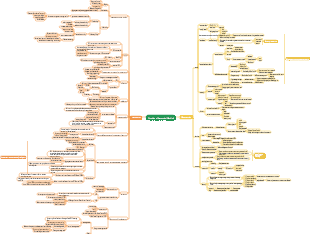
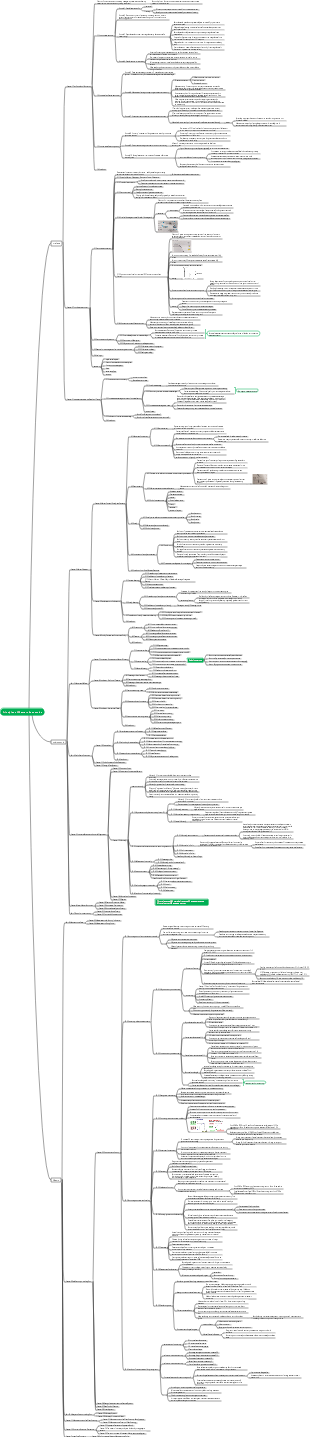
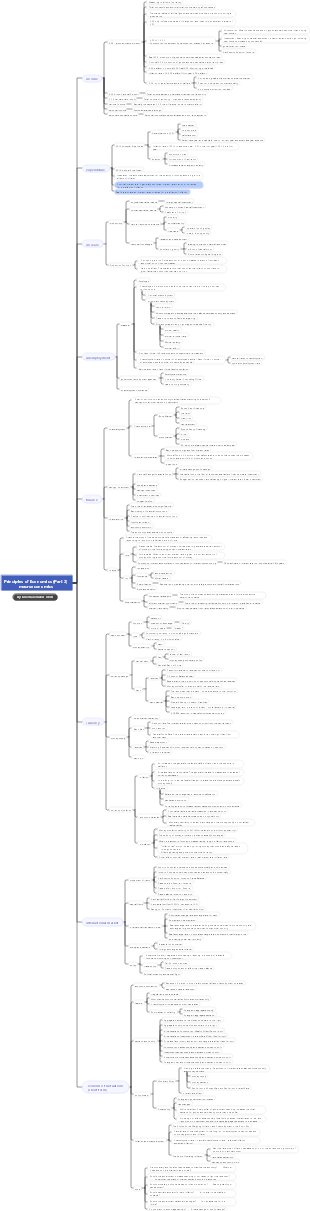
Principles of Economics (Part 1) Microeconomics Mankiw
Economics is the study of general human life affairs
introduction
Ten principles of economics
how people make decisions
1. Humanity faces trade-offs
There is no free lunch in the world
Efficiency and equality, the size of the pie and how it is divided
2. The cost of something is what you give up in order to get it.
opportunity cost
3. Rational people consider the marginal quantity
Decisions are rarely black and white choices, but gray areas
Make decisions based on marginal cost/marginal revenue
4. People respond to incentives
Incentive: Something that causes a person to perform a certain behavior
subtopic
How to trade with each other
5. Trade can make everyone better off
6. Markets are usually a good way to organize economic activities
market economy
invisible hand
7. Governments can sometimes improve market outcomes
Property Rights: The ability of individuals to own and control scarce resources
market failure
subtopic
overall economic performance
8. A country’s standard of living depends on its ability to produce goods and services
9. When the government issues too much money, prices rise
10. Society faces a short-term trade-off between inflation and unemployment.
economic cycle
economic Research
Scientific Method: Observation, Theory, Further Observation
Hypothesis can simplify complex problems
economic model
economic model
Circulation flow diagram
An intuitive model of how money flows between households and businesses
Factors of production: labor, land, capital, etc.
Business: Produces and sells goods and services, hires and uses factors of production
Households: own and sell factors of production, buy and consume goods and services
Factors of production market: Households selling, businesses buying
Markets for Goods and Services: Businesses for Sale, Households to Buy
production possibilities frontier
The combination of the quantity of products an economy can produce when factors of production and production technology are given.
Resource allocation: If the same resources are used to produce products A and B, how to determine the quantity ratio of A/B
Principle 1: Trade-offs; Principle 2: Opportunity cost
economic thinking
express
Empirical expression
descriptive
What the world is like, discussion of logic and relationships
normative expression
prescriptive
What should the world look like and what should be done?
disagreement
Scientific judgment is different
Different values
feeling and reality
trade and choice
Absolute advantage: comparative advantage
Comparative advantage: one’s comparative advantage
Opportunity cost: The trade price is between two opportunity costs
Trade: can benefit everyone in society because it allows people to engage in activities in which they have a comparative advantage
graphics
Univariate
pie chart
Column chart
time series diagram
bivariate
Coordinate Xu scatter plot: positive correlation, negative correlation
Coordinate System Curve Graph: Demand Curve
Changes along curves and movement of curves
Definition of slope
causality of change
market
Market: a group of buyers and sellers
Competition: perfect competition versus monopoly, number of supply and demand parties
supply and demand
Demand: Demand curve, the relationship between price and quantity demanded; Demand quantity, demand theorem, demand schedule, demand curve
Normal Goods: Other things being equal, an increase in income causes an increase in demand
Low-end goods: other things being equal, an increase in income causes a decrease in demand
Substitutes: An increase in the price of one good causes an increase in the demand for another good
Complementary goods: an increase in the price of one good causes a decrease in the demand for another good
Influencing factors: Hobbies, expectations, number of buyers
Supply: supply curve, the relationship between price and quantity supplied; Quantity supplied, supply theorem, supply schedule, supply curve
Influencing factors: input prices, technology, expectations, number of sellers
balanced
equilibrium price & equilibrium quantity
Supply Theorem: The price of any item will spontaneously adjust to balance the supply and demand for the item.
Surplus: supply is greater than demand
Shortage: quantity demanded is greater than quantity supplied
elasticity
A measure of the response of demand or supply to changes in a certain determinant
Price elasticity of demand/supply: How responsive demand/supply is to price (elastic/inelastic)
Availability of close substitutes
Necessities and luxuries: Necessities are generally inelastic, while luxuries are highly elastic.
Market definition, narrow market definition is flexible, broad market definition is inelastic
Actual range, elastic in the long run, inelastic in the short run
Calculation: price elasticity of demand = percentage change in quantity demanded / percentage change in price Midpoint method, take the variation/average value
If the calculated elasticity value is >1, it is elastic; if the calculated elasticity value is <1, it is inelastic.
Total revenue: When elasticity > 1, price and total revenue move in opposite directions; when elasticity < 1, price and total revenue move in the same direction.
policy
price
The price limit has no impact when supply exceeds demand; when supply is less than demand, there is a rush
Price lower limit, if supply is less than demand, there will be no impact; if supply exceeds demand, it will be unsaleable.
tax
The impact of taxing sellers on the market. Taxes reduce the size of the market. Buyers pay more and sellers get less.
The impact of taxing buyers on the market. Taxes reduce the size of the market. Buyers pay more and sellers receive less.
The tax burden falls more on the inelastic market side
Remaining
Consumer Surplus
The amount a buyer is willing to pay for a good minus the amount he actually pays for it
Willingness to Pay: The highest price a buyer is willing to pay
Can be a good measure of economic well-being
producer surplus
The amount a seller gets from selling an item minus its cost of production
cost
Willingness to sell
market efficiency
Efficiency, resource allocation to maximize total surplus
Equality, buyers and sellers in the market have similar welfare levels
Equilibrium to maximize total surplus
tax
deadweight loss
Taxation reduces consumer surplus and producer surplus. Since the reduction in total surplus is greater than the tax revenue, This difference is the deadweight loss
When supply is elastic, the deadweight loss of taxes is larger
When demand is elastic, the deadweight loss of taxes is larger
marginal tax rate on labor income
About 40% in the United States
international trade
factors that determine trade
World Prices and Comparative Advantage
export country
Domestic producers are better off
Domestic consumers are worse off
Overall, economic welfare increased
import country
The situation of domestic consumers has improved
Domestic producers are worse off
Overall, economic welfare increased
tariff
Tariffs mainly affect importing countries
Tariffs reduce the quantity of imports and shift the domestic market toward the equilibrium in the absence of trade
Import quotas and tariffs are similar
benefit
Increased item diversity
Reduced costs through economies of scale
increased competition
Strengthened exchange of ideas
limit
job theory
National security theory
infant industry theory
unfair competition theory
government
externality
The uncompensated impact of one's actions on the welfare of bystanders
cause market failure
Lack of property rights
Can't price
free
According to whether it is beneficial or not beneficial to bystanders, it is divided into positive externalities and negative externalities.
Internalization of externalities, changing incentives so that people take into account the external effects of their actions
Technology spillover, internalization of externalities through government subsidies, patents and property rights as incentives
measure
command and control policy
Regulation, which addresses externalities by regulating or prohibiting certain behaviors
subtopic
market-based policies
Correctional taxes, subsidies
tradable pollution permit
Private solution to externalities
moral constraints
act of charity
Coase Theorem: Private parties can negotiate resource allocation at no cost, They can solve the externality problem on their own
thing
Basis: exclusivity, competition in consumption
Private goods: exclusivity and competition
Club Items: Exclusive No Competition
Public goods: non-excludable and non-rivalrous
national defense
basic research
anti-poverty
Public resources: non-exclusive and competitive
clean air and water
congested road
tax system
income
Personal Income Tax
social security
medical insurance
local tax
sale tax
tariff
other
expenditure
national defense
medical
Pension
unemployment
Budget
Surplus: expenses < income
Deficit: Expenditure > Revenue
Purpose: Obtain the same amount of tax at a lower cost
deadweight loss due to tax
The administrative burden of taxpayers paying taxes in accordance with the law
Core: Efficiency and Equality
Marginal tax rate: the additional tax paid on an additional $1
Decide how much to encourage people not to work
Average tax rate: total tax/total income
fixed tax
tax equality
Benefit principle
ability to pay principle
enterprise
Cost of production
Total revenue: The amount of money a firm receives from selling its products
Total cost: the market value of the inputs used by the firm in production
Profit: total revenue - total cost
explicit cost, implicit cost, opportunity cost
Economic profit, accounting profit (economic profit minus opportunity cost)
Production function, marginal product, total cost curve
fixed costs, variable costs
average cost, marginal cost
Economies of scale (specialization), diseconomies of scale (coordination problems)
compete
Competitive market
There are many sellers and buyers in the market
The items offered by each seller are generally the same
Companies can enter and exit the market freely
supply curve
Short run: market supply with a fixed number of firms
Long term: market supply with entry and exit
Competitors
average return
Marginal revenue
profit maximization
Marginal Cost and Enterprise Supply Strategy
Sunk costs
Costs that have been incurred and cannot be recovered
monopoly
Competitive firms are price takers, while monopolies are price deciders.
monopoly resources
government regulation
patent
copyright
Production Process
ultra low cost
price discrimination, market power
movie ticket
Airfare
discount coupon
quantity discount
response
Efforts to make monopoly industries competitive
Antitrust laws that prohibit competitors from merging
Regulating the behavior of monopolies
Turn private monopolies into public enterprises
inaction
Monopolistic Competition
Features
many sellers
There are differences in products
Free entry and exit
advertise
brand
oligarch
A market with only a few sellers
Collusion: Agreement between firms in a market on how much to produce or the price to charge
Cartel: A group of businesses that act together
Nash equilibrium (results of game theory)
yield effect
price effect
cooperative economy
prisoner's dilemma
arms race
Public resource
dominant decision
subtopic
Restriction policy
trade restrictions
antitrust laws
personal
factors of production
Inputs used to produce goods or services
derived requirements
labor market
demand for labor
Production function and marginal product of labor
Labor demand (influence)
Product price, price increase increases demand
Technological change, labor-saving/labor-expanding technological innovation
Supply of other factors
supply of labor
Work-leisure trade-off
Hobbies change
Alternative opportunities change
migrant
labor market equilibrium
Wages will adjust spontaneously to achieve a balance between supply and demand
Wage equals the value of the marginal product of labor
land and capital
Capital: Equipment and buildings used to produce goods or services
purchase price, rental price, equilibrium
capital income
income
factors that determine equilibrium wages
compensatory wage differential
Human capital: the accumulation of investments in people, such as education and on-the-job training
Ability, effort, opportunity
minimum wage
Efficiency wage: A wage paid by an enterprise above the equilibrium wage in order to improve worker productivity.
Discrimination: race, employer, government, customer
income inequality
Poverty rate: the proportion of households with income below the poverty line
Poverty line: About three times the cost of adequate food in the U.S.
Economic mobility: people move between income brackets
The philosophy of income redistribution
Utilitarianism: the starting point is utility
Liberalism: Justice
policies to reduce poverty
minimum wage laws
Welfare: subsidizing the income of the poor
Negative income tax, high tax on high income, subsidy tax on low income
In-kind transfers, no cash required
issue
Choice Theory in Consumption
Budget constraint: what consumers can afford
Preferences: What consumers want
indifference curve
Optimization: What consumers choose
Impact of changes in income
Impact of price changes
income effect and substitution effect
The impact of wages on labor supply
The impact of interest rates on household savings
theme
Asymmetric Information Economics
principal, agent
Moral Hazard
better supervision
high salary
deferred payment
political economy
Looking at politics from the perspective of economics
Condorcet's Paradox: Majority voting itself tells us nothing about what outcome the device really wants
Arrow's Impossibility Theorem: No matter which voting scheme a society adopts when aggregating the preferences of its members, it is defective in some respects as a social choice mechanism.
Median Voter Theorem: The views of a minority will not be taken too seriously
behavioral economics
Taking psychology into account in economics
People are not always rational
people are overconfident
People pay too much attention to the minutiae observed in real life
People are unwilling to change their ideas
left bit deviation
ultimatum
inconsistent
By: One share makes seven