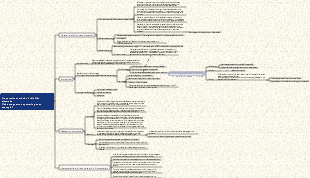
MindMap Gallery solid electrolyte
This is a mind map about solid electrolytes. The main contents include: inorganic solid electrolytes, solid electrolytes, polymer composite electrolytes, and polymer solid electrolytes.
Edited at 2024-10-25 15:13:43Rumi: 10 dimensions of spiritual awakening. When you stop looking for yourself, you will find the entire universe because what you are looking for is also looking for you. Anything you do persevere every day can open a door to the depths of your spirit. In silence, I slipped into the secret realm, and I enjoyed everything to observe the magic around me, and didn't make any noise. Why do you like to crawl when you are born with wings? The soul has its own ears and can hear things that the mind cannot understand. Seek inward for the answer to everything, everything in the universe is in you. Lovers do not end up meeting somewhere, and there is no parting in this world. A wound is where light enters your heart.
Chronic heart failure is not just a problem of the speed of heart rate! It is caused by the decrease in myocardial contraction and diastolic function, which leads to insufficient cardiac output, which in turn causes congestion in the pulmonary circulation and congestion in the systemic circulation. From causes, inducement to compensation mechanisms, the pathophysiological processes of heart failure are complex and diverse. By controlling edema, reducing the heart's front and afterload, improving cardiac comfort function, and preventing and treating basic causes, we can effectively respond to this challenge. Only by understanding the mechanisms and clinical manifestations of heart failure and mastering prevention and treatment strategies can we better protect heart health.
Ischemia-reperfusion injury is a phenomenon that cellular function and metabolic disorders and structural damage will worsen after organs or tissues restore blood supply. Its main mechanisms include increased free radical generation, calcium overload, and the role of microvascular and leukocytes. The heart and brain are common damaged organs, manifested as changes in myocardial metabolism and ultrastructural changes, decreased cardiac function, etc. Prevention and control measures include removing free radicals, reducing calcium overload, improving metabolism and controlling reperfusion conditions, such as low sodium, low temperature, low pressure, etc. Understanding these mechanisms can help develop effective treatment options and alleviate ischemic injury.
Rumi: 10 dimensions of spiritual awakening. When you stop looking for yourself, you will find the entire universe because what you are looking for is also looking for you. Anything you do persevere every day can open a door to the depths of your spirit. In silence, I slipped into the secret realm, and I enjoyed everything to observe the magic around me, and didn't make any noise. Why do you like to crawl when you are born with wings? The soul has its own ears and can hear things that the mind cannot understand. Seek inward for the answer to everything, everything in the universe is in you. Lovers do not end up meeting somewhere, and there is no parting in this world. A wound is where light enters your heart.
Chronic heart failure is not just a problem of the speed of heart rate! It is caused by the decrease in myocardial contraction and diastolic function, which leads to insufficient cardiac output, which in turn causes congestion in the pulmonary circulation and congestion in the systemic circulation. From causes, inducement to compensation mechanisms, the pathophysiological processes of heart failure are complex and diverse. By controlling edema, reducing the heart's front and afterload, improving cardiac comfort function, and preventing and treating basic causes, we can effectively respond to this challenge. Only by understanding the mechanisms and clinical manifestations of heart failure and mastering prevention and treatment strategies can we better protect heart health.
Ischemia-reperfusion injury is a phenomenon that cellular function and metabolic disorders and structural damage will worsen after organs or tissues restore blood supply. Its main mechanisms include increased free radical generation, calcium overload, and the role of microvascular and leukocytes. The heart and brain are common damaged organs, manifested as changes in myocardial metabolism and ultrastructural changes, decreased cardiac function, etc. Prevention and control measures include removing free radicals, reducing calcium overload, improving metabolism and controlling reperfusion conditions, such as low sodium, low temperature, low pressure, etc. Understanding these mechanisms can help develop effective treatment options and alleviate ischemic injury.
solid electrolyte
solid electrolyte
Advantages and Disadvantages of Liquid Electrolytes and Gel Electrolytes
Advantages
High room temperature ionic conductivity
A stable solid electrolyte film is formed on the surface of the cathode material
Disadvantages
Unable to meet low temperature requirements
security issues
Battery charging and discharging Coulomb efficiency is low
Battery performance is low
Limiting the use of cathode materials related to high voltages
Solid electrolyte advantages
Excellent security
Stable performance at high and low temperatures
lower cost
Battery energy density is higher
Interface impedance problem
Limiting the efficient transport of lithium ions in full cells
Classification
polymer solid electrolyte
Inorganic solid electrolyte
Composite electrolyte
Inorganic solid electrolyte
Inorganic composite solid electrolyte
Amorphous solid electrolyte (isotropic → easier ion channel connection, low interface resistance, Higher total ionic conductivity can be obtained)
LiPON
Amorphous sulfide
Main component Lithium sulfide Li2S
S is more polarized than O and has a weaker interaction with lithium → Among the same series of materials, sulfide electrolytes have higher conductivity
crystalline solid electrolyte
Perovskite Li3xLa2/3−xTiO3
Alkaline earth metal titanates (cubic, tetragonal, orthorhombic crystal forms)
When 0.06<x<0.14, it is a solid solution, a tetragonal structure, and a pure ionic conductor. Electronic conductivity is almost negligible
The conductivity is the highest when x=0.11
Lithium ions are conducted through the vacancy mechanism, and the transport of lithium ions follows the percolation model. Has high ionic conductivity
question
It is difficult to control the components of synthetic products
High interface resistance → overall conductivity decreases
Do not have direct contact with negative electrode materials
Anti-perovskite type
Ion transport conditions in the crystal lattice: vacancies, gaps
The main driving force for the conduction of superionic conductors: lithium vacancies and anion disorder
In order to obtain lithium ion conductors, material design was carried out using perovskite material (ABX3) as a prototype. This makes the electrical properties of each element in ABX3 opposite to that of traditional perovskite materials.
LiRAP material advantages
Low melting point → thin film material, mass production
Low activation energy, high potential, and easy structure adjustment
Very low electronic conductivity
Low density and light weight
The reaction product with water is environmentally friendly → easy to recycle
low cost
Stable with lithium metal electrode
Has certain thermal stability
NASICON type
structure
It is generally a hexagonal phase. Depending on the composition, monoclinic, triclinic, tetragonal and other structures may appear.
Material resistance limited
Body phase
Grain boundary resistance
Currently mainly LATP and LAGP
Advantages
High conductivity and wide electrochemical window → applied to all-solid-state lithium-ion batteries, Lithium air battery, lithium liquid battery
question
LATP titanium ions are reduced at low potential→ It cannot be used in direct contact with lithium or low-potential lithium-embedded anode materials.
LISICON type Li14Zn(GeO4)4
Li14Zn(GeO4)4 compound, Li4GeO4 and Zn2GeO4 form a mutually soluble phase
question
It has high electrical conductivity at high temperatures, but low electrical conductivity at room temperature.
High lithium oxide content → sensitive to air, limited application
Garnet type
silicate mineral structure
higher conductivity
Wide electrochemical window
Stable in air and stable in contact with lithium
Li3N type
The ionic conductivity and decomposition voltage are both low, limiting its application in all-solid-state batteries.
The lithium nitride layer formed on the surface of metallic lithium prevents lithium dendrites
Polymer composite electrolyte
Purpose: To enhance the mechanical stability of polymer electrolytes
The role of inorganic ceramics in polymer electrolytes
Reduce the crystalline phase content of the polymer system and increase the amorphous phase for ion transport, which is conducive to rapid lithium ion transport.
Fast lithium ion channels can also be formed near the filler
The filler can act as Lewis acid to react with N, O, F, etc. in the polymer and Lewis base to increase the number of free ions.
Increase the mechanical properties and film-forming properties of the polymer, and improve the interface condition with metallic lithium
The role of inorganic lithium ion conductor materials
Improve the disorder of the polymer phase and enhance lithium ion conduction
It can provide lithium ion conduction channel itself
Organic-inorganic composite electrolyte for lithium ion conductor: High ionic conductivity, good electrode-electrolyte interface
polymer solid electrolyte
It uses polymer as the matrix and consists of highly polar polymer and metal salt through Lewis acid-base reaction. Complexation and decomplexation reactions continue to occur to form polymer materials with ionic conductivity.
Compared with inorganic solid electrolytes
It has good flexibility, good film-forming properties, viscoelasticity and light weight.
Compared with traditional liquid lithium-ion batteries
Avoid electrolyte leakage, high safety, light weight and large capacity
Polyether alkali metal salt complex
No plasticizers
Ion conduction relies on ions in negative polarity polymer networks
Polymer electrolytes obtained by simply mixing PEO polymers and salts are the main representatives.
Conditions for forming high conductivity polymer electrolytes