 Wondershare EdrawMind
MindMap Gallery Overview of global trade in education services
- 17
- 1
Overview of global trade in education services
Educational service trade refers to the trading activities and transaction processes of educational services that occur between countries (regions) and countries (regions). It is a general term for the acquisition of educational resources.
Edited at 2024-10-23 16:05:20
- Recommended to you
- Outline
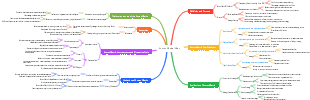

"Overview of Global Education Services Trade"
Definitions and Concepts
The meaning of education service trade
It elegantly spreads the path of educational services through cross-border delivery, overseas consumption, business and storage operations, and migration of natural persons.
1. Cross-border delivery: Promote the efficient circulation of educational resources internationally and allow students around the world to share high-quality educational services.
2. Overseas consumption: meet the needs of international students for localized educational services and promote the diversified development of educational services trade.
3. Commercial inventory operation: Through online and offline integration, create an education service industry chain and enhance the added value of education service trade.
4. Migration of natural persons: Encourage the flow of talents, promote international educational exchanges and cooperation, and jointly promote the prosperity of global education services trade.
Involving the sale and purchase of educational products, such as courses, degree programs, training services, etc.
1. Educational service trade involves the sale and purchase of various types of courses, including online and offline courses.
2. Degree projects are an important part of educational service trade and involve the issuance of degree certificates.
3. Training services are the core content of educational services trade, covering various skills and knowledge training.
4. Educational service trade also includes the development and transfer of educational resources, such as teaching materials, teaching aids, etc.
5. The development of educational services trade helps improve the quality of global education and promote educational equity.
Characteristics of International Educational Services Trade
Intangibility, indivisibility, heterogeneity and perishability of services
1. The intangibility of services: Educational services are difficult to touch and rely on knowledge transfer and skill acquisition. Their value is mainly reflected in their effects.
2. Inseparability of services: Educational services usually require multiple links and participants to complete together. The absence of one link may affect the overall effect.
3. Heterogeneity of services: Different types of educational services have different characteristics and advantages and meet the needs of different groups of people.
4. Perishability of services: The effect of educational services is limited by time, and past experience and knowledge may become invalid over time.
Depends on the development of information technology and global networks
1. Information technology promotes the rapid development of global education services trade.
1. Information technology promotes the rapid development of global education services trade.
2. Information technology promotes the globalization of educational services.
3. Information technology improves the accessibility of educational services.
4. Information technology reduces the cost of educational services.
5. Information technology has changed the way educational services are delivered.
6. Information technology enhances the interactivity of educational services.
7. Information technology improves the quality of educational services.
8. Information technology accelerates the development and innovation of educational services.
9. Information technology promotes the internationalization of educational services.
2. The Internet connects countries and promotes the globalization of education service trade.
1. The Internet breaks geographical restrictions, connects all parts of the world, and promotes the internationalization of education service trade.
2. The development of information technology makes education service trade more convenient and efficient, promoting exchanges and cooperation on a global scale.
3. The popularity of the Internet and global networks has provided more market opportunities and development prospects for education service trade.
3. Online education platforms have become a new carrier of educational services trade.
1. Online education platforms promote the sharing of global educational resources.
2. Online education platforms improve the accessibility of educational services.
3. Online education platforms reduce the cost of education services.
4. Online education platforms promote education service innovation.
5. Online education platforms expand the education service market.
6. Online education platforms promote global educational equity.
7. Online education platforms promote international educational cooperation.
8. Online education platforms improve the quality of educational services.
9. Online education platforms have become a new trend in educational services trade.
4. Multinational education companies rely on information technology to expand global markets.
1. Transnational education companies use information technology to expand global markets.
2. Information technology helps multinational education companies overcome geographical barriers.
3. Information technology improves the operational efficiency of multinational education companies.
4. Information technology facilitates communication between multinational education companies and customers.
5. Information technology reduces costs for multinational education companies.
6. Information technology promotes innovation and development in the transnational education industry.
5. Information technology helps optimize the allocation and sharing of educational resources.
1. Information technology improves the accessibility of educational resources and narrows regional gaps.
2. Innovate teaching methods, enrich educational content, and meet individual needs.
3. Promote educational equity, improve education quality, and contribute to global education development.
4. Information technology helps integrate educational resources and improve management efficiency.
5. Online learning across regions, time and space to expand educational coverage.
6. Information technology promotes the upgrading of the education industry and cultivates high-quality talents.
7. Information security and privacy protection ensure the healthy development of education services trade.
6. Artificial intelligence, big data and other technologies are applied to education service trade.
1. Artificial intelligence helps personalized education.
2. Big data optimizes the allocation of educational resources.
3. Virtual reality expands educational experience.
4. Cloud computing improves the efficiency of educational services.
5. The Internet of Things makes educational facilities intelligent.
6. Blockchain ensures the security of educational services.
7. 5G technology accelerates the development of distance education.
8. Intelligent voice-assisted teaching interaction.
7. Virtual reality and augmented reality technologies enrich the global education service experience.
1. Virtual reality technology brings immersive experience to global education.
2. Augmented reality technology helps personalized learning and improves the quality of education.
3. Virtual laboratories allow students to personally participate in experiments and enhance practical abilities.
4. Use virtual campuses to expand educational resources and narrow regional gaps.
5. Virtual classroom breaks through the limitations of time and space and realizes the popularization of distance education.
6. Artificial intelligence assists teaching and improves teachers’ teaching effectiveness.
7. Virtual reality and augmented reality technologies promote cross-cultural communication and understanding.
8. The online education platform integrates high-quality resources and provides diversified educational services.
9. Virtual simulation training assists vocational training and enhances employment competitiveness.
8. Information security issues have an impact on global trade in educational services.
1. Information security issues may lead to the leakage of educational resources and affect the credibility of global education services trade.
2. Information security issues may lead to the theft of educational institutions and student information, causing financial losses to the victims.
3. Information security issues may lead to unfair competition in educational services trade and damage market order.
4. Information security issues may lead to inconsistent laws and regulations on transnational education service trade, affecting cooperation and development.
5. Information security issues may hinder technological innovation in global education services trade and affect industry progress.
6. Information security issues may lead to a crisis of trust in global education services trade and affect international cooperation and exchanges.
Historical background and development
The Origin of International Educational Services Trade
Early exchange of international students and cultural exchanges
1. Early exchange of international students: Promote cultural dissemination and technological exchanges.
2. Cultural exchange: enhance international friendship and broaden horizons.
3. Historical background: The industrial revolution promoted the internationalization of education.
4. Development process: Under the trend of globalization, education service trade continues to expand.
The rise of modern education service trade and the process of globalization
1. The rise of modern education service trade: In the context of globalization, countries have an increasing demand for educational resources, which has promoted the development of modern education service trade.
2. Historical background and development: Global education services trade originated in the early 20th century and gradually developed and expanded with the advancement of science and technology, economy and culture.
3. The origin of international trade in educational services: The origin of global trade in educational services can be traced back to the wave of studying abroad from the late 19th century to the early 20th century, which laid the foundation for subsequent trade in educational services.
4. Policy support and regulation: Governments of various countries have issued a series of policies to support and regulate the development of modern education services trade, such as the "Overview of Global Education Services Trade" and other documents.
5. Industrial integration and innovation: Modern educational service trade promotes the integrated development of the education industry and other industries, and promotes educational innovation and technological progress.
6. Talent training and international exchanges: Modern education service trade provides more high-quality educational resources to various countries and promotes talent training and international exchanges.
7. Challenges and opportunities: Modern education service trade faces many challenges in the process of globalization, but it also brings huge development opportunities and potential.
Trends and Statistics
Market size and growth rate of global education services trade
1. The scale of the global education services trade market continues to expand and has grown rapidly in recent years.
2. According to statistical data, Asia is one of the major markets for global education services trade.
3. With the continuous optimization and allocation of global educational resources, educational services trade has shown a diversified development trend.
4. Government departments and international organizations have increased their support for education services trade to promote further prosperity of the market.
5. In the future, with the development of science and technology and the improvement of global education levels, educational services trade is expected to maintain steady growth.
Export and import of educational services in major countries and regions
1. The United States: Educational service exports account for the largest proportion in the world, mainly involving higher education and vocational training.
2. The United Kingdom: Dominated by English training and home to many world-renowned universities.
3. Australia: Vocational education and language training are developed, and there are a large number of international students.
4. Canada: Pays equal attention to higher education and skills training, and is favored by international students.
5. New Zealand: The quality of education is high, especially in the study abroad market.
6. China: The scale of imports of educational services continues to expand, involving preschool education, higher education and other fields.
7. India: English training and vocational education are the main export directions, attracting a large number of overseas students.
8. South Korea: Higher education and scientific and technological training are popular, and the study abroad market is gradually rising.
9. Japan: Focusing on language training and academic research, it is more attractive to overseas students.
Key players and markets
education service provider
Higher education institutions, language schools, vocational training institutions, etc.
"Global Education Services Trade Overview" major players and markets:
1. Higher education institutions: offering bachelor's, master's and doctoral degree programs.
2. Language schools: teach various language skills, such as English, Spanish, etc.
3. Vocational training institutions: Provide vocational skills training, such as computer programming, cooking, etc.
Online education platform and distance education services
1. Online education platform: Provides educational resources and courses worldwide.
2. Distance education services: transcending geographical restrictions and realizing personalized learning.
3. Technology-driven: Use technologies such as the Internet and big data to improve the quality of education.
4. Flexibility: You can choose your own learning time, place and content.
5. Interactivity: real-time interaction and community sharing to enhance learning effects.
6. Personalization: Provide customized courses according to student needs.
7. High-quality teacher resources: Attract outstanding educators from around the world to provide online teaching.
8. Reduce costs: Reduce expenses such as paper textbooks and physical classrooms.
students and consumers
International student mobility trends and preferences
1. International students are increasingly interested in Asian education.
2. English-speaking countries are still the largest source of international students.
3. Business, computer science and engineering majors are popular.
4. More and more international students choose to study online.
5. Increased focus on local cultural experience and career development.
6. Under the influence of the epidemic, international students have increased demand for a balance between online courses and face-to-face teaching.
Analysis of individual and corporate demand for educational services
1. Diversified demand for educational services: Individuals and enterprises’ demands for educational services include skills training, online courses, study abroad consulting, etc., requiring educational service providers to provide customized and flexible services.
2. Pay equal attention to quality and cost-effectiveness: In the education service market, individuals and enterprises pay attention to the quality of education services, while also focusing on price rationality and pursuing value-for-money education services.
3. Growing demand for international education: As globalization accelerates, individuals and enterprises have increasing demands in the field of international education, and the demand for cross-border education services, foreign language training, etc. is particularly urgent.
4. Technological innovation promotes the development of educational services: The needs of individuals and enterprises in terms of digitalization and intelligence have promoted technological innovation in the educational service industry, such as the application and development of emerging technologies such as online education and virtual reality teaching.
Governments and International Organizations
The role of government in promoting trade in educational services
"Government's role in promoting trade in educational services" can cover many aspects, here are five possible points:
Policy support: The government provides a good environment for the development of the industry by formulating policies and regulations that are conducive to the development of education services trade.
Market supervision: The government is responsible for fair and effective supervision of the education services trade market to protect the rights and interests of market participants and maintain market order.
Investment guidance: The government guides social capital to invest in the field of education service trade through financial support, tax incentives and other means.
Cooperation and promotion: The government actively cooperates with international organizations and governments of other countries to jointly promote the development of global education services trade.
Quality improvement: The government promotes the quality improvement of education service trade to meet the needs of domestic and foreign markets by formulating education standards and certification systems.
The policy and guiding role of international organizations such as UNESCO and OECD
1. International organizations such as UNESCO and OECD formulate norms and standards for global education services trade and promote policy coordination and cooperation among countries.
2. These organizations help developing countries improve the quality and accessibility of education by providing policy advice and technical support.
3. Organizations such as UNESCO advocate the principles of fair competition and sustainable development and promote the prosperity and stability of the global education services trade market.
4. International organizations strengthen communication and cooperation between governments and enterprises by organizing conferences, seminars and other activities to jointly respond to the challenges of global education services trade.
Influencing factors and challenges
Policy and regulatory environment
Education policies and visa regulations in different countries
1. The United States: According to the "Global Education Services Trade Overview", the United States' education policies and visa regulations are highly competitive in the international market and attract many international students.
2. Germany: The German government encourages international students to study in Germany and provides many scholarships and grants. However, visa approval is relatively strict and requires sufficient preparation of materials.
3. Japan: Japan’s education policies and visa regulations aim to attract high-quality foreign talents and provide a relatively relaxed visa policy, but applicants need to go through a highly competitive selection process.
4. Australia: The Australian government attaches great importance to the development of the education industry and provides a good learning and living environment for international students. However, the visa policy is relatively strict and certain language and financial ability requirements must be met.
5. Singapore: The Singaporean government attracts international students through preferential policies and provides high-quality educational resources. However, visa requirements are relatively high and applicants need to have high overall quality.
Legal framework and standards for transnational educational cooperation
1. The legal framework for transnational educational cooperation: international conventions, bilateral agreements and national laws provide common rules for cooperation.
2. Standards for transnational education cooperation: ensuring consistency and mutual trust in education quality, curriculum and teaching staff.
3. Intellectual property protection for transnational educational cooperation: protect the intellectual property rights of both parties and encourage innovation and technology transfer.
4. Protection of students’ rights and interests in transnational education cooperation: ensuring that students’ rights and interests are not compromised during the cooperation process and providing a safe, healthy and fair learning environment.
5. Tax policy for transnational educational cooperation: rationally plan taxes, reduce cooperation costs, and promote the development of trade in educational services.
6. Supervision and evaluation of transnational education cooperation: Establish and improve a supervision mechanism and conduct regular evaluations of cooperation projects to ensure the quality and effectiveness of cooperation.
Economic and Market Factors
The impact of global economic fluctuations on trade in educational services
1. Global economic fluctuations affect the demand for trade in educational services.
2. Educational services trade has been impacted by the global economic recession.
3. The economic recovery period brings new opportunities to education services trade.
4. Global economic uncertainty has led to increased risks in education services trade.
5. The reallocation of resources affects the pattern of trade in educational services.
6. Technological development promotes innovation in education services trade.
7. Global economic fluctuations have an impact on investment in transnational education services.
8. Government policy adjustments have an impact on education services trade.
9. Regional economic integration promotes the development of education service trade.
Exchange rate changes and international payment ability considerations
1. Exchange rate fluctuations affect the cost of education service trade, and attention needs to be paid to international payment capabilities.
2. Currency depreciation may increase the price of imported education services and challenge domestic market competitiveness.
3. Exchange rate changes affect cross-border investment and cooperation, and exchange rate risks and returns need to be balanced.
4. Insufficient international payment capabilities may hinder the development of education services trade, and the strength of the financial system needs to be improved.
5. A stable exchange rate is conducive to expanding the scale of education services trade and attracting more international investors.
6. Foreign exchange control policies affect exchange rates and international payment capabilities and require appropriate adjustments.
7. Facilitating cross-border RMB settlement will help reduce exchange rate risks and promote the development of education services trade.
cultural and social factors
The impact of cultural differences on acceptance of educational services
1. Cultural differences may lead to different needs for educational services.
2. Cultural background may affect educational service consumption concepts and behaviors.
3. Language barriers may affect cross-cultural communication and acceptance of educational services.
4. Values and beliefs may affect market positioning and selection of educational services.
5. Educational service trade may be restricted by cultural customs, laws and regulations.
6. Cultural conflicts may lead to uneven regional distribution of educational services.
7. Cultural traditions and family values may affect educational service consumption patterns.
8. Cultural cognitive differences may lead to different educational service quality standards.
9. Cross-cultural cooperation and exchanges can help improve the global competitiveness of educational services.
Differences in social values and educational concepts
1. Differences in social values: The educational concepts of different countries and regions are affected by their social values, such as family values, gender equality, competition and cooperation, etc.
2. Differences in educational concepts: There are differences in educational concepts around the world, such as emphasizing academic performance versus focusing on quality education, respecting personal development versus emphasizing collective interests, etc.
3. Cultural factors: The cultural background and traditions of various countries have an impact on educational concepts. For example, Eastern culture emphasizes respecting teachers and morality, and Western culture emphasizes individual freedom, etc.
4. Differences in social systems: The social systems and policies of different countries have an impact on educational concepts and practices, such as government investment, allocation of educational resources, etc.
Technology and Innovation
Application of information technology in educational service trade
1. Information technology assists distance education and expands the scope of education service trade.
2. Digital course resource sharing to improve the efficiency of educational services trade.
3. Artificial intelligence assists teaching and improves the quality of educational service trade.
4. Big data analysis optimizes the allocation of educational resources and reduces the cost of educational service trade.
5. Virtual reality technology enriches educational experience and expands the form of educational service trade.
6. Blockchain technology ensures the integrity and security of education service trade.
7. Cloud computing technology supports the rapid iteration and development of education service trade.
8. Internet of Things technology enables intelligent management and monitoring of education service trade.
Innovative models of online education and distance learning
1. Personalized learning: Online education and distance learning can provide customized courses based on students’ needs and interests.
2. Interactive teaching: Real-time interaction between teachers and students is realized through the network platform to improve learning effects.
3. Mobile learning: Learn anytime and anywhere, breaking through time and space constraints.
4. Resource sharing: Rich online educational resources promote the dissemination and exchange of knowledge.
5. Virtual experiment: Use virtual reality technology to simulate experimental operations and reduce experimental costs.
6. Online assessment: Through big data and artificial intelligence technology, intelligent assessment of students’ learning processes and outcomes is achieved.
7. Community learning: Build an online community to encourage students to learn and cooperate with each other to create a good learning atmosphere.
Future prospects and opportunities
Emerging markets and growth potential
Education service needs in developing countries and emerging economies
The "Global Education Services Trade Overview" shows that developing countries and emerging economies have a growing demand for education services.
Future prospects and opportunities: The education markets in these countries have huge potential and room for growth.
Emerging markets and growth potential: The demand for educational services in these countries will continue to drive global economic growth.
The expansion of the online education market and the trend of personalized learning
1. The online education market is expanding rapidly and attracting more investment.
2. The demand for personalized learning continues to grow, promoting educational innovation.
3. Artificial intelligence technology helps improve the quality of online teaching.
4. The popularization of mobile devices provides a convenient online learning experience.
5. Cross-border cooperation accelerates the integration of educational resources and improves the level of educational services.
6. Government policy support creates a good environment for the development of online education.
7. The epidemic has catalyzed the demand for online education market, which will continue to grow in the short term.
8. Online education can help narrow the urban-rural education gap and promote educational equity.
9. As companies expand into the online education market, competition intensifies and promotes industry progress.
International cooperation and exchange
Opportunities for collaboration on transnational education projects
1. Promote the sharing of global educational resources.
2. Improve the quality and effectiveness of education.
3. Enhance international competitiveness and innovation capabilities.
4. Promote cultural exchange and understanding.
5. Establish multilateral cooperation mechanisms and platforms.
6. Strengthen policy coordination and support.
7. Explore new models and forms of cooperation.
8. Achieve common development and prosperity.
Strengthening of international academic exchanges and research cooperation
1. Improve international standards and norms for education services trade.
2. Promote the sharing and optimal allocation of transnational education resources.
3. Strengthen the construction of international academic exchange platforms.
4. Promote in-depth integration of industry-university-research cooperation.
5. Improve the quality of international talent training for international students.
6. Expand international scientific research cooperation projects and funding sources.
7. Promote international innovation and cooperation in the field of educational technology.
8. Strengthen the international market development and competitiveness of the education service industry.
9. Establish a policy coordination mechanism for global education services trade.
Policy innovation and support
Government support policies for education services trade
1. Raise the entry threshold for education services trade and ensure quality.
2. Establish special funds to support the export of educational services.
3. Strengthen intellectual property protection and encourage innovation.
4. Promote international cooperation and exchanges and improve educational service levels.
5. Improve laws and regulations to provide strong protection for education service trade.
6. Increase publicity and promotion of education services trade.
Standardization and quality assurance system for international trade in educational services
1. Establish an international education services trade standard system and improve service quality.
2. Strengthen the supervision of international education services trade to ensure quality and safety.
3. Promote the standardization and transparency of international education services trade.
4. Promote the diversified development of international education services trade to meet different needs.
5. Strengthen intellectual property protection in international trade in educational services.
6. Improve talent training and skill levels in international education services trade.
7. Support policy innovation and market expansion in international education services trade.
Suggested structure for group reports
Introduction
Definition of report purpose and research scope
1. This report aims to analyze the current status, trends and challenges of global education services trade.
2. The research scope covers the main fields, players and markets of international education services trade.
3. Through comparative analysis, explore the advantages and disadvantages of global education services trade.
4. The report will focus on the policy environment, laws and regulations and international trade rules of education services trade.
5. Take Asia as an example to study its status and role in global education services trade.
6. Propose suggestions and measures to promote the development of global education services trade.
7. Predict and look forward to the future development trends of global education services trade.
The importance and research significance of international trade in educational services
1. International trade in educational services helps promote global economic growth and development.
2. Studying international trade in educational services helps to understand the educational resources and needs of each country.
3. International trade in educational services can improve the quality and efficiency of education.
4. An in-depth study of international trade in educational services will help optimize the allocation of educational resources.
5. International trade in educational services is of great significance in promoting educational reform and innovation.
6. Studying international trade in educational services will help improve the international competitiveness of our country’s education.
7. Discussing the important role of international trade in educational services in achieving educational equity and sustainable development.
Main content
Concept definition and theoretical framework
1. Overview of global education services trade: Overview of the global education services trade market size, development trends and major players.
2. Suggestions on the structure of the team report: Propose a clear and organized report structure, including background introduction, main findings and recommendations.
3. Main content: Analyze the main characteristics, influencing factors and policy challenges of global education services trade, and provide decision-making basis for governments and enterprises.
Historical development and current situation analysis
"The historical development of global trade in educational services can be traced back to the early 20th century, but it really flourished after the end of the Cold War. Currently, the industry has become an important part of the global economy and is constantly promoting the globalization and professionalization of education. "
"The current situation of global education services trade shows its high degree of internationalization and marketization. However, it is also faced with issues such as regulatory environment, quality standards, fairness, etc., which need to be jointly addressed and resolved by governments and relevant institutions of all countries."
"From history to current situation, the development of global education services trade not only reflects the impact of technological and social progress on education demand, but also reveals the important role of international cooperation and policy environment in the development of this industry."
Key Players and Market Analysis
1. The main participants in global education services trade include national governments, educational institutions, enterprises and non-governmental organizations.
2. Market analysis shows that the demand for educational services in Asia (such as China, India and Japan) is growing rapidly.
3. The digital education and online training market has experienced significant growth over the past few years.
4. Vocational training and skills improvement courses have received widespread attention from companies and industries.
5. Language learning and study abroad services are one of the important areas of global educational services trade.
6. Cooperative education and distance education models are gradually gaining recognition around the world.
7. Policy support and international cooperation play an important role in promoting the development of global education services trade.
Discussion on influencing factors and challenges
1. Technological development: Global trade in educational services is affected by technological progress, such as the popularity of online education and digital courses, making cross-border educational services easier to implement.
2. Policy factors: Governments’ policy support and restrictions on education services trade, such as visa policies, tax policies, etc., have an impact on global education services trade.
3. Market demand: The global demand for high-quality educational services continues to grow, driving the development of educational services trade.
4. Cultural differences: The cultural backgrounds, educational concepts and values of different countries and regions pose challenges to the cooperation and development of global education services trade.
Future trends and strategic suggestions
In the "Global Education Services Trade Overview", future trends and strategies are suggested as follows:
1. Rapid growth of digital education services;
2. The widespread application of artificial intelligence technology in the field of education;
3. The continuous expansion of cross-border education service trade;
4. Improve the quality and standards of educational services.
Conclusion and recommendations
Summary of research findings
1. The "Global Education Services Trade Overview" study found that education services trade has huge market potential and room for growth.
2. Suggestions on the structure of the group report can help improve the logic and readability of the research report, making it easier for readers to understand and accept it.
3. The conclusions and suggestions provide useful reference and reference for further promoting the development of global education services trade.
4. Through in-depth research, we can better understand the current status, trends and challenges of global education services trade and provide strong support for relevant policy formulation.
Suggestions on the development of education service trade
1. Improve the transparency and quality standards of trade in educational services to promote international cooperation and mutual trust.
2. Strengthen policy coordination on education services trade and promote the sharing and optimal allocation of global educational resources.
3. Promote the innovation and development of education services trade and cultivate more internationally competitive professionals.
Outlook on future research directions
1. Explore international standards and norms for education services trade.
2. Analyze the policy impact and development trends of education services trade.
3. Research the technological application and innovation of education service trade.
4. In-depth understanding of cross-cultural differences and management challenges in educational services trade.
5. Improve the quality and efficiency of education services trade and promote global education equity.
6. Pay attention to the impact of educational service trade on talent training and social development.
7. Discuss the relationship between trade in educational services and the Sustainable Development Goals.
8. Strengthen international cooperation and experience sharing, and promote the reform and improvement of education services trade.
Appendices and References
Supplementary data and charts
1. The "Global Education Services Trade Overview" shows that Asia occupies a dominant position in global education services trade, especially China and India.
2. The group report recommends focusing on the digital transformation of education services to improve education quality and efficiency.
3. The appendix provides detailed data on education services trade in various countries, which helps to gain an in-depth understanding of the characteristics of each market.
4. The references cover relevant research on educational services trade, providing theoretical support for further analysis.
Detailed list of cited literature and research materials
1. The literature and research materials cited in "Global Education Services Trade Overview" include international organization reports, government documents, academic papers, etc., covering all aspects of global education services trade.
2. The group report structure suggestions mentioned that cited literature and research materials should be classified according to topics to facilitate readers to find and understand.
3. The appendices and references section lists detailed citations and research sources, including book title, author, year of publication, publisher and other information.
4. In order to ensure the accuracy and reliability of literature and research materials, it is recommended to carefully check the citation content and indicate the source when writing an article.