MindMap Gallery Big Data Analysis and Mining - Trial Lesson Plan Decision Tree and Regression Analysis
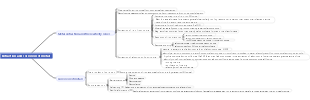
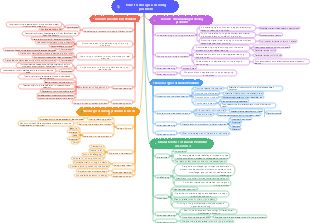
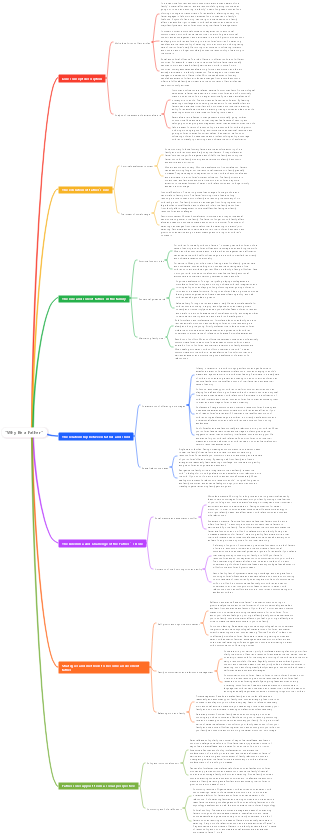
This is an article about big data analysis and mining - trial lesson plan: mind map of decision tree and regression analysis. The main contents include: 4. Summary (about 1 minute), 3. Regression analysis (about 6 minutes), 2. Decision tree (about 6 minutes), 1. Scenario introduction (about 2 minutes).
Edited at 2024-11-23 00:43:18Rumi: 10 dimensions of spiritual awakening. When you stop looking for yourself, you will find the entire universe because what you are looking for is also looking for you. Anything you do persevere every day can open a door to the depths of your spirit. In silence, I slipped into the secret realm, and I enjoyed everything to observe the magic around me, and didn't make any noise. Why do you like to crawl when you are born with wings? The soul has its own ears and can hear things that the mind cannot understand. Seek inward for the answer to everything, everything in the universe is in you. Lovers do not end up meeting somewhere, and there is no parting in this world. A wound is where light enters your heart.
Chronic heart failure is not just a problem of the speed of heart rate! It is caused by the decrease in myocardial contraction and diastolic function, which leads to insufficient cardiac output, which in turn causes congestion in the pulmonary circulation and congestion in the systemic circulation. From causes, inducement to compensation mechanisms, the pathophysiological processes of heart failure are complex and diverse. By controlling edema, reducing the heart's front and afterload, improving cardiac comfort function, and preventing and treating basic causes, we can effectively respond to this challenge. Only by understanding the mechanisms and clinical manifestations of heart failure and mastering prevention and treatment strategies can we better protect heart health.
Ischemia-reperfusion injury is a phenomenon that cellular function and metabolic disorders and structural damage will worsen after organs or tissues restore blood supply. Its main mechanisms include increased free radical generation, calcium overload, and the role of microvascular and leukocytes. The heart and brain are common damaged organs, manifested as changes in myocardial metabolism and ultrastructural changes, decreased cardiac function, etc. Prevention and control measures include removing free radicals, reducing calcium overload, improving metabolism and controlling reperfusion conditions, such as low sodium, low temperature, low pressure, etc. Understanding these mechanisms can help develop effective treatment options and alleviate ischemic injury.
Rumi: 10 dimensions of spiritual awakening. When you stop looking for yourself, you will find the entire universe because what you are looking for is also looking for you. Anything you do persevere every day can open a door to the depths of your spirit. In silence, I slipped into the secret realm, and I enjoyed everything to observe the magic around me, and didn't make any noise. Why do you like to crawl when you are born with wings? The soul has its own ears and can hear things that the mind cannot understand. Seek inward for the answer to everything, everything in the universe is in you. Lovers do not end up meeting somewhere, and there is no parting in this world. A wound is where light enters your heart.
Chronic heart failure is not just a problem of the speed of heart rate! It is caused by the decrease in myocardial contraction and diastolic function, which leads to insufficient cardiac output, which in turn causes congestion in the pulmonary circulation and congestion in the systemic circulation. From causes, inducement to compensation mechanisms, the pathophysiological processes of heart failure are complex and diverse. By controlling edema, reducing the heart's front and afterload, improving cardiac comfort function, and preventing and treating basic causes, we can effectively respond to this challenge. Only by understanding the mechanisms and clinical manifestations of heart failure and mastering prevention and treatment strategies can we better protect heart health.
Ischemia-reperfusion injury is a phenomenon that cellular function and metabolic disorders and structural damage will worsen after organs or tissues restore blood supply. Its main mechanisms include increased free radical generation, calcium overload, and the role of microvascular and leukocytes. The heart and brain are common damaged organs, manifested as changes in myocardial metabolism and ultrastructural changes, decreased cardiac function, etc. Prevention and control measures include removing free radicals, reducing calcium overload, improving metabolism and controlling reperfusion conditions, such as low sodium, low temperature, low pressure, etc. Understanding these mechanisms can help develop effective treatment options and alleviate ischemic injury.
Big Data Analysis and Mining - Trial Lesson Plan: Decision Tree and Regression Analysis
1. Scenario introduction (about 2 minutes)
Scenario introduction: Ask a practical question, such as: How does a bank predict loan default risk based on customer information? How do e-commerce platforms recommend products based on user behavior? Elicit the importance of common methods of data mining.
Introducing the topic: Today we mainly study two common methods in data mining: decision tree and regression analysis.
2. Decision tree (about 6 minutes)
The meaning of decision tree (about 1 minute):
Definition: A decision tree is a tree structure that guides the decision-making process through a series of questions or conditions.
Visual explanation: It can be compared to the decision-making process in our daily life, where a decision is finally made through layers of screening.
The decision tree is like a wise "guiding tree". It stands in the forest of data and helps us guide the direction and find the answers we want. Imagine you are standing at an unfamiliar intersection and want to go to a specific destination but don't know where to go. At this time, if a "guiding tree" appears in front of you, what will it do?
Components of a decision tree (about 1.5 minutes):
(1) Decision node: The node that determines the next branch.
(2) Plan branch: The branch derived from the decision node represents different decision plans.
(3) Status node: A node that represents the decision result or status, which can be an intermediate result or a final result.
(4) Probability branch: Connects state nodes and represents the probability of different states occurring.
Decision tree construction steps (about 1 minute):
The first step is to draw a tree diagram and arrange each scheme and the various natural states of each scheme according to the known conditions.
In the second step, mark the probability and profit and loss value of each state on the probability branch.
The third step is to calculate the expected value of each plan and mark it on the state node corresponding to the plan.
The fourth step is to perform pruning (pruning is one of the ways to stop branching in a decision tree. In order to avoid overfitting, the generated tree needs to be pruned to remove some unnecessary nodes), compare the expected values of each solution, and Mark it on the plan branch, and the last remaining plan with a small expected value (i.e., pruning out inferior plans) is the best plan.
Advantages and disadvantages of decision trees (about 0.5 minutes):
Advantages: Intuitive, easy to understand, highly interpretable, and can handle numerical and categorical data.
Disadvantages: prone to overfitting, sensitive to outliers, lack of smoothness and bias towards selecting features with more eigenvalues.
In practical applications, it is necessary to choose whether to use a decision tree and how to optimize it based on specific scenarios and needs.
The scope of application and common methods of decision trees (about 2 minutes):
Scope of application: Suitable for classification and prediction problems, especially when the feature selection is clear and the data size is moderate.
Commonly used methods:
1. C&R tree (Classification and Regression Tree): The reasoning process is completely based on the value characteristics of attribute variables. It is easy to understand and can be used for both classification and regression.
2.QUEST decision tree: A fast, unbiased, and effective statistical tree that uses a technology called "quick segmentation" to speed up the decision tree construction process and is especially suitable for processing large data sets.
3. CHAID decision tree: The decision tree algorithm based on the chi-square test is suitable for classification problems, especially when the target variable is a categorical variable. It is widely used in marketing, customer segmentation and other fields.
4.C5.0 decision tree: An improved version of C4.5, with optimized execution efficiency and memory usage, higher efficiency, and stronger ability to process large data sets. It is widely used in credit assessment, disease diagnosis and other fields.
Expand
In project management and risk analysis, decision trees and EMV are often used together.
Decision trees help decision-makers understand problems more clearly by graphically displaying the decision-making process and results; while EMV uses quantitative analysis to help decision-makers evaluate risks more comprehensively, objectively and specifically and make optimal decisions.
3. Regression analysis (about 6 minutes)
The meaning of regression analysis (about 1 minute):
Regression analysis is a method of statistically analyzing data. It mainly studies how one or more independent variables (also called predictor variables, explanatory variables or independent variables) affect the dependent variable (also called the response variable, explained variable or changes in the dependent variable).
Simply put, regression analysis attempts to find a mathematical relationship or model between the independent variables and the dependent variable so that the value of the dependent variable can be predicted based on the value of the independent variable.
Regression analysis is widely used in various fields, such as economics, sociology, medicine, engineering, etc. For example:
In economics, regression analysis can be used to study the relationship between economic variables such as income, consumption, and investment;
In medicine, it can be used to study the impact of drug dosage, patient weight, condition and other factors on the therapeutic effect;
In engineering, it can be used to study the impact of material properties, process parameters and other factors on product quality.
Classification of regression analysis (about 2 minutes):
(1) Linear regression: There is a linear relationship between the independent variable and the dependent variable, which is the simplest and most commonly used type.
(2) Logistic regression: Mainly used for classification problems, predicting the probability of an event, and mapping the results of linear regression to between 0-1 to express probability.
(3) Polynomial regression: The data relationship between the independent variable and the dependent variable is not linear, but has a polynomial relationship, and the data can be fitted by polynomials.
(4) Stepwise regression: By gradually introducing or eliminating independent variables, important independent variables are automatically selected to avoid multicollinearity and select the optimal regression model.
(5) Ridge regression: An improved linear regression method that processes high-dimensional data, reduces model complexity, prevents overfitting, and is used to solve multicollinearity problems.
Commonly used regression models (about 1.5 minutes):
(1) Linear regression model: y = ax b, where a is the slope and b is the intercept.
(2) Nonlinear regression model: There is a nonlinear relationship between independent variables and dependent variables, such as exponential functions, logarithmic functions, etc.
(3) Logistic regression model: Used to predict the probability of an event occurring, such as predicting whether a user will click on an advertisement.
(4) Ridge regression model: Add regularization terms to the loss function to avoid overfitting.
(5) Principal component regression: Reduce the number of independent variables and improve model efficiency through dimensionality reduction. First perform principal component analysis on the independent variables, and then use the principal components to perform regression.
Basic steps of regression analysis (about 1.5 minutes):
(1) Determine the independent variables and dependent variables: Clarify the questions and objectives to be studied.
(2) Collect data: Collect relevant independent variable and dependent variable data.
(3) Select regression model: Select an appropriate model based on the characteristics of the data and research objectives.
(4) Model fitting: Use data to estimate model parameters.
(5) Model evaluation: Evaluate the fitting effect and prediction ability of the model.
(6) Model application: Use models for prediction and analysis.
4. Summary (about 1 minute)
Briefly review the key elements of decision trees and regression analysis. Emphasize the important role and application scenarios of these two methods in data mining. Students are encouraged to study and explore further after class.