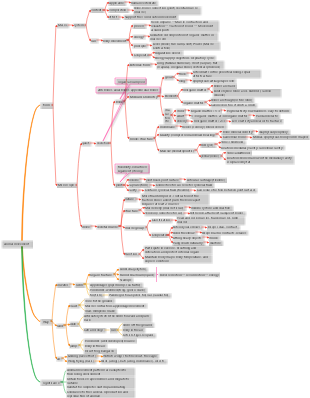
MindMap Gallery Biology Chapter 1 Main Groups of Animals
The mind map of Chapter 1 of Yashimi Biology is very focused. This mind map helps you to familiarize yourself with the key points of knowledge and enhance your memory. Students in need can save it.
Edited at 2024-11-30 09:30:17ルミ:精神的な目覚めの10次元。あなたが自分自身を探すのをやめるとき、あなたが探しているのはあなたを探しているので、あなたは宇宙全体を見つけるでしょう。あなたが毎日忍耐することは何でもあなたの精神の深みへの扉を開くことができます。沈黙の中で、私は秘密の領域に滑り込み、私は私の周りの魔法を観察するためにすべてを楽しんだが、何の騒ぎをしなかった。翼で生まれたときに、なぜcraいるのが好きですか?魂には独自の耳があり、心が理解できないことを聞くことができます。すべてへの答えを内向きに求めてください、宇宙のすべてがあなたの中にあります。恋人たちはどこかで会うことはなく、この世界には別れもありません。傷は光があなたの心に入るところです。
慢性心不全は、心拍数の速度の問題だけではありません!これは、心筋収縮と拡張期機能の減少によって引き起こされ、それが不十分な心拍出量につながり、肺循環の鬱血と全身循環のうっ血を引き起こします。原因、誘導、補償メカニズムまで、心不全の病態生理学的プロセスは複雑で多様です。浮腫を制御し、心臓の前面と後負荷を減らし、心臓の快適機能を改善し、基本的な原因を予防し、治療することにより、この課題に効果的に対応できます。心不全とマスタリング予防と治療戦略のメカニズムと臨床的症状を理解することによってのみ、心臓の健康をよりよく保護できます。
虚血再灌流損傷は、臓器や組織が血液供給を回復すると、細胞機能と代謝障害、構造的損傷が悪化する現象です。その主なメカニズムには、フリーラジカル生成の増加、カルシウム過負荷、および微小血管および白血球の役割が含まれます。心臓と脳は一般的な損傷した臓器であり、心筋の代謝と超微細構造の変化、心機能の低下などの変化として現れます。予防と制御の測定には、フリーラジカルの除去、カルシウム過負荷の減少、代謝の改善、低温、低温、低圧などの再灌流条件の制御が含まれます。これらのメカニズムを理解することは、効果的な治療オプションの開発に役立ち、虚血性損傷を軽減するのに役立ちます。
ルミ:精神的な目覚めの10次元。あなたが自分自身を探すのをやめるとき、あなたが探しているのはあなたを探しているので、あなたは宇宙全体を見つけるでしょう。あなたが毎日忍耐することは何でもあなたの精神の深みへの扉を開くことができます。沈黙の中で、私は秘密の領域に滑り込み、私は私の周りの魔法を観察するためにすべてを楽しんだが、何の騒ぎをしなかった。翼で生まれたときに、なぜcraいるのが好きですか?魂には独自の耳があり、心が理解できないことを聞くことができます。すべてへの答えを内向きに求めてください、宇宙のすべてがあなたの中にあります。恋人たちはどこかで会うことはなく、この世界には別れもありません。傷は光があなたの心に入るところです。
慢性心不全は、心拍数の速度の問題だけではありません!これは、心筋収縮と拡張期機能の減少によって引き起こされ、それが不十分な心拍出量につながり、肺循環の鬱血と全身循環のうっ血を引き起こします。原因、誘導、補償メカニズムまで、心不全の病態生理学的プロセスは複雑で多様です。浮腫を制御し、心臓の前面と後負荷を減らし、心臓の快適機能を改善し、基本的な原因を予防し、治療することにより、この課題に効果的に対応できます。心不全とマスタリング予防と治療戦略のメカニズムと臨床的症状を理解することによってのみ、心臓の健康をよりよく保護できます。
虚血再灌流損傷は、臓器や組織が血液供給を回復すると、細胞機能と代謝障害、構造的損傷が悪化する現象です。その主なメカニズムには、フリーラジカル生成の増加、カルシウム過負荷、および微小血管および白血球の役割が含まれます。心臓と脳は一般的な損傷した臓器であり、心筋の代謝と超微細構造の変化、心機能の低下などの変化として現れます。予防と制御の測定には、フリーラジカルの除去、カルシウム過負荷の減少、代謝の改善、低温、低温、低圧などの再灌流条件の制御が含まれます。これらのメカニズムを理解することは、効果的な治療オプションの開発に役立ち、虚血性損傷を軽減するのに役立ちます。
Biology Chapter 1 "Main Groups of Animals"
coelenterates
Characteristics: The body is radially symmetrical; There are stinging cells on the body surface; With mouth but no anus
Animal representatives: hydra, jellyfish, Jellyfish, jellyfish, sea anemone
Others: There are two germ layers - endoderm and ectoderm; there are tentacles; The cavity surrounded by endoderm is called the digestive cavity
Reproduction: budding reproduction
Lifestyle: sessile or floating life
Platyhelminthes
Characteristics: The body is bilaterally symmetrical; dorsoventrally flat; With mouth but no anus
Animal representatives: planarians, Cladoris sinensis, Schistosoma japonicum, pork tapeworm
Lifestyle: parasitic life
Others: There are three germ layers: inner, middle and outer; The reproductive organs are well developed and have strong reproductive capabilities. But the motor organs and digestive organs are relatively simple
annelids
Characteristics: The body is cylindrical; There are many body segments that are similar to each other, Movement assisted by setae or warty feet
Animal representatives: leech, lugworm, Earthworms (wrist by muscles and bristles; breathe through moist body walls)
linear animals
Characteristics: Body is slender and cylindrical; There is a cuticle on the body surface; Have mouth and anus
Animal representatives: roundworms, pinworms, hookworms, filarial worms (parasitic types) Caenorhabditis elegans (free-living type) is an important experimental animal for humans
Lifestyle: Mainly parasitic type; A small number of free life types
Others: Simple digestive tract, well-developed reproductive organs
Mollusk
Features: Soft body surface with mantle, Most have shells; The locomotive organ is the foot
Animal representatives: river mussel, scallop, chiton, Snail, squid, octopus, razor clam
Others: The constricted razor clam uses gills to breathe and uses its feet to move. It is the second largest group in the animal kingdom.
arthropods
Features: Tough exoskeleton on body surface; The body and appendages are decomposed
Animal representatives: seven-star ladybug, shrimp, crab, spider, locust
Characteristics of insects: The body is divided into three parts: head, thorax and abdomen. Three pairs of legs, two pairs of wings, one pair of antennae (321 memory)
Others: Exoskeleton functions: Protect internal organs and prevent water evaporation, But exoskeletons can also limit the development and growth of insects. So there is regular shedding. Is the largest group of animals
Reproduction: internal fertilization, external development, egg laying
fish
Characteristics: Lives in water; usually has Covered in scales; breathe through gills; through tail and The swing of the trunk and the coordinated action of the fins swim
Animal representatives: freshwater fish: herring, Grass carp, silver carp, bighead carp Saltwater fish: pomfret, shark, Grouper, Hairtail, Flounder
Others: Functions of scales and mucus: Protection; Divided into three parts: head, trunk and tail; Mostly streamlined (reduces resistance to movement in water) The spine begins to appear; it is the most diverse group of vertebrates
amphibian
Characteristics: larvae live in water, breathing through gills; Adults mostly live on land, You can also swim in the water. Breathe with your lungs, breathe with your skin
Animal representatives: frog, toad, salamander, salamander
Frog characteristics: split head, trunk and limbs, skin exposed
Reproduction: IVF, oviparous
reptile
Features: The body surface is covered with horny scales or nails; breathe with lungs; lay eggs on land, The egg has a tough egg shell on its surface
Animal representatives: lizard, turtle, turtle, snake, crocodile
Lizard characteristics: body divided into heads, neck, trunk, limbs and tail; Dry skin, covered in keratinous scales (Protect the body and prevent water evaporation)
Reproduction: internal fertilization, The eggs are protected by a tough egg shell. Growth and development processes get rid of dependence on water environment
Others: Breathe with lungs
bird
Features: The body surface is covered with feathers, and the forelimbs turn into wings. Beak, no teeth, air sacs to assist breathing
Animal representatives: pigeon, ostrich
Characteristics of birds suitable for flight: 1. Morphological structure: The body is Streamlined shape can reduce air resistance during flight; The forelimbs become wings; the bones are thin, light, and strong, The long bones are hollow and have keel processes; they have well-developed pectoral muscles; 2. Physiological functions: large food intake and strong digestion ability; There are air bags to assist breathing (gas exchange is not possible), Can perform double breathing; has a fast heartbeat rate, The body temperature is high and constant, making it a warm-blooded animal.
Reproduction: IVF, oviparous
mammal
Characteristics: Most of the body surface is covered with hair, viviparous and lactating; Teeth are divided into incisors, canines, and molars
Animal representatives: rabbit, wolf, blue whale, bat, human
Reproduction: viviparous, lactation, Greatly improved the survival rate of offspring