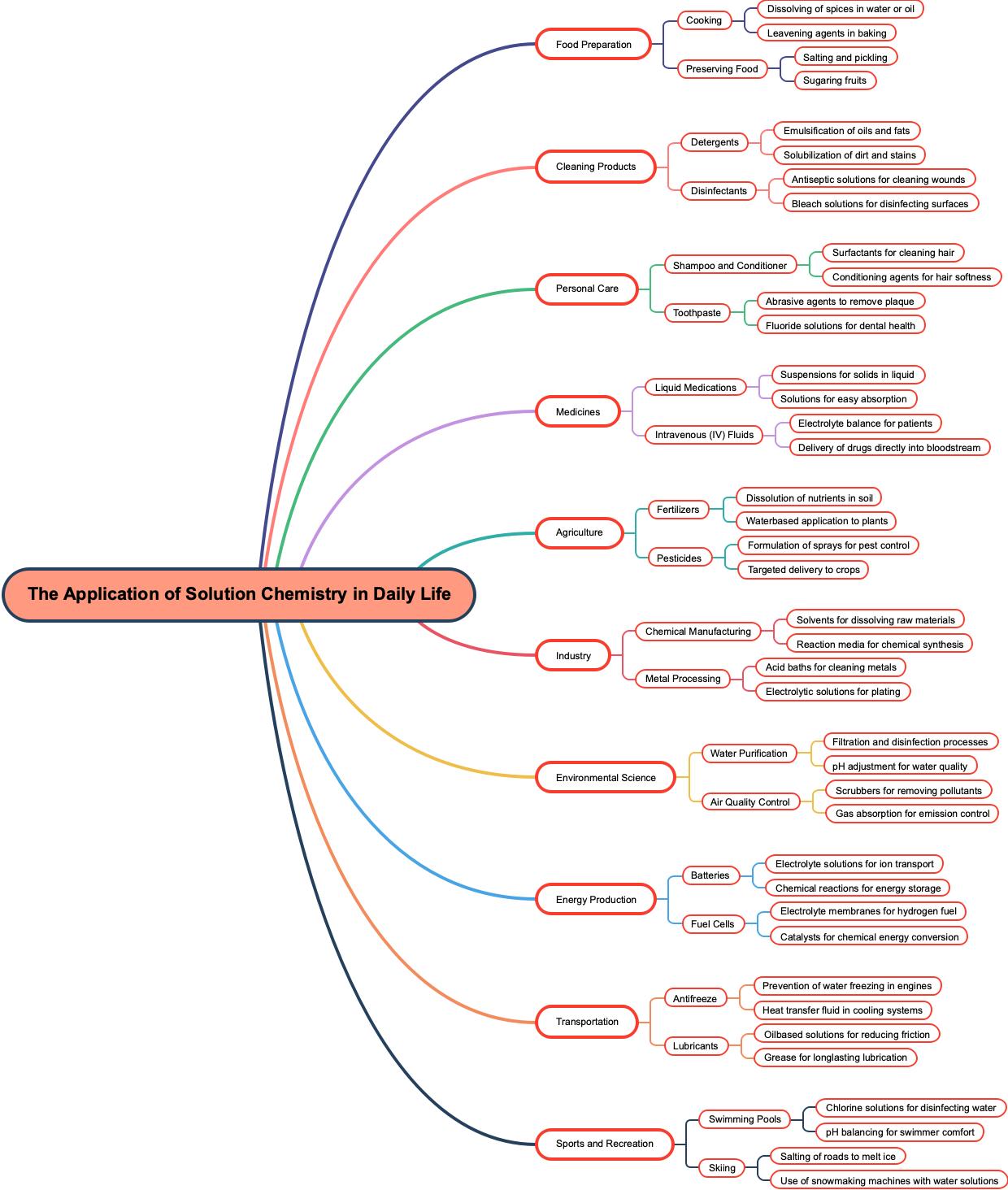
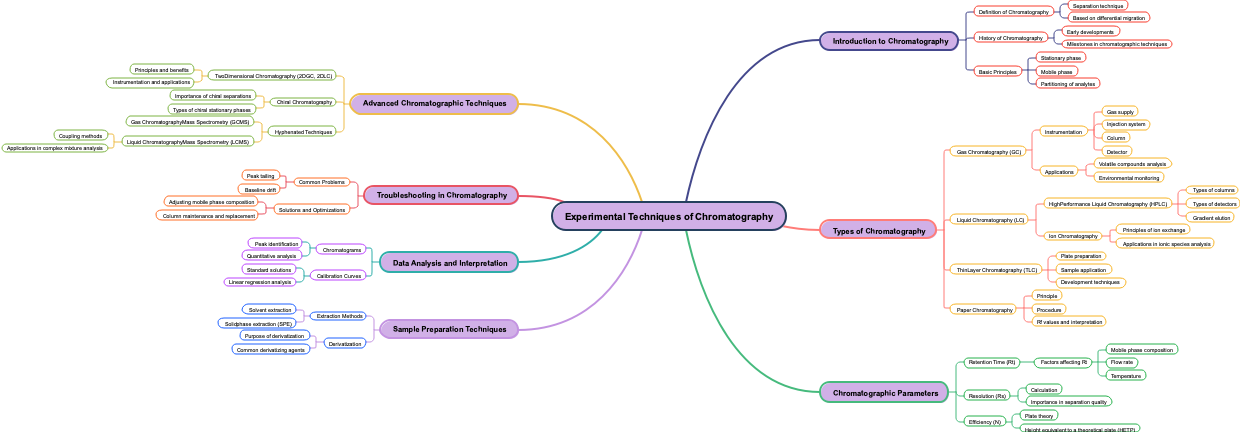
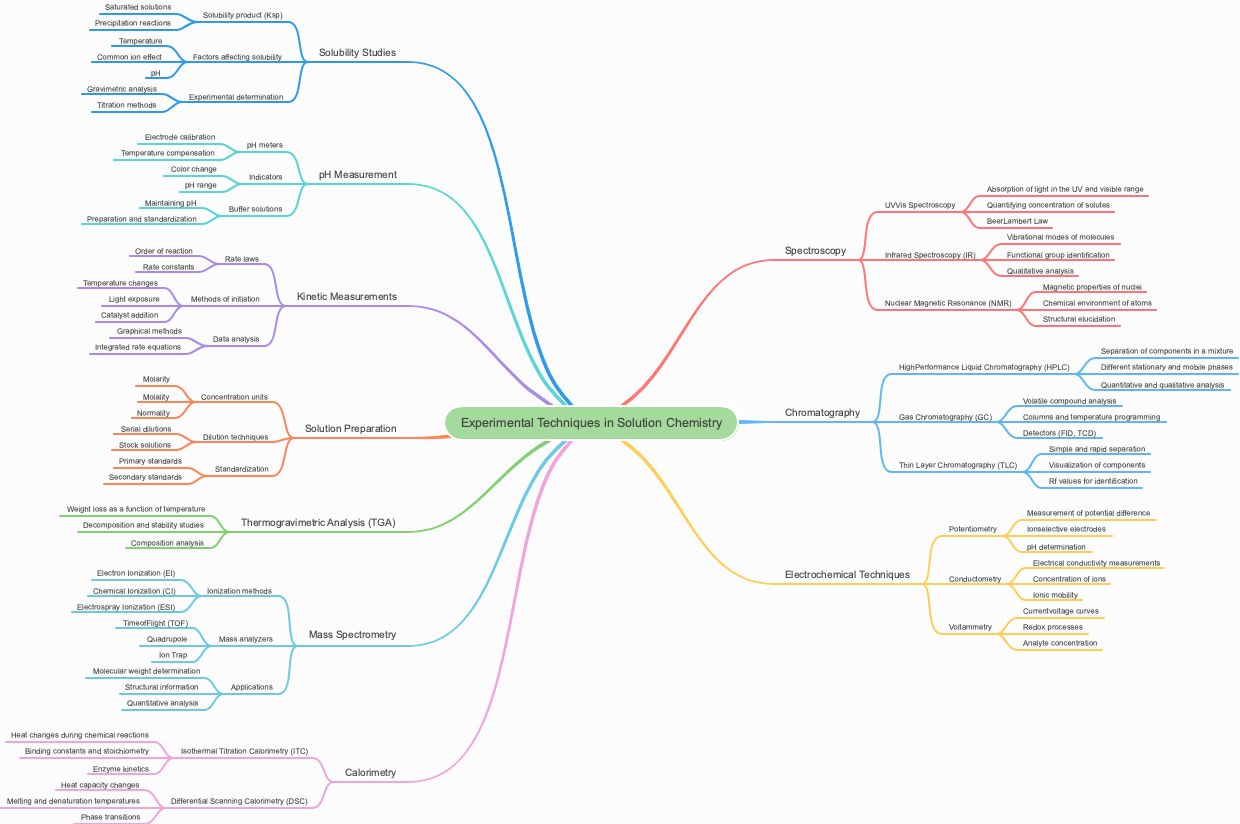
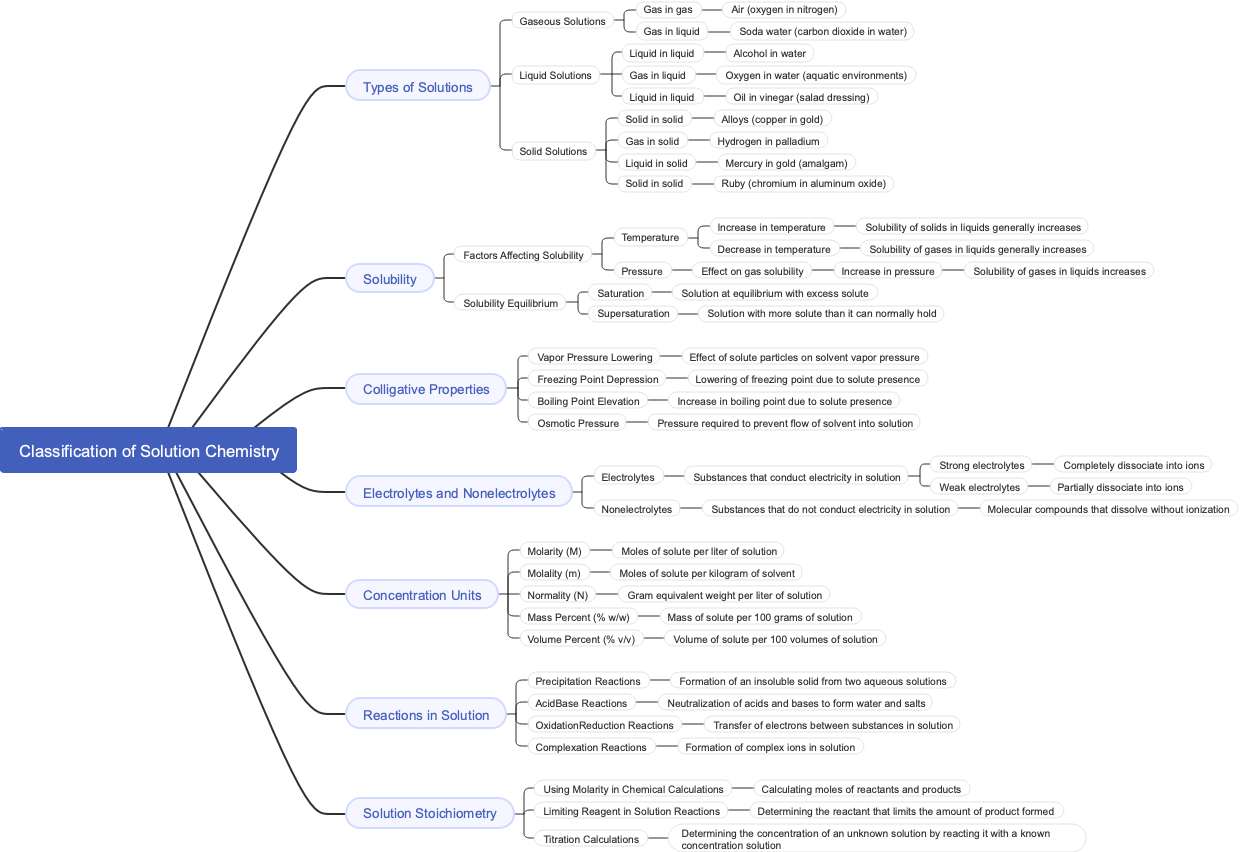
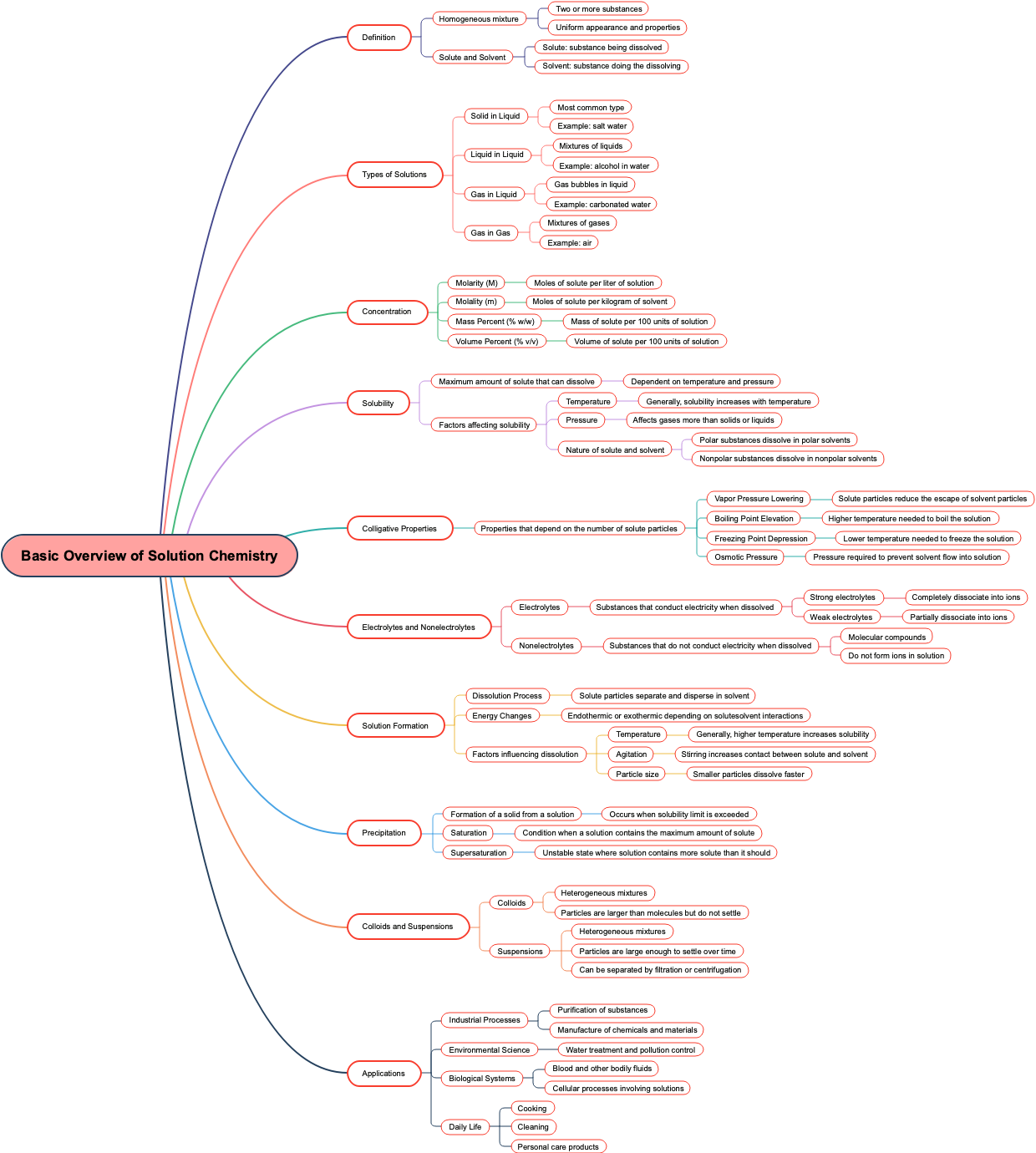
MindMap Gallery solution chemistry
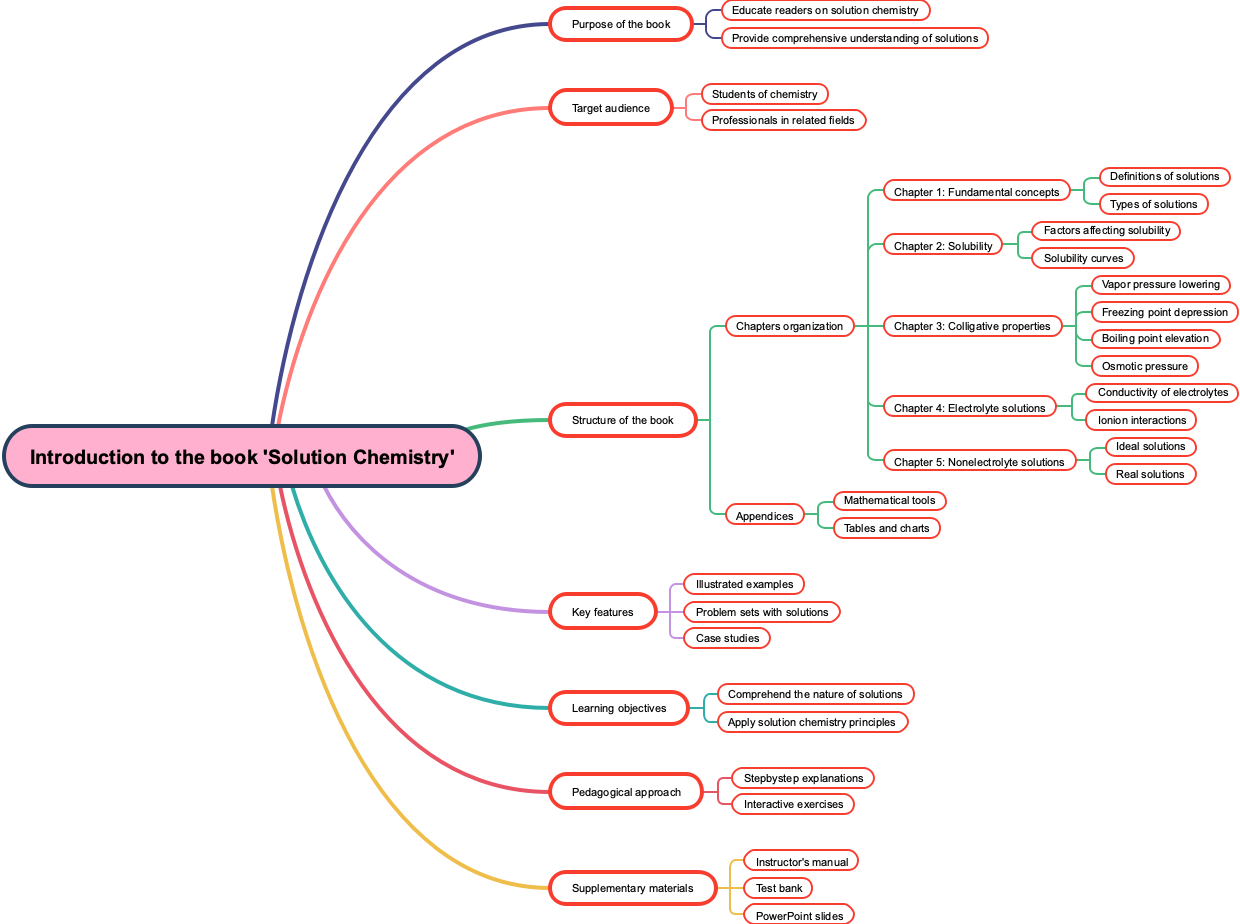
This is a mind map about solution chemistry. The main contents include: Chapter two: Electrolyte Solution, Chapter three: Buffer Solution, Chapter one: Solution.
Edited at 2024-11-06 19:31:39루미 : 영적 각성의 10 차원. 당신이 자신을 찾는 것을 멈출 때, 당신은 당신이 찾고있는 것이 당신을 찾고 있기 때문에 우주 전체를 찾을 것입니다. 당신이 매일 인내하는 것은 당신의 영의 깊이의 문을 열 수 있습니다. 침묵 속에서 나는 비밀 영역으로 미끄러 져 내 주변의 마법을 관찰하기 위해 모든 것을 즐겼으며 어떤 소음도 만들지 않았습니다. 날개로 태어 났을 때 왜 기어 다니는 것을 좋아합니까? 영혼은 그 자체의 귀를 가지고 있으며 마음이 이해할 수없는 것들을들을 수 있습니다. 모든 것에 대한 답을 내면으로 찾으십시오. 우주의 모든 것이 당신 안에 있습니다. 연인들은 어딘가에서 만나지 않으며이 세상에는 이별이 없습니다. 상처는 빛이 당신의 마음에 들어가는 곳입니다.
만성 심부전은 심박수 속도의 문제가 아닙니다! 심근 수축 및 이완기 기능의 감소로 인해 심장 출력이 불충분하여 폐 순환에서 정체와 체계 순환의 혼잡을 유발합니다. 원인, 유도에서 보상 메커니즘에 이르기까지, 심부전의 병리 생리 학적 과정은 복잡하고 다양합니다. 부종을 제어하고, 심장의 전선 및 애프터로드를 줄이고, 심장 안락함 기능을 향상시키고, 기본 원인을 예방하고 치료함으로써, 우리는이 도전에 효과적으로 대응할 수 있습니다. 심부전의 메커니즘과 임상 증상을 이해하고 마스터 링 방지 및 치료 전략을 이해함으로써 우리는 심장 건강을 더 잘 보호 할 수 있습니다.
허혈-재관류 손상은 기관이나 조직이 혈액 공급을 회복시킨 후 세포 기능 및 대사 장애 및 구조적 손상이 악화 될 것이라는 현상입니다. 주요 메커니즘에는 증가 된 자유 라디칼 생성, 칼슘 과부하 및 미세 혈관 및 백혈구의 역할이 포함됩니다. 심장과 뇌는 흔한 손상 기관이며 심근 대사 및 초 구조적 변화, 심장 기능 감소 등으로 나타납니다. 예방 및 제어 조치에는 자유 라디칼 제거, 칼슘 과부하 감소, 신진 대사 개선 및 저 나트륨, 저온, 저압 등과 같은 재관류 조건을 제어하는 것이 포함됩니다. 이러한 메커니즘을 이해하면 효과적인 치료 옵션을 개발하고 허혈성 손상을 완화시키는 데 도움이 될 수 있습니다.
루미 : 영적 각성의 10 차원. 당신이 자신을 찾는 것을 멈출 때, 당신은 당신이 찾고있는 것이 당신을 찾고 있기 때문에 우주 전체를 찾을 것입니다. 당신이 매일 인내하는 것은 당신의 영의 깊이의 문을 열 수 있습니다. 침묵 속에서 나는 비밀 영역으로 미끄러 져 내 주변의 마법을 관찰하기 위해 모든 것을 즐겼으며 어떤 소음도 만들지 않았습니다. 날개로 태어 났을 때 왜 기어 다니는 것을 좋아합니까? 영혼은 그 자체의 귀를 가지고 있으며 마음이 이해할 수없는 것들을들을 수 있습니다. 모든 것에 대한 답을 내면으로 찾으십시오. 우주의 모든 것이 당신 안에 있습니다. 연인들은 어딘가에서 만나지 않으며이 세상에는 이별이 없습니다. 상처는 빛이 당신의 마음에 들어가는 곳입니다.
만성 심부전은 심박수 속도의 문제가 아닙니다! 심근 수축 및 이완기 기능의 감소로 인해 심장 출력이 불충분하여 폐 순환에서 정체와 체계 순환의 혼잡을 유발합니다. 원인, 유도에서 보상 메커니즘에 이르기까지, 심부전의 병리 생리 학적 과정은 복잡하고 다양합니다. 부종을 제어하고, 심장의 전선 및 애프터로드를 줄이고, 심장 안락함 기능을 향상시키고, 기본 원인을 예방하고 치료함으로써, 우리는이 도전에 효과적으로 대응할 수 있습니다. 심부전의 메커니즘과 임상 증상을 이해하고 마스터 링 방지 및 치료 전략을 이해함으로써 우리는 심장 건강을 더 잘 보호 할 수 있습니다.
허혈-재관류 손상은 기관이나 조직이 혈액 공급을 회복시킨 후 세포 기능 및 대사 장애 및 구조적 손상이 악화 될 것이라는 현상입니다. 주요 메커니즘에는 증가 된 자유 라디칼 생성, 칼슘 과부하 및 미세 혈관 및 백혈구의 역할이 포함됩니다. 심장과 뇌는 흔한 손상 기관이며 심근 대사 및 초 구조적 변화, 심장 기능 감소 등으로 나타납니다. 예방 및 제어 조치에는 자유 라디칼 제거, 칼슘 과부하 감소, 신진 대사 개선 및 저 나트륨, 저온, 저압 등과 같은 재관류 조건을 제어하는 것이 포함됩니다. 이러한 메커니즘을 이해하면 효과적인 치료 옵션을 개발하고 허혈성 손상을 완화시키는 데 도움이 될 수 있습니다.
solution chemistry
Chapter one:Solution
1-1 Basic Terms of Solution
Solution
solvent
solute
mixed case
miscible
immiscible
Solution Process
diffusion
solvation (hydration)
Absorption and release of heat
endothermic
exothermic (exothermic)
1-2 Solubility of substance
Solubility & Factors that affect solubility
The nature of solutes and solvents
temperature
Stress has little effect
1-3 Concentration of Solution
1-3.1 Amount-of-substance and Molar Mass
Amount-of-substance
mole
The mole is the amount of substance of a system which contains as many elementary entities as there are atoms in 0.012 kilogram of carbon-12.
one mole of anything contains 6.022 × 10²³ entities. 6.022 × 10²³ is called Avogadro's Number
molar mass
M
unit:g/mol
1.3.2 Amount-of-substance Concentration
Amount-of-substance Concentration (molarity)
Unit: mol/L or mmol/L……
mass of a substance (m) Amount of substance (n) = -------------------------- molar mass (M)
Unit: mole (mol)
Confusing errors
So, c(bB)=1/bc(B)
1-3.3 Reacting Rule of Equal Amount of Substance
When aA tT = dD eE
n(aA)= c(aA)V(A) n(tT)= c(tT)V(T)
1-3.4Mass Concentration (This is not density, this is the mass of the solute, and density is the mass of the solution)
Ρ=m/v
The SI unit is kg/m3 (equal to g/L)
1.3.5 Volume fraction
Va/Va Vb
1-3.6 Molality (mB )or(bB)
mB=nB/mA
kilogramsofsolvent(mA)
unit must be kg
amount-of-substanceofsolute(nB)
In Chinese textbooks, it is represented by b
1-3.7 Amount-of-substance Fraction(xi)(Mole fraction)
1-3.8Mass Percent of Solute
mass of solute/mass of solution
Summary
G1: molarity; mass concentration; Volume fraction
G2: molality; mass percent of solute; mole fraction
1-4 Collaborative Properties of Solutions
*1-4 Colligative Properties of Solutions
Colligative properties are properties that depend only on the number of solute particles in solution and NOT on the nature (identity) of the solute particles, regardless of whether they are atoms, ions, or molecules
Colligative Properties of NonelectrolyteSolutions (Nonvolatile, non-electrolyte and relatively dilute solutions).
Colligative Properties of Electrolyte Solutions.
1-4.1 Vapor Pressure Lowering of Solution -Raoult’sLaw
Raoult’s law : Vapor pressure lowing of a dilute solution that containing nonvolatile, nonelectrolyte is directly proportional to the amount-of-substance fraction of the solute and has nothing to do with the nature of solute.
Vapor Pressure of Solution (p): p= poxA
unit: Pa, kPa
po: vapor pressure of pure solvent
xA:the mole fraction of the solvent in the solution
For Solution: solvent (A), solute (B)
∵ xA xB =1, p= p°xA = p°(1- xB )= p°– p°xB ∴ p°- p = p°xB Δ p =p°- p = p°xB
For a dilute solution: mB = n B(bB=nB)
Δ p = K mB
K=p°MA /1000; mB : molality of B
p = px A Δp = px B Δp = K m B
1-4.2Elevation of Boiling Point
ΔTb= Tb-Tb°= K'Δp= K'K mB =Kb mB
Kb: the modal boiling-point elevation constant of solvent
1-4.3Depression of Freezing Point
Freezing point depression refers to the lowering of the freezing point of solvents upon the addition of solutes.
ΔTf= Tf°-Tf =KΔp = K'K mB=Kf mB
1-4.4Osmosis & Osmotic Pressure
Osmosis: the process of solvent flow through asemipermeable membrane from apure solvent or from a dilutesolution to a more concentrated solution in order to equalize theconcentrations of solutes on the two sides of the membrane.
osmotic pressure (π):The pressure of a solution which just stops osmosis
The relationship between osmotic pressure, concentration and temperature (Van’t Hoff Law)
Π= c RT
unit: Pa, kPa
For a dilute solution: Π= mB RT
because mB=cB,the density of solution is close to pure water
1-4.5 Using Colligative Properties to Determine Molar Mass
For dilute nonelectrolyte solutions:
Δp= Kb mB, ΔT b= Kb mB , ΔT f = K f mB , Π= c RT ≈ mB RT
For dilute electrolyte solutions:
Δp’ =i Kb mB, ΔT b’=i Kb mB ΔT f ’= i K f mB, Π’= i c RT ≈ i mB RT
i: van’t Hoff factor
Example: NaCl, KNO3, i =2; CaCl2, MgCl2 i = 3;
1-4.7Medical Applications of Osmosis
1-4.7.1 Isotonic, Hypotonic, Hypertonic Solution
◆Hypotonic: contains less solute compared to another solution.
◆Hypertonic: contains more solutes compared to another solution.
◆Isotonic: two solutions have the same concentration of solutes
1-4.7.2Osmolarity
It is the total concentration of ALLosmotically active solute particles in the solution.
Osmole (Osm), Cos , Osm/L, mOsm/L nonelectrolytes:OsmL=mol/L For electrolytes: Osm/L=mol/L×i
1-4.7.3Crystalloid Osmotic Pressure and Colloidal Osmotic Pressure
Crystalloid Osmotic Pressure
Definition:Small molecular crystal substance (NaCl (≈ 80%), NaHCO3, glucose) formed π
Physiological action:Regulate balance of fluid and electrolyte on the two sides of cell membrane
Semipermeable membranes:Cell membrane
Colloidal Osmotic Pressure
Definition:Large molecular colloid substance (plasma proteins) formed π
Physiological action:Regulate balance of fluid and electrolyte on the two sides of blood capillary wall
Semipermeable membranes:Capillary wall
1-4.7.4Applications of Osmosis
Dialysis
The Artificial Kidney
Reverse Osmosis
Chapter two:Electrolyte Solution
2-1 Strong and Weak Electrolyte Solution
2-1.1 Theory of Strong Electrolyte Solution
Ion-ion Interaction Theory
form ionic atmophere
The ions restrict each other, causing the ion movement rate to slow down, resulting in a decrease in the ionization degree measured by conductivity.
apparent degree of ionization
The degree of mutual restraint of ions in reactive strong electrolytes
The greater the apparent ionization degree, the smaller the restraint effect between ions.
The smaller the apparent ionization degree, the greater the containment effect between ions.
Ion Activity and Activity Coefficient
Actual concentration of ion (c) multiply a correction factor - activity coefficient ( f ).
a = f·c
Generally, a<c, 0<f<1
Activity coefficients are influenced by
ion concentration
the electric-charge number of ion
Ionic Strength ( I )
I =1/2(c₁z₁² c₂z₂²…cizi²)
Where, I is ionic strength;
c is the amount-of-substance concentration of the ion i;
z i is the charge number of the ion i
2-1.2 Ionization Equilibrium of Weak Electrolyte Solution
The law of Chemical Equilibrium(Equilibrium Constant)
a A b B c C d D
Ionization Constant (Ki )
Ka stands for “acid constant”
Kb stands for “base constant”
Degree of Ionization (α)(Percent Ionization)
1. Definition:
2. The factor influencing degree of ionization
① the nature of solute:
② the initial concentration of solute:
③ temperature
Dilution Law
(1) the weak electrolyte must be monoprotic
(2) α≤5%
The Common Ion Effect and Salt Effect
1. Common ion effect
The ionization of a weak electrolyte is markedly decreased by the addition of an ionic compound containing one of the ion of the weak electrolyte, this effect is called the common ion effect.
2.Salt effect
The ionization of a weak electrolyte is increased by the addition of an soluble strong electrolyte which not contains the common ion with the weak electrolyte. This effect is called salt effect.
2-2 Theory of Acid-base
2-2.1 The Arrhenius theory of acids and bases (Arrhenius ionization theory)
2-2.2 Bronsted-Lowry Acids and Bases (Acid-base Proton Theory)
1. Definition of acid and base
Conclusion:
Acid or base may be a molecule, atom, or ion.
Some molecules or ions are capable of donating a proton, and also accepting a proton, which named ampholyte.
There are no concepts of salt in acid-base proton theory.
2. Essence of Acid and Base Reaction
Essence: proton transfer reaction.
3. Relative Strength of Acids and Bases
① Judgment by acid-base reaction:
② Compare by K a or Kb
③ The relationship between acid-base strength and solvent (proton-accepting ability)
4. The Leveling and Differentiating Effect
The leveling effect:
The inability of a solvent to differentiate the relative strengths of all acids stronger than the solvent’s conjugate acid is known as the leveling
The differentiating effect:
The ability of a solvent to differentiate the relative strengths of all acids stronger than the solvent’s conjugate acid is known as the differentiating effect.
2-3 Acidity and Calculation of Solution
2-3.1 Automation of Water
2-3.2 Acidity of solution (The pH Function)
2-3.3 Calculation of Acidity of Solution
For Strong Acids and Bases
Monoprotic Weak Acids and Bases
K times the concentration under the square root (the same goes for acids and bases)
2-4 Equilibrium between Dissolution and Precipitation
2-4.1 Solubility Product Constant (Ksp)
2-4.2 Exchange between Solubility and Ksp
● AB (s , ksp)
● AB2(A2B)
2-4.3 Formation/dissolution of precipitation
Rule of Solubility Product
Formation of precipitation
condition: Qi>Ksp
Selective Precipitation of Ions (Separation of Ions by Fractional Precipitation)
Selective precipitation is a technique of separation ions in an aqueous solution by using a reagent that precipitates one or more of the ions, while leaving other ions in solution
Dissolution of precipitation
condition: Qi<Ksp (ion product < solubility product)
methods to dissolve precipitation.
1. Forming weak electrolytes by adding some compounds make precipitation dissolve.
2. Forming coordination compounds by adding some agents make precipitation dissolve.
3. Producing oxidation-reduction reactions by adding oxidizing agents or reducing agents make precipitation dissolve.
Chapter three:Buffer Solution
3-1 Concept of Buffer Solution
3-1.1 Concept of Buffer Solution
Buffer solution (buffer): A solution that can resist changes in pH when limited amounts of strong acid or base are added to it.
● Adding a small amount of acid
● Adding a small amount of base.
3-1.2 Composition and Type of buffer solution
3-2 The pH of Buffer Solution
3-2.1 Henderson-Hasselbalch equation
buffer ratio
When the temperature of the same buffer solution is constant, the pH value depends on the buffer ratio
3-2.2 Calculating the pH of buffer solution
3-3 Capacity of Buffer Solution
3-3.1 Concept of buffer capacity
The buffer capacity (β) is the amount-of-substance of strong acid or base per liter needed to produce a unit change in pH.
Δb: the amount-of-substance of strong acid/base added
ΔpH: pH variation after addition of Δb mol strong acid/base
unit: (mol L-1pH-1)
3-3.2 Factors Influencing Buffer Capacity (β)
Table 3-1 the relationship between capacity and concentration
Table 3-2 The relationship between capacity and buffer ratio
3-4 Designing and Preparation of Buffers
3-4.1 Preparing Principle of Buffer Solution
1. Choose the suitable buffer system
2. Choose the best buffer system
3. Choose the suitable total concentration
Buffer capacity: 0.01-0.1
3-4.2 Methods of Preparing Buffer Solution
• Choose the suitable buffer system
• Choose the suitable total c
• Calculate the amount of acid and base
• Mix the amount of acid and base
3-4.2.1Ways to make a buffer
3-4.3 Preparing a Buffer in Lab
methods
Calculation and weighing
Dissolution
pH measurement
3-5 Buffer Systems in the Body
The pH of blood: 7.35~7.45
Maintaing Body pH Balance
Intracellular buffers: HHbO2-HbO2-, HHb-Hb-,
Intracellular buffers in RBC:HHbO2-HbO2-, HHb-Hb-, H2CO3-HCO3-
We can not determine their strength, because H3O is the strongest acid that can exist in aqueous solution.
Body fluids: about 300 mOsm/L. Isotonic solution: cos = 280~320mOsm/L Hypertonic solution: cos> 320mOsm/L Hypotonic solution: cos < 280mOsm/L
Hemolysis
Normal
Plasmolysis/creation
Significant Figures
Significant Figures Rules
General rule: 'significant figures are any non-zero digits or trapped zeros. They do not include leading or trailing zeros'
1.Trailing zeros in a whole number are not significant (unless they come from a measurement). Examples: 300, 300 kg
2.Leading zeros are zeros before non-zero numbers. Example: 00054
3.Trapped zeros are zeros placed in between any two non-zero digits. Example: 5001
4.Zeros placed between the dot and the first non-zero digit are not significant if the number is smaller than 1 (it is a particular case of the rule above). Example: 0.069 has 2 significant figures.
5.Trailing zeros at the end of the number after the decimal point are significant. Example: 812.00 has five significant figures.
6.Only zeros: The number 0 has one significant figure. Therefore, any zeros after the decimal point are also significant. Example: 0.00 has three significant figures, 0.000 has four significant figures and so on.