 Wondershare EdrawMind
MindMap Gallery Laughable parenting
- 13
Laughable parenting
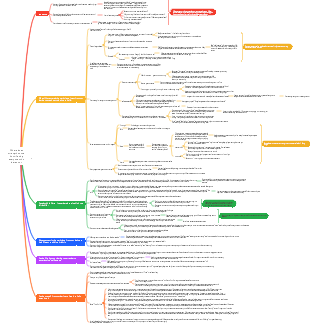
This is a mind map about parenting that makes you laugh. The main contents include: seeing the truth, parenting with ease, the problems that make us unable to laugh, special treatment for those who cannot laugh, just laugh and see. The book brings together the author Li Yinuo’s parenting experience and thoughts as a mother of three children, as well as a review of her personal growth from a top student to a leader in the business world.
Edited at 2024-11-06 11:32:59
- 곤충학
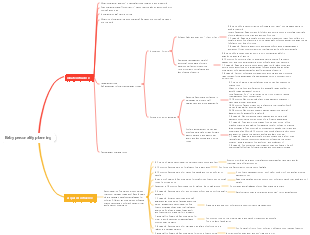
이것은 곤충학에 대한 마인드 맵으로, 곤충의 생태와 형태, 생식 및 발달, 곤충과 인간의 관계를 연구하는 과학입니다. 그것의 연구 대상은 곤충으로, 가장 다양하고 가장 많은 수의 동물이며 생물학적 세계에서 가장 널리 분포되어 있습니다.
- 자녀의 내부 동기 부여를 개발하는 방법 기업가를위한 실용 가이드
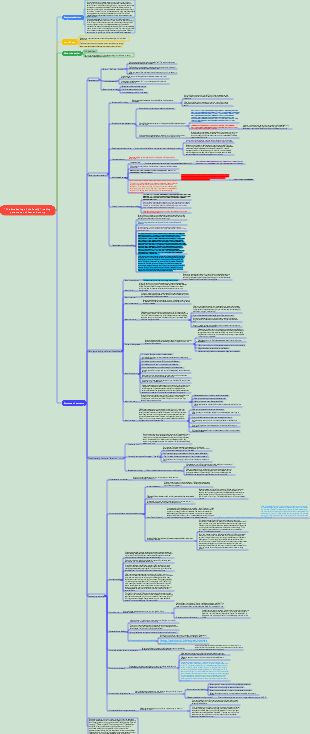
이것은 어린이의 내부 동기를 육성하는 방법에 대한 마인드 맵입니다. 기업가를위한 실용적인 가이드, 주요 내용 : 요약, 7. 정서적 연결에주의를 기울이고, 과도한 스트레스를 피하십시오.
- 자동화 된 프로젝트 관리 템플릿
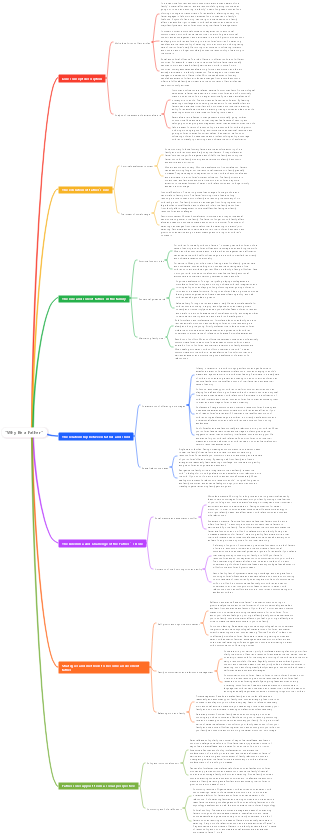
이것은 자동화 프로젝트 관리 템플릿, 주요 내용에 대한 마인드 맵입니다. 메모, 시나리오 예제, 템플릿 사용 지침, 프로젝트 설정 검토 단계 (What-Why-How), 디자인 검토 단계 (What-Why-How), 수요 분석 단계 (What-Why-How)에 대한 마인드 맵입니다.
Laughable parenting
- 곤충학
이것은 곤충학에 대한 마인드 맵으로, 곤충의 생태와 형태, 생식 및 발달, 곤충과 인간의 관계를 연구하는 과학입니다. 그것의 연구 대상은 곤충으로, 가장 다양하고 가장 많은 수의 동물이며 생물학적 세계에서 가장 널리 분포되어 있습니다.
- 자녀의 내부 동기 부여를 개발하는 방법 기업가를위한 실용 가이드
이것은 어린이의 내부 동기를 육성하는 방법에 대한 마인드 맵입니다. 기업가를위한 실용적인 가이드, 주요 내용 : 요약, 7. 정서적 연결에주의를 기울이고, 과도한 스트레스를 피하십시오.
- 자동화 된 프로젝트 관리 템플릿
이것은 자동화 프로젝트 관리 템플릿, 주요 내용에 대한 마인드 맵입니다. 메모, 시나리오 예제, 템플릿 사용 지침, 프로젝트 설정 검토 단계 (What-Why-How), 디자인 검토 단계 (What-Why-How), 수요 분석 단계 (What-Why-How)에 대한 마인드 맵입니다.
- Recommended to you
- Outline





Laughable parenting
Smile and see
Being able to laugh is a high-level ability
Children's language is play, adults' language is "language"
As long as you entrust them with respect and trust, they will devote themselves to doing it without reservation.
Why can't you laugh?
The "problem-solving" approach to parenting is a "bottomless pit." Problems will arise one after another. Moreover, the child's problems will continue to reflect the "me" problems behind them.
The reason is those grooves within us, the unconscious self-judgments, fears, and anxieties. To face it.
The starting point is to plant a seed of awareness in yourself and begin to observe yourself consciously
understanding children
Children are not small adults
Contradiction 1: Imaginary world (playing) vs. real world (doing things, logic and reason)
The contradiction arises because it is difficult for us adults to "return" to the imaginary world
Contradiction 2: Expressing with the body (perceiving the world with the senses) vs. expressing with language
Special treatment can't make you laugh
Change your brain circuitry
The three most important and most difficult loops to change
First, from “elsewhere” to “now”
Children are masters of living in the moment, and the younger the child, the more obvious it is.
When dealing with children, the so-called "respecting the moment" means that when you see your child immersed in something, remind yourself not to disturb him yet, and let him do it and let him think. If you must interrupt, try to make the time without interruption as long as possible.
In terms of time arrangement, don’t make plans for at least half a day a week. During this time, give the child free space and time. If he wants to do something, he can do it.
Allow children to have chunks of time rather than fragmented time; allow it to happen; support and encourage.
Time is limited and precious. Good things roam in children's lives, giving them a sense of pleasure, accomplishment, and value.
When you go downstream, you have the least resistance, which is the real "inaction". You are "moving", but very "relaxed". Life is that stream. Learn to sense the direction of the "water flow" and follow the trend, so that you can truly "live in the moment"
When a child's heart is seen and respected, many things will be "easier" and their ability to resist frustration will become stronger. And "resisting frustration" is actually an innate ability.
The second is from "scarcity" to "abundance"
Being aware and in the present moment allows us to see the gifts and abundance in life.
Every life has three treasures: awareness, love and compassion, wisdom,
The third is from "escape" to "entering the game"
The truth is, the faster you try to solve and escape, the less you can escape, and this state will continue to create new problems.
Instead of running out, think instead, "face the problem and go in" because if it is really "cut off", it will not only be cut off, but also the connection between you and the child, the child's inability to express emotions and the unacknowledged See the need.
Super artifact
1. Make good use of the three realms
The world of adults: a world composed of "hateful" adults who like to talk logic and get angry.
The world of children: the present, beautiful, imaginative, but seemingly messy world
The world of plush toys: adults can control children, children can control plush toys, and plush toys can also control adults!
Set privileges
privilege card
focus
It is to allow children to live in an imaginary world as long as possible, and to support and expand this imaginary world.
The most important underlying ability to learn well is concentration. Concentration comes from this immersive state. Children who can play well will definitely learn well. All they need is appropriate forms, situations and guidance.
From the brain, to logic, to emotions, to letting go, to the present moment, to immersion, this series of changes is the ultimate lesson for each of us to cultivate our inner self.
Breaking the Curse of “Bringing Parents Down”
The problem with "disappointing parents" is that when the love in the heart is transformed into behavior, it often turns into demands, coercion, and even moral kidnapping. Because the process from the love in the heart to the externalized behavior has to go through a "big dye vat" filled with worries about life. This kind of love is a disaster for children.
remind
1. Your first priority is to create a pleasant environment for your children;
2. A good family should have smiles and laughter every day;
3. Everything you do now will become part of your child’s memory when they grow up;
4. What was your favorite adult like when you were growing up? Is there a person who always "unconditionally accepts" you? If so, learn from him/her; if not, learn it yourself;
5. Every time before you talk to your child or make a decision, ask yourself: How will your child feel if I say or do this? Then start taking action.
method
1. Don’t make demands, but give strength: The greatest meaning of parents to their children is: when children think of their parents, Your heart will be full of strength, you will feel warm, you will feel supported, you will feel accepted, and you will gain confidence in yourself. and the courage and strength to overcome difficulties. It is this confidence, courage and strength that allows life to bloom freely.
2. Always stand with your child: As your child’s last haven, never stand on the opposite side of your child. Remind yourself to always side with your children. Children should be accepted at the bottom level, and on this basis, feedback and suggestions should be given to the children's behavior. The child is not the problem, the child needs your help to solve the problem,
Feedback principles: specific, friendly and helpful
3. To be reasonable is to bully children: children’s language is play and participation. It is much more effective to solve problems by "playing" than by reasoning.
4. Happiness comes from "breaking the rules", and truly understanding and obeying the rules begins with allowing children to break the rules. A sense of boundary is established through touching the boundary.
When the relationship between you and your child is hurt and the space for communication becomes narrow, any educational method that seems correct loses the possibility of working on the child from the inside out. We should actively give feedback, set examples, and provide support for children's behavior to help them change.
Raise your child well and give him 7 full abilities
Three keys to success
1.Smarts means learning ability
2.Purpose is the direction of life and sense of mission
3.Agency. It is the sense of control and autonomy over one’s own life.
7 underlying capabilities
Organize your life
housework
Everyone must learn to organize their lives. This is the basic ability for our survival.
Let’s make it clear that “you have to do some things even if you don’t like them.”
Make a housework schedule and list everything that needs to be done
1. Make all invisible housework “visible”
2. An opportunity to discuss what “fairness” means
3. “Visual” education process
time
perceived time
Record time
Managing Time: Managing Prioritization and Sequencing
Facing the unknown
ability to cook
The ability to organize and arrange one's life
The ability to ask for help is something we tend to overlook
deep learning
Concentration
The ability to put learned theories into practice and verify them
ability to teach others
ability to question
critical thinking, independent thinking
nonviolent communication
The core philosophy is to avoid conflict and violence by promoting effective communication by expressing one's own needs and feelings while listening and respecting the needs and feelings of others
The starting point of nonviolent communication is actually self-awareness, that is, starting from understanding your own emotions and needs
The ability to listen to others, learn to listen to others' feelings and needs, and respect their opinions and underlying emotions
When expressing your feelings and needs, use sentences that begin with "I" rather than "you"
Make suggestions: What are our true feelings and needs, and what can be done about them.
persuade others
Principle 1: Always give your children opportunities to negotiate with you, while you play a relatively difficult role.
Principle 2: Make things difficult for him reasonably and then let him win. Let him have the experience of winning and have a good enough perspective to look at this issue again.
Understanding money
Principle 1. Don’t cry poor, "poor" and "unworthy" are two different things. There is room for choice in life, and you can feel the beauty of life from small things.
Principle 2. Teach children to understand money
Principle 3. Make it clear in advance that my money has nothing to do with you
face yourself
Comes from awareness, self-acceptance and the confidence and self-esteem that develop on this basis. With these, we can face, express and process our emotions. The core method is to cultivate children's ability to talk to themselves.
5 Simple Tips to Support Your Children
1. What does it mean to grow up? If you can take care of yourself, you have grown up.
2. If you don’t want others to treat you this way, don’t treat others this way.
3. When you are in a public place or as a guest in someone else’s home, you should be the same as you were when you left.
4. What is yours? Only the things you have learned and understood are truly yours.
5. Want to be the boss? Only by putting others before yourself can you be the boss
What does effective learning look like in the AI era?
"Technological progress requires a stronger and more continuous link between education and work."
There are only three "core skills": empathy, continuous learning and creativity. These three abilities are particularly important in the future society because they are also abilities that are more difficult to be replaced by "machines".
Lifelong learning does not reduce inequality and may exacerbate it
Problems that make us laugh
It's not your fault to be angry
those difficult questions
adult version
If you don’t have enough time or energy, how can you spend time with your children?
2. Don’t use macro narratives to describe your life. Stop imagining, face the status quo, and allow a little inner relaxation, and we will be able to find solutions.
How to face endless problems
There is no "ultimate" way out of life. Constantly facing and solving problems is the true meaning of "perfection".
How to start with small problems
The first step is to take a deep breath and let our center of gravity sink from the high-speed brain to the body, giving wisdom a space to rise.
The second step is to untie the "red rope" tied to the top. To put it bluntly, adult growth is about cultivating inner "space" and "fluidity". With them, there is the possibility of wisdom. "
How to face the chaos of life
Always set a small goal for yourself: stay in a good mood for 3 minutes. Look at life from a different perspective and cherish every 3 minutes in your life.
The wisdom of life is actually to turn the chicken feathers in life into colorful chicken feathers
What should I do if I am not in a good state and have no patience?
The first step is to realize that you are in a bad state. Tell your child, "This has nothing to do with you."
Step two, realize you can adjust. You can't change others, you can only change yourself. Take a deep breath and hug yourself,
What should I do if I feel guilty if I get angry and hurt my child?
A good fix is to open and restructure communication.
The first step is to repair yourself. Restoration means taking apart who you are, your actions, what you do. It not only acknowledges the problem, but also has the energy to change.
The second step is to repair it with your child. Say what happened, take responsibility, and explain how you would handle it differently next time.
In the third step, after reconnecting with the child, we can discuss with the child behaviors that both parties can improve.
What should I do if my parenting concepts conflict?
First, if you learn a lot of new educational concepts, share them with others.
Second, actions speak louder than words. Interact with your children in an effective way, and the people around you will be touched and changed. Don’t focus on the arguments between adults, try to use interaction with children to “educate” adults
Children's version
What should I do if my child has emotions?
One of the best ways is to “play”
Does accepting bad emotions mean always putting up with it?
The first step is to describe what happened as objectively as possible.
The second step is to guide children to describe and express the feelings and emotions they experience.
The third step is to explore the root causes of "bad emotions" with your children.
What should I do if there is a conflict between children?
First, don’t immediately enter the “referee” mode. Let your children fully express themselves first.
Second, as children’s abilities improve, try to support them in solving problems on their own.
The third and most important thing is not to go above and beyond, and use adult moral standards to demand children.
How to balance love for children
Make every child feel special and unique.
Method one is to give children "privileges".
Method 2: Meet the unique needs of each child without making comparisons.
Method 3: Take the initiative to "cover" your children.
Because every child is inherently kind. When he is treated well and his mistakes are forgiven, the seeds of kindness will actually be planted in his heart. He himself will be more alert and careful in the future, and will be more likely to treat others with the same forgiving heart when they make mistakes.
When should you help your child?
What lifeguards do is to constantly give opportunities and support so that people who fall into the water can save themselves as much as possible.
See the truth and raise with ease
Why have I lost the ability to laugh?
three levels of education
The outermost layer is about skill acquisition.
The middle level is about gaining the ability to face “uncertainty”.
In the face of uncertainty, how to judge the environment and what criteria to use as a reference and make decisions is the ability to find a way out where there is no way, and it is also what the road of life shows.
The core level is about gaining inner vitality and wisdom.
Everyone is self-sufficient and has inner gold mines. How to get in touch with this inner gold mine by breaking down and letting go of layers of obstacles is the core of education.
See yourself in reincarnation
My mother’s education “three axes”
The first step: Grasp the big ones and let go the small ones, and let the children make their own decisions.
The second axe: Don’t be afraid when things happen, you can always start over
The third axe: Love must be expressed
Parents have the greatest influence on their children,
The first is to provide children with an environment in which they can grow freely.
The second is to live your life with passion and enthusiasm
Special treatment can't make you laugh