 Wondershare EdrawMind
MindMap Gallery water cycle
- 44
water cycle
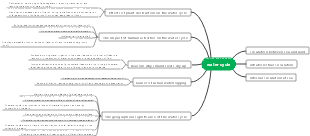
This is a mind map about the water cycle. The water cycle means that water on the earth is constantly evaporated into water vapor under the action of solar energy and heat energy on the earth's surface. It enters the atmosphere. The water vapor condenses into water when it is cooled. Under the action of gravity, Down, the repeated process of falling to the ground in the form of precipitation.
Edited at 2024-11-04 15:31:18
- 곤충학
이것은 곤충학에 대한 마인드 맵으로, 곤충의 생태와 형태, 생식 및 발달, 곤충과 인간의 관계를 연구하는 과학입니다. 그것의 연구 대상은 곤충으로, 가장 다양하고 가장 많은 수의 동물이며 생물학적 세계에서 가장 널리 분포되어 있습니다.
- 자녀의 내부 동기 부여를 개발하는 방법 기업가를위한 실용 가이드
이것은 어린이의 내부 동기를 육성하는 방법에 대한 마인드 맵입니다. 기업가를위한 실용적인 가이드, 주요 내용 : 요약, 7. 정서적 연결에주의를 기울이고, 과도한 스트레스를 피하십시오.
- 자동화 된 프로젝트 관리 템플릿
이것은 자동화 프로젝트 관리 템플릿, 주요 내용에 대한 마인드 맵입니다. 메모, 시나리오 예제, 템플릿 사용 지침, 프로젝트 설정 검토 단계 (What-Why-How), 디자인 검토 단계 (What-Why-How), 수요 분석 단계 (What-Why-How)에 대한 마인드 맵입니다.
water cycle
- 곤충학
이것은 곤충학에 대한 마인드 맵으로, 곤충의 생태와 형태, 생식 및 발달, 곤충과 인간의 관계를 연구하는 과학입니다. 그것의 연구 대상은 곤충으로, 가장 다양하고 가장 많은 수의 동물이며 생물학적 세계에서 가장 널리 분포되어 있습니다.
- 자녀의 내부 동기 부여를 개발하는 방법 기업가를위한 실용 가이드
이것은 어린이의 내부 동기를 육성하는 방법에 대한 마인드 맵입니다. 기업가를위한 실용적인 가이드, 주요 내용 : 요약, 7. 정서적 연결에주의를 기울이고, 과도한 스트레스를 피하십시오.
- 자동화 된 프로젝트 관리 템플릿
이것은 자동화 프로젝트 관리 템플릿, 주요 내용에 대한 마인드 맵입니다. 메모, 시나리오 예제, 템플릿 사용 지침, 프로젝트 설정 검토 단계 (What-Why-How), 디자인 검토 단계 (What-Why-How), 수요 분석 단계 (What-Why-How)에 대한 마인드 맵입니다.
- Recommended to you
- Outline






water cycle
body of water
terrestrial body of water
river
river course
Water system characteristics
The structure of the river channel: source, injection, flow direction, process, basin area, number of tributaries, shape, river channel drop, width, and depth of bends.
Causes of river channel morphology
Erosion/accumulation, single/diverse lithology, crustal uplift/subsidence
river water
hydrological characteristics
Flow velocity, sediment content, freezing season and flood season, seasonal changes in water level, recharge type
lake
Lake basin (shape, size, steepness and gentleness, causes of formation)
Tectonic lake (internal force action)
(External force) Fengcheng Lake…
lake water
Transparency, water temperature, salinity, water volume, freezing period, supply method
Soil water, frozen soil bottom ice, atmospheric water
ocean water body
ocean space
Coast type*5
seabed topography
seawater
Static (temperature, salinity)
Movement (ocean currents, sea and air effects)
Terrain ➡️⬅️Water ➡️⬅️Climate
Examine water on the surface and topography and climate on substance
evaporation
Evaporation from water surface, evaporation from soil, transpiration from plants
Influencing factors
1Solar radiation (light), Atmospheric conditions ⏬ 2 temperature, 3. Air humidity. The relative humidity of the air reaches saturation and evaporation stops. The drier the air, the faster the evaporation. 4. Wind speed. The faster the wind speed, the greater the evaporation of the water surface. [Special circumstances] ① Extreme conditions do not affect the balance of the water body when the wind speed is extremely high, leaving no time for evaporation ② The intrusion of strong cold air (high wind speed) brings strong cooling, reduces evaporation, and even causes condensation 5. The size and shape of the water surface. The water area is small and the evaporation is faster. However, the larger the water area, the actual evaporation may be greater. The humidity along the coast is greater than inland. 6 Other vegetation leaf area texture.
Evaporation capacity (maximum possible evaporation amount) > actual evaporation amount
The northwest has strong evaporation capacity, but its actual evaporation volume is small because there is little local precipitation (it is difficult for a clever woman to cook without rice).
⚠️⚠️Multiple-choice question trap: The theoretical evaporation graph asks about actual evaporation, pay attention to local precipitation The actual evaporation amount diagram asks about the evaporation capacity and the impact of the options on evaporation. The difference
Only when the underlying surface is sufficiently moist can the maximum possible evaporation become the actual local evaporation. Actual evaporation depends on local precipitation
Find actual evaporation of water
water vapor in the atmosphere
Water evaporating into the air (water vapor) may not necessarily turn into clouds (liquid water droplets), depending on the temperature and air saturation
However, cooling does not necessarily mean that water vapor will turn into clouds. It also depends on whether the original water vapor content exceeds the water vapor content of the temperature-saturated air after cooling.
The higher the temperature, the greater the air's ability to hold water.
Relative humidity = water vapor content/water vapor content of saturated air at the same temperature*% =Actual water vapor pressure/saturated water vapor pressure
Low relative humidity does not mean the air is dry! It could also be that the temperature is high, the air has a super strong water-holding capacity (large denominator), and you are not full yet.
Ventilation and humidity reduction (greenhouse agriculture)
The temperature inside the greenhouse is higher than outside the greenhouse, the evaporation volume is relatively large, and the air is relatively humid. When exchanged with the drier and colder atmosphere outside, the water vapor content of the air in the greenhouse will be reduced, and the saturated water vapor pressure will be reduced. In winter, the air should not be released in the morning (when the temperature is the lowest), but on sunny days. The air should be released against the wind (thermal expansion and contraction to achieve automatic air exchange).
water vapor transport
After the water vapor is transported, it does not directly precipitate, but also rises and so on.
Horizontal (transported from one place to another) power: wind near the surface
Vertical (low altitude to high altitude, lifted into clouds and rain) power: updraft
The lifted water vapor may not necessarily form clouds and cause rain⏬
Water vapor over the ocean➡️land trade wind, west wind, monsoon Distance from the ocean and terrain obstruction
Infiltrate
ground properties
Hard ground (not good), sandy soil (good)
slope
The slope is small, the flow rate is slow, and it slowly penetrates
vegetation coverage
High, intercepting surface runoff
precipitation intensity
The precipitation intensity is small and falls little by little.
Precipitation duration
Over time, it slowly penetrates slowly.
precipitation
⚠️Precipitation formation conditions
Sufficient water vapor (where does it come from and who brings it)
Atmospheric circulation
Replenishment of the underlying surface (lakes (you can emphasize the unfrozen lake surface), plant transpiration, warm current evaporation)
Updraft (sending water, condensation nuclei, and cooling)
power boost
When warm and cold air masses meet a front, they rise and cause frontal rain.
The terrain blocks the airflow from rising, and the terrain rains
Thermal flow
When the temperature of the underlying surface is high, the air rises due to heat. The rising air expands and cools. The water vapor condenses into water droplets, releasing heat, heating the surrounding air and further lifting it, causing convective rain. Subtropical ocean surface, low pressure area cyclone, strong wind, typhoon rain (more extreme convection)
Condensation nuclei (generally present, depending on the material)
The material emphasizes the dustiness
There are many glaciers in a certain place - solid precipitation - surplus = income (precipitation) (starting from precipitation conditions) expenditure (consumption of storage space valley)
Urban rain island effect = urban waste heat, air lift, dust, precipitation in specific areas There is more precipitation in cities than in suburbs
Influencing factors
1Sea and land Coastal/inland 2Topography Windward slope/leeward slope 3Climate Monsoon, pressure and wind zone 4 Underlying surface vegetation coverage, water area, urban heat island, rain island effect 5 Human activities: reservoirs, afforestation, returning farmland to lakes, artificial precipitation 6 ocean currents
run-off Precipitation falling in the basin, surface, underground
Precipitation (runoff formation process)
A small amount falls on the water surface (rivers, lakes and reservoirs) and directly forms runoff.
Most of the earth's surface (layer by layer) [flooding may occur if each layer is full (multiple choice question) Plant interception (absorbing evaporation and blocking it) ➡️Fill in depressions, ground retention (moistening) ➡️(infiltration) soil water storage ⏩⏩Evaporation) ➡️Underground water storage (permeable rock formation groundwater) ➡️Deep groundwater ⏩Surface slope flow ⏩Mid-soil flow (soil water) ⏩Subsurface runoff (groundwater)
Plant interception does not completely block the water, but intercepts it, and part of it is absorbed, evaporates, or slides to the surface, reducing direct impact on the surface.
The amount of vegetation interception is related to the number of vegetation structures and will not change significantly in a short period of time.
Runoff flows into relatively low-lying rivers and lakes and merges into the river network
groundwater recharge Rivers recharge groundwater during wet periods, and groundwater recharges rivers during dry periods (less losses and changes).
Precipitation = surface runoff, vegetation interception, soil absorption, underground water storage
[Big topic] The surface runoff flow has decreased, the scouring force has weakened, and the situation of water and soil erosion has improved than before. Water and soil erosion has reduced the surface water collection speed slowly, the river water level has risen and spread, the flood peak arrives later, and the hidden danger of floods is small.
basin
watershed, catchment area Slope water ➡️Small river ➡️Large tributary ➡️Main stream ➡️Basin outlet (the lake and sea disappear)
⚠️Influencing factors of runoff
nature
climate
Precipitation (income)
There is a lot of precipitation and a lot of runoff. Precipitation process: The precipitation lasts for a short time, the greater the intensity, the flow (less infiltration) is larger and more urgent, the water collection time is short (a pile of water rushes into the river quickly), the river water level rises quickly, the river pressure is high, and the flood peak Fast arrival, high risk of flooding Flood (river overflow), waterlogging (water accumulation in low-lying areas)
Evaporation (expenditure) Careful consideration: temperature, humidity, wind
Water balance [income = expenditure]
Stable lake area/stable river flow
1 Ocean precipitation runoff = evaporation 2 Inner flow area precipitation = evaporation 3 Outflow area Precipitation - Evaporation - Runoff = 0
underlying surface
1Geographic location (large spatial scale) latitude, sea and land 2Topography characteristics: steep/gentle slope, soil texture/lithology (steep slope, fast flow rate, short water collection time, small slope loss (less infiltration and evaporation)) large flood volume 3Vegetation coverage: short and dense tree crown, good interception effect (analogous to holding an umbrella) Litter leaves increase surface roughness, increase friction, slow down slope flow, increase infiltration, and reduce evaporation. The root system solidifies the soil and increases infiltration (water follows the roots) ⏩Underground reservoir (backup) Maintain soil and water and conserve water sources (less loss of soil water and groundwater) 4. Watershed area (water system characteristics) and shape: Large watershed area means large runoff (large supply) 5. Lakes and swamps: The regulation and storage function of lakes, weakening (weakening) peak floods during flood periods, replenishing rivers during dry periods, purifying pollutants, providing biological habitats, and regulating the climate.
High vegetation coverage increases air humidity and increases the probability of precipitation (❌ does not necessarily increase the amount of precipitation (see the three conditions for precipitation), Increase the river runoff during the dry season and reduce the river runoff during the flood period (❌ It cannot be directly said to increase the river runoff outside of the season)
Maintain water and soil ⏩ There are abundant sources of sand under vegetation ⏩ Every layer is saturated in continuous heavy rainfall, and subsequent rainfall (surface water that cannot penetrate) will wash away this area and increase the sand content of the river.
Trees, shrubs and herbs ⏩ intercepted layer by layer
There is a lot of sediment on the river bottom and the river water is fast. The upturned sediment on the river bed increases the sediment content of the river. However, high vegetation coverage will reduce the amount of sediment in the river, and the river bed will not have too much sediment.
The top of the mountain has a higher and steeper terrain, less seepage, poor surface and groundwater storage conditions, and less actual evaporation. Slope: The terrain is relatively steep and there is less penetration. The valley is low and flat with lots of seepage.
Eutrophication of water bodies
Nutrient salts in the water body. This nutrient salt refers to nitrogen, phosphorus, potassium, etc., or other pollutant particles enter the water body, which increases the nutrient salts in the water body. Algae that feed on the nutrient salts multiply wildly. When the algae With crazy reproduction, algae will cover the water surface and cover it, forming a In the case of opacity, sunlight cannot penetrate the water surface and enter the water body. Some aquatic plants in the shallow water underwater will not be able to carry out photosynthesis, leading to death. Some aquatic organisms that feed on these plants will also die, causing biological diseases. In the case of death, we call it water desertification, which means there is no life left. The life cycle of algae is very short and will die soon. The algae corpses will rot under high temperature. The rot and smell will become toxic and harmful substances that have an impact on water quality.
human activities
rural area
Transforming slopes into terraces
Rainwater is intercepted, water collection speed is slowed down, infiltration is increased, surface runoff is reduced, and underground runoff is increased.
City
heat island effect, rain island effect
Cities have more waste heat, dust, and precipitation than suburban areas.
The ground hardens and the impermeable area increases (concrete floor buildings) (The natural ground has less infiltration and more surface runoff)
Infiltration is reduced, and underground runoff is reduced (underground (backup) reservoir recharge is less) ⏩Dry season runoff is reduced
The surface water collects quickly, the flood peak arrives quickly, the flow is large, and the hidden danger of urban flooding increases.
Subway construction changes groundwater seepage direction
Urban drainage system (smooth, direct and rapid collection of water into the river, water level rises quickly)
Measures: Sponge City (increase natural ground) ⏩ Increase ground infiltration and reduce surface runoff (suppressed) The most influential link in the water cycle—runoff transportation (originally using surface runoff sponges to increase underground runoff) Improve the diversion of rainwater and sewage, utilize water resources, and reduce the pressure on drainage pipes to collect water from rivers in a short period of time
Sea water properties
temperature
Vertical release: The range of changes is large within 1000m, and the range of changes in deep seawater below 1000m is small.
Influencing factors
Latitude, depth, ocean currents, seasons, monsoons, weather, warm and cold air masses Distance from land (near land, water temperature is low in winter and high in summer), ice formation and melting
Evaporation absorbs heat (consumption of heat), condensation releases heat
The water temperature at the bottom of the sea is low. When the surface water temperature is lower, the vertical temperature difference is smaller.
When the maximum temperature and maximum water temperature are inconsistent, there is usually a delay. July has the highest temperature and August has the highest water temperature.
salinity The average salinity of the ocean is 35‰ (higher than it means the salinity is high and lower than it means low salinity)
Distribution: highest in the subtropics, decreasing toward both sides
Influencing factors
Temperature: The higher the temperature, the more salt it can hold and the higher the salinity.
Evaporation: The more evaporation, the higher the salinity.
Precipitation: more precipitation, more dilution, and low salinity
Runoff into the sea (sea areas near land): the more, the lower
Ocean Currents: Warm currents passing through high salinity
Ice: Freezing (frozen is fresh water precipitating salt) has high salinity, melting ice has low salinity
Outline of sea and land: Closed sea areas are greatly affected by land and have extremely high or low salinity⏬
Seawater exchange: The more exchanges with high-salinity seawater, the higher the salinity will be. The less exchanges between low-salinity and high-salinity seawater, the lower the salinity will be.
Salt farm site selection
1. A vast and flat muddy coast, where seawater is not easy to seep, which is conducive to collecting sea salt and not easily mixed with sand. The flat terrain is conducive to the layout of salt fields. 2. Low latitude, high temperature, many sunny days, less precipitation, sufficient sunlight, and strong evaporation, which is conducive to salt exposure. 3Haiqu has higher salinity and good water quality
density p=m/v
Distribution: The density is high at high latitudes, and the density increases rapidly the deeper you go within 1000m. Sea cliff: the density suddenly becomes smaller as the depth increases (the buoyancy of sea water becomes smaller)
Influencing factors
Temperature: water has high temperature (volume expansion) and low density
Salinity: High salinity (high mass) and high density
Depth (pressure): The deeper (the greater the pressure, the volume compression) the greater the density
Density of each ocean
Equator: water with high temperature, low salinity and low density Subtropical zone: water temperature is high, salinity is high, okay Polar Regions: The water temperature is very low, the salinity is low, and the density is the highest
density flow
Surface water: opposite Deep seawater: high density, low density in the direction of flow