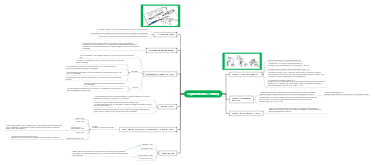
MindMap Gallery type
This is a mind map about types. The main contents include: types of organizational learning, types of organizational changes (1 time), types of management innovation (1 time), types of risks, types of control standards (2 times) , type of control (17 times), conflicting class type (2 times), type of communication (8 times), type of leadership style (4 times), type of organizational culture (1 time), training classification (6 times), source of personnel, source of authority (4 times) , type of organizational structure (16 times), type of budget management.
Edited at 2024-11-03 12:37:21Rumi: 10 dimensiones del despertar espiritual. Cuando dejes de buscarte, encontrarás todo el universo porque lo que estás buscando también te está buscando. Cualquier cosa que haga perseverar todos los días puede abrir una puerta a las profundidades de su espíritu. En silencio, me metí en el reino secreto, y disfruté todo para observar la magia que me rodea y no hice ningún ruido. ¿Por qué te gusta gatear cuando naces con alas? El alma tiene sus propios oídos y puede escuchar cosas que la mente no puede entender. Busque hacia adentro para la respuesta a todo, todo en el universo está en ti. Los amantes no terminan reuniéndose en algún lugar, y no hay separación en este mundo. Una herida es donde la luz entra en tu corazón.
¡La insuficiencia cardíaca crónica no es solo un problema de la velocidad de la frecuencia cardíaca! Es causado por la disminución de la contracción miocárdica y la función diastólica, lo que conduce al gasto cardíaco insuficiente, lo que a su vez causa congestión en la circulación pulmonar y la congestión en la circulación sistémica. Desde causas, inducción a mecanismos de compensación, los procesos fisiopatológicos de insuficiencia cardíaca son complejos y diversos. Al controlar el edema, reducir el frente y la poscarga del corazón, mejorar la función de comodidad cardíaca y prevenir y tratar causas básicas, podemos responder efectivamente a este desafío. Solo al comprender los mecanismos y las manifestaciones clínicas de la insuficiencia cardíaca y el dominio de las estrategias de prevención y tratamiento podemos proteger mejor la salud del corazón.
La lesión por isquemia-reperfusión es un fenómeno que la función celular y los trastornos metabólicos y el daño estructural empeorarán después de que los órganos o tejidos restauren el suministro de sangre. Sus principales mecanismos incluyen una mayor generación de radicales libres, sobrecarga de calcio y el papel de los leucocitos microvasculares y. El corazón y el cerebro son órganos dañados comunes, manifestados como cambios en el metabolismo del miocardio y los cambios ultraestructurales, disminución de la función cardíaca, etc. Las medidas de prevención y control incluyen eliminar los radicales libres, reducir la sobrecarga de calcio, mejorar el metabolismo y controlar las condiciones de reperfusión, como baja sodio, baja temperatura, baja presión, etc. Comprender estos mecanismos puede ayudar a desarrollar opciones de tratamiento efectivas y aliviar las lesiones isquémicas.
Rumi: 10 dimensiones del despertar espiritual. Cuando dejes de buscarte, encontrarás todo el universo porque lo que estás buscando también te está buscando. Cualquier cosa que haga perseverar todos los días puede abrir una puerta a las profundidades de su espíritu. En silencio, me metí en el reino secreto, y disfruté todo para observar la magia que me rodea y no hice ningún ruido. ¿Por qué te gusta gatear cuando naces con alas? El alma tiene sus propios oídos y puede escuchar cosas que la mente no puede entender. Busque hacia adentro para la respuesta a todo, todo en el universo está en ti. Los amantes no terminan reuniéndose en algún lugar, y no hay separación en este mundo. Una herida es donde la luz entra en tu corazón.
¡La insuficiencia cardíaca crónica no es solo un problema de la velocidad de la frecuencia cardíaca! Es causado por la disminución de la contracción miocárdica y la función diastólica, lo que conduce al gasto cardíaco insuficiente, lo que a su vez causa congestión en la circulación pulmonar y la congestión en la circulación sistémica. Desde causas, inducción a mecanismos de compensación, los procesos fisiopatológicos de insuficiencia cardíaca son complejos y diversos. Al controlar el edema, reducir el frente y la poscarga del corazón, mejorar la función de comodidad cardíaca y prevenir y tratar causas básicas, podemos responder efectivamente a este desafío. Solo al comprender los mecanismos y las manifestaciones clínicas de la insuficiencia cardíaca y el dominio de las estrategias de prevención y tratamiento podemos proteger mejor la salud del corazón.
La lesión por isquemia-reperfusión es un fenómeno que la función celular y los trastornos metabólicos y el daño estructural empeorarán después de que los órganos o tejidos restauren el suministro de sangre. Sus principales mecanismos incluyen una mayor generación de radicales libres, sobrecarga de calcio y el papel de los leucocitos microvasculares y. El corazón y el cerebro son órganos dañados comunes, manifestados como cambios en el metabolismo del miocardio y los cambios ultraestructurales, disminución de la función cardíaca, etc. Las medidas de prevención y control incluyen eliminar los radicales libres, reducir la sobrecarga de calcio, mejorar el metabolismo y controlar las condiciones de reperfusión, como baja sodio, baja temperatura, baja presión, etc. Comprender estos mecanismos puede ayudar a desarrollar opciones de tratamiento efectivas y aliviar las lesiones isquémicas.
type
Type of system
Formation method
nature
artificial
Whether to interact with the environment
closed
open
Whether the system status changes
static
dynamic
Types of managers (10 times)
portrait
high-rise
Conceptual skills > Interpersonal skills > Technical skills
middle level
Concept = technology = interpersonal
Grassroots level
Technical skills>Interpersonal skills>Conceptual skills
Horizontal
comprehensive
straight line
major
staff officer
Global management environment (3 times)
general environment
Politics and Law
economics and technology
culture
task environment
supplier
seller
customer
competitors
labor market
union
Environment type (4 times)
general or macroscopic
political law
economy
technology
society
Culture, tradition and education are most important
nature
Specific or micro: strategic regulation for customers to compete
internal environment of organization
substance
manpower
Material resources
financial resources
culture
Types of Decisions (8 times)
Controllability of environmental factors
Sure
risk
uncertain
Involving issues
Programmatic
non-programmed
main body
individual
group
importance
Strategy: overall, long-term, strategic (high-level)
Tactics-management: local, medium-term, tactics (middle-level)
Business-execution: trivial, short-term, daily (grassroots level)
starting point
initial decision
Starting point
non-zero starting point
Track decisions
fundamental correction
Decision tracking and adjustment
Essence: Sublation
Type of plan (5 times)
The extent and duration of the impact on the business scope of the enterprise
strategy
Long-term, holistic, uncertain
tactics
Concrete, operable, low risk
Operation
Individuality, repeatability, rigidity (command) certainty
time interval length
long
More than 5 years, long-term, direction (work program)
medium term
1-5 years, detailed and specific
short term
Less than 1 year, decompose and implement
The content of the activities involved
comprehensive
Totality
major
functional
People, property, things, supplies, production, sales
Project (topic)
Transactional
functional space
business
Material, supply, production, sales
personnel
finance
clarity of content
concreteness
Operability
instructive
flexibility
degree of programming
Programmatic
recurring
non-programmed
not repeated
newman
regular plan
Dedicated plan
Strategy type (6 times)
Basic Strategy (Competition)
cost leadership
Features and advantages (differentiation)
Target aggregation (centralization)
Expansion within core competencies
Integration
Forward Integration: Buyer Ownership
Backward integration: seller ownership
Horizontal integration: homogeneous ownership
Diversification
Concentric Diversification: Increase Business Relevance
Hybrid Diversification: Increasing Business Irrelevances
Horizontal diversification: existing customers new and irrelevant
Enhanced
market penetration
market development
product development
Expansion beyond core competencies
Strategic Alliance: Cooperation
Virtual Operations: Outsourcing
Selling core products
defense strategy
Contraction strategy: reduce
Divestment Strategy: Selling Parts
Liquidation Strategy: Sell All
Types of management by objectives
Fully decomposed (individual)
Semi-decomposed (grassroots organization)
Types of budget management
content
operating budget
investment budget
financial budget
strength of control
rigid budget
flexible budget
Types of organizational structure (16 times)
Linear system: born from top-down leadership
The earliest, small scale, army, simplest
Top-down vertical leadership
Functional system: born due to the specialty of the staff
Staff organization/staff organization, U-shaped
Professional functional divisions
Line functions: born out of learning from strengths and weaknesses
Two systems
Longitudinal straight line
horizontal functions
Most commonly used
Business unit system: born of independent operation and decentralization
Type M/Sloan Model
Business division division
Category
market users
area
process
centralized decision-making
Personnel, budget, supervision
Decentralized operations
Responsible for self-financing
Matrix system: born of coordination
Two systems
vertical functions
Horizontal product or project
Source of authority (4 times)
Line Authority: Command (senior level)
Staff powers: right to advise (supplementary)
Functional authority: professional exercise (subordinates or other departments)
Source of personnel
Internal recruitment: high efficiency
external
Referral
Door-to-door job hunting: low cost
labor agency
educational institution
Training classification (6 times)
Pre-job training
on the job training
Special training
Types of organizational culture (1 time)
intrinsic characteristics
Academic Type: Professional
Club Type: Generalist
Baseball Formations: Innovation
Fortress Type: Liquidity Challenges
influence
Strong type: Loyal to the organization
Strategic rationality: loyal to the environment
Flexible and adaptive: loyal to both the organization and the environment
Coverage
subculture
main culture
concentration of power
Power type: highly concentrated in one person
Functional type: focused on position
Mission type: focus on tasks
Personality type: focused on the individual
Classification of culture, strategy and environment
adaptive
Visionary
small group type
bureaucracy
Types of leadership styles (4 times)
innovative ways
Charming
transformational
way of thinking
Thing type: maintain
strategic
Resource allocation integration
Competition to seize the market
Empower flexible change
Managing human capital
Types of communication (8 times)
One-way communication vs. two-way communication
One-way: unchanged direction and position, no feedback (fast and simple)
Bidirectional: direction and position constantly changing, with feedback (accurate, complex)
Verbal and non-verbal communication
verbal communication
oral communication
Simple, fast, timely feedback, direct communication
Limited space and time range, not conducive to storage and dissemination
written communication
Not limited by time and space, easy to save, standardized and serious
Time-consuming, untimely feedback, lack of assistance, and stiffness
nonverbal communication
body language
intonation
Formal and informal communication
formal communication
Advantages and Disadvantages
Good effect, strong restraint, easy to keep secret (important)
Slow and rigid
channel
Downward communication: high to low (traditional)
Upward communication: low to high
Parallel communication: Matrix is easy to coordinate
network
chain
Single, smooth
Layer-to-layer transmission is prone to distortion, and the contact area is narrow and unsatisfactory.
Direct authority, chain of command system, assembly line
Wheeled
One central member is two points, and the other members have no communication
Fast speed, high accuracy, strong central member control
Other members are not satisfied
Simple and obedient to authority
Y type
Center plus transfer, combining chain and wheel type
Centrality is second only to wheel type
Filter transfer is prone to distortion, low accuracy, and low morale
ring type
Only adjacent pairs communicate
no centrality
High level of satisfaction
Narrow channels, many links, low speed and accuracy
Full channel
Open in all directions and accessible to all
Low degree of centralization
Equality, high morale, easy cooperation
Chaotic, time-consuming, and inefficient
committee
informal communication
Outside formal communication channels, grapevine is typical
Advantages and Disadvantages
Convenient, flexible, fast, and rich in content
Difficult to control, inaccurate, confusing
type
Bundle: Selective
random: chance
Rumor style: one person spreads everything
Single line: one person passes to another
Type of conflict (2 times)
The level at which conflict occurs
intra-individual conflict
close - close (want both)
Avoidance-avoidance (neither wants)
Approach-avoidance (wanting to succeed, not wanting to work hard)
Interpersonal conflict: two or more people
intergroup conflict
interorganizational conflict
Impact of conflict on organizations
Constructive conflict: positive, positive effects
Care about goals, deal with things, and promote communication
Destructive conflict: negative, negative effects
Concerned about winning or losing, treating people, hindering communication
Causes of conflict
goal conflict
cognitive conflict
emotional conflict
program conflict
Types of control (17 times)
Determine the control standard Z value
Program control: t time (program)
Tracking control: after profit-tax reform - w leading volume (sales volume) tax (following volume)
Adaptive control: elastic control
Best Control: Best Value
control process
Feedforward control: beforehand and future-oriented
Preventing problems before they happen is easy to implement
Requires information to be accurate and free of interference
Difficult to do in reality, rarely used
On-site control: on-site, face-to-face, supervision and guidance
Process in a timely manner and improve work ability and self-control ability
Affected by managers’ personal influence, narrow scope of application, easy to be opposed
Occasionally or at critical moments
Feedback control: post hoc, results
Routine activities can prevent and eliminate the subsequent effects of deviations, summarize lessons and standardize, and provide basis for rewards and punishments
Losses have been incurred, making up for the loss before it is too late, time lag
control function
strategic control
financial control
ratio analysis
liquidity ratio
Leverage ratio
activity ratio
Yield
budget analysis
investment budget
cash budget
revenue budget
Asset Liability Budget
Added value analysis
Economic added value
market added value
marketing control
annual work plan
profit control
Efficiency control
strategic control
Control content
institutional control
Risk prevention and control
budget control
incentive control
Performance Appraisal Control
strategic level
hierarchical control
budget control
Audit control
financial control
solvency ratio
Current ratio: short-term solvency
Quick Ratio: Immediate Repayment Ability
Asset-liability ratio: total liabilities/total assets
profitability ratio
return on total assets
sales profit margin
operating capacity ratio
Inventory turnover
Accounts receivable turnover ratio
market share
Market control: high administrative costs
Company level
department level
personal level
Group Control: Dynamic Adjustments
Build a new organizational culture
A culture that responds to customer needs
Create a good workplace spirit
Type of control standard (2 times)
quantitative standards
physical standards
Yield
Scrap quantity
consume
value standard
cost
profit
income
time standard
Construction period
Delivery time
Working hours quota
Qualitative criteria
Service quality
organizational image
Type of risk
Has the socio-economic environment changed?
static
dynamic
Is there any profit opportunity?
pure risk
speculative risk
scope of risk
basic risk
specific risks
Whether the risk will bring economic losses
economic risk
non-economic risk
Can risks be diversified?
diversifiable risk
Undiversifiable risk
potential loss patterns
property risk
personal risk
liability risk
credit risk
Cause of loss
natural risks
social risk
economic risk
political risk
Types of management innovation (1 time)
different ways
degree of innovation
Progressive
Destructive
innovative ways of change
elements
overall
structure
local
The degree of organization of innovation
spontaneous
organized
different functional areas
strategic innovation
organizational innovation
Institutional innovation
structural innovation
cultural innovation
Leading innovation
different factor levels
management thinking
management environment
market
Talent
Management techniques and methods
Types of organizational change (1 time)
Degree and speed of change
Progressive
Radical
Work object
Organizational focus
People focus
Technology focus
different emphasis
strategic
structural
process dominance
People-centered
The operating environment of the organization
proactive change
passive change
Types of organizational learning
single loop learning
Adaptability
Double loop learning
innovative, reflective
Study again
fundamental