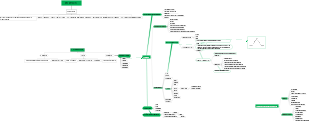
MindMap Gallery Poetics Aristotle
"Poetics" has incisive arguments and profound content. Although it is not long, it is of great magnanimity. It is undoubtedly a weighty and profound work written by everyone. "Poetics" explores a series of theoretical issues worthy of attention, such as the relationship between human nature and artistic imitation, the components that constitute tragic art, the function of tragedy, the combination of plots, the similarities and differences between tragedy and epic, etc. Certain ideas put forward in "Poetics" - such as the idea that the plot is an imitation of action and the idea that poetry criticism should not apply standards for commenting on politics - had valuable innovative significance at the time. This immortal work reflects the essence of a new and relatively mature poetic thought.
Edited at 2024-10-31 23:52:23This is a mind map about the annual work plan of the three pillars of human resources. The main contents include: strategic human resources planning, talent recruitment and allocation, employee performance management, employee training and development, employee relationships and communication, employee welfare and care, human resources information system construction, regulatory compliance and risk management, and organizational culture construction.
This is a mind map for the diagnosis and treatment of acute cerebral hemorrhage in patients with hemodialysis. The annual incidence of acute cerebral hemorrhage in patients with hemodialysis is (3.0~10.3)/1000, and the main cause is hypertension. Compared with non-dialysis patients, the most common bleeding site is the basal ganglia area, accounting for 50% to 80%; but the bleeding volume is large and the prognosis is poor, and the mortality rate is 27% to 83%. Especially for patients with hematoma >50ml, hematoma enlarged or ventricular hemorrhage on the second day after onset, the prognosis is very poor.
The logic is clear and the content is rich, covering many aspects of the information technology field. Provides a clear framework and guidance for learning and improving information technology capabilities.
This is a mind map about the annual work plan of the three pillars of human resources. The main contents include: strategic human resources planning, talent recruitment and allocation, employee performance management, employee training and development, employee relationships and communication, employee welfare and care, human resources information system construction, regulatory compliance and risk management, and organizational culture construction.
This is a mind map for the diagnosis and treatment of acute cerebral hemorrhage in patients with hemodialysis. The annual incidence of acute cerebral hemorrhage in patients with hemodialysis is (3.0~10.3)/1000, and the main cause is hypertension. Compared with non-dialysis patients, the most common bleeding site is the basal ganglia area, accounting for 50% to 80%; but the bleeding volume is large and the prognosis is poor, and the mortality rate is 27% to 83%. Especially for patients with hematoma >50ml, hematoma enlarged or ventricular hemorrhage on the second day after onset, the prognosis is very poor.
The logic is clear and the content is rich, covering many aspects of the information technology field. Provides a clear framework and guidance for learning and improving information technology capabilities.
Poetics
imitation
Imitation mimēsis does not refer to malicious distortion or vilification, nor does it mean copying life or eating prototypes alive, but a carefully organized artistic activity centered on the performance of characters.
There are three differences in imitation: medium, object, and method.
Art imitates through media
Impersonators represent people in action, and the characters they describe are either better than us, worse than us, or equal to us.
Comedy tends to show people who are worse than people today, tragedy tends to show people who are better than people today
People can use different expressions of the same medium to imitate the same object
The imitator must choose the object of imitation from the following three things: 1. Past or present events 2. Legends or imagined events 3. Things that should be like this or that
Poetry
There are two reasons for the emergence of poetry. 1. People are born with a unique ability to imitate and obtain their initial knowledge from imitation. 2. Everyone can get pleasure from the results of imitation.
The development of poetry forms two categories according to the different personalities of the authors. Some become heroic poets, and some become satirical poets.
The poet's duty is not to describe what has happened, but to describe what might have happened, that is, what might have happened on the basis of probability or necessity.
Because poetry tends to express universal things, while history tends to record specific events. The so-called "universal things" refer to things that a certain type of person may say or do based on the principle of probability or necessity.
In the parts of the work that are flat and relaxed and do not express character and thoughts, poets should work more on their words, because in the opposite case, too gorgeous words will obscure the expression of character and thoughts.
Errors related to the art of poetry itself can be divided into two categories: one is an error in the art itself, and the other is accidental.
If a poet intends to imitate something, but the result is that the imitation does not look like it due to lack of skill, this is the fault of the art itself.
If the choice is incorrect - describing the horse's two right legs moving simultaneously - the error lies in some other technique
First of all, the answer to some criticisms should start from the consideration of the poetic art itself.
Secondly, we need to clarify the type of error: is it an error in the art itself, or is it an accidental mistake?
People's criticisms are divided into five categories, that is, the poet describes things that are impossible, irrational, harmful, inconsistent and technically inappropriate.
Generally speaking, the following reasons can be used to justify the impossibility: the need to write poetry, the work should be higher than the prototype, and the ordinary people's point of view
Treat verses that contain contradictions as you would an opponent's rebuttal in a debate
tragedy
Later came tragedy and comedy, which were higher and more popular in form than satire and epic.
Tragedy - and comedy too - grew out of improvisation, went through many evolutions, and ceased development when it acquired its natural properties.
Comedy imitates bad people; these people are not evil-doing gangsters - funny is just an expression of ugliness
Tragedy has all the elements of epic, but epic does not have all the elements of tragedy
Tragedy must include the following six elements that determine its nature, namely plot, character, speech, thought, scene and aria
The combination of events is the most important of the ingredients, because tragedy imitates not people but actions and life.
People's happiness and misfortune are reflected in actions. The purpose of life is a certain action, not quality; people's character determines their quality, but their happiness depends on their actions.
Because the actions imitated by the plots obviously range from simple to complex, the plots also vary from simple to complex. By "simple action," as explained above, we mean coherence and unity, in which changes do not suddenly occur or find accompanying actions. The so-called "complex action" refers to an action in which changes include discovery or sudden change, or both.
A sudden change in the development of an action from one direction to the opposite direction
Discovery refers to the transformation from ignorance to knowledge
The best discoveries coincide with sudden changes, because they can inspire pity or fear
Suffering refers to actions that are destructive or involve pain
A well-conceived plot must be a single line, not a double line.
It should show a person's transition from a prosperous state to a defeated state. The reason why the character encounters misfortune is not because of his own evil, but because he has made some kind of mistake with serious consequences - the character of the person involved should be as mentioned above, and also It can be better, but it cannot be worse
Thought refers to the ability to express opinions appropriately and appropriately
Speech refers to the use of words to express meaning, and its potential is the same in poetry as in prose.
Fear and pity can come from the scene, or they can come from the construction of the plot itself. The latter method is better.
Tragic events happening between close relatives can cause people to feel fear and pity
overall
Whether it is a living animal or any whole composed of parts, if it is to appear beautiful, it must meet the following two conditions, that is, not only the arrangement of the various parts of the body must be appropriate, but also it must have a certain volume that is not obtained by accident. , because beauty depends on volume and order
From the perspective that the nature of things determines their limits, as long as the plot is clear and clear, the longer the page, the better, because length can accommodate as much beauty as possible.
If the presence or absence of an object in the whole does not make a significant difference, then it is not part of the whole.