MindMap Gallery Development and validation of a prognostic model for bleeding and ischemia in elderly patients with acute coronary syndrome and atrial fibrillation
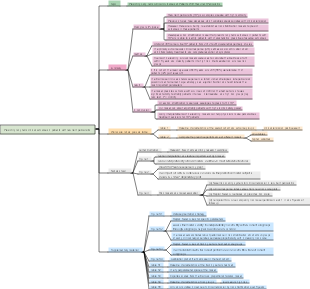
This is a mind map about the development and validation of a hemorrhage and ischemia prognostic model in elderly patients with acute coronary syndrome and atrial fibrillation. The main contents include: supplementary materials, tables are not as good as pictures, words are not as good as tables, abstract, and title.
Edited at 2024-10-29 15:50:10Chronische Herzinsuffizienz ist nicht nur ein Problem der Geschwindigkeit der Herzfrequenz! Es wird durch die Abnahme der Myokardkontraktion und der diastolischen Funktion verursacht, was zu unzureichendem Herzzeitvolumen führt, was wiederum Staus im Lungenzirkulation und Stau der systemischen Zirkulation verursacht. Aus den Ursachen sind die pathophysiologischen Prozesse der Herzinsuffizienz für Kompensationsmechanismen komplex und vielfältig. Durch die Kontrolle von Ödemen, die Reduzierung der Vorder- und Nachlast des Herzens, die Verbesserung der Herzkomfortfunktion und die Verhinderung und Behandlung grundlegender Ursachen können wir auf diese Herausforderung effektiv reagieren. Nur durch das Verständnis der Mechanismen und klinischen Manifestationen von Herzinsuffizienz und Beherrschung der Präventions- und Behandlungsstrategien können wir die Herzgesundheit besser schützen.
Ischämie-Reperfusionsverletzung ist ein Phänomen, dass sich die Zellfunktion und Stoffwechselstörungen und strukturelle Schäden verschlimmern, nachdem Organe oder Gewebe die Blutversorgung wiederhergestellt werden. Zu den Hauptmechanismen gehören eine erhöhte Erzeugung des freien Radikals, die Kalziumüberladung sowie die Rolle von mikrovaskulären und Leukozyten. Das Herz und das Gehirn sind häufige beschädigte Organe, die sich als Veränderungen des Myokardstoffwechsels und ultrastrukturelle Veränderungen, verringerte Herzfunktion usw. manifestieren usw. umfassen die Entfernung von freien Radikalen, die Verringerung der Kalziumüberlastung, die Verbesserung des Stoffwechsels und die Kontrolle von Reperfusionsbedingungen, z.
Stress ist ein unspezifischer Schutzmechanismus, der im Körper unter interner und externer Umweltstimulation auftritt, aber übermäßiger Stress kann zu internen Umweltstörungen und -krankheiten führen. Die Stressreaktion beinhaltet mehrere Systeme wie neuroendokrine, zelluläre und körperliche Flüssigkeiten, und seine Hauptmanifestationen umfassen emotionale Reaktionen, Veränderungen der kognitiven Fähigkeiten und Veränderungen des sozialen Verhaltens. Übermäßige Konzentration von Katecholamin ist einer der Hauptmechanismen des Stresses, die körperliche Erkrankungen wie Herz -Kreislauf -Erkrankungen, Stressgeschwüre und psychische Probleme wie traumatische Belastungsstörungen verursachen können. Das Verständnis des Stadiums und des Aufprallmechanismus von Stress kann dazu beitragen, Stress besser zu bewältigen und die körperliche und psychische Gesundheit aufrechtzuerhalten.
Chronische Herzinsuffizienz ist nicht nur ein Problem der Geschwindigkeit der Herzfrequenz! Es wird durch die Abnahme der Myokardkontraktion und der diastolischen Funktion verursacht, was zu unzureichendem Herzzeitvolumen führt, was wiederum Staus im Lungenzirkulation und Stau der systemischen Zirkulation verursacht. Aus den Ursachen sind die pathophysiologischen Prozesse der Herzinsuffizienz für Kompensationsmechanismen komplex und vielfältig. Durch die Kontrolle von Ödemen, die Reduzierung der Vorder- und Nachlast des Herzens, die Verbesserung der Herzkomfortfunktion und die Verhinderung und Behandlung grundlegender Ursachen können wir auf diese Herausforderung effektiv reagieren. Nur durch das Verständnis der Mechanismen und klinischen Manifestationen von Herzinsuffizienz und Beherrschung der Präventions- und Behandlungsstrategien können wir die Herzgesundheit besser schützen.
Ischämie-Reperfusionsverletzung ist ein Phänomen, dass sich die Zellfunktion und Stoffwechselstörungen und strukturelle Schäden verschlimmern, nachdem Organe oder Gewebe die Blutversorgung wiederhergestellt werden. Zu den Hauptmechanismen gehören eine erhöhte Erzeugung des freien Radikals, die Kalziumüberladung sowie die Rolle von mikrovaskulären und Leukozyten. Das Herz und das Gehirn sind häufige beschädigte Organe, die sich als Veränderungen des Myokardstoffwechsels und ultrastrukturelle Veränderungen, verringerte Herzfunktion usw. manifestieren usw. umfassen die Entfernung von freien Radikalen, die Verringerung der Kalziumüberlastung, die Verbesserung des Stoffwechsels und die Kontrolle von Reperfusionsbedingungen, z.
Stress ist ein unspezifischer Schutzmechanismus, der im Körper unter interner und externer Umweltstimulation auftritt, aber übermäßiger Stress kann zu internen Umweltstörungen und -krankheiten führen. Die Stressreaktion beinhaltet mehrere Systeme wie neuroendokrine, zelluläre und körperliche Flüssigkeiten, und seine Hauptmanifestationen umfassen emotionale Reaktionen, Veränderungen der kognitiven Fähigkeiten und Veränderungen des sozialen Verhaltens. Übermäßige Konzentration von Katecholamin ist einer der Hauptmechanismen des Stresses, die körperliche Erkrankungen wie Herz -Kreislauf -Erkrankungen, Stressgeschwüre und psychische Probleme wie traumatische Belastungsstörungen verursachen können. Das Verständnis des Stadiums und des Aufprallmechanismus von Stress kann dazu beitragen, Stress besser zu bewältigen und die körperliche und psychische Gesundheit aufrechtzuerhalten.
Development and validation of a prognostic model for bleeding and ischemia in elderly patients with acute coronary syndrome and atrial fibrillation
topic
Development and Validation of Prognostic Models for Bleeding and Ischemia in Elderly Patients With Comorbid Acute Coronary Syndrome and Atrial Fibrillation
summary
Background/Purpose
Acute coronary syndrome and atrial fibrillation are common cardiovascular diseases in the elderly
Patients with comorbidities face increased risk of bleeding and ischemia
Prognostic models quantifying these risks in this special population are lacking
method
In this retrospective cohort study, 1851 patients (≥65 years old) with acute coronary syndrome and atrial fibrillation from 2 hospitals in China were included in the development cohort (1252 cases) and 2 external validation cohorts (284 cases and 315 cases). example)
During 1 year of follow-up, 96 Bleeding Academic Research Consortium type 3 or 5 bleeding events and 245 thromboembolic events were observed
In the development cohort, the concordance index ranged from 0.737 to 0.845 for bleeding and 0.723 to 0.777 for ischemia at 3, 6, and 12 months
Calibration curve and decision curve analysis demonstrate adequate calibration and clinical utility
Consistency index in the validation cohort ranged from 0.679 to 0.809
Subgroup analyzes focusing on anticoagulants and antithrombotic therapy were performed and revealed similar discrimination and calibration
Kaplan-Meier curves show significant differences (log-rank P<0.001)
These models outperform traditional models in terms of consistency index, comprehensive discrimination improvement, and net reclassification improvement
result
Provides 2 robust prognostic models with readily available clinical factors for predicting bleeding and ischemia in elderly patients with acute coronary syndrome and atrial fibrillation
Provides online calculators to facilitate individualized risk assessment and clinical decision-making
in conclusion
The web-based calculator was developed as an easy-to-use practical forecasting tool
The model demonstrated excellent performance, clinical utility, and risk stratification capabilities. Compared with existing prognostic models, our newly developed model significantly improves the prediction performance at different time points
Recommended clinical applications include the use of models to help determine the optimal benefit-risk ratio of antithrombotic treatment regimens to reduce bleeding and thrombotic risk in older patients with acute coronary syndrome and atrial fibrillation.
Words are not as good as table
Table 1
Baseline Characteristics of Elderly Patients with ACS and AF in Development and Validation Cohorts
Table 2
Comprehensive discriminant improvement and net reclassification improvement on 60-month all-cause mortality by adding NT-proBNP and ST2 to the model
Not as shown
Figure 1
Predictive model setup process
Figure 2
Clinical predictor selection using minimum absolute shrinkage and selection operator analysis with 10-fold cross-validation
A: Coefficient profile of LASSO regression model for BARC type 3 or 5 bleeding events.
B: Cross-validation error plot for identifying potential predictors of bleeding
C: Coefficient profile of ischemic LASSO regression model
D: Cross-validation error plot for identifying potential predictors of ischemia.
Figure 3
Nomogram, time-dependent receiver operating characteristic curve, and area under the ROC curve
A, B: Nomogram predicting bleeding (A) and ischemia probability (B)
C, D: Time-dependent ROC curves for hemorrhage (C) and ischemia (D) models at 3, 6, and 12 months
Figure 4
One-year Kaplan-Meier cumulative event curves for hemorrhage and ischemia in the development cohort
A: BARC type 3 or 5 bleeding
B: ischemia
Supplementary material
Table S1
Baseline characteristics of patients with and without BARC type 3 or 5 bleeding or thromboembolic events
Table S2
Baseline characteristics of elderly patients with ACS and AF in the temporal validation cohort
Table S3
variable assignment
Table S4
Univariate and multivariate Cox regression analysis of bleeding-related predictors
Table S5
Univariate and multivariate Cox regression analysis of ischemia-related predictive factors
Table S6
Performance of bleeding models in DAT and TAT subgroups of patients in 3 types of validation (discrimination)
Table S7
Performance of bleeding models in 3 validations (degrees of calibration) of patients in DAT and TAT subgroups
Table S8
Performance of DAT and TAT subgroup ischemia models in 3 validations (differences)
Table S9
Performance of DAT and TAT subgroup ischemia models in 3 validations (calibrations)
Table S10
Risk stratification of bleeding scores in elderly ACS patients with atrial fibrillation
Table S11
Risk stratification of ischemia score in elderly ACS patients with atrial fibrillation
Table S12
Comparing the ability of a newly developed nomogram to differentiate bleeding with existing prognostic models in a development cohort
Table S13
Comparing the ability of a newly developed nomogram to differentiate ischemia from existing prognostic models in a development cohort
Table S14
Reclassification statistics for newly developed bleed maps in development cohorts
Table S15
Reclassification statistics of newly developed ischemic cerebrovasculograms in developmental cohorts
Figure S1
Patient enrollment flow chart
Figure S2
Receiver operating characteristic (ROC) curve and area under the ROC curve (AUC) over time. ROC curves over time for hemorrhage (A) and ischemia (B) models at 3, 6, and 12 months in the spatial validation cohort. ROC curves over time for hemorrhage (C) and ischemia (D) models at 3, 6 and 12 months in the temporal validation cohort
Figure S3
Calibration curves assessing hemorrhage map accuracy at 3, 6, and 12 months in development (A-C), spatial validation (D-F), and temporal validation (G-I) cohorts
Figure S4
Bleeding nomogram decision curve analysis at 3, 6 and 12 months in the development (A), spatial validation (B) and temporal validation (C) cohorts
Figure S5
Calibration curves assessing ischemia map accuracy at 3, 6, and 12 months in developmental (A-C), spatial validation (D-F), and temporal validation (G-I) cohorts
Figure S6
Decision curve analysis of ischemia maps at 3, 6, and 12 months in the developmental (A), spatial validation (B), and temporal validation (C) cohorts
Figure S7
Use X-tile to determine the optimal cutoff point for hemorrhage (A) and ischemia (B). One-year Kaplan-Meier cumulative event curves for BARC type 3 or 5 bleeding (C) and ischemia (D) in the spatial validation cohort. One-year Kaplan-Meier cumulative event curves for BARC type 3 or 5 bleeding (E) and ischemia (F) in the temporal validation cohort
Figure S8
Decision curve analysis of newly developed nomogram and classic prognostic risk scores at different time points