MindMap Gallery Learning sequence of BEV sensing directions
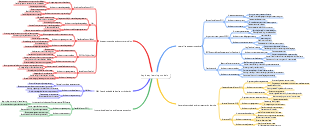
This is a mind map about the learning sequence of BEV perception direction. The main contents include: summary, 9. Project practice, 8. Embedded system and hardware development, 7. Computer graphics and BEV perception, 6. SLAM and multi-tasking Sensor fusion, 5. Deep learning and convolutional neural network (CNN), 4. Machine learning basics, 3. Linear algebra and spatial geometry, 2. Computer vision basics, 1. Programming basics and tool usage.
Edited at 2024-10-19 15:24:38Este modelo mostra a estrutura e a função do sistema reprodutivo na forma de um mapa mental. Ele apresenta os vários componentes dos órgãos genitais internos e externos e classifica o conhecimento claramente para ajudá -lo a se familiarizar com os principais pontos do conhecimento.
Este é um mapa mental sobre a interpretação e o resumo do e-book do campo de relacionamento, conteúdo principal: visão geral da interpretação da essência e visão geral do e-book do campo de relacionamento. "Campo de relacionamento" refere -se à complexa rede interpessoal na qual um indivíduo influencia outras pessoas através de comportamentos e atitudes específicos.
Este é um mapa mental sobre livros contábeis e registros contábeis.
Este modelo mostra a estrutura e a função do sistema reprodutivo na forma de um mapa mental. Ele apresenta os vários componentes dos órgãos genitais internos e externos e classifica o conhecimento claramente para ajudá -lo a se familiarizar com os principais pontos do conhecimento.
Este é um mapa mental sobre a interpretação e o resumo do e-book do campo de relacionamento, conteúdo principal: visão geral da interpretação da essência e visão geral do e-book do campo de relacionamento. "Campo de relacionamento" refere -se à complexa rede interpessoal na qual um indivíduo influencia outras pessoas através de comportamentos e atitudes específicos.
Este é um mapa mental sobre livros contábeis e registros contábeis.
Learning sequence of BEV sensing directions
1. Programming basics and tool usage
Learn a programming language (Python or C): This is the basis for all other learning. It is recommended that you take the time to master a programming language first, especially Python, because it is widely used in the fields of computer vision and deep learning.
Tool usage: Install and become familiar with relevant tools and libraries, such as OpenCV, TensorFlow, PyTorch, MATLAB, etc. These tools will be used frequently in subsequent studies.
Time recommendation: 1-2 months
2. Basics of Computer Vision
Image processing: Learn basic image processing techniques, such as filtering, edge detection, and feature extraction. Do some hands-on work with OpenCV.
Camera calibration and geometric transformation: Master geometric techniques such as camera calibration, projection and perspective transformation. Understanding these contents is crucial to subsequent generation of BEV views.
Stereo Vision and Depth Perception: Learn how to calculate depth information through stereo vision, and further understand the relationship between cameras and three-dimensional space.
Time recommendation: 2-3 months
3. Linear algebra and space geometry
Matrix operations and transformations: Learn the basics of linear algebra, including matrix operations, eigenvalues, eigenvectors, etc., which is very important for understanding geometric transformations in computer vision.
Spatial geometry: Master the principles of coordinate transformation, rotation, projection, etc. in three-dimensional geometry. This knowledge is indispensable when generating BEV views.
Time recommendation: 2 months (study in parallel with Computer Vision Fundamentals)
4. Basics of Machine Learning
Basic algorithms: Learn basic knowledge such as supervised learning and unsupervised learning, and understand basic algorithms such as classification and regression.
Hands-on: Apply machine learning knowledge in image classification or object detection projects to further understand how algorithms are used for image understanding.
Time recommendation: 2-3 months
5. Deep learning and convolutional neural network (CNN)
Basics of deep learning: Learn the basic structure and principles of neural networks, and master optimization methods such as backpropagation and gradient descent.
Convolutional Neural Network (CNN): Focus on learning CNN architecture for image processing, such as ResNet, YOLO, Faster R-CNN, etc. You can perform practical operations in conjunction with the target detection project to understand how to use these models for target detection and classification in BEV.
Time recommendation: 3-4 months
6. SLAM and multi-sensor fusion
SLAM basics: Learn the basic theory and common algorithms of simultaneous positioning and map construction (SLAM), and understand how to perform positioning and map construction in a dynamic environment.
Multi-sensor fusion: Learn how to fuse data from multiple sensors such as cameras and lidar to improve the accuracy and robustness of environmental perception.
Time recommendation: 3-4 months
7. Computer graphics and BEV perception
Projection and Inverse Perspective Transformations: Learn more about how to transform ordinary 2D images into bird's-eye views. Master the geometric principles of inverse perspective transformation.
Implementation of BEV awareness: Learn how to generate BEV views from multiple cameras and solve problems such as occlusion and perspective splicing. High-quality BEV views can be generated using deep learning methods such as Lift-Splat-Shoot, etc.
Time recommendation: 3 months
8. Embedded system and hardware development
Embedded platforms: Learn how to develop AI systems on embedded platforms such as NVIDIA Jetson and Intel Movidius.
Hardware integration: Learn to integrate cameras, lidar and other sensors with embedded systems to build a real-time BEV perception system.
Time recommendation: 2-3 months
9. Project practice
Build a small BEV perception system: Various modules of learning can be integrated together to build a complete BEV perception system, such as generating a bird's-eye view of the environment in autonomous driving or drone projects.
Participate in open source projects: Learn practical experience and apply the knowledge learned to real problems by participating in related projects in the open source community.
Time suggestions: throughout the entire learning process
Summarize
Preliminary basics (programming, vision, mathematics): 5-6 months
Mid-term core content (machine learning, deep learning, SLAM, multi-sensor fusion): 6-8 months
Later application (embedded, project practice): 2-4 months
The entire learning process takes approximately 12-18 months, and you can flexibly adjust it according to your own time schedule. Try to complete some projects or experiments at each stage, which can make learning more efficient and deepen understanding.