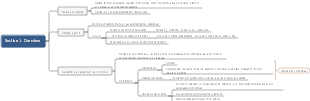
MindMap Gallery Chapter 9 Stress
The stress mind map of Chapter 9 of the Sick Student summarizes and organizes the knowledge points, covering all core contents, which is very convenient for everyone to learn. Suitable for exam review and preview to improve learning efficiency. Hurry up and collect it to learn together!
Edited at 2024-10-13 15:37:49Ceci est le chapitre 5 du livre de l'enseignant "This Is Auth to Read", qui parle principalement de ces aspects: ① L'importance de la capacité d'apprentissage ②Comment ajouter un contexte à l'information ③Comment distinguer les connaissances et les informations Je ne vous précipite pas pour remettre en question et défier ⑤Comment utiliser des notes collantes pour mettre à niveau votre capacité d'apprentissage ⑥Pour pourquoi chasser les "biens secs" un pseudo-apprentissage?
Afin d'aider tout le monde à utiliser Deepseek plus efficacement, une collection de Mind Map Deepseek Guide a été spécialement compilée! Cette carte mentale résume le contenu principal: liens liés à Yitu, analyse de profil DS, comparaison des routes technologiques Deepseek et ChatGpt, Guide de déploiement du modèle Deepseek et Qwen, comment gagner plus d'argent avec Deepseek, comment jouer Deepseek, Deepseek Scientific Research Applications Mows Inside Attendez, vous permettant de saisir rapidement l'essence de l'interaction AI. Qu'il s'agisse de la création de contenu, de la planification du plan, de la génération de code ou de l'amélioration de l'apprentissage, Deepseek peut vous aider à atteindre deux fois le résultat avec la moitié de l'effort!
Il s'agit d'une carte mentale sur les 30 instructions de niveau d'alimentation de Deepseek.
Ceci est le chapitre 5 du livre de l'enseignant "This Is Auth to Read", qui parle principalement de ces aspects: ① L'importance de la capacité d'apprentissage ②Comment ajouter un contexte à l'information ③Comment distinguer les connaissances et les informations Je ne vous précipite pas pour remettre en question et défier ⑤Comment utiliser des notes collantes pour mettre à niveau votre capacité d'apprentissage ⑥Pour pourquoi chasser les "biens secs" un pseudo-apprentissage?
Afin d'aider tout le monde à utiliser Deepseek plus efficacement, une collection de Mind Map Deepseek Guide a été spécialement compilée! Cette carte mentale résume le contenu principal: liens liés à Yitu, analyse de profil DS, comparaison des routes technologiques Deepseek et ChatGpt, Guide de déploiement du modèle Deepseek et Qwen, comment gagner plus d'argent avec Deepseek, comment jouer Deepseek, Deepseek Scientific Research Applications Mows Inside Attendez, vous permettant de saisir rapidement l'essence de l'interaction AI. Qu'il s'agisse de la création de contenu, de la planification du plan, de la génération de code ou de l'amélioration de l'apprentissage, Deepseek peut vous aider à atteindre deux fois le résultat avec la moitié de l'effort!
Il s'agit d'une carte mentale sur les 30 instructions de niveau d'alimentation de Deepseek.
Chapter 9 Stress
Overview (Mastery)
Stress refers to the non-specific systemic reaction of the body under the stimulation of various internal and external environmental factors, also called stress response.
Features
non-specific
After lung infection or fracture, it causes tension, anxiety, blood redistribution, and increased heart rate (not directly related to the irritating factors)
specificity
Such as trauma and fractures causing pain, bleeding, and movement disorders Lung infection causing coughing and difficulty breathing
Defense and damage coexist
benign stress
Stress is an adaptive change of the body, which can improve the body's adaptability and is beneficial to the body's fight or flight.
adverse stress
Stress that is too strong or lasts too long is harmful to the body and can lead to stress diseases.
stressor
Definition: Various stimuli that can cause stress reactions
somatic contingency
external environmental factors
physical factors
chemical factors
biological factors
Internal environmental factors
Dehydration, anemia, shock
psychological stressors
social and psychological factors
Features
reach sufficient strength
Different action time, different stress response
Have individual differences (psychological quality, personality characteristics)
General Adaptation Syndrome (GAS)
Stressors continue to act on the body, and stress manifests itself as a dynamic and continuous process, eventually leading to internal environment disorder and disease.
installment
alert period
Characteristics: The reaction occurs quickly and lasts for a short time. The sympathoadrenal medulla is excited and catecholamines are secreted continuously.
Meaning: The body is in the optimal mobilization period for its protective defense mechanism.
Resistance period
Features: Decreased excitability of the sympathoadrenal medullary system, excitement of the hypothalamic-pituitary-adrenocortical system, and increased secretion of glucocorticoids (GC)
Significance: The defense reserve capacity is reduced, and the body's adaptability and resistance are improved.
exhaustion stage
Features: GC secretion continues, the number of GC receptors decreases, and obvious internal environment disorder occurs
Significance: exhaustion of the body's resistance and disorder of the internal environment, causing disease, organ dysfunction, and death.
Overview
The three stages are a continuous process
does not necessarily appear in sequence
Most stress only causes changes in the alert period and resistance period.
Basic performance of stress response (mastery)
stress
neuroendocrine response
Locus coeruleus-sympathetic-adrenal medullary system (LSAM)
composition
The central site of LSAM in the locus coeruleus
Basic effect
central effect
Excited, alert, nervous, anxious
peripheral effect
Sympathetic nervous excitement
Increased norepinephrine
adrenal medulla excitement
Increased secretion of catecholamines
The significance of defense compensation (the effect of catecholamines on the body)
Improve central nervous system alertness and response sensitivity
Enhanced heart function
β2 positive myocardial effect
Heart, brain, and skeletal muscles receive adequate blood supply
α Constriction of skin blood vessels, abdominal visceral blood vessels, and renal blood vessels
β2 coronary arteries, skeletal muscle vasodilation
The caliber of cerebral blood vessels does not change much, ensuring blood supply to the brain
Improve alveolar ventilation and increase oxygen uptake
β2, bronchiectasis
Promote material metabolism and meet body needs
Promote the decomposition of glycogen and fat, providing a material basis for body metabolism (Decreased insulin secretion and increased glucagon secretion)
Promote the secretion of other hormones
Such as adrenocortical hormones, glucagon, growth hormone, thyroxine, renin, erythropoietin
Inhibit insulin secretion
Side effects of catecholamines on the body
Continuous contraction of small blood vessels in abdominal viscera
stress ulcer
Peripheral small blood vessels continue to contract and blood pressure increases
stress-induced hypertension
Increase body oxygen consumption and energy metabolism
Increased cardiac load, leading to myocardial hypoxia and myocardial infarction
Increased blood coagulation
Stress is prone to myocardial infarction and cerebral infarction
Increased oxygen free radicals
Damage cell membranes, organelles, and DNA. speed up aging
hypothalamic-pituitary-adrenocortical system (HPAC)
basic structure
paraventricular nucleus of hypothalamus
Central point of the HPAC axis
adenohypophysis
adrenal cortex
Basic effects during stress
central effect
Increased corticotropin-releasing hormone (CRH)
Moderate amount: excitement and pleasure
Excessive: depression, anxiety, anorexia, decreased learning and memory
Increased adrenocorticotropic hormone (ACTH)
peripheral effect
Increased glucocorticoids (GC)
The defense and compensatory significance of increased GC secretion during stress
Promote the increase of blood sugar and maintain blood pressure
Permitted Effect: Increases the sensitivity of the cardiovascular system to catecholamines (CA)
Anti-cell damage Stabilize cell membranes and lysosomal membranes
Inhibits phospholipase A2 activity
Anti-inflammatory and anti-allergic
Inhibits neutrophil activation and production of pro-inflammatory mediators
Adverse effects of increased GC
Suppress immune response, reduce immunity, and become susceptible to infection
Endocrine disorders
Inhibit growth and development
Inhibit growth and development, short stature
Inhibit thyroid axis
Decreased thyroid secretion
suppress gonadal system
Sexual dysfunction, irregular menstruation
Promote protein breakdown
Affects wound healing
Abnormal behavior
Depression, pica, suicidal tendencies
cellular humoral response
acute phase reaction
Under the action of stressors such as infection, inflammation, and tissue damage, the body rapidly increases the concentration of certain proteins in the plasma. This reaction is called an acute phase reaction.
Acute phase response protein (APP)
concept
A general term for proteins produced during acute phase reactions, synthesized by liver cells
Basic functions
Inhibit protease activity
Reduce tissue damage
alpha1 antitrypsin inhibitor, alpha1 antichymotrypsin inhibitor
Anti-infection and anti-damage
Remove foreign matter and necrotic components when inflammatory tissue is damaged,
CRP (C-reactive protein), complement C3
Regulate coagulation and fibrinolysis
Promote coagulation and resist bleeding
increased clotting factors
Integrate transportation functions
Scavenge free radicals and remove excess copper ions
Ceruloplasmin, haptoglobin, hemopexin
cellular stress response
Hot shock protein (HSP) Also known as molecular partner
Refers to a group of proteins newly synthesized or increased by cells under the action of high temperature (heat stress) or other stressors.
Nature: Non-secreted protein, plays a role in cells
biological properties
induced non-specific
breadth of existence
structural conservatism
function within cells
Basic functions (molecular chaperone)
under physiological conditions
Participate in protein folding and translocation
under pathological conditions
Repair damaged proteins during stress and help them renature
Significance: Can enhance tolerance to multiple stressors
Metabolic changes in body function (understanding)
The main structural basis that affects the body's emotions
limbic system
Stress diseases and stress-related diseases (mastery)
Stress disorders (causes)
Stress ulcers (tarry stools, upper gastrointestinal bleeding)
Mechanism of occurrence (passed)
Gastric mucosal ischemia (basic condition)
Reverse diffusion of hydrogen ions from the gastric cavity to the mucosa (necessary condition)
other
Bile reflux (damage to gastric mucosal barrier)
Oxygen free radicals damage mucosal epithelium
Stress-related disorders (triggers)
Stress and mental illness
PTSD
Delayed and long-lasting mental disorder syndrome after severe psychological trauma
Three core symptoms
Repeatedly replaying traumatic experiences
avoidance and numbness
Pathologically increased alertness
Inspection point
The hormone most released during stress
Catecholamines
The most important hormone produced by the body during stress
Glucocorticoids