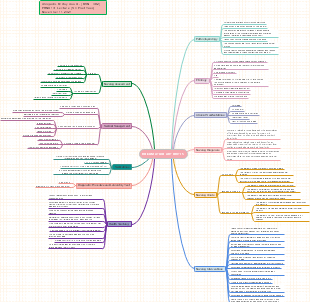
MindMap Gallery Rheumatoid arthritis (RA)
Blood routine: white blood cells, red blood cells, hemoglobin, platelets, erythrocyte sedimentation rate (ESR), introducing the causes of diseases, Diagnostic basis, differential diagnosis, mechanism, pathological changes, treatment, prognosis, etc.
Edited at 2024-12-04 14:04:39這是一篇關於把時間當作朋友的心智圖,《把時間當作朋友》是一本關於時間管理和個人成長的實用指南。作者李笑來透過豐富的故事和生動的例子,教導讀者如何克服拖延、提高效率、規劃未來等實用技巧。這本書不僅適合正在為未來奮鬥的年輕人,也適合所有希望更好地管理時間、實現個人成長的人。
This is a mind map about treating time as a friend. "Treating Time as a Friend" is a practical guide on time management and personal growth. Author Li Xiaolai teaches readers practical skills on how to overcome procrastination, improve efficiency, and plan for the future through rich stories and vivid examples. This book is not only suitable for young people who are struggling for the future, but also for everyone who wants to better manage time and achieve personal growth.
這七個習慣相輔相成,共同構成了高效能人士的核心特質。透過培養這些習慣,人們可以提升自己的領導力、溝通能力、團隊協作能力和自我管理能力,從而在工作和生活中取得更大的成功。
這是一篇關於把時間當作朋友的心智圖,《把時間當作朋友》是一本關於時間管理和個人成長的實用指南。作者李笑來透過豐富的故事和生動的例子,教導讀者如何克服拖延、提高效率、規劃未來等實用技巧。這本書不僅適合正在為未來奮鬥的年輕人,也適合所有希望更好地管理時間、實現個人成長的人。
This is a mind map about treating time as a friend. "Treating Time as a Friend" is a practical guide on time management and personal growth. Author Li Xiaolai teaches readers practical skills on how to overcome procrastination, improve efficiency, and plan for the future through rich stories and vivid examples. This book is not only suitable for young people who are struggling for the future, but also for everyone who wants to better manage time and achieve personal growth.
這七個習慣相輔相成,共同構成了高效能人士的核心特質。透過培養這些習慣,人們可以提升自己的領導力、溝通能力、團隊協作能力和自我管理能力,從而在工作和生活中取得更大的成功。
Rheumatoid arthritis (RA)
Pathological changes
Synovial inflammation: synovial cell proliferation and pannus formation
Cartilage and bone destruction: leading to joint deformity and loss of function
Fibrosis: Fibrosis of tissues around joints, limiting joint movement
treat
Drug treatment: methotrexate, sulfasalazine, folic acid, biological agents (such as Yisaipu)
Physical therapy: physiotherapy, joint protection
Surgical treatment: considered when medications and physical therapy fail
The forgetting curve shows that after learning, the speed of forgetting is fast first and then slows down, and the speed of forgetting is fastest in the early stage of learning.
prognosis
Long-term management: Long-term drug treatment and regular review are required
Quality of life: Improves with treatment, but relapse is possible
mechanism
Immune response: Autoimmune cells attack joint tissue
1. Predict what the other party is going to say. Why is this worth discussing?
2. What is the logic behind recording the other party’s explanation?
3. What questions and inspirations do I have from this discussion?
4. What thinking models can I distill from the other party’s practices, ideas, or inspiration points?
5. Discuss inspiration: What can become the next steps? How to apply them in life?
Inflammatory response: causes joint inflammation and destruction
Differential diagnosis
Most recommended
Osteoarthritis: usually affects older adults with joint pain and stiffness but no systemic symptoms
Gout: acute attack, joint redness, swelling, heat and pain, but usually hyperuricemia
Systemic lupus erythematosus: multi-system involvement but joint symptoms similar to RA
Diagnosis basis
Symptoms: joint swelling and pain, morning stiffness, limited joint function
laboratory tests
Blood routine: white blood cells, red blood cells, hemoglobin, platelets, erythrocyte sedimentation rate (ESR)
Rheumatoid factor (RF) is significantly elevated
Elevated C-reactive protein (CRP), Significantly elevated anti-cyclic citrullinated peptide (CCP) antibodies
Antinuclear antibody (ANA) positive
Imaging examination
X-ray shows reduced joint bone density, narrow joint space, and soft tissue swelling
cause of disease
Genetic factors: family history
Environmental factors: possible triggers such as infection, stress, etc.
Immune factors: Abnormal autoimmune response
subtopic