 Wondershare EdrawMind
MindMap Gallery Primary school fourth grade science textbook volume 1
- 38
Primary school fourth grade science textbook volume 1
Summary and arrangement of science knowledge points for the fourth grade of primary school. It is very detailed and comes with exercises and answers. It is a good helper for children to learn. It is full of useful information. Students in need can save it.
Edited at 2024-11-29 10:21:17
- 把時間當作朋友
這是一篇關於把時間當作朋友的心智圖,《把時間當作朋友》是一本關於時間管理和個人成長的實用指南。作者李笑來透過豐富的故事和生動的例子,教導讀者如何克服拖延、提高效率、規劃未來等實用技巧。這本書不僅適合正在為未來奮鬥的年輕人,也適合所有希望更好地管理時間、實現個人成長的人。
- Treat time as a friend
This is a mind map about treating time as a friend. "Treating Time as a Friend" is a practical guide on time management and personal growth. Author Li Xiaolai teaches readers practical skills on how to overcome procrastination, improve efficiency, and plan for the future through rich stories and vivid examples. This book is not only suitable for young people who are struggling for the future, but also for everyone who wants to better manage time and achieve personal growth.
- 高效能人士的七個習慣
這七個習慣相輔相成,共同構成了高效能人士的核心特質。透過培養這些習慣,人們可以提升自己的領導力、溝通能力、團隊協作能力和自我管理能力,從而在工作和生活中取得更大的成功。
Primary school fourth grade science textbook volume 1
- 把時間當作朋友
這是一篇關於把時間當作朋友的心智圖,《把時間當作朋友》是一本關於時間管理和個人成長的實用指南。作者李笑來透過豐富的故事和生動的例子,教導讀者如何克服拖延、提高效率、規劃未來等實用技巧。這本書不僅適合正在為未來奮鬥的年輕人,也適合所有希望更好地管理時間、實現個人成長的人。
- Treat time as a friend
This is a mind map about treating time as a friend. "Treating Time as a Friend" is a practical guide on time management and personal growth. Author Li Xiaolai teaches readers practical skills on how to overcome procrastination, improve efficiency, and plan for the future through rich stories and vivid examples. This book is not only suitable for young people who are struggling for the future, but also for everyone who wants to better manage time and achieve personal growth.
- 高效能人士的七個習慣
這七個習慣相輔相成,共同構成了高效能人士的核心特質。透過培養這些習慣,人們可以提升自己的領導力、溝通能力、團隊協作能力和自我管理能力,從而在工作和生活中取得更大的成功。
- Recommended to you
- Outline
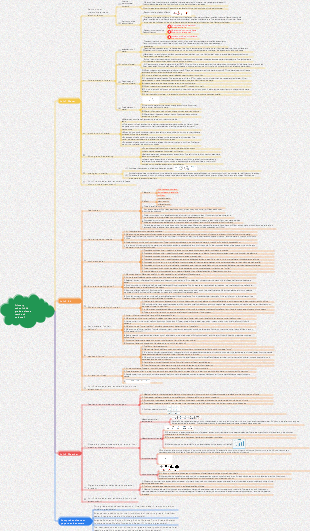
Primary school fourth grade science textbook volume 1
一、 Unit 1 Sound
1. listen to the sound
1. The sound of wind, rain, thunder, etc. are sounds of nature.
2. Singing, reading, the roar of machines, etc. are the sounds produced by human production and life.
3. Dogs barking, cats meowing, horses neighing, etc. are the sounds of animals.
4. The notes "1"2""3" in the music are arranged in ascending order of sound as "3""2""1".
5. A tuning fork is a sound-producing instrument used to adjust musical instruments and test pitch. There are letters and numbers on the tuning fork. The letters represent the pitch and the numbers represent the number of times the tuning fork vibrates per second.
6. We often use high, low, strong, weak, pleasant, and harsh to describe sounds. For example, the sound of thunder is stronger and the sound of rain is weaker; the sound of children is higher than that of adults; the sound of birds is more pleasant, and the roar of machines is more harsh.
7. The sound changes in pitch, intensity, and intensity.
8. "Listen to the Sound" Exercises
2. How objects make sounds
1. Stretch the rubber band, press the rubber band, and rub the rubber band with your hands. The rubber band will not vibrate and make no sound.
2. Gently pluck the rubber band and pull it laterally. The rubber band will vibrate and make a sound.
3. Sound is produced by the vibration of objects.
4. Gently touch the sounding steel ruler, drum surface, musical instrument and other objects with your hands, and you will feel the objects vibrating.
5. When you play the recorder, the air vibrates.
6. Our ability to make sounds mainly relies on the vocal cords in the throat. The tighter the vocal cords, the higher the sound. When speaking, we can feel the vibration of the vocal cords by gently placing our hands on the Adam's apple.
7. "How do objects make sounds" exercises
3. how sound travels
1. As long as the drum sound is loud enough, we can hear it from any position in the classroom, which means that the sound spreads in all directions.
2. Sound propagates in the form of waves. When sound waves encounter an object, it will cause the object to vibrate.
3. Pull out the air in the glass cover. The sound of the alarm clock in the glass cover gradually weakens and is finally no longer audible. This shows that air can transmit sound, but vacuum cannot.
4. When you put your ear against the tabletop, you can hear the sound of scratching the tabletop more clearly, indicating that the tabletop can transmit sound.
5. When the struck tuning fork is immersed in water, we can hear the sound produced by the tuning fork, indicating that water can transmit sound.
6. When an object vibrates, it will also cause vibrations in the surrounding materials, and sound will be transmitted from one place to another through these materials.
7. Sound can propagate in gases, liquids, and solids, but sound cannot propagate in vacuum.
8. Sound propagates at different speeds in solids, liquids, and gases, usually solid > liquid > gas.
9. When making the "earth call", tighten the string. The "Russian Telephone" illustrates that wires can carry sound.
10. Exercises on "How Sound Travels"
4. how we hear sounds
1. The human ear is composed of three parts: the outer ear, the middle ear, and the inner ear. The external ear includes the auricle and the external auditory canal. The middle ear includes the ossicles and eardrum. The inner ear includes the cochlea and auditory nerve.
The function of the outer ear: to collect and transmit sound waves.
The role of the middle ear: to generate and transmit vibrations.
The inner ear's function: generates signals and transmits them to the brain.
2. The function of the ear is to collect sound waves. We can use paper speakers to simulate the ears, and the sounds heard with paper speakers will be clearer and louder.
3. The function of the eardrum is to produce vibrations. It is characterized by being very thin and elastic, and we can use balloon skin to simulate the eardrum.
4. How we hear sound: object vibration → air vibration → drum glue vibration → ossicles transmit vibration to the inner ear → auditory nerve → brain.
5. The head on the stethoscope can feel the vibration; the rubber tube on the stethoscope is equivalent to the external auditory canal, which can better transmit sound.
6. Ways to protect our hearing: stay away from noise, control the sound of objects, and block the spread of noise.
7. If you put your hands behind your ears and face the direction of the sound, you will enlarge the auricle, so that the sound we hear will be clearer.
8. "How do we hear sounds" exercises
5. The strength and weakness of the voice
1. The strength of sound can be described by volume. The greater the amplitude of the object's vibration, the stronger the sound; the smaller the amplitude of the object's vibration, the weaker the sound. Unit: decibel (dB).
2. To make the same drum produce sounds of different strengths and weaknesses, you can change the intensity of the sound produced by the drum by tapping it lightly and hitting it hard. If you tap the drum surface lightly, the vibration amplitude will be small, and the sound will be weak. If you tap it hard, the sound will be weak. The greater the vibration amplitude of the drum head, the stronger the sound.
3. In daily life, we usually refer to sounds of different severity as different strengths of sounds.
4. Gently move the steel ruler. The ruler will vibrate up and down in a small amplitude and make a weak sound. On the contrary, the ruler will vibrate in a large amplitude and make a strong sound.
5. Use different forces to pull apart the same length of rubber band. The greater the force, the greater the vibration of the rubber band and the stronger the sound. The smaller the force, the smaller the vibration amplitude of the rubber band and the weaker the sound.
6. The farther the ear is from the sound source, the smaller the vibration amplitude of the tympanic membrane, and the weaker the sound heard; the closer the ear is to the sound source, the greater the vibration amplitude of the tympanic membrane, and the stronger the sound heard.
7. Hang a small and light ball close to the tuning fork to see the changes in the vibration amplitude of the tuning fork more clearly. The farther the ball is bounced, the greater the amplitude of the tuning fork's vibration; the closer the ball is bounced, the smaller the amplitude of the tuning fork's vibration.
8. "Strongness and Weakness of Sound" Exercises
6. high and low sound
1. The level of sound can be described by pitch.
2. The level of sound is related to the speed (frequency) of the object's vibration: the faster the object vibrates, the higher the sound it makes; the slower the object vibrates, the lower the sound it makes. Unit Hertz (Hz)
3. We can study the relationship between the height of sound and the speed of object vibration by constantly changing the length of the steel ruler extending out of the table and using the same force to move the steel ruler. The longer the ruler extends out of the table, the slower the ruler vibrates and the lower the sound it makes; the shorter the ruler extends out of the table, the faster the ruler vibrates and the higher the sound it makes.
4. Tap glasses with different amounts of water. The less water, the higher the sound. The more water, the lower the sound.
5. There is a rubber band, and it is plucked with the same force. The tighter the rubber band is, the higher the sound will be, and the looser the rubber band will be, the lower the sound will be.
6. When doing experiments, each experiment should be repeated three times to avoid chance and make the experimental results more accurate.
7. The pitch of the sound is related to the length of the sound emitter. Comparing nails with the same thickness but different lengths, the longer the nail, the slower the vibration and the lower the sound; the shorter the length, the faster the vibration and the higher the sound.
8. The pitch of the sound is related to the thickness of the sound-emitting body. Comparing iron pipes with the same length but different thicknesses, the thicker the iron pipe, the slower the vibration and the lower the sound; the thinner the iron pipe, the faster the vibration and the higher the sound.
9. We can divide the changing pitch of the sound into 4 levels, namely high, higher, lower, and low.
10. "High and Low Sounds" Exercises
7. Make the strings make sounds of different pitches and pitches
1. Musical instruments that produce different high and low sounds based on the vibration of strings include erhu, violin, guitar, guzheng, etc.
2. The pitch of the string is related to the length of the vibrating part of the string, the tightness of the string, and the thickness of the string.
3. Move your fingers on a string and change the length of the vibrating part of the string. The longer the vibrating part of the string, the lower the sound the string emits; the shorter the vibrating part of the string, the higher the sound the string emits.
4. Adjust the tightness of a string. The looser the string, the lower the sound; the tighter the string, the higher the sound.
5. Usually the thickness of the strings is different. When your fingers move continuously on multiple strings, the thicker the string, the lower the sound; the thinner the string, the higher the sound.
6. The strings of the musical instrument will make a sound when they are plucked, but there will be no sound when you press it with your hand.
7. "Making strings make different sounds of different pitches" exercises
8. make my little instrument
1. Make my own small musical instrument and adjust different sounds from thickness, length and height.
2. Musical instruments such as panpipes, flutes, and trumpets rely on air vibration to produce sound.
3. Making a water bottle piano: Choose seven identical bottles and fill them with water of different heights to make a water bottle piano.
4. When the water bottle is struck, the sound is produced by the bottle and the water inside. The bottles are all the same, so the difference in pitch is mainly determined by the water. The more water, the lower the sound; the less water, the louder the sound. high.
5. When playing the aquarium, the sound is produced by the air column inside the bottle, so the more water, the shorter the air column, and the higher the sound; the less water, the longer the air column, and the lower the sound.
6. Musical instruments such as drums and gongs rely on the vibration of the instrument itself to produce sound.
7. Little common sense:
(1) Tap glasses with different amounts of water. The less water, the higher the sound, and the more water, the lower the sound.
(2) Vibrating objects can be loose or tight. (For example: rubber bands) The sound of a tight sound is high and the sound of a loose sound is low.
(3) When the rubber band is stretched to the same length, the sound will be stronger if the rubber band is pulled harder, and the sound will be weaker if it is pulled gently.
(4) Vibrating objects can be thick or thin. (For example: piano strings) Thin ones have a high sound, and thick ones have a low sound.
(5) There are long and short vibrating objects, (such as nails). Short ones have a high sound, and long ones have a low sound.
(6) Vibrating objects can be large or small, (such as a bowl). Small ones have a high sound, and large ones have a low sound.
8. "Making My Little Instrument" Exercises
二、 Unit 2 Respiration and Digestion
1. feel our breath
1. The organs involved in breathing include the nasal cavity (or oral cavity), throat, trachea, bronchi, lungs, and diaphragm. The lungs are organs for gas exchange.
2. Inhalation is the process in which air containing oxygen enters the trachea from the nose or mouth and then enters the lungs. At this time, the chest expands and the abdomen contracts. Inhalation: nasal cavity or oral cavity → trachea → bronchi and lungs.
3. Exhalation is the process in which the exchanged air travels from the lungs to the trachea and then out through the nose or mouth. At this time, the chest contracts and the abdomen relaxes. Exhalation: lungs → bronchi-trachea nasal cavity or oral cavity.
4. No matter day or night, we are breathing, and uninterrupted breathing becomes our important activity.
5. Oxygen is a necessary substance to maintain life.
6. Carbon dioxide is a necessary raw material for plants to make nutrients.
7. "Feeling Our Breathing" Exercises
2. Breathing and healthy living
1. The cells in our body need oxygen in the air to maintain life. The oxygen inhaled from the air can help us live and work normally.
2. Human breathing actually involves gas exchange, allowing oxygen to enter the blood and expelling carbon dioxide at the same time.
3. Our breathing is usually about 20 times per minute when we are calm. The number of breaths per minute when people are sleeping is the least.
4. Comparison of the gas components inhaled and exhaled by the human body under normal circumstances 3. Comparison of the gas components inhaled and exhaled by the human body under normal circumstances
(1) Under normal circumstances, compared with the gas inhaled, the gas exhaled by the human body contains less oxygen and more carbon dioxide.
(2) Under normal circumstances, the gas inhaled by the human body is air. The most abundant gas in the air is nitrogen, accounting for about 78%, oxygen accounting for about 21%, and carbon dioxide accounting for about 0.03%.
(3) Under normal circumstances, whether it is the gas exhaled by the human body or the gas inhaled by the human body, nitrogen accounts for the largest proportion.
5. The lungs are the "transfer station" for gas exchange in the body. The size of this "transfer station" directly determines the amount of gas exchange in each breath.
6. During strenuous exercise, the human body needs to consume more oxygen, so the lungs must work harder. This is why we breathe faster when we exercise.
7. "Breathing and Healthy Living" Exercises
3. Measure lung capacity
1. After the human body tries its best to inhale, the amount of air it exerts to exhale is the lung capacity.
2. Take a deep breath and blow the same whistle. People with greater lung capacity will take longer to blow the whistle.
3. Data on vital capacity in the "National Student Physical Health Standards (Revised in 2014)": the vital capacity of boys in the fourth grade of primary school is 1100-2600 ml; the vital capacity of girls in the fourth grade of primary school is 900-2000 ml.
4. You can use the drainage method to measure vital capacity: students with larger vital capacity will drain more water from the plastic bottle.
5. Use a spirometry bag to measure lung capacity. Students with larger lung capacity will have more gas in the plastic, and the larger the plastic bag will be.
6. How to use the spirometry bag.
(1) Unfold the measuring bag.
(2) Take a deep breath, and then exhale from the snorkel into the measurement bag.
(3) After all the air in the lungs has been exhaled, tighten the ventilation tube to prevent air from escaping.
(4) Read the maximum value on the bulging measuring bag, in milliliters, which is the measured vital capacity.
7. Generally, people with larger lung capacity take less time to return to normal breathing after exercise.
8. Generally, the greater the lung capacity, the healthier our body is. We can increase lung capacity by strengthening physical exercise.
9. "Measuring Lung Capacity" Exercises
4. a day's food
1. We can distinguish food by raw food and cooked food. Apples, bananas, cold cucumbers, etc. are raw foods; barbecue slices, steamed buns, meatballs, etc. are cooked foods.
2. Some foods are suitable for eating both raw and cooked. For example, tomatoes mixed with sugar are raw foods, while tomato and egg soup is cooked food.
3. We can also classify food according to its source. Usually plant foods are called vegetarians, such as green peppers, spinach, noodles, apples, etc.; animal foods are called meat foods, such as barbecue slices, beef, milk, eggs, etc. .
4. When recording the food we eat in a day, it is better to record egg fried rice as two foods: eggs and rice.
5. According to different classification standards, the same food can be classified into different categories.
6. "A Day's Food" Exercises
5. nutrition in food
1. The nutrients in food are usually divided into protein, sugar, fat, vitamins, inorganic salts and water.
2. Starch is one of the important members of carbohydrates and it is the main source of energy for our body.
3. Protein is the main component of human muscles, internal organs, hair, nails and blood.
4. Vitamins and inorganic salts have the function of regulating body functions. There are many types of them, and they are indispensable nutrients for us to stay healthy.
5. Foods rich in protein include lean meat, beans, milk, eggs, etc.
6. Fat-rich foods include fatty meat, fish oil, peanuts, walnuts, sesame seeds, chocolate, etc.
7. Foods rich in vitamins and inorganic salts include vegetables, fruits, etc.
8. Methods to test the nutritional content of food: Drop iodine-starch Apply a layer of fat on paper Barbecue method-protein
(1) We can use the method of dropping iodine to test whether there is starch in food. Put a drop of iodine on the food. If the area where the iodine is dropped turns blue, it means the food contains starch.
(2) We can use the method of smearing on paper to check whether there is fat in food. Apply food to the paper. If it leaves a grease mark that won't go away, the food may be rich in fat.
(3) We can use the barbecue method to test whether there is protein in the food. If the food smells like burnt feathers, it means the food contains protein.
9. Experiments to find nutrients in food.
Experiment name: Nutrition in food
Experimental equipment: bread, vegetable oil, meat, peanuts
Experimental steps:
(1) Put two drops of iodine on the bread.
(2) Make a mark with vegetable oil on the paper. Then mark the paper with meat and peanuts.
The bread turned blue.
Experimental phenomenon: Vegetable oil, meat, and peanuts all left translucent oil stains on the paper.
Experimental conclusion: Bread contains starch, and meat and peanuts contain fat.
10. Foods containing starch: potatoes, bread, steamed buns, rice, corn, yams, etc.
11. Foods containing fat: peanuts, soybeans, walnuts, meat, melon seeds, and cream products.
12. Exercises on "Nutrition in Food"
6. Nutrition should be balanced
1. The top layer of the "Balanced Diet Pagoda for Chinese Residents" is salt and oil, and the bottom layer is water, cereals and potatoes. The amount of food consumed on the lower level of the "Balanced Diet Pagoda for Chinese Residents" is greater than the amount of food on the upper level.
2. Only by not eating too much or having a partial eclipse can you get balanced nutrition from food. This is a good eating habit. If nutrition is unbalanced, it will affect your health.
3. No one food can contain all the nutrients. We can use meat and vegetable combinations, coarse and fine grain combinations and other methods to obtain more balanced nutrition.
4. If you exercise a lot, you need to eat more sugary foods to replenish enough energy.
5. Due to the needs of growing bodies, children need to eat more protein-rich foods.
6. When you have peeling fingers or oral ulcers, you need to eat more foods rich in vitamins.
7. Cereals and fats contain sugar and fat respectively, which can provide us with energy.
8. Dairy products, beans, fish, shrimp and eggs contain protein, which can support our growth and development.
9. Vegetables and fruits contain vitamins and minerals that keep us healthy.
10. Principles of dietary nutrition.
(1) Combination of meat and vegetables.
(2) Matching of coarse and fine grains.
(3) Eat appropriate amounts of fresh fruits and vegetables every day.
(4) When exercising heavily, you need to eat more sugar-containing foods to replenish energy.
(5) When you have peeling fingers or oral ulcers, you need to eat more foods rich in vitamins.
11. Exercises on "Balanced Nutrition"
7. Changes in food in the mouth
1. Digestive organs can transform food into nutrients and energy that we can absorb. This process is called digestion.
2. The oral cavity is one of the digestive organs of the human body. After chewing, the steamed buns will become crumbly, soft and moist.
3. The function of the tongue: transporting and stirring food.
4. The function of saliva: lubricate food and digest starch in food.
5. The function of teeth: crush food.
6. Teeth can be divided into three types: incisors, canines and molars. The incisors are used to cut food, the molars are used to chew food, and the canines are used to tear food. The big teeth we are talking about are the teeth at the back that can chew - the molars.
subtopic
Name Number of pieces Incisor teeth 8 are used to cut food Canine teeth 4 are used to tear food into pieces Molars 20 Used for chewing food
7. The steamed buns will be soaked with saliva and become soft during chewing. There are salivary glands in the human mouth, which secrete saliva. There is an enzyme in saliva that promotes food digestion. It breaks down starch into maltose. Therefore, the oral cavity is the first stop for food digestion. Put a piece of steamed bun or some rice in your mouth and chew it continuously without swallowing. After a while, your mouth will feel a little sweet because the starch in the steamed bun or rice is decomposed into sugar by saliva, so it feels a little sweet.
8. Role-play "steamed buns", "teeth" and "tongue", use cardboard to imitate the shapes of incisors and canines, and use large plastic bags filled with air to imitate molars.
9. Teeth are important tools for digestion of our bodies. Proper brushing can prevent tooth decay.
10. Exercises on "Changes of Food in the Mouth"
8. The journey of food in the body
1. The digestive organs of the human body mainly include the mouth, esophagus, stomach, small intestine and large intestine.
2. Function of digestive organs
(1) Oral cavity: Stirring, chewing, and grinding food.
(2) Esophagus: transports food to the stomach.
(3) Stomach: turns food into paste through peristalsis. absorb some nutrients
(4) Small intestine: completes digestion and absorbs most nutrients in food.
(5) Large intestine: absorbs water from undigested food residues. Stores indigestible food residues that produce feces
3. We can use a clean, soft, transparent plastic tube to simulate the working of the esophagus. Prepare a small piece of steamed bun, put it into the "esophagus", and squeeze the plastic tube on the bun with your fingers to simulate the peristalsis of the esophagus.
4. We can use plastic bags to simulate the working of the stomach. Fill a plastic bag with water and some food, and squeeze the bag repeatedly to turn the food inside into a paste (chyme).
5. Digestive organs are very susceptible to damage. Too cold, too hot, unclean, and insufficiently chewed food will affect their work and health.
6. The journey of food in our body is about 9 meters long and lasts about 24 hours.
7. "The Journey of Food in the Body" Exercises
三、 motion and force
1. Let the car move
1. Objects are sometimes stationary and sometimes in motion. Force is required to make a stationary object move, to stop a moving object, to change the speed of motion, etc.
2. Force is the effect of an object on an object. Force cannot exist alone without an object. Forces may also occur between two objects that are not in contact. The effects of forces are reciprocal.
3. Thousands of years ago, humans invented the car. Car type and power
4. Gravity pulls objects on the Earth's surface toward the ground. Examples of gravity:
Apple falls from the tree
The ball that goes up in the air always falls back to the ground
Children slide up and down the slide
Water flows down
5. What is the relationship between the speed of the car's movement and the magnitude of the pulling force? The greater the pulling force, the faster the car moves; the smaller the pulling force, the slower the car moves.
6. How do athletes change the state of football? (Fast or slow, start or stop) Athletes can change the speed or slowness of the football by exerting force, making the football start or stop.
7. Student Activity Handbook
I found: In the experiment to study the relationship between the speed of the car's movement and the magnitude of the pulling force, the fewer the number of washers, the smaller the pulling force, the longer it takes the car from the starting point to the end, and the slower the car moves. ). The greater the number of hanging washers, the greater (larger) the pulling force generated, the shorter (shorter) the time it takes the car from the starting point to the end point, and the faster (faster) the car moves.
8. "Let the car move" exercises
2. Balloon driven car
1. When the gas in the balloon is ejected, it will produce a thrust in the opposite direction of the ejection. This force is called recoil.
2. Inflate the balloon enough and then release the mouth. The direction of the balloon's jet is exactly opposite to the direction of movement. Because when the gas in the balloon is ejected, it will generate a thrust in the opposite direction of the ejection.
3. Inflated balloons have energy and can generate power when inflated.
4. Jet aircraft and rockets all rely on the recoil generated by jet engines to move.
5. What improvements can be made to make the car travel further?
Method 1: You can use a larger balloon to inflate the balloon more fully, which will generate greater power.
Method 2: You can use a thinner nozzle to make the airflow from the gas in the balloon more powerful.
Method 3: You can use two balloons to blow air at the same time, which generates more power.
6. What other examples of recoil do we know of?
The bullet ejects from the chamber and produces recoil due to recoil.
Some sports such as swimming and skating also use recoil.
A kind of firework commonly known as "Monkey in the Sky" is ignited, flies into the air, and then explodes. The process of flying into the air uses recoil.
7. Record table of the relationship between the direction of balloon movement and the direction of gas ejection
Experimental conclusion: Inflate the balloon enough and then release the mouth. The direction of the balloon's jet is exactly opposite to the direction of movement.
8. "Driving a Car with a Balloon" Exercises
3. Use rubber bands to drive the car
1. Objects such as rubber bands can easily change their shape when acted upon by external forces. When their shape changes, they will generate a force to restore their original shape. This force is called elastic force.
2. The elasticity disappears when the rubber band returns to its original shape.
3. Elastic bands, money clips, bows and arrows, tensioners and various springs all utilize the elasticity of objects.
4. Connect the rubber band loops and fix one end to the frame. Turn the wheel, wrap one end of the rubber band around the axle, release your hand from turning the wheel, and the wheel will turn.
5. The force that makes the wheel rotate comes from the elastic force of the rubber band, and the direction of the car's movement is opposite to the direction in which the rubber band is wound.
6. The direction of the car's movement is related to the direction in which the rubber band wraps around the car's axle.
7. The more turns of the rubber band, the greater the elastic force generated, the longer the time it acts on the car, the faster the driving speed, and the farther the car travels; the fewer the number of turns of the rubber band, the smaller the elastic force produced and the effect. The shorter the time on the car, the slower the driving speed, and the closer the car travels.
8. The greater the force, the longer the rubber band is stretched.
9. Causes of elasticity.
(1) Elastic force is generated when the shape of an object changes.
(2) Elasticity is the force that an object can use to restore its shape.
10. Exercise "Driving a Car with a Balloon"
4. spring dynamometer
1. When studying motion and force, it is often necessary to know the magnitude of the force. A spring dynamometer is a tool for measuring the magnitude of the force.
2. Schematic diagram of a spring dynamometer. A spring dynamometer is composed of five parts: a lifting ring, a spring, a pointer, a scale plate, and a hook.
subtopic
Carrying loop - allows you to hold the dynamometer with your hands
Spring - measure the force
Pointer - a scale pointing to the magnitude of the force
Scale board - shows the scale
Hook - to hang the object being measured
3. Pull the hook slowly and hard, and you will find that the spring will lengthen, and the pointer will point to different scales as the spring lengthens.
4. When using a spring dynamometer to measure force, you should pay attention to the scale of the spring dynamometer to find out how much force each large grid is, how much force a small grid is, and how much force can be measured at the maximum.
5. When using a spring dynamometer to measure force, the greater the tension, the longer the spring stretches, and the larger the indication. This is very similar to the characteristics of a rubber band.
6. The unit of force is Newton, referred to as Newton, represented by the symbol N. It is named after the famous British physicist Newton. (1 Newton ≈ 100 grams of force)
7. Things to note when using a spring dynamometer:
(1) Pick up the dynamometer and first check whether the pointer is pointing at the "0" position
(2) When reading, keep your sight level with the pointer;
(3) The measured force cannot exceed the maximum amount marked on the dynamometer scale.
8. How is the elastic force of the spring dynamometer generated? The springs in the spring dynamometer can easily change their shape when they are acted upon by a heavy object. When their shape changes, they will generate a force to restore their original shape, thus generating elastic force.
9. How to use a spring dynamometer to measure force?
Step 1: Pick up the dynamometer and check whether the pointer is pointing at the "0" position.
Step 2: Hang the measured weight on the hook and look at the scale pointed by the pointer.
Step 3: Read the scale pointed by the pointer. This number is the size of the force.
10. Where in life do you still have flexibility? Pole vault and sponge mats, fitness balls, springboards, trampolines, springs, archery, rubber balls, badminton, basketball, guitar, erhu and other musical instruments, rubber bands, elastic bands, elastic socks, elastic cotton, tensioners, slingshots, etc. .
11. Recording table for measuring the tensile force of an object using a spring dynamometer
12. "Spring Dynamometer" Exercises
5. motion and friction
1. When an object moves on the surface of another object, there are two ways: rolling and sliding.
2. When an object moves on the surface of another object, friction will occur at the contact surface of the two objects. The moving object will experience a force that hinders its movement. This force is called friction.
3. The magnitude of friction can be measured.
4. The amount of friction is related to the smoothness of the contact surface of the object, the weight of the object, and the way the object moves.
5. The smoother the contact surface between objects, the smaller the friction force; the rougher the contact surface between objects, the greater the friction force; the heavier the object, the greater the friction force during movement; the lighter the object, the smaller the friction force.
6. Friction is sometimes beneficial to us and sometimes harmful. When people need friction, they find ways to increase it; when they don't need friction, they find ways to reduce it.
7. When we walk or drive in a car, the friction is too small to cause slipping. At this time, the friction is beneficial; the running parts of the machine rub against each other and wear out, and the friction here is harmful. When playing a scooter, the friction between the scooter and the ground is harmful and hinders the scooter's progress, while the friction between the shoes and the board is beneficial and allows the person to stand firmly on the skateboard. in the car.
8. Places on the bicycle that need to increase friction: front and rear tires, the surface of the pedals, brake rubber, and handles are made into patterns. Places where friction needs to be reduced: front axle, center axle, rear axle, pedal axle, large and small gears and chains.
9. Things that increase friction in life include: shoe sole patterns, car tire patterns, stripes on steps, carpeting in rainy and snowy weather, turning rolling friction into sliding friction, etc.
10. Things that reduce friction in life include: skates, small wheels under suitcases, suspended trains, changing sliding friction into rolling friction, etc.
11. Exercises on "Motion and Friction"
6. sports car
1. Find energy through tapping experiments and impact experiments.
Experimental conclusion: The greater the slope, the higher the position when releasing the car, the (faster) the speed when the car slides to the horizontal surface, and the (further) the distance the wooden block slides after impact. This shows that the greater the speed of the car, the greater (larger) its energy.
2. If you strike the tuning fork quickly, the vibration amplitude will be large and the sound will be strong.
3. The greater the slope, the faster the car will slide down and the greater the force.
4. The smaller the slope, the slower the car will slide down and the smaller the force.
5. Any object requires energy to work. Without energy, there would be no movement and change in nature, and there would be no life.
6. In our daily lives, there are cars that use various forms of energy to move. Glowing light bulbs, burning candles, stretched rubber bands... all have energy. Energy is also stored in fuel, food and some chemicals.
7. "Moving Car" Exercises
7. Design and make a car (1)
1. General process of design and production.
(1) Clarify the problem: Clarify what is designed, what is the purpose, and what are the specific requirements.
(2) Formulate a plan: Brainstorm, study what problems will be encountered, how to solve them, and formulate the best plan.
(3) Implementation plan: Team collaboration, processing and production according to the plan, report and presentation.
(4) Evaluation and improvement: Evaluate, score, reflect on problems in the plan, production and the entire process according to standards, and make further improvements.
2. Requirements for making a car.
(1) The length of the vehicle body shall not exceed 25 cm.
(2) Use rubber bands or balloons as power.
(3) Only the materials provided can be used.
3. Materials for making the car: cardboard boxes, scissors, rubber bands, wheels, connecting shafts, glue straws, tape, and balloons.
4. Things to note when formulating a plan.
(1) When drawing the design drawing, draw the car from multiple angles to more fully reflect its structure. Dimensions of major parts.
(2) Fully consider the power mode of the car, the materials used in each part, the processing method and tools used for each material, and the connection method of each part.
5. Exercises in "Designing and Making Cars (1)"
8. Design and make a car (2)
1. Steps to make the car according to the design drawing.
(1) Determine the assembly steps.
(2) Select materials and tools.
(3) Processing materials.
(4) Assembly.
(5) Debugging.
2. Contents of reports and tests.
(1) Report design ideas.
(2) Display design drawings.
(3) Introduce the assembly process.
(4) Test the car.
3. Design the car to be powered by rubber bands or balloons and have a long enough travel distance.
4. Methods to increase the power and running time of small racing cars.
(1) The length of the rubber band and the number of winding turns can be increased.
(2) Use big balloons, long balloons, etc.
5. For a car powered by rubber bands, in order to overcome wheel slippage, the wheels can be rougher and the car a little more focused.
6. If the balloon car has no slipping problem, the lighter the body, the better. Foam plastic can be used as the car board.
7. Test and improve the car
8. Exercises in "Designing and Making Cars (2)"