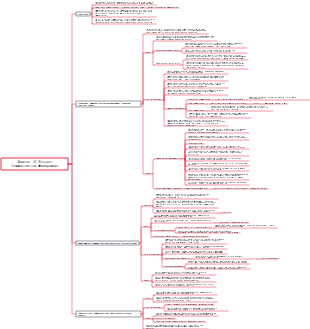
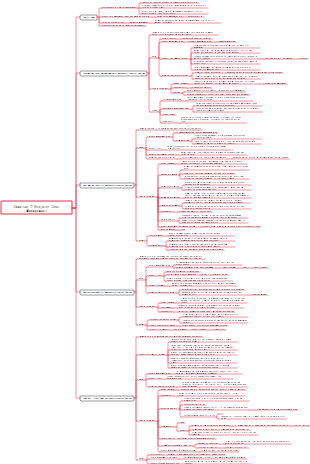
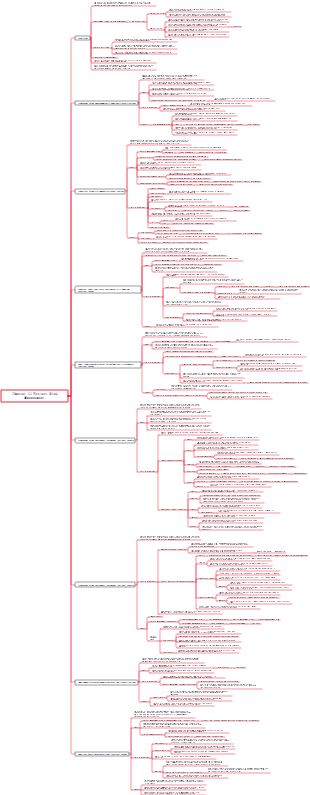
MindMap Gallery Chapter 4 Distribution Channel Management (Intermediate Economist's Business Management Professional Knowledge and Practice Notes)
The content comes from the official textbook for intermediate economists "Professional Knowledge and Practice of Business Administration" (2024). I spent almost a month organizing the notes and straightening out the logical relationships (mainly referring to Teacher Zheng Wei from Yun Private School and Teacher Sun Jing from Global). I spent two days reviewing before the exam. I didn't study the set questions because I didn't have enough time. I just studied based on my own study habits. It took me two and a half months to read the two official textbooks: Economic Fundamentals and Business Administration. Business Administration came last. When I finished reading, there were only 7 days left before the exam. I spent two days writing down my notes before the exam. Go through it again (about 20 hours, you must be at full strength), and all the questions you will encounter in the exam will be included in your notes! ! But there were several questions that I didn’t remember well, which was so uncomfortable! Give me two more days to review my notes, and I am confident that I can reach 130! It is recommended that students preparing for the exam can directly use this template as a basis and make appropriate adjustments based on next year's new textbook content. This can greatly save time (I have been typing on the computer almost every day for more than two months, and my eyes are almost blind. (very affected the learning status), this year’s teaching materials mainly changed in the company legal person part, and it is expected that there will not be much change next year. If conditions permit, it is recommended to cut the notes into several parts in A4 size and print them on one side so that they can be easily read. At the same time, make casual notes on the unprinted area on the other side. By the Way, all the notes did not draw coordinate diagrams. I am not very good at using a computer to draw curve diagrams. I printed them out and then drew them manually.
Edited at 2024-11-28 16:47:37Questo è il capitolo 5 del libro dell'insegnante Zhao Zhou "Questo è abbastanza da leggere", che parla principalmente di questi aspetti: ① L'importanza dell'abilità di apprendimento ② Come aggiungere contesto alle informazioni ③ Come distinguere la conoscenza e le informazioni Non mi affretta a mettere in discussione e sfidare ⑤Come usare note appiccicose per aggiornare la capacità di apprendimento ⑥ Perché inseguire i "merci secche" uno pseudo-apprendimento?
Per aiutare tutti a usare DeepSeek in modo più efficiente, è stata compilata una raccolta di Map Mind Mind Guide DeepSeek! Questa mappa mentale riassume il contenuto principale: collegamenti correlati a Yitu, analisi del profilo DS, confronto tra rotte tecnologiche DeepSeek e Chatgpt, Guida di distribuzione del modello DeepSeek e Qwen, come fare più soldi con DeepSeek, come giocare a DeepSeek, DeepSeek Scientific Research Application Aspetta, permettendoti di cogliere rapidamente l'essenza dell'interazione AI. Che si tratti di creazione di contenuti, pianificazione del piano, generazione di codice o miglioramento dell'apprendimento, DeepSeek può aiutarti a ottenere il doppio del risultato con metà dello sforzo!
Questa è una mappa mentale sulle 30 istruzioni a livello di alimentazione di DeepSeek.
Questo è il capitolo 5 del libro dell'insegnante Zhao Zhou "Questo è abbastanza da leggere", che parla principalmente di questi aspetti: ① L'importanza dell'abilità di apprendimento ② Come aggiungere contesto alle informazioni ③ Come distinguere la conoscenza e le informazioni Non mi affretta a mettere in discussione e sfidare ⑤Come usare note appiccicose per aggiornare la capacità di apprendimento ⑥ Perché inseguire i "merci secche" uno pseudo-apprendimento?
Per aiutare tutti a usare DeepSeek in modo più efficiente, è stata compilata una raccolta di Map Mind Mind Guide DeepSeek! Questa mappa mentale riassume il contenuto principale: collegamenti correlati a Yitu, analisi del profilo DS, confronto tra rotte tecnologiche DeepSeek e Chatgpt, Guida di distribuzione del modello DeepSeek e Qwen, come fare più soldi con DeepSeek, come giocare a DeepSeek, DeepSeek Scientific Research Application Aspetta, permettendoti di cogliere rapidamente l'essenza dell'interazione AI. Che si tratti di creazione di contenuti, pianificazione del piano, generazione di codice o miglioramento dell'apprendimento, DeepSeek può aiutarti a ottenere il doppio del risultato con metà dello sforzo!
Questa è una mappa mentale sulle 30 istruzioni a livello di alimentazione di DeepSeek.
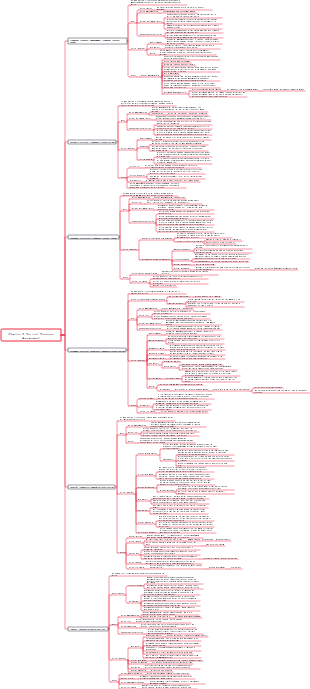
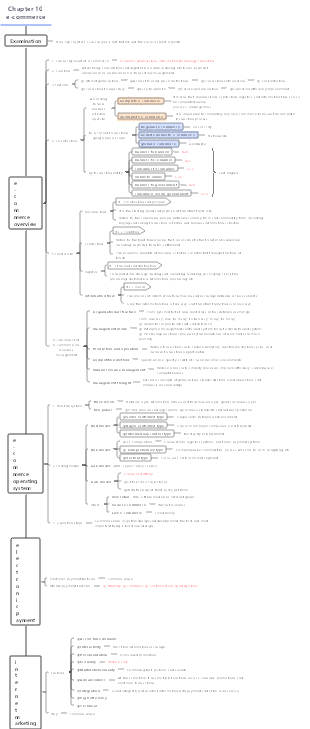
Chapter 4 Distribution channel management
Examination
Non-key chapters, case analysis is not tested, and the score is 8-9 points
New content has been added in the past two years. The difficulty level is moderate. It is important to understand the basic concepts without delaying.
Channel operation management
1. Marketing channels and distribution channels
Chapter Highlights
marketing channels
Refers to all enterprises and individuals that cooperate to produce, distribute and consume the goods and services of a certain producer, that is, including all enterprises and individuals involved in the production and marketing process.
marketing channels
Supplier (upstream)
Distribution channel
producer
middleman
final consumer
Supplier
Logistics company
bank
insurance company
consulting firm
Distribution channel
Refers to a set of interdependent organizations that facilitate the smooth transfer of certain goods and services to consumers through the market exchange process. Members include: all enterprises and individuals that obtain ownership of such goods or assist in the transfer of ownership during the transfer of goods from producers to consumers.
Distribution channel
producer
middleman
final consumer
Tip: The exam mainly tests the difference between the two members → Marketing channels include distribution channels!
2. Objectives of distribution channel management
3 indicators
①Market share
Reflects the market share of enterprise products
②Profit amount
Reflects the quality of business operations
③Sales growth
Reflect the development status of the enterprise
3. Tasks of distribution channel management
① Propose and formulate distribution goals; ② Monitor distribution efficiency; ③ Coordinate channel member relationships and resolve channel conflicts; ④ Promote product sales; ⑤ Modify and rebuild distribution channels
Tip: It’s all about sales and channels! As long as you can choose!
4. Construction of distribution channels for different commodities
consumer goods
Classification
Convenience products
Frequently purchased and easy to purchase
Daily necessities (salt), impulse purchases (fruit), emergency items (umbrellas and raincoats)
Optional items
Compare price, quality, style, etc. before purchasing
Such as: mobile phone
Special product
Products with special characteristics or brand logos for which buyers are willing to pay special purchasing power
Such as: cars, high-end customized clothes
non-desired items
Under normal circumstances, I will not take the initiative to buy
Such as: life insurance, encyclopedias, collectibles, new products
Tip: The above categories are from the perspective of most ordinary people.
Distribution model
①Manufacturer direct supply model
Manufacturers directly supply goods to terminal channels for sales 【Manufacturer→Retailer】
Disadvantages: ① Largely affected by traffic; ② Easy to have sales blind spots: ③ High management costs
②Multiple distribution (agent) model
Choose multiple dealers (agents) and establish a huge sales network [Manufacturer→First-level dealer→Second-level dealer→Retailer]
Disadvantages: ① Difficulty in management; ② prone to cross-selling and price confusion
③Exclusive distribution (agency) model
Select a dealer (agent) in a certain area and let him establish a distribution channel
[Manufacturer→Exclusive Distributor→Retailer]
Disadvantages: The right to sell goods is completely handed over to middlemen, and manufacturers have channel control risks.
Tip: This model is often chosen when new products are launched and companies are not well-known.
④Platform sales model
The manufacturer takes the sub-packaging factory as the core, and the operating department established by the sub-packaging factory is responsible for supplying to retail terminals. [Manufacturer→Distributor ABC→Distributor ABC]
Disadvantages: ① Restricted by regional market conditions; ② Factory delivery requires the cooperation of more management personnel
Such as tea leaves. (1) The manufacturer sells directly to supermarkets, which is a direct supply model. Under this model, there may be problems with incomplete coverage. You can’t sell it in every supermarket, right? (2) At this time, the manufacturer will find first-level dealers and ask them to assign them to second-level dealers in each city, and then the second-level dealers will allocate them to supermarkets in their respective cities. This is the multi-distribution model.
Industrial products
concept
Industrial goods: products purchased for the purpose of social reproduction
Industrial products market: also known as the production means market
Industrial product market characteristics
① Derivativeness of requirements
Buyer demand for products stems from consumer demand for consumer goods
②Demand elasticity is small
Price increases will not trigger a significant drop in demand for industrial products
③Professional purchasing
Purchasing activities in the industrial product market are completed by professionals or professional purchasing teams
④ Large amount purchased at one time
⑤Customer concentration is stable
Distribution model
① Focus on direct sales (short channels); ② Set up outlets in major sales locations; ③Use agents to establish sales points; ④Use wholesalers for sales
【learn】
Service products
feature
①Intangibility
②Inseparability
The production and consumption processes of service products occur simultaneously
③Difference
Lack of standards [McDonald’s is an industrial product, Michelin is a service product]
④Unstorability
Product cannot be stored
⑤Non-transferability of ownership
Membership is a common means for service-oriented companies to maintain customer relationships.
Distribution model
①Direct distribution model
Such as: medical institutions, accounting firms, etc.
②Distribution channels established by intermediaries
The most commonly used channel models for service companies
[Agent] Tourism, transportation, credit, industrial and commercial services
【Broker】such as insurance broker
[Wholesaler] For example: purchase a large number of employee welfare travel packages through wholesalers
[Retailer] Photo studio, dry cleaners
5. Channel member management
Ways to Motivate Channel Members
①Communication and motivation
Provide information exchange, banquets, and let dealers complain
②Business incentives
Hold meetings and give commissions
③Support and incentives
Provide policy, personnel, and financial support
Main precautions during the motivation process
①Insufficient motivation
Insufficient rebates and negative attitude
②Excessive incentives
Excessive rebates and increased costs
6. Channel rights management
Channel rights: refers to the ability of a specific channel member to control or influence the behavior of another channel member [Li Jiaqi? 】
Sources of channel rights: ① Reward rights; ② Coercion rights; ③ Legal rights; ④ Identity rights (reference rights); ⑤ Expertise rights; ⑥ Information rights
channel rights Classification
coercive power
Coercive power [such as: a retailer threatening to give up the sale of a certain product]
non-coercive powers
Other powers
intermediary power
When you demonstrate power, you are using intermediary power.
Reward power, coercion power, legal power
[For example: a platform requires sellers to sell goods without complying with platform rules]
disintermediated power
Power that does not exist if other channel members are not aware of it if it is not actively displayed.
Expertise rights, information rights, recognition rights, traditional legal rights
[For example: A certain platform is well-known in a certain area, and many manufacturers hope to cooperate with this platform]
channel power use
commitment strategy
Do as I say and I will reward you
reward rights
threat strategy
If you don't do what I say, I will punish you
power of coercion
legal strategy
You must do what I do, because in a sense, you have already agreed (signed the contract)
statutory authority
request strategy
Please do what I want, please
Right of recognition, right of reward, right of coercion
information exchange strategy
Needless to say, we discuss what would be more beneficial for cooperation
Suggest strategies
If you do what I say, you will make more money
Expertise rights, information rights, reward rights
channel power Keep
The essence of maintaining rights channels is to maintain channel control.
Maintaining manufacturer’s channel control
①Only a few large manufacturers control [oligopoly]
②The product has no substitutes [low elasticity of demand]
③The product is very important to consumers
④ Products or consumers are differentiated
⑤Manufacturers can implement forward integration [can migrate downstream]
Maintaining control over intermediary channels
①Influential independent brands
② Form a large sales scale
③Provide promotional services
④ Cultivate loyal customers
⑤ Centralized purchasing
⑥Use the gray market in a timely and appropriate manner
⑦Sign a long-term cooperation agreement to sell slow-moving goods
⑧Adopt vertical integration strategy when appropriate
⑨ Attract customers through wholesale and retail operations, price discounts and other means
⑩ Influence suppliers through flexible payment settlement policies
Tip: Just be able to identify which one is beneficial to the manufacturer and which one is beneficial to the middleman.
7. Channel conflict management
Contradictions and disharmony between channel members due to interest relationships
conflict Classification
By hierarchical relationship
horizontal conflict
Dealers and Distributors
vertical conflict
Distributors and manufacturers
Multi-channel conflict
Online and offline
According to the relationship between conflict of interest and confrontational behavior
conflict
Confrontational Behavior Conflict of Interest
latent conflict
There is only a conflict of interest
false conflict
There is only a conflict of interest
No conflict
None exist
Tip: Confrontational behavior refers to legal and substantive disputes
According to the degree of conflict
Low conflict area, medium conflict area, high conflict area
According to the direction of influence of channel conflicts on enterprise development
functional conflict
Psychological impact, positive effect
destructive conflict
Confrontational behavior has negative effects
Cause of conflict
Choose with common sense!
Conflict handling
① Determine the long-term goals of channel members based on common interests
Aim farther
②Encourage each channel member to actively participate in channel activities and the formulation process of relevant policies
③Appropriate use of incentives
④ Use personnel exchange to reduce channel conflicts
For example: suppliers and manufacturers exchange personnel and think in their shoes.
⑤ Make good use of conflict resolution methods such as negotiation, mediation, arbitration and litigation
⑥Remove channel members in a timely manner
Distribution channel system assessment
Channel Gap Assessment
Service quality gap
quality perception gap
Enterprises cannot accurately perceive customers’ service expectations
Common: Insufficient market research
quality standards gap
Established service standards are inconsistent with management’s perceived customer expectations
Common: Lack of senior management support, resulting in unreasonable standards For example: next-day delivery is set, but actually unable to achieve next-day delivery
service delivery gap
The service production and delivery process is not carried out in accordance with the standards set by the enterprise
Common: Not following the rules For example: 24-hour gym, but it is not possible due to machine failure.
Market communication gap
Marketing promises differ from actual services provided
Common: Overpromise
Perceived service gap
The service expected by customers is inconsistent with the service actually experienced
This is the final result and the core of the model
Distribution channel operation performance evaluation
patency assessment
Measure: Item transit time
That is, the time it takes for goods to flow from the enterprise to the final consumer.
Product transmission time = product inventory time, transportation time of each link, unit "days"
index
①Commodity turnover speed
②Payment recovery speed
③Sales recovery rate
R=actual payment received/sales revenue×100%
Channel coverage assessment
absolute indicator
Indicators: ① market coverage; ② market coverage
channel financial performance Evaluate
cost index
①Distribution channel expenses
The sum of various expenses incurred by distribution channels
②Distribution channel expense rate
R=distribution channel expenses/channel sales×100%
③The degree of increase or decrease in the distribution channel expense rate
R = Expenses rate for the current period – Expenses rate for the previous period
Positive number: rising expenses and higher costs
Negative numbers: expenses fall, costs fall
share index
Channel share
R=distribution sales of a certain channel/total sales of the product in the same period÷100%
Reflect the channel’s status and role in the entire distribution network
profitability indicator
①Channel sales growth rate
R=increment/base period×100%
②Channel sales profit margin
R=channel profit/total channel merchandise sales×100%
③Channel cost profit margin
R=channel profit/channel cost×100%
Tip: It’s actually the input-output ratio
④Channel asset profit rate
R=channel profit margin/channel asset occupation×100%
High ratio: It means using less assets to achieve higher profits
Distribution channel development trends
Internet distribution channels
The difference between online distribution and traditional distribution:
effect
Network: ① Provides a two-way information dissemination mode, making communication more convenient; ② Faster; ③ It can not only carry out business activities, but also provide training and after-sales service
structure
Network: ① Mesh, with the Internet as the center and diverging to all sides; ② Direct distribution and indirect distribution
Tradition: ①Linear, a linear channel with flow direction; ②Direct distribution Indirect distribution
cost
Network: lower
Tradition: higher
network distribution system
①Ordering system; ②Settlement system; ③Distribution system
type
Internet direct selling
①Build a website directly
Such as: corporate official website
② Check into the e-commerce platform
Such as: Tmall flagship store
Internet indirect distribution (middleman)
① Directory service provider
②Search engine service provider
Such as: Baidu
③Virtual commercial street
Such as: Taobao, Tmall
④Internet content provider
Such as: Tencent, NetEase
⑤Online retailers
Such as: Amazon, Walmart (e-commerce)
⑥Virtual assessment agency
Such as: Dianping
⑦Intelligent agent
Recommended based on shopping preferences
⑧Virtual market
Such as: Xianyu
⑨Internet statistics agency
Organization providing Internet statistics
⑩Online financial institutions
Such as: Alipay, bank app
Channel flattening
1. Refers to reducing intermediate links, achieving direct contact between products and customers, and reducing costs and information distortion.
2. Distributors have logistics platforms, capital platforms, and information flow platforms. In a flat channel, distributors are weakened, leaving only the logistics platform.
3.Form
①Direct channel
Manufacturer→Customer
Such as: online order
② Flattening of one layer of middlemen
Manufacturer→Middleman→Customer
Such as: shopping mall counters, chain stores
Large stores are an important aspect
③The flattening of two layers of middlemen
Manufacturer→Distributor (agent)→Retailer→Customer
The most commonly used flat pattern at present
Manufacturers pay more attention to dealers’ delivery capabilities
Channel strategic alliance
①Strategic alliance between dealers
Purpose: Use advantages to compete with manufacturers to obtain greater profit margins
Form: centralized procurement or establishment of distribution alliance
②Strategic alliances between manufacturers
Purpose: avoid price war
Characteristics: short-term behavior driven by certain interests
③Strategic alliance between suppliers and dealers
Purpose: Improve supply chain efficiency and provide better services