MindMap Gallery Chapter 3 Marketing and Brand Management (Intermediate Economist's Business Management Professional Knowledge and Practice Notes)
The content comes from the official textbook for intermediate economists "Professional Knowledge and Practice of Business Administration" (2024). I spent almost a month organizing the notes and straightening out the logical relationships (mainly referring to Teacher Zheng Wei from Yun Private School and Teacher Sun Jing from Global). I spent two days reviewing before the exam. I didn't study the set questions because I didn't have enough time. I just studied based on my own study habits. It took me two and a half months to read the two official textbooks: Economic Fundamentals and Business Administration. Business Administration came last. When I finished reading, there were only 7 days left before the exam. I spent two days writing down my notes before the exam. Go through it again (about 20 hours, you must be at full strength), and all the questions you will encounter in the exam will be included in your notes! ! But there were several questions that I didn’t remember well, which was so uncomfortable! Give me two more days to review my notes, and I am confident that I can reach 130! It is recommended that students preparing for the exam can directly use this template as a basis and make appropriate adjustments based on next year's new textbook content. This can greatly save time (I have been typing on the computer almost every day for more than two months, and my eyes are almost blind. (very affected the learning status), this year’s teaching materials mainly changed in the company legal person part, and it is expected that there will not be much change next year. If conditions permit, it is recommended to cut the notes into several parts in A4 size and print them on one side so that they can be easily read. At the same time, make casual notes on the unprinted area on the other side. By the Way, all the notes did not draw coordinate diagrams. I am not very good at using a computer to draw curve diagrams. I printed them out and then drew them manually.
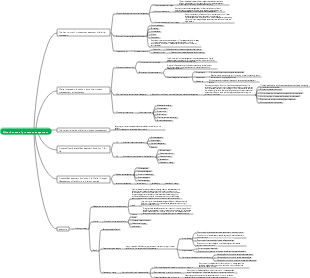
Edited at 2024-11-28 16:46:23Questo è il capitolo 5 del libro dell'insegnante Zhao Zhou "Questo è abbastanza da leggere", che parla principalmente di questi aspetti: ① L'importanza dell'abilità di apprendimento ② Come aggiungere contesto alle informazioni ③ Come distinguere la conoscenza e le informazioni Non mi affretta a mettere in discussione e sfidare ⑤Come usare note appiccicose per aggiornare la capacità di apprendimento ⑥ Perché inseguire i "merci secche" uno pseudo-apprendimento?
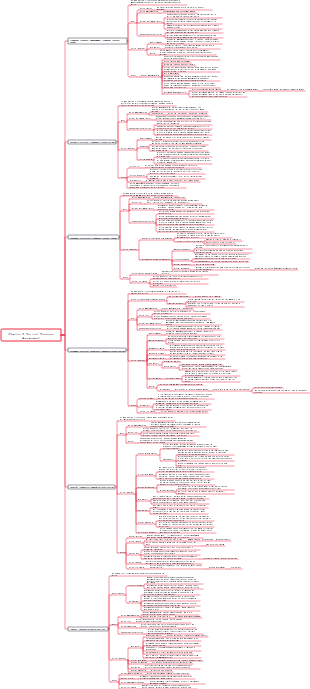
Per aiutare tutti a usare DeepSeek in modo più efficiente, è stata compilata una raccolta di Map Mind Mind Guide DeepSeek! Questa mappa mentale riassume il contenuto principale: collegamenti correlati a Yitu, analisi del profilo DS, confronto tra rotte tecnologiche DeepSeek e Chatgpt, Guida di distribuzione del modello DeepSeek e Qwen, come fare più soldi con DeepSeek, come giocare a DeepSeek, DeepSeek Scientific Research Application Aspetta, permettendoti di cogliere rapidamente l'essenza dell'interazione AI. Che si tratti di creazione di contenuti, pianificazione del piano, generazione di codice o miglioramento dell'apprendimento, DeepSeek può aiutarti a ottenere il doppio del risultato con metà dello sforzo!
Questa è una mappa mentale sulle 30 istruzioni a livello di alimentazione di DeepSeek.
Questo è il capitolo 5 del libro dell'insegnante Zhao Zhou "Questo è abbastanza da leggere", che parla principalmente di questi aspetti: ① L'importanza dell'abilità di apprendimento ② Come aggiungere contesto alle informazioni ③ Come distinguere la conoscenza e le informazioni Non mi affretta a mettere in discussione e sfidare ⑤Come usare note appiccicose per aggiornare la capacità di apprendimento ⑥ Perché inseguire i "merci secche" uno pseudo-apprendimento?
Per aiutare tutti a usare DeepSeek in modo più efficiente, è stata compilata una raccolta di Map Mind Mind Guide DeepSeek! Questa mappa mentale riassume il contenuto principale: collegamenti correlati a Yitu, analisi del profilo DS, confronto tra rotte tecnologiche DeepSeek e Chatgpt, Guida di distribuzione del modello DeepSeek e Qwen, come fare più soldi con DeepSeek, come giocare a DeepSeek, DeepSeek Scientific Research Application Aspetta, permettendoti di cogliere rapidamente l'essenza dell'interazione AI. Che si tratti di creazione di contenuti, pianificazione del piano, generazione di codice o miglioramento dell'apprendimento, DeepSeek può aiutarti a ottenere il doppio del risultato con metà dello sforzo!
Questa è una mappa mentale sulle 30 istruzioni a livello di alimentazione di DeepSeek.
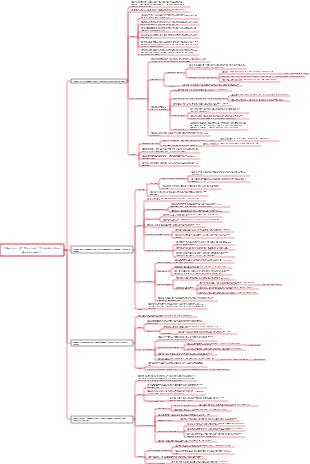
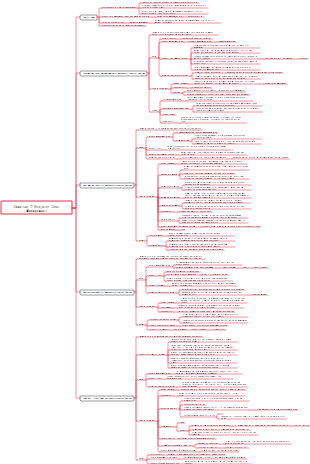
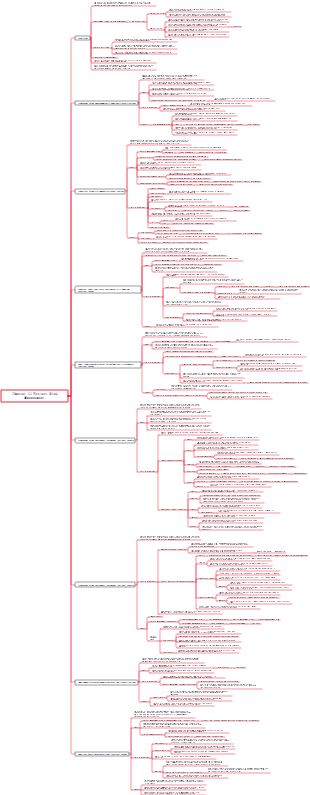
Chapter 3 Marketing and Brand Management
Examination
Sub-key chapters. The score is around 17 points. There are basically 4-5 case analysis questions. The test points have a high repetition rate. Most of the knowledge points can be understood based on common sense in life.
marketing environment
macro environment
Refers to the main social forces that bring market opportunities and environmental threats to enterprises, and are environmental factors that indirectly affect corporate marketing activities.
①Population environment
Population is the first factor that constitutes the market
Population directly determines market size and potential capacity
②Economic environment
consumer income
[Disposable income] Income minus taxes and non-tax burdens (such as union fees, provident fund)
[Disposable income] Disposable income minus expenses necessary to maintain life
【Money income】The total amount of income
[Real income] The real purchasing power of money income after taking inflation into account
Consumer spending, savings and credit, economic development level, etc.
③Natural environment
The shortage of natural resources, the increasingly serious environmental pollution, the increasing government intervention in the environment, and the public’s ecological needs and awareness
④Technical environment
Technology is a 'creative force of destruction'
The average life cycle of products is getting shorter and shorter, the new technological revolution affects the retail industry structure and consumer shopping habits, and new technologies change the way enterprises operate and manage.
⑤Political and legal environment
⑥Social and cultural environment
Relevant to public sentiment
microenvironment
Refers to the various forces that have a direct impact on a company's ability to serve its customers
①The enterprise itself
First level: top management
Second level: other functional departments
②Supplier
③Competitors
④Marketing channel companies
Refers to those businesses or individuals that assist businesses in promoting, selling and distributing products or services to end buyers
Including: middlemen, entity distribution agencies, marketing service agencies, financial institutions
⑤Customer
⑥Public
external public
media public, government public, association public, financial public
internal public
Employees, shareholders and managers within the enterprise
Marketing environmental analysis
Comprehensive threat-opportunity analysis
Adventure Business【Double High】
High risk, high reward
Comprehensive analysis, careful decision-making, and striving for benefits
Ideal Business【Low High】
Low risk, high return
Be sure to seize the opportunity
Difficult business [high and low]
High risk, low reward
Try to reverse the situation. If unable to reverse the situation, give up decisively.
Mature business [double low]
Low risk, low return
Achieve average profits according to regular operations, accumulate strength, and prepare for entering the ideal environment
marketing strategy
Strategic planning: Determine corporate tasks → Specify corporate goals → Arrange business portfolio → Develop new business plans
Define corporate goals
Metrics for measuring financial and marketing goals
①Investment rate of return = profit/total investment capital × 100%
②Market share = sales volume (amount)/sales volume (amount) of similar products in the unified market × 100%
③Sales growth rate = sales increase/sales of the previous period × 100%
Set business goals principles
①Hierarchy
Decomposed into layers of operational target systems
② Quantifiable
Concrete into a certain quantitative value
③Reality
feasible
④Coordination
Coordination between strategic goals
Arrange business portfolio
General Electric Company Law (Strategic Business Planning Network): The General Electric Matrix is usually used for analysis, and two comprehensive indicators of industry attractiveness and business strength are used to evaluate each strategic business unit of the company to help corporate managers make investment decisions.
green zone
Big strong, medium strong, big medium
Increase investment and focus on development strategies
yellow zone
Small strong, medium, big weak
Maintain current investment levels and market share
red zone
small weak, small medium, medium weak
Harvest or abandon strategy
target market strategy
market segmentation
Market segmentation: refers to dividing the market into sub-markets (market segments) based on customer needs through market research.
Differences in consumer demand are the basis for market segmentation
Segmentation variables
objective variables
Geographic variables
Demographic variables
subjective variables
psychological variables
Inner psychological activities, difficult to observe
behavioral variables
External behavioral performance, easy to observe (can be analyzed through calculation)
target market mode
①Product-market concentration
Only produce or operate one standardized product and only supply a certain customer group [A certain clothing store only provides winter clothing to the elderly]
One to one
Mobike
②Product specialization
Supply a certain product to various customers at the same time [A clothing store provides winter clothing to children, youth, middle-aged and elderly people]
one to many
Didi
③Market specialization
Offer all differentiated products to the same customer group [A clothing store provides various seasonal products to the elderly]
many to one
iFlytek
④ Selective specialization
Selectively enter several market segments and provide customers with different products [A clothing store provides winter clothes for middle-aged and elderly people and summer clothes for children]
Many to many, incomplete
ByteDance
⑤Full access
Comprehensive access to various market segments [A clothing store provides clothing for all seasons to all ages]
many-to-many, comprehensive
Tencent, Alibaba
target market Choose a strategy
undifferentiated marketing strategy
Cost leadership overall strategy corresponding to the functional strategic level
Think of the overall market as a big market target
Use only one marketing mix
No market segmentation, single product to meet all needs
Differentiated marketing strategy
Differentiated overall strategies corresponding to functional strategic levels
Use different marketing mixes
Market segmentation, multiple products to meet all needs
focused marketing strategy
Centralized overall strategy corresponding to the functional strategic level
Select one or several market segments. The overall market share may not be high, but a certain market segment has a high market share.
Market segmentation, focusing on specific market segments and only meeting part of the needs
market positioning
Ways to achieve
①Create distinctive characteristics or personality
②Create a unique market image
Implementation method
① Positioning based on attributes and benefits
Volvo Cars emphasizes "safety"
②According to user positioning
Nike signs star players to attract consumers who pursue excellence and fashion
③Position based on competitors’ situation
Pepsi-Cola is often compared with Coca-Cola, emphasizing "the choice of a new generation"
④ Positioning based on price
LV conveys the high-end image of luxury goods through high prices
⑤Combined positioning
Based on the above methods, such as: iphone
marketing mix strategy
product mix strategy
concept
Product line: refers to a group of closely related products within a product category [For example: a cosmetics company may have two product lines: facial care and makeup]
Product items: refers to specific products of different varieties, specifications, quality, forms, colors and prices within the same product line [for example: the facial care product line of the above-mentioned cosmetics company may include facial creams of different types and prices]
The width of the product portfolio: refers to the number of different product lines operated by the enterprise [width = number of product lines] [For example: the product portfolio width of the above cosmetics company is 2]
The length of the product portfolio: refers to the total number of product items included in the product portfolio [length = number of product categories] [For example: a cosmetics company has two product lines: facial care and makeup. Among them, facial care has 5 products and makeup has 6 products. Then the product portfolio length of the cosmetics company is 11]
Depth of product portfolio: refers to how many colors, varieties, specifications, etc. are available for each product in the product line [For example: the facial creams of the above-mentioned cosmetics companies are available in small, medium and regular styles]
Product portfolio relevance: refers to the degree to which each product line is closely related in terms of end use, production conditions, and distribution channels. [High correlation means that product lines have common market positioning or production technology] [For example: The facial care and makeup product lines of the above-mentioned cosmetics companies are all developed for 20-year-old skin]
type
Expanding product portfolio strategy
Including increasing the width, length, depth of the product portfolio
Reduce product portfolio strategy
Including reducing the width, length, depth of the product portfolio
product line extension strategy
extend upward
Add high-end products
extend downward
Increase resistance products
Two-way extension
Increase both high-end and low-end products
Product Line Modernization Strategy
Emphasis on applying modern technology to the production process
packaging strategy
Similar packaging strategies
embody common traits
Reduce costs and leverage existing reputation to promote new products
individual packaging strategies
Reflect unique style
Prevent the failure of one product from affecting the reputation of other products
Related packaging strategies
Set for sale
Reduce costs and help promote new products
Hierarchical packaging strategy
reflect quality differences
Portion Packaging Strategy
Big packaging, small packaging
Reuse packaging strategy or dual use packaging strategy
The packaging itself has other uses, one thing has multiple uses
Comes with gift packaging strategy
Giveaways to add surprises
Change packaging strategy
Change packaging to keep it fresh
new product development strategy
New product classification
① Brand new products; ② Replacement products; ③ Improved products
strategy pattern
According to development method
Independent development
Google team develops Google Glass
Commissioned development
Pfizer partners with BioNTech to develop mRNA COVID-19 vaccine
joint development
Samsung and Sony jointly develop OLED TV technology
According to the degree of innovation
innovation strategy
imitation strategy
According to development time
first strategy
follow up strategy
Pricing strategy
Factors affecting pricing
①Market demand
Market demand affects the upper limit of enterprise product prices
②Cost
Cost factors affect the lower limit of enterprise product prices
③Market competition
Pricing target
①Maintain business survival
②Short-term profit maximization
③Maximize market share
④Maintain corporate and product image
Pricing method
①Cost-oriented pricing method
cost plus pricing
Product price = unit cost × (1 markup rate)
target run pricing
Target price = (total cost target profit) / total sales volume
②Demand-oriented pricing method
cognitive value pricing
High-end watch brands set high prices based on consumers’ perception of brand value and quality
demand differential pricing
Airlines adjust ticket prices according to peak and off-season
③Competition-oriented pricing method
Market-following pricing
gasoline price
competitive price pricing
E-commerce platforms set the prices of their own products by comparing them with those of competitors.
sealed bid pricing
Construction companies use sealed bids when bidding for large engineering projects
Strategy
New product pricing strategy
Set aside pricing strategy
Pricing is high to make high profits in the shortest possible time
Moderate pricing strategy
Set between high and low prices to satisfy both buyers and sellers
market penetration pricing strategy
Pricing is very low, taking advantage of low prices to quickly occupy the market
Product portfolio pricing strategy
Product line pricing
Different grades, different prices
Alternative product pricing
Optional, you can buy it or not
Ancillary product pricing
The main product is not changed often, but the accessory products should be replaced frequently. Businesses can make profits through high-priced ancillary products. [For example: Printers are cheap, but ink cartridges are expensive]
By-product pricing
The main product is priced low to capture the market, and the by-product is priced high to gain profits.
Product bundle pricing
Sold in combination, the price is lower than buying individually
Promotional strategy
Promotional mix
pull strategy
Use advertising and public relations and other means to introduce products and companies to consumers and guide them to purchase
The manufacturer's marketing target is the final consumer
push strategy
Using personal selling and sales promotion, products are promoted by manufacturers to wholesalers, wholesalers to retailers, and retailers to final consumers.
The manufacturer's influence targets channel members
Promotion method
advertise
How to set up an advertising budget
①Act within your capabilities
②Sales percentage method
Calculate advertising spend as a percentage of sales or unit price
③ Competitive balance of power method
Maintain roughly the same advertising costs as competitors
④Target and task method
Define the advertising budget based on marketing goals and the tasks that advertising should undertake
personal selling
Personal selling is an extremely expensive form of promotion
sales promotion
Promotional measures that can generate incentives quickly to stimulate demand in a large target market
Such as: free gifts, discount coupons, special packages, prize sales, store displays, live performances
public relations
Various public relations activities to establish a good image for enterprises and products
direct marketing
Refers to direct contact with target customers without going through middlemen.
Such as: direct mail, telephone, TV, Internet
Brands and Brand Equity
brand Classification
According to radiation area
regional brand
A certain area has a high reputation [such as: Beijing Tongrentang]
Domestic brands
High domestic market share [such as: Haier]
international brand
Popular around the world [eg: Apple]
According to market position
Leading brand
[For example: Coca-Cola]
Challenge brand
[For example: Pepsi Cola]
follower brand
[For example: Master Kong]
gap-filling brand
[Such as: IKEA]
by life cycle
Introductory brand
[Such as: Xiaomi]
Growth stage brand
[For example: Tesla]
Mature brand
[Such as: Procter & Gamble]
Brands in decline
[Such as: Nokia]
point by value
functional value brand
[Such as: IKEA]
spiritual value brand
[Such as: Louis Vuitton]
Attribution by brand
Manufacturer brand
[Such as: BMW]
middleman brand
[Such as: Wal-Mart]
According to different purposes
Production materials brand
[Such as: Schneider]
Living materials brand
[For example: Unilever]
Target by price
Ordinary brand
[Such as: Uniqlo]
high-end brands
[Such as: Rolex]
luxury brand
[Such as: Hermès]
By industry
Automobile industry brands
Electrical appliance industry brands
Catering industry brands
brand assets
David Icke’s “Five-Star” Model of Brand Equity
brand awareness
How well consumers remember the brand
stage
①No visibility: no impression
② Prompt popularity: A certain brand may be remembered after prompts or hints
③Not prompted for popularity: Can be remembered proactively without prompting
④Top visibility: the first brand that comes to mind or blurts out
brand awareness
Consumers’ overall impression of the brand
Including perceptions of product quality and service quality
brand association
All associations generated through the brand
Such as: Apple (innovation and high quality), Mercedes-Benz and BMW (think Mercedes-Benz is more cost-effective)
brand loyalty
Biased behavioral responses to brands are consumers’ psychological decision-making and evaluation processes.
Brand loyalty is the core of brand equity
level
①No loyal buyers: Constantly changing brands and only sensitive to price
② Habitual buyers: accustomed to a certain brand, but will compare and switch to other brands at any time
③Satisfied buyers: Very satisfied with the original brand, the cost of changing brands is higher
④Emotional buyers: Emotional recognition is a part of life
⑤Committed buyers: Die-hard fans who are not only emotionally strong but also proud of themselves
Brand other assets
Intellectual property rights such as trademarks and patents
brand strategy
Family brand decision
individual brand strategy
Different products use different brands
[For example] Class A lubricating oil, Class B lubricating oil, and Class C lubricating oil are labeled with different brands.
[Excellent] Errors in individual products will not affect the overall image.
Unified brand strategy
All products use the same brand
【Such as】Apple’s iPhone, iPad, MacBook
【Excellent】Save money, once the brand is successful, it is easy to launch new products
【Missing】One loss and total loss
Classification family brand strategy
Different types of products use different brands
[For example] Use the same brand of Class A lubricating oil and Class B lubricating oil; use another brand of C gasoline and D gasoline.
[Difference from individuals] Classification is equivalent to dividing a large family into several small families
Strategies for using corporate names and individual brands together
Each brand is preceded by the company name
[Such as] Schneider Electric circuit breakers, Schneider Electric switches
[Excellent] Legalize the product and save publicity costs
Multi-brand decision
Refers to an enterprise operating two or more competing brands at the same time [such as Procter & Gamble]
Advantages
① Can occupy a larger display area and increase the display proportion of products
②Can attract more customers and increase market share
③ Helps internal competition and improves work efficiency
④The products of 17th Metallurgical Co., Ltd. cover a wider market
Brand repositioning decision
reason
①After long-term use in the market, consumers lose the sense of freshness
② Similar products appear and consumers shift consumption, causing the sales volume of enterprise products to decrease.
Considerations need to be made:
①Transfer cost
②Possible benefits