MindMap Gallery cost group pricing method
The cost group pricing method, also known as the cost-plus pricing method, refers to a pricing method that determines the product sales price based on the product cost plus a certain proportion of markup. The core of this method is to accurately calculate the various costs of the product, and add a reasonable profit markup on this basis to form the final sales price. Used to improve the skills of engineering cost personnel.
Edited at 2024-11-28 09:10:23Lezione 12 della storia, l'ascesa della democrazia nazionale in Asia, Africa e America Latina, questa mappa del cervello ti aiuta a familiarizzare con i punti chiave della conoscenza e rafforzare la memoria. Gli studenti bisognosi possono aggiungere un segnalibro.
Questa è una mappa mentale sull'introduzione alla competenza di Chat GPT.
Questa è una mappa mentale sulla condivisione di profonde abilità di utilizzo.
Lezione 12 della storia, l'ascesa della democrazia nazionale in Asia, Africa e America Latina, questa mappa del cervello ti aiuta a familiarizzare con i punti chiave della conoscenza e rafforzare la memoria. Gli studenti bisognosi possono aggiungere un segnalibro.
Questa è una mappa mentale sull'introduzione alla competenza di Chat GPT.
Questa è una mappa mentale sulla condivisione di profonde abilità di utilizzo.
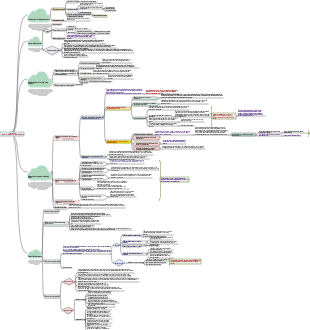
cost group pricing method
Rough stone cutting pricing
Basic knowledge
Understanding of rough materials: It is both a product of stone mines and a raw material for plate processing plants.
Raw material yield rate
Restrictions: geographical conditions, mining conditions and technology, on-site hoisting capacity, transportation conditions
The length and height determine the board size; the width determines the board quantity.
Generally 6~8m3, the minimum imported one is 1m3
Common modules: height 600~1200, length 1000/1200/1600/1800/2000/2400 (600, 800, 1000 are modules), width generally 1200~2000
Large plate yield rate
Basic restrictions: stone physical properties (hardness, brittleness, texture), quantity of the same type of blocks in the same batch, size of the blocks, cutting process (tool, size), lifting, packaging and transportation conditions, order quantity of the same type of finished product, order size Matching suitability
Physical properties: 1. The greater the hardness, the higher the processing difficulty, the higher the requirements for processing equipment, and the greater the loss of the cutter head during the process. 2. The higher the brittleness, the lower the material yield, and the more expensive the back panel reinforcement (glass fiber mesh bonding, back frame, laminate layer) will be. 3. Consistent texture is a requirement for general projects. Defects affect the yield rate. 4. The larger the size, the higher the corresponding yield rate, the higher the processing difficulty and equipment requirements.
Market characteristics: 1. The market chooses 600*1000 width as the basic plate type, and the prices are different for larger sizes. 2. The quantity of the same material is limited by pit mouth shipment and supplier purchase conditions. 3. Procurement content ratio of special-shaped materials 4. Requirements for stone protection
Processing conditions: 1. Equipment type and processing capacity limit the size of the finished plate; 2. The saw kerf directly affects the amount of material produced. For example, the thickness of the saw blade ranges from 0.5 to 1cm, plus an activity gap of 0.2 to 0.4cm, generally 0.8mm. 3. Normal cutting utilization rate: generally 90%, the cost price should be: land reclamation square price ÷90%;, water cutting 4. Special-shaped material nesting issues: typesetting algorithm, process limitations, texture influence
Cost composition
Raw material cost
Stone purchase price
Type and quality, market supply and demand conditions, size standards
Shipping and warehousing costs
Transportation method and distance, trading site and warehousing conditions and time, transportation and warehousing losses
Raw material testing costs
Processing cost
Cutting process and efficiency
Cutting machinery type, process complexity (curved surface, special shape, surface treatment)
Labor cost
Worker skill level, labor market conditions
protection cost
Six-sided waterproof, reinforced back frame
Material loss
Output rate
Management fees, profits and risks
profit margin setting
Industry average profit margins, stone manufacturers generally have to consider profits ranging from 15% to 30%.
business strategy
Management fee composition
Finished product testing and inspection
Risk assessment and reservation
Market price fluctuations, losses during processing
Financial costs, risks and additional measures arising from payment terms
taxes
Enterprise tax scale, tax package or not, input tax, etc.
Distribution box cabinet price
Component procurement cost
component cost
Brand series, voltage classification, process standards (patents, etc.), safety certification
Purchase volume and price concessions
Bulk purchase discounts, retail
long term supplier relationships
Box cost
Connection aids and accessories costs
Assembly and testing fees
Labor assembly cost
Technical staff salary level, assembly efficiency
Functional testing and quality control fees
Test equipment investment and quality control process
Shipping and installation costs
Logistics and distribution costs
Delivery distance and method, packaging and handling requirements
On-site installation and commissioning costs
Installer salary
Adaptability to site conditions
Debugging costs
other costs
Manage costs, profits, taxes
Amortization of production conditions
Factory, office, R&D, production conditions
Amortization for administrative personnel
After-sales service
After-sales service period and content
Maintenance service response and parts supply guarantee
Customer technical support
Technical support team
Financial costs, risks and additional measures arising from payment terms
Curtain wall assembly pricing
Material cost
Curtain wall material selection
Surface layer: glass, metal, stone, etc.
Material properties and durability
Base layer: metal profiles, structural steel frame
security
Production and processing costs
Mold opening costs and processing accuracy requirements
Investment in automated production lines
Auxiliary materials and accessories
Sealants, connectors, hardware, etc.
Accessories quality and cost
Design and production costs
Design plan development
Sunk costs of bidding plans and designer labor costs
Additional fees for innovative design (R&D patents, etc.)
Installation and maintenance costs
On-site installation labor costs
Installation team size, installation conditions, technical difficulty, and cost of measures
Material testing and experiment costs
Later maintenance and service
Maintenance cycle and cost
preventive maintenance plan
other costs
Manage costs, profits, taxes
Financial costs, risks and additional measures arising from payment terms
Complete equipment price
Equipment acquisition cost
Equipment original price
Equipment brand and model, technical parameters and performance, testing experiments
Purchasing channels and discounts
Direct procurement and agents, long-term cooperation agreement
Special shipping requirements
Large equipment transportation and transportation insurance costs
Supporting transformation, installation and commissioning
Special-shaped parts processing, equipment parameter modification and matching
Installation and commissioning technical requirements
Installation team professionalism and cost
Single machine debugging and joint debugging
other costs
Manage costs, profits, taxes
Financial costs, risks and additional measures arising from payment terms
Summarize
Basic abilities of estimators
It is the secondary manifestation of internalized knowledge
The main direction of personal quality improvement
The driving force behind enterprise technological progress
Assessment standards for employee skill evaluation