MindMap Gallery Muscle relaxants
A brief summary of pharmacological muscle relaxants (excluding specific drugs). Muscle relaxants selectively act on skeletal muscle nerve-muscle junctions, bind to N2 choline receptors, and temporarily block the transmission of excitation between neuromuscles, thereby producing Muscle relaxing effect.
Edited at 2024-11-27 23:35:16Lezione 12 della storia, l'ascesa della democrazia nazionale in Asia, Africa e America Latina, questa mappa del cervello ti aiuta a familiarizzare con i punti chiave della conoscenza e rafforzare la memoria. Gli studenti bisognosi possono aggiungere un segnalibro.
Questa è una mappa mentale sull'introduzione alla competenza di Chat GPT.
Questa è una mappa mentale sulla condivisione di profonde abilità di utilizzo.
Lezione 12 della storia, l'ascesa della democrazia nazionale in Asia, Africa e America Latina, questa mappa del cervello ti aiuta a familiarizzare con i punti chiave della conoscenza e rafforzare la memoria. Gli studenti bisognosi possono aggiungere un segnalibro.
Questa è una mappa mentale sull'introduzione alla competenza di Chat GPT.
Questa è una mappa mentale sulla condivisione di profonde abilità di utilizzo.
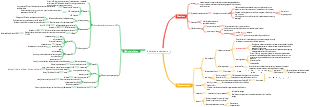
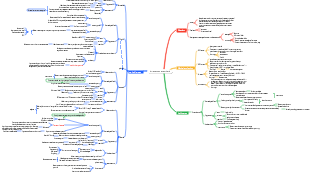
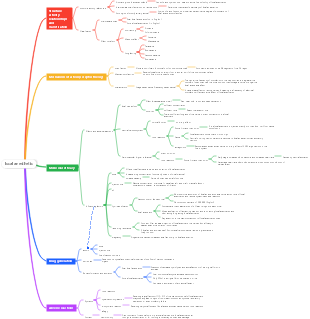
Muscle relaxants
Overview
concept
Muscle relaxants selectively act on skeletal muscle nerve-muscle junctions, bind to N2 choline receptors, and temporarily block the transmission of excitation between nerves and muscles, thereby producing muscle relaxation.
Classification
Depolarization type
Ultra short acting
Succinylcholine
Non-depolarizing type
short acting
mivacurium
Medium effect
Vecuronium bromide
Rocuronium
(cis)atracurium
Long lasting
pancuronium bromide
pipecuronium bromide
Common environment
Adjuvant medication for general anesthesia (avoid deep anesthesia)
Laryngeal muscle spasm during endotracheal intubation
Prevent muscle spasms caused by certain diagnostic procedures (such as esophagoscopy)
Rehabilitation of bone and joint dislocations and fractures
Controlled ventilation during thoracic and surgical surgery
Controlling muscle spasms in patients with tetanus
Mechanism of action
neuromuscular junction
composition
Presynaptic membrane (motor neuron axon terminal)
Post-synaptic membrane (the thickened part of the basal fiber that faces the pre-synaptic membrane)
synaptic cleft
N2 choline receptor
Ligand-gated ion channel receptor
site of action
α protein subunit of the post-adapter membrane N2 receptor
Classification
competitive blocking
N2 receptor agonists (depolarizing muscle relaxants)
Long-lasting depolarization causes non-depolarizing block
N2 receptor blockers (non-depolarizing muscle relaxants)
non-competitive blocking
ion channel block
open type
After the ion channel is opened, it enters the channel to exert its effect.
Strength depends on how much of the channel is open and how often
closed type
Directly blocks the ion channel entrance
desensitization block
The receptor is insensitive to the effect of agonists on opening ion channels. At this time, although the receptor binds to the agonist, there is no change in the configuration of the receptor protein and the ion channel will not open.
Acts on extrasynaptic and presynaptic acetylcholine receptors
extrasynaptic receptors (pathology)
The use of depolarizing muscle relaxants will depolarize large areas of myofiber membrane and lead to K efflux leading to hyperkalemia.
presynaptic receptor
Accelerate ACh release (positive feedback mechanism)
Non-depolarizing muscle relaxants can antagonize
Pharmacodynamics
High safety threshold
Block more than 75%
My twitching tone begins to weaken
Block 95%
Complete suppression of muscle twitching
Restoration time limit
The time it takes for muscle twitch to recover from 25% to 75%
Features
Different receptor distribution densities
Small muscle groups>Abdominal muscle groups
amount of blood flow
Throat muscles take effect and recover quickly
selective relaxation
Different parts of skeletal muscles have different sensitivities to muscle relaxants
Body muscles and limb muscles > thick adductors and diaphragm
High affinity for N₂ receptors
adverse reactions
Can bind to N2 and block N1 and M choline receptors
cardiovascular adverse reactions
Can cause the release of histamine (induction period of anesthesia)
Hypotension, tachycardia
Skin flushing and urticaria
Pulmonary edema and bronchospasm (serious adverse reactions)
Pharmacokinetics
absorb
Highly dissociated polar compounds
Intravenous injection. It is not absorbed orally and is ineffective when injected subcutaneously. The effect of intramuscular injection is only 20% to 50% of that of intravenous injection.
distributed
Can bind to mucopolysaccharides, bone and plasma proteins in tissues
Repeated administration may lead to accumulation
Metabolized (not reabsorbed)
Hoffmann elimination and esterase breakdown
atracurium
cisatracurium
pseudocholinesterase
Succinylcholine
excretion
kidney
long-acting muscle relaxants
bile
Medium-duration muscle relaxants