MindMap Gallery alcohol
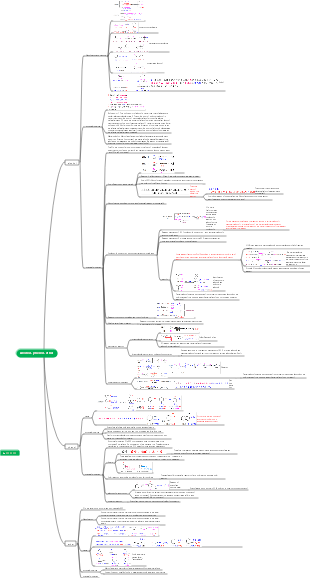
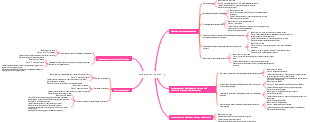
College chemistry alcohol mind map, alcohol is an organic compound in which the hydrogen atoms in the side chains of aliphatic hydrocarbons, alicyclic hydrocarbons or aromatic hydrocarbons are replaced by hydroxyl groups (—OH). In chemistry, an alcohol is any organic compound in which a hydroxyl functional group (—OH) is bound to a saturated carbon atom. The general formula of alcohol is R-OH, where R represents a hydrocarbon group.
Edited at 2024-11-27 23:08:27Lezione 12 della storia, l'ascesa della democrazia nazionale in Asia, Africa e America Latina, questa mappa del cervello ti aiuta a familiarizzare con i punti chiave della conoscenza e rafforzare la memoria. Gli studenti bisognosi possono aggiungere un segnalibro.
Questa è una mappa mentale sull'introduzione alla competenza di Chat GPT.
Questa è una mappa mentale sulla condivisione di profonde abilità di utilizzo.
Lezione 12 della storia, l'ascesa della democrazia nazionale in Asia, Africa e America Latina, questa mappa del cervello ti aiuta a familiarizzare con i punti chiave della conoscenza e rafforzare la memoria. Gli studenti bisognosi possono aggiungere un segnalibro.
Questa è una mappa mentale sull'introduzione alla competenza di Chat GPT.
Questa è una mappa mentale sulla condivisione di profonde abilità di utilizzo.
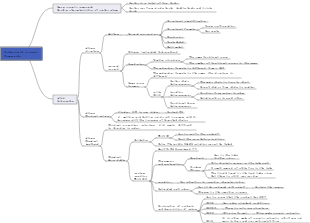
alcohol
name
First and second tertiary alcohols (first and second tertiary alcohols attached to C - OH)
Also contains double bonds, —OH: a certain enol, —OH is the main functional group x-a certain enol-y-ol
-OH number
one yuan
Diverse
Binary
three yuan
…
nature
physical properties
Boiling point: Overcoming hydrogen bonds and intermolecular forces => the more branches there are, the harder it is for hydrogen bonds to associate molecules, and the boiling point is lowered
Density: Alkane < Fatty Alcohol < 1 < Phenol
chemical properties
Acidity and alkalinity
Acidic
The strength depends on how easy it is to break H-O, that is, whether the group connected to -OH is electron-attracting or electron-pushing (phenol>H2O>HO-R)
The benzene ring forms a conjugated system with O, absorbing O electrons and helping O absorb H electrons.
H does not absorb or give electrons
Hydrocarbon group donates electrons
The larger the hydrocarbon group, the stronger the electron pushing effect and the weaker the acidity of the alcohol: methanol > primary alcohol > secondary alcohol > tertiary alcohol
Sodium alkoxide: colorless solid, used as a base in organic synthesis, alkaline: RONa>NaOH (judgment by poor electronegativity)
alkaline
Alcohol Strong Acid/Lewis Acid (Containing Empty Orbitals) -> Amethyst Salt (Dissolved in Acid)
This reaction is used to separate/remove water-insoluble alcohols from alkanes and halogenated hydrocarbons.
O provides a lone pair of electrons to form a coordination bond with the acid
-OH2 in aluminium salt is easy to lose, making the C-O bond easy to break, so substitution and elimination reactions generally use acids as catalysts
Esterification reaction (essence: O-H bond breaking)
The greater the polarity of the bond, the easier it is to react; the greater the steric hindrance, the harder it is for the groups to approach and the more difficult the reaction is (V: methanol>primary alcohol>secondary alcohol>tertiary alcohol)
Halogenation reaction
With PX3, PX5, SOCl2
Avoid the production of C and no rearrangement, and can be used to prepare high-purity halogenated hydrocarbons.
with HX
H-X activity order: HI>HBr>HCl>>HF
Relevant to bond chemical activity (refer to the chapter on halogenated hydrocarbons): polarizability (primary), polarity (secondary)
The reaction conditions between alcohol and HBr are concentrated sulfuric acid, heating
The reaction between alcohol and HCl is more difficult. The conditions are anhydrous ZnCl2 and concentrated hydrochloric acid.
Lucas reagent (identification reagent: anhydrous ZnCl2, concentrated HCl), identification based on reaction rate
Suitable for alcohols containing no more than 6 C (soluble in water)
Primary alcohol heating reaction
Secondary alcohol slow reaction
Tertiary alcohol, allyl alcohol, benzyl alcohol react immediately
nucleophilic substitution
Under the action of the same hydrohalic acid, the alcohol reaction activity is determined by the stability of the C produced: allyl alcohol, benzyl alcohol > tertiary alcohol > secondary alcohol > primary alcohol
Primary alcohol (SN2)
Secondary alcohol (SN1 rearrangement)
Tertiary alcohol (SN1)
dehydration reaction
Primary and secondary alcohols
140℃-form into ether
Preparation of symmetric ethers
170℃-forming alkene
Tertiary alcohol
Generally only dehydration to alkenes occurs
nucleophilic reaction
R-CH2-CH2-OH H ——>R-CH2-CH2-OH2 ——>R-CH2-CH2 ——>RCH=CH2
The appearance of C, C ion stability determines the rearrangement (replacement with Me/hydrocarbyl group)
Williamson reaction
Preparation of asymmetric alcohols
不能用醇和卤代烃制备,酸性:HO-H>RO-H,R-X只能水解(碱性条件),不能醇解
Alkoxy anions are nucleophilic, so sodium alkoxides and halogenated hydrocarbons can be substituted to produce ethers, which is not suitable for
Tertiary halogenated hydrocarbons
C=C-X/ph-X
X is not lively
oxidation reaction
Monohydric alcohol
Primary alcohol-acid
If you want to oxidize primary alcohol to produce aldehyde, you can distill it while reacting (boiling point: aldehyde < alcohol)
Secondary alcohol-ketone
Tertiary alcohol - not oxidized (same as benzene ring a-H oxidation)
Cr: 6 (orange) 3 (dark green)
Sarrett's reagent (CrO3 and pyridine complex), selective oxidation
Does not oxidize double bonds
Only oxidizes the hydroxyl group to the ketone carbonyl group
Oxidation of vicinal diol
HIO4 is extremely oxidizing, directly breaking the C-C connected to -OH, and each fracture will combine with one -OH and then lose water.
Functional group reaction: pay close attention to the functional group reaction and whether the bonds of a-C and b-C are broken (-OH induction effect transfers the distance of 3 bonds) and the bonds with large electronegativity difference are broken.
O-H cleavage: The V reaction depends on the O-H polarity. The -OH connecting group attracts/pushes electrons, causing the O's ability to attract H electrons to increase/decrease.
C-OH cleavage: V reaction depends on the stability of the generated C
The position of the double bond is determined by the generated conjugated system (primary) and Zaitsev's law (secondary)
hydrogen bond
forming conditions
Suppressed H (the connected atoms are highly electronegative, but H is an electron)
Atoms containing lone pairs of electrons (N, O, F, S, Cl)
Influence
Intermolecular hydrogen bonding: brings molecules together and increases boiling point
Intramolecular hydrogen bonds: reduce intermolecular association, lower boiling point